

Tesla tricks with robotaxi safety driver, Waymo launches in Miami
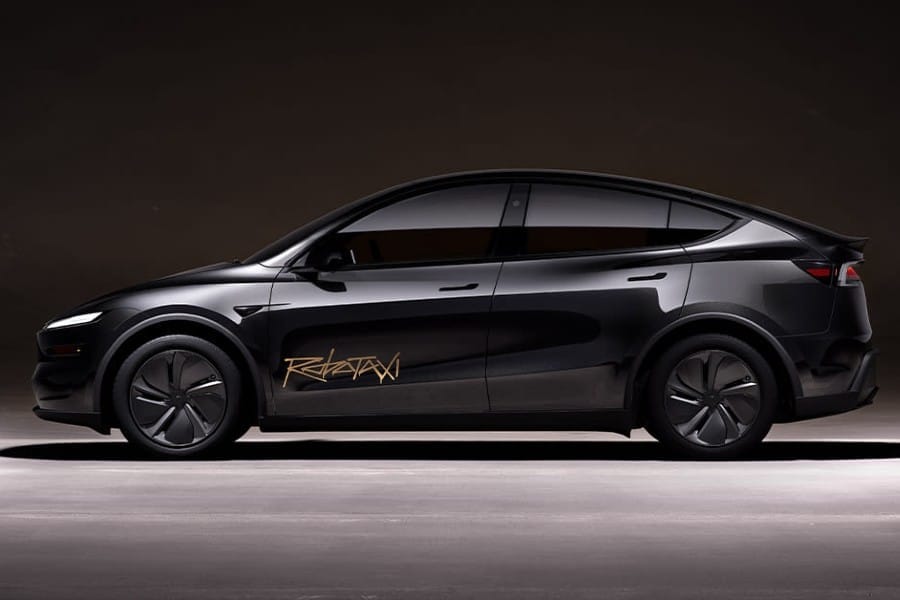
Elon Musk has repeatedly broken his promises: as far back as 2019, the Tesla CEO declared at the company’s ‘Autonomy Day’ that Tesla would have one million robotaxis on the roads by 2020. His vision centred on customers’ vehicles, which were to be made available to others via ride-hailing services. Since then, new promises have followed year after year—but Musk has yet to deliver.
In June 2025, Tesla launched a robotaxi service in Austin, Texas. However, until recently, all vehicles operated with a ‘Safety Monitor’ on board—a person who could take control via a display if needed. That changed when Musk triumphantly announced on his social media platform X: “Just started Tesla Robotaxi drives in Austin with no safety monitor in the car.”
This announcement suggested that, after years of setbacks, Tesla had finally achieved fully autonomous driving—a milestone not only for its robotaxi service but also for the many customers who have subscribed to the ‘Full Self-Driving’ (FSD) system. This system is designed to enable hands-free driving, yet it currently operates only in a ‘Supervised’ mode, requiring the driver to remain attentive and ready to intervene if the FSD system reaches its limits.
Unsurprisingly, Tesla’s stock price surged by around 4 per cent following the announcement. Musk reinforced the news from Austin with an appearance at the World Economic Forum in Davos, where—alongside promoting his Mars colonisation plans and the Optimus robot—he declared that Tesla had ‘solved’ autonomous driving. He outlined the next steps with confidence: “Tesla’s rolled out robotaxi service in a few cities, and will be very, very widespread by the end of this year within the US.” However, it is worth noting that, so far, those ‘few cities’ consist only of Austin and San Francisco. And in San Francisco, a driver still sits behind the wheel, making the service there even less advanced than in Austin. This is due to regulatory constraints, as Tesla currently lacks approval to operate self-driving cars in California.
Returning to Austin and Musk’s post on X: what initially sounded like a breakthrough—that Tesla’s robotaxis could now operate completely autonomously—quickly proved to be a sleight of hand. Just hours after the announcement, which was accompanied by a video purporting to show a self-driving Tesla with no one in the driver or passenger seat, another video began circulating on social media.
Safety driver with remote control
This video revealed that while there was no ‘safety monitor’ inside the robotaxi, such a person was now seated in another Tesla following the supposedly autonomous vehicle. In other words, the robotaxi may drive largely autonomously, but it is not yet permitted to operate entirely on its own—and the safety monitor can intervene via remote control.
Thus, Tesla has still not achieved full autonomy at SAE Level 4, which would allow a vehicle to operate within a clearly defined and mapped area without human intervention. Musk can even claim he did not lie—because the combination of text and video initially created the illusion of fully autonomous driving. However, a closer look at his X post reveals the trick: he wrote, ‘with no safety monitor in the car.’
Waymo delivers—again
The situation is entirely different at Waymo, Google’s sister company. Unlike Tesla, Waymo has once again ‘delivered’ on autonomous driving—this time by fully rolling out its service to the public in Miami. Following Phoenix, San Francisco, Los Angeles, Austin, and Atlanta, this marks the sixth city where Waymo’s robotaxis operate fully autonomously and without safety drivers.
Waymo’s lead over Tesla’s robotaxi service stems from its use of LiDAR, radar, and cameras to create a redundant, precise 3D representation of the environment. This enables fully autonomous driving at SAE Level 4 without the need for a driver. Tesla, in contrast, relies solely on cameras and AI, eschewing LiDAR, which has so far limited its system to Level 2 or 3 autonomy, requiring a safety driver. While Tesla CEO Elon Musk repeatedly claims that his ‘Vision Only’ approach—powered by learning algorithms trained on billions of kilometres of data—will soon achieve Level 4 autonomy without a safety driver, LiDAR provides exact distance and object data even in darkness or rain.
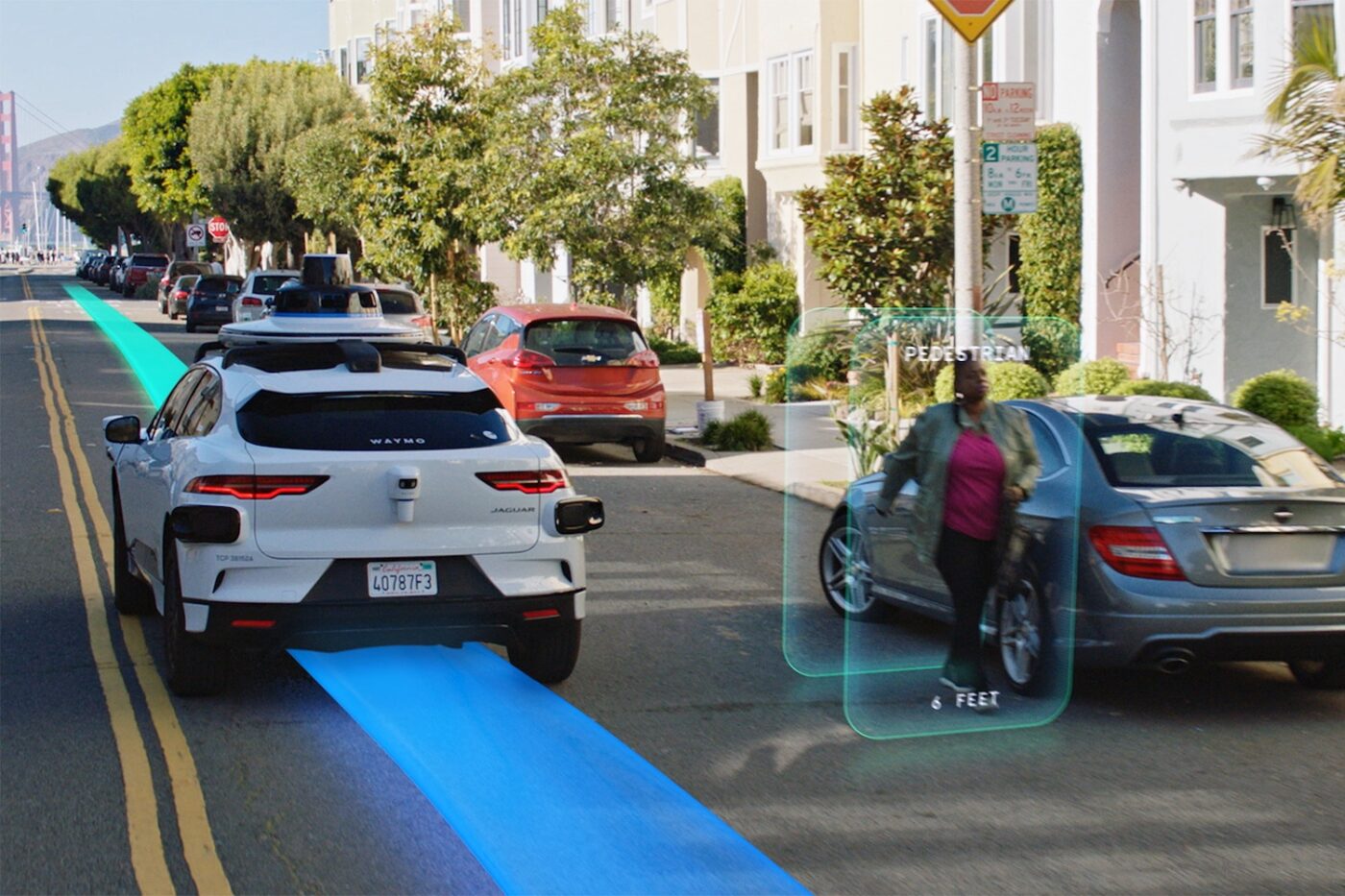
Back to Waymo: before launching in Miami, the company followed its usual process of mapping public roads with its vehicles and trained personnel on board. It then conducted initial tests with safety drivers before gradually introducing driverless rides from November onwards. Initially, the driverless service was only available to employees—but it has now been opened to the public. As usual, the autonomous vehicles can be booked and paid for via the Waymo app.
The operational area initially covers 60 square miles (155 square kilometres) and includes Miami’s most famous neighbourhoods—from the Design District and Wynwood to Brickell and Coral Gables. Waymo plans to expand its autonomous ride service to routes to and from Miami International Airport in the future.
Miami welcomes Waymo’s launch
“Miami-Dade County welcomes Waymo as it begins driverless vehicle operations in our community. As a county that embraces innovation, we see the potential for emerging mobility technologies to expand transportation options and support a more connected future,” said Miami-Dade County Commission Chairman Anthony Rodriguez. “We look forward to working collaboratively while ensuring these operations meet our high standards for safety, transparency, and accountability, and that they integrate thoughtfully into our transportation network for the benefit of residents and visitors alike.”
Announced as early as late 2024, Waymo is collaborating with Nigerian startup Moove in Miami to manage its fleet. Waymo cited the partnership as a way to focus on advancing its ‘Driver Technology.’
Waymo has already announced plans to launch in numerous additional cities this year, including Dallas, Houston, San Antonio, and Orlando. Detroit, Las Vegas, and San Diego are also on the list, alongside Denver, Nashville, and Washington, D.C. And that’s not all: in October, it was revealed that Waymo plans to expand to London this year, marking its first city outside the US.
0 Comments