

New free trade zone announced between India and the EU
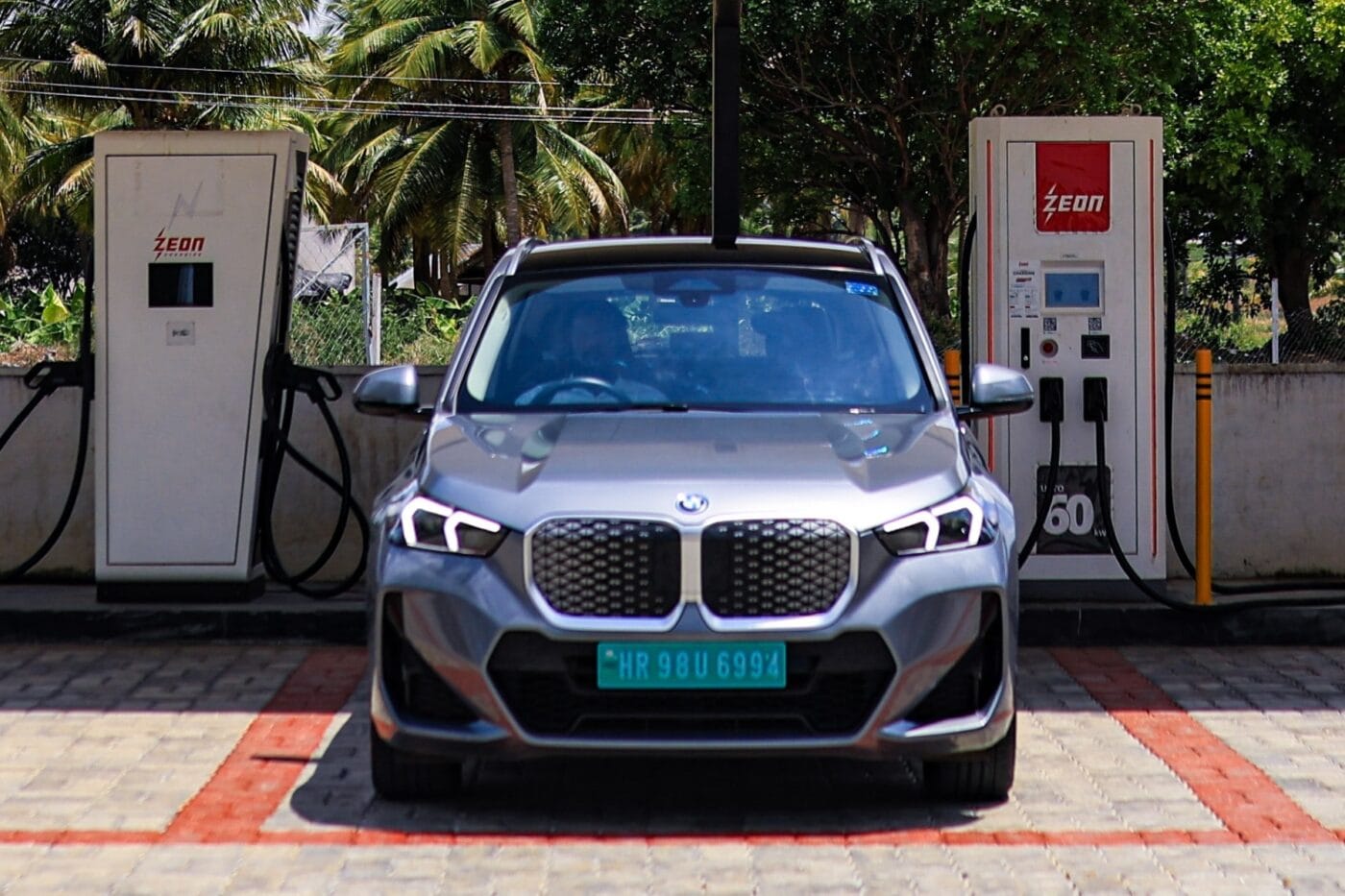
Despite India being the world’s fourth-largest economy, neither electric nor combustion engine European vehicles have enjoyed a lucrative market on the South Asian subcontinent. India’s high import tariffs have meant that the EU has played only a minor role in exports until now. Newly concluded negotiations between the EU and India have established a vast new free trade zone, announced by European Commission President Ursula von der Leyen and Indian Prime Minister Narendra Modi on Tuesday in New Delhi.
The EU has already highlighted the European automotive industry as a key beneficiary of the agreement, although few details have been made public so far. In an initial statement, the EU announced that tariffs on motor vehicles exported to India are to be gradually reduced from 110% to as low as 10% for an annual quota of 250,000 vehicles. Tariffs on automotive parts are even set to be “completely eliminated after five to ten years.” This could make European electric cars significantly more competitive in India moving forward. As yet, the EU has not disclosed the reverse arrangement—what tariffs Indian automakers will face in the EU. Further details are also not yet finalised at this stage.
The agreement is expected to “double EU goods exports to India by 2032 by eliminating or reducing tariffs on 97% of EU exports to India.” European Commission President Ursula von der Leyen described the intercontinental agreement as the most ambitious trade liberalisation India has ever offered to a trading partner. In addition to easing imports for the automotive industry, tariffs will be largely abolished, down from up to 44% on machinery, 22% on chemicals, and 11% on pharmaceuticals. Overall, the tariff reductions could save around four billion euros annually in duties on European products, according to the EU.
With over 1.45 billion inhabitants, India is the world’s most populous country, just ahead of China, while the EU is home to around 450 million people. The German publication, Der Spiegel, noted that the two countries collectively represent nearly a quarter of both global GDP and the world’s population. The agreement between the two major industrial powers comes at a time of increasing geopolitical tensions and global economic challenges, particularly due to recent rule-breaking by the USA. Against this backdrop, the EU has emphasised that the free trade agreement with India highlighted the two countries’ “joint commitment to economic openness and rules-based trade.”
India has been undertaking its transition off fossil fuels at an eye-watering pace, in particular regarding transport electrification, as well as hydrogen-based fuels for shipping and aviation, for example. While the US government has rolled back provisions to address climate change and environmental protections, India and the EU have, among other things, included ‘dedicated sustainability provisions’ that are to ‘enhance environmental and climate protection’. Other parts of the agreement allow “Privileged access to India for EU service providers in key areas (of) financial services and maritime services.”
India is dedicated to evolving its hydrogen economy for shipping and aviation fuels, and is currently home to around 50 million cars and 250 million two and three-wheeled vehicles. The tariff-free quota of vehicles to India is set at ‘250,000 motor vehicles’, but no such quotas are mentioned for machinery and electrical equipment or spacecraft and aircraft, both of which will now enjoy zero tariffs when entering India from Europe.
It will still take some time before the agreement comes into force. The negotiated drafts are to be published ‘shortly’ by the EU, after which they will undergo legal scrutiny and be translated into all official EU languages. The Commission must then submit its proposal for signing and concluding the agreement to the Council. Once approved by the Council, the agreement can be signed. Before it enters into force, the agreement will then require the approval of the European Parliament and the Council, and ratification by India.
The Mercosur free trade agreement between South American countries and the EU recently stalled in the European Parliament. However, resistance from parliamentarians to the India agreement is considered unlikely, as the deal is not expected to include the kind of sensitive issues for local farmers that proved controversial in the Mercosur agreement.
spiegel.de (in German), ec.europa.eu, ec.europa.eu (Q&A)
0 Comments