

Struggle over the “French model”: Spanish EV subsidies are being delayed
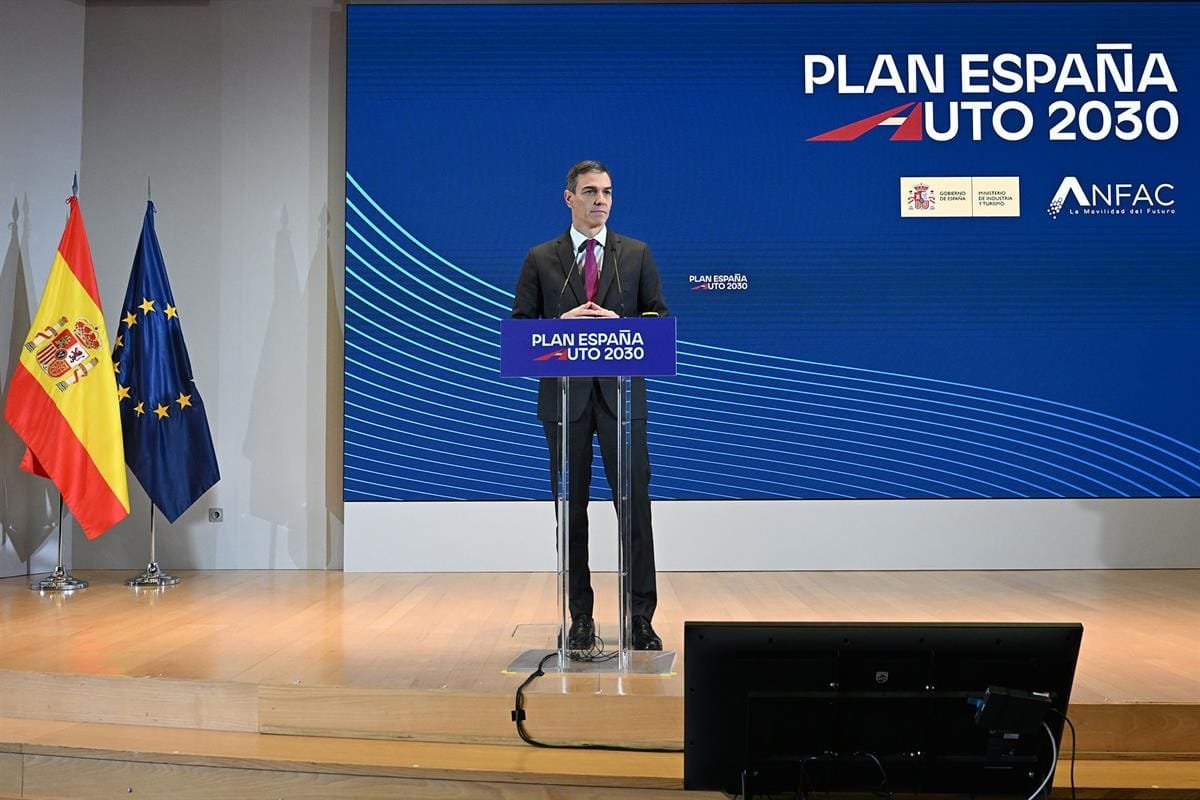
Spain is restructuring its electric mobility incentives under the national plan ‘España Auto 2030,’ reorganising its approach around three pillars while redefining responsibilities. Central to this is the ‘Plan Auto+’ programme, which aims to channel €400 million in subsidies directly to consumers in 2026, helping to reduce the price of electric vehicles. Alongside this, a new initiative called ‘Moves Corredores’ has been launched with a €300 million budget to support the deployment of charging stations. Additionally, another €580 million will be allocated to the existing e-mobility funding programme PERTE in 2026 to bolster projects in EV and battery production. The latter is classified as an industrial subsidy.
Regarding the purchase incentive programme ‘Plan Auto+,’ the government announced in December that it would replace the Moves programme. Crucially, from 2026, subsidies will be managed by the central government rather than the autonomous regions, as was the case with the Moves III programme, which expires at the end of 2025. Originally, ‘Plan Auto+’ was intended to succeed the Moves programme at the turn of the year, but the government has yet to publish the funding criteria.
According to Spanish media, the release of these criteria is currently being blocked by the Ministry of Economic Affairs. The reason? The ministry seeks to introduce a system for calculating the CO₂ footprint similar to the one used in France. The French incentive scheme weights the environmental bonus based on the CO₂ footprint of battery-electric vehicles (BEVs), which includes emissions from manufacturing and transport. This criterion was introduced to favour European models while discouraging those from China. Initially, the Spanish Plan Auto+ was intended to prioritise electric cars manufactured in the European Union without excluding other models. However, the criteria are now set to be tightened further, following the French example.
By the way: The EV purchase incentive in Germany, introduced retroactively from 1 January 2026 and with details published just days ago, does not exclude any models—for now. At the outset of the new scheme, all new M1-class vehicles with battery-electric or plug-in hybrid powertrains are eligible (though PHEVs must emit no more than 60 grams of CO₂ per kilometre and offer an electric range of at least 80 kilometres). However, the ministry is ‘examining the inclusion of so-called EU preference rules.’ These provisions could be integrated into the ongoing funding programme at a later stage, meaning imported EVs—particularly those from China—might not remain eligible indefinitely.
Back in Spain: the portal La Tribuna de Automoción reports that the funding criteria for ‘Plan Auto+’ were supposed to be published shortly after Christmas. However, the Ministry of Economic Affairs is still working intensively to integrate a CO₂ score that would primarily exclude Chinese EVs from subsidies. This has created a funding vacuum, and industry experts fear the market could stagnate as a result.
A brief look back: The Moves III programme was launched by the government in 2021 and expanded by €400 million in December 2022, bringing its total budget to €1.2 billion. With further increases in 2024 and 2025, the funds allocated to Moves III have grown to €1.735 billion over the years. However, the programme suffered from structural weaknesses; some applicants, for example, had to wait up to two years to receive their subsidies. The autonomous regions handled the disbursement of funds. The government had intended to reform the system last year but was unable to do so in time due to the country’s devastating floods.
Now, however, the reform is set to proceed: Prime Minister Pedro Sánchez views the overhaul as a plan of national significance, one that will ensure ‘Spain has done its homework by the end of the decade.’ The measures are the result of close collaboration and dialogue with the private sector. Spain’s automotive industry contributes nearly 10 per cent to the country’s GDP and supports almost two million direct and indirect jobs. This makes Spain the second-largest car manufacturer in Europe. Yet, when it comes to electrification, the country remains sluggish, as recently highlighted by Forocoches Electricos: “Although the Moves III programme has enabled the purchase of 170,000 electric cars and the numbers are set to double again in 2025, the starting point remains low. Moreover, two major obstacles persist: the limited number of charging stations and cumbersome bureaucracy, which hinders expansion.”
Madrid has been clear that the cost of EVs must decrease to make the transition to electric mobility truly attractive in Spain. “We want to produce electric cars in Spain that are affordable for the middle and working classes of our country and ensure these groups are not excluded from the Green Deal,” Sánchez recently stated. Currently, purchasing an electric car represents a significant financial burden for many families. The government must therefore act transparently and decisively to support this process. The Prime Minister emphasised: “Spain will not waver in its commitment to electric mobility.”
Economic interests naturally play a significant role: Spain is, after all, the production hub for Volkswagen Group’s upcoming family of small electric cars. Sánchez sees this as a major opportunity for both industry and consumers: “Next year, we will see a wide range of electric models priced under €25,000. This is the path to the future, and the Spanish government intends to pursue it together with the industry.”
The Auto+ plan is set to provide €400 million in direct purchase subsidies for electric vehicles in 2026, aligning the annual budget with previous Moves funding allocations. By centralising the programme’s administration, the government aims to ensure a faster and more uniform process. The goal is to ‘ensure that payments reach families when they need them,’ as stated. The model for this is the ‘Reinicia Auto+’ plan, introduced to mitigate the impacts of the flood disaster, which, according to the government, helped ensure that “95 per cent of applications from Valencia residents were processed within a year of the tragedy.”
forococheselectricos.com, latribunadeautomocion.es (both in Spanish)
0 Comments