

Aggregator for North American utilities
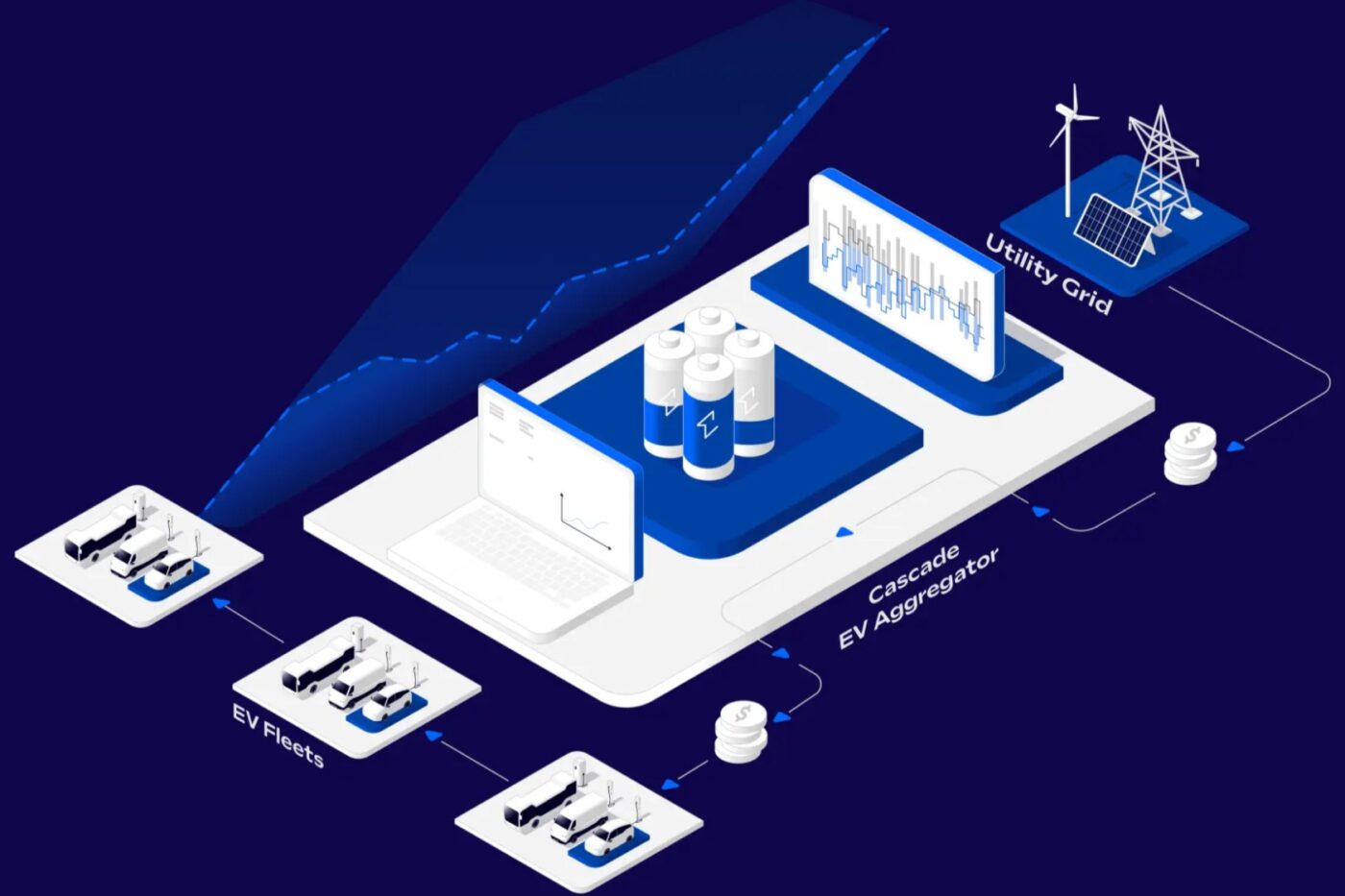
According to The Mobility House North America, its Cascade EV Aggregator represents ‘the most versatile EV load aggregation tool in North America’. The new technology makes charging and discharging optimisation possible across a number of different charger and vehicle asset classes, ranging from home chargers to electric school bus fleets.
Electric vehicles can either become a burden or a great asset to utilities as utilities struggle to fulfil the electricity burden of new data centres while carrying the burden of overdue infrastructure upgrades and the integration of multiple new energy sources, as well as growing electricity demand for vehicles. Electric vehicles can serve as energy storage assets to balance grids with services such as demand response, dynamic rate optimisation, and grid constraint management.
The Mobility House platform can manage both unidirectional smart charging to incentivise load shifting (V1G), so that drivers and fleet owners know when to charge when demand is otherwise low, and bidirectional vehicle-to-grid (V2G) chargers so that EV batteries can export power back into the grid when demand is high.
Greg Hintler, CEO of The Mobility House North America, noted: “Electric vehicle batteries can play a substantial role in meeting the tremendous challenge of load growth on the electrical grid. The Mobility House is committed to developing the technology that harmonises EV charging with reliable grid operations.”
Electric vehicle fleets provide utilities with especially useful flexible battery assets, benefiting both the utility and the fleet operator. The Mobility House explains that, while ‘a charge management system (CMS) such as The Mobility House’s ChargePilot manages charging optimisation for a fleet operator, Cascade can work with each CMS at thousands of sites to create flexibility for the distribution grid.’
In California, Massachusetts, and New York, Cascade is currently being deployed to provide vehicle-to-grid (V2G) value for school bus fleets. Ernest Epley, Transportation Director of the Fremont Unified School District explains “The electric school buses in our fleet work hard every day to get students to school safely. And now, as a part of The Mobility House’s Cascade Aggregator, they can earn revenue for the district supporting the energy grid while they are parked at the depot.”
In Europe, The Mobility House recently inked an agreement with Toyota to provide V2G and V1G services for Toyota vehicles, the first outcomes of which should materialise this year. In November 2025, in the United States and Canada,The Mobility House was awarded a Sourcewell cooperative purchasing contract for EV chargers, charge management software, and consulting services for fleet operators.
Some challenges have been posed by policy change dynamics over the last couple of years in the USA. Hintler recently gave electrive an extensive interview, revealing how fleet owners can make the shift to electric for more resilient operations and reliable partners.

0 Comments