

U-turn: Tesla reinstalls its own 4680 cells in the Model Y

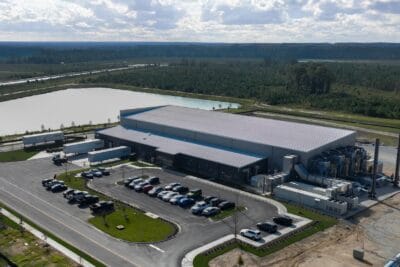
As revealed in the latest financial report, Tesla has taken a step back in its use of 4680 cells. The report states: “We have begun to produce battery packs for certain Model Ys with our 4680 cells, unlocking an additional vector of supply to help navigate increasingly complex supply chain challenges caused by trade barriers and tariff risks.” Tesla also highlights its progress in domestic battery production: “We now produce dry-electrode for 4680 cells with both anode and cathode made in Austin. We expect both domestic cathode material in Texas and LFP lines in Nevada to begin production in 2026.“ These developments underscore Tesla’s strides in vertical integration.
What Tesla does not mention is that its strategy to use its own 4680 cells in the Cybertruck has achieved limited success. The Cybertruck’s weak sales mean Tesla’s battery programme is unlikely to be fully utilised. The large cylindrical cell was unveiled in September 2020 at Tesla’s Battery Day, with the promise of halving battery costs and enabling a Tesla priced at $25,000. The portal Electrek reported that Tesla achieved a production rate of 868,000 cells per week by the end of 2022, enough for approximately 1,000 Model Y vehicles. In April 2023, the company opened order books for a more affordable Model Y AWD equipped with 4680 cells, priced at 49,990 US dollars. However, by September 2023—just six months later— “Tesla quietly discontinued the 4680 Model Y AWD, removing it from the configurator entirely,’ according to the portal. The prevailing theory at the time was that ‘Tesla needed to redirect its limited 4680 cell production to the Cybertruck, which was about to launch.’ Since then, Tesla’s own 4680 cells have been used exclusively in the Cybertruck. However, the Cybertruck has underperformed in sales, reducing the demand for cells. Meanwhile, Tesla’s high-volume models, the Model Y and Model 3, continue to rely on 2170 NMC or LFP cells.
A surprising development emerged in December, when South Korean battery materials manufacturer L&F announced that the volume of its supply contract for cathode materials with Tesla had been reduced due to a change in delivery quantities from an original value of around $2.9 billion to just $7,000. The most likely reason for Tesla’s cancellation is weak demand for the Cybertruck. According to insiders, L&F’s high-nickel cathode materials were intended for Tesla’s 4680 cylindrical cells.
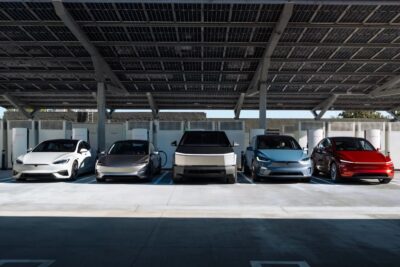
Tesla has now revealed in its annual report that its own 4680 cells will once again be used in some Model Y vehicles. Officially, the manufacturer cites mitigating trade barriers and tariff risks as the reason, should Tesla’s Chinese battery partners face tariffs or export restrictions. While this argument is valid, it is worth considering whether it addresses the core issue. After all, the Model Y is likely to attract far more buyers than the Cybertruck. Regardless, the bad news from L&F suggests that Tesla has no immediate plans to significantly scale up 4680 cell production.
For context: the 4680 battery cell measures 46 millimetres in diameter and 80 millimetres in height—hence the designation 4680. The cell was designed to be cost-effective to produce while offering high range, and it was intended for use in an affordable Tesla priced at just 25,000 US dollars. However, this model has yet to materialise and appears to have been deprioritised by CEO Elon Musk.
ssets-ir.tesla.com (PDF, page 9), electrek.co
0 Comments