


Luce instead of Elettrica: Ferrari renames its electric SUV

Ferrari revealed technical details about its first all-electric production model last October. The Italian marque has opted for a system featuring two electric axles and four permanently excited synchronous motors (two per axle), which utilise Halbach array rotors—a technology originally derived from Formula 1. The front axle delivers 210 kW and can be decoupled at any speed to improve efficiency; in all-wheel-drive mode, it engages automatically when required. The rear axle provides 620 kW. The battery system comprises 15 modules, each containing 14 cells, with a gross capacity of 122 kWh and a charging capacity of 350 kW.
As the company has now announced, the production model will not be called Elettrica but Ferrari Luce. “Introducing the interior and interface of the Ferrari Luce, our first fully electric model that presents a new, cross-disciplinary design language into an authentic Ferrari experience,” states a LinkedIn post. “Designed in close collaboration with the creative collective team LoveFrom in San Francisco, the #FerrariLuce embraces electric architecture as a new opportunity, rethinking every detail of the cabin, interface, and controls. Each element, from the Binnacle and Control Panel to the tactile switches and custom interface, has been designed to connect the driver with the car in a completely new way.”
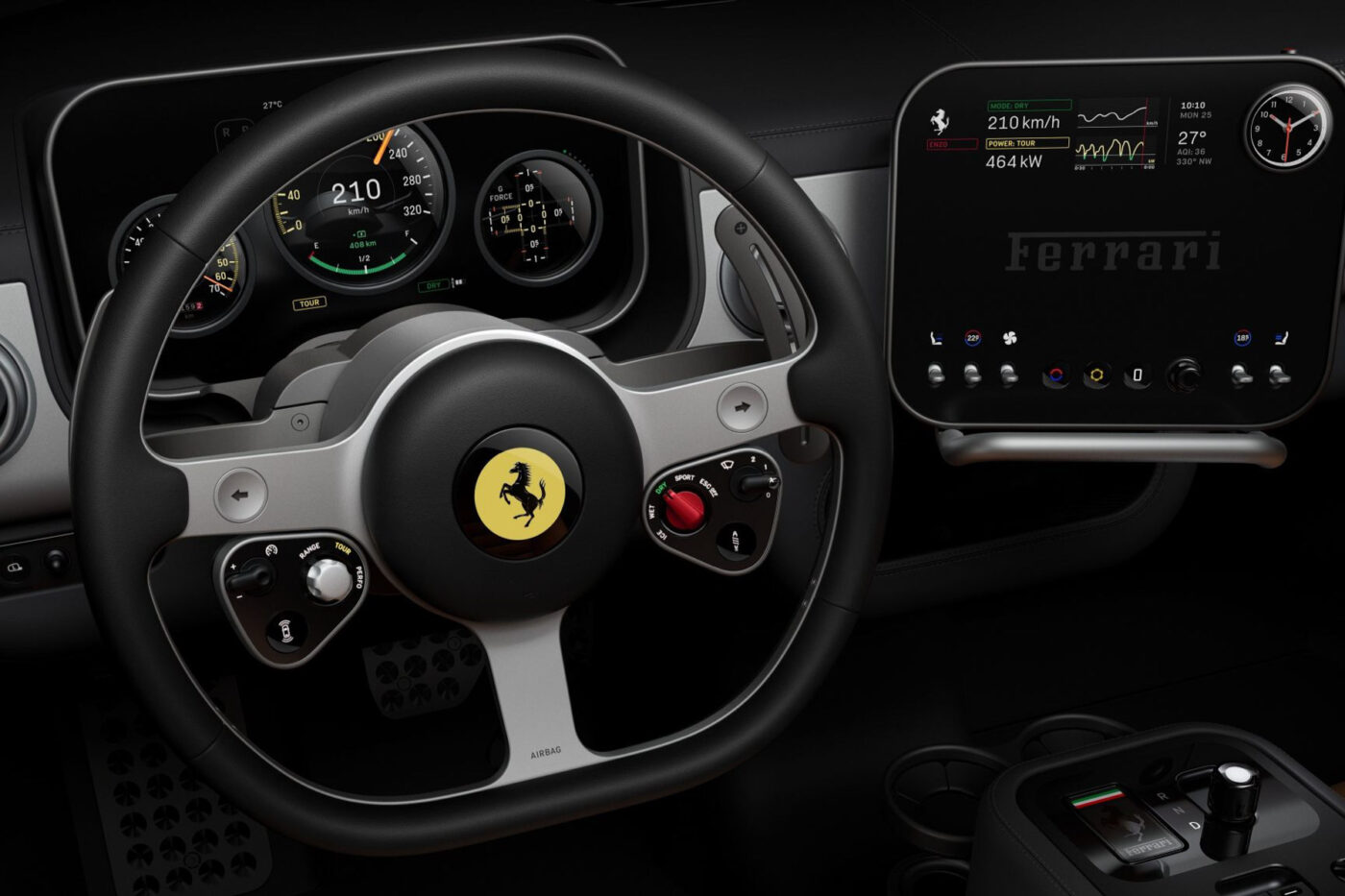
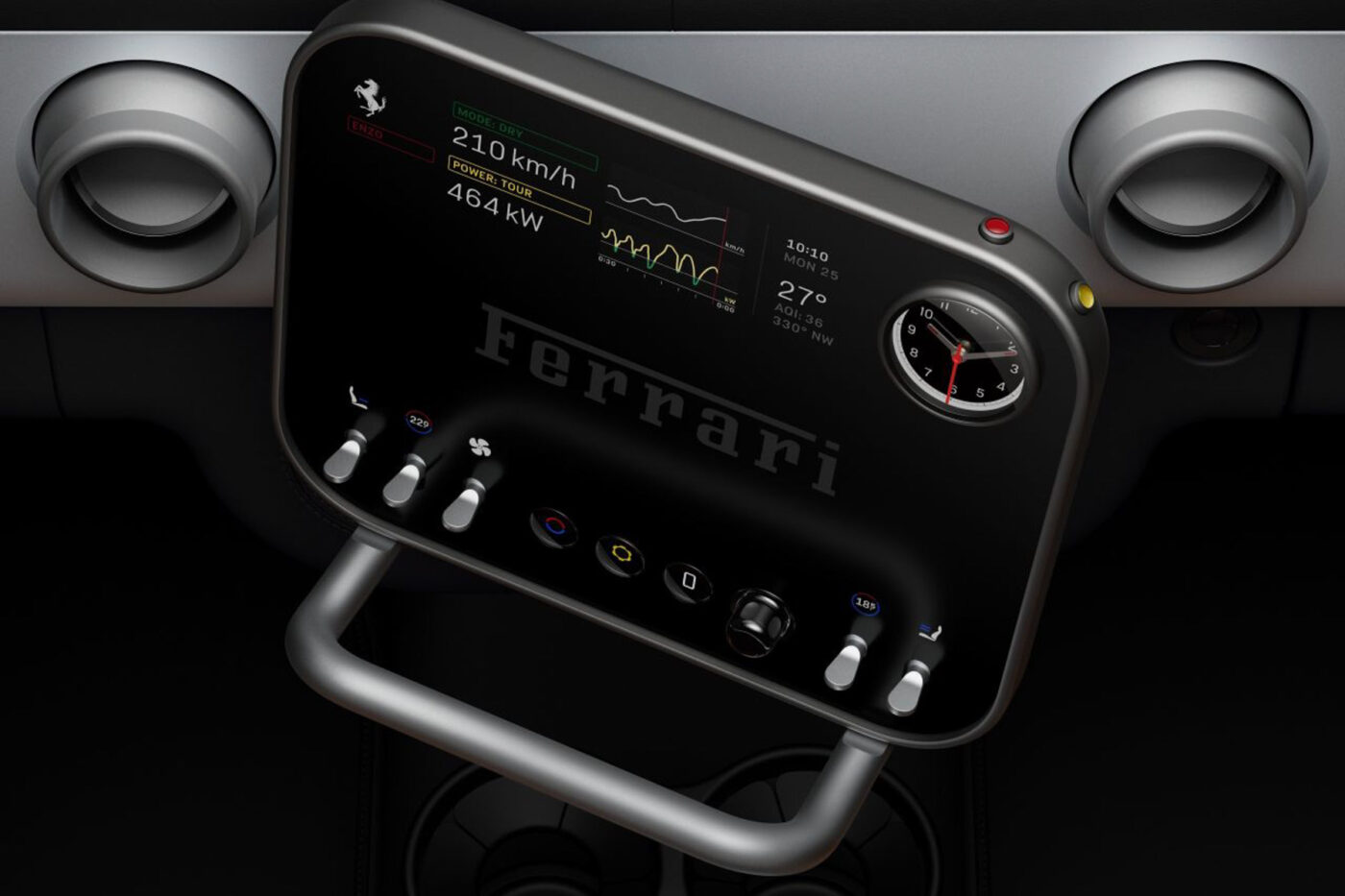
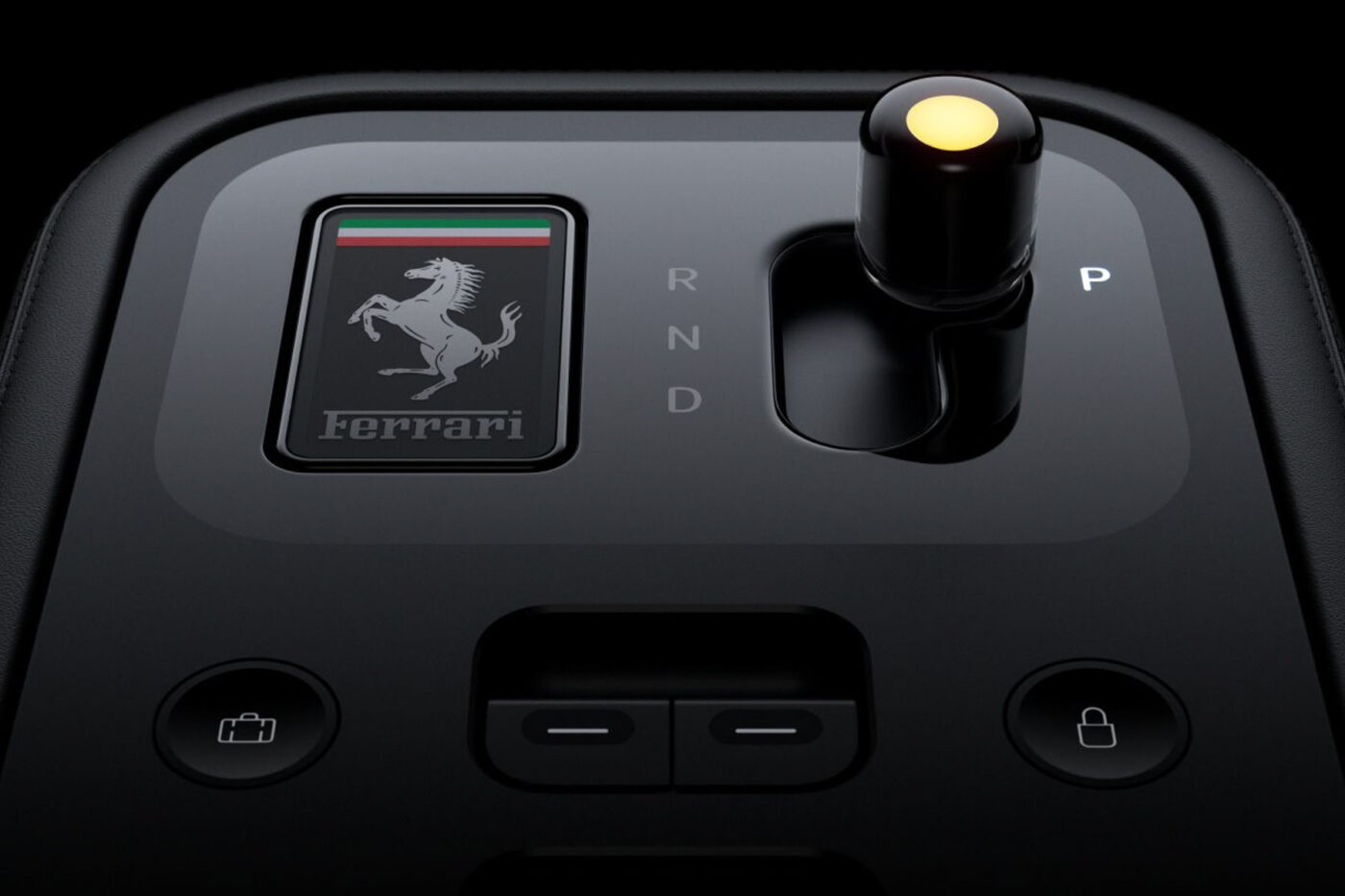
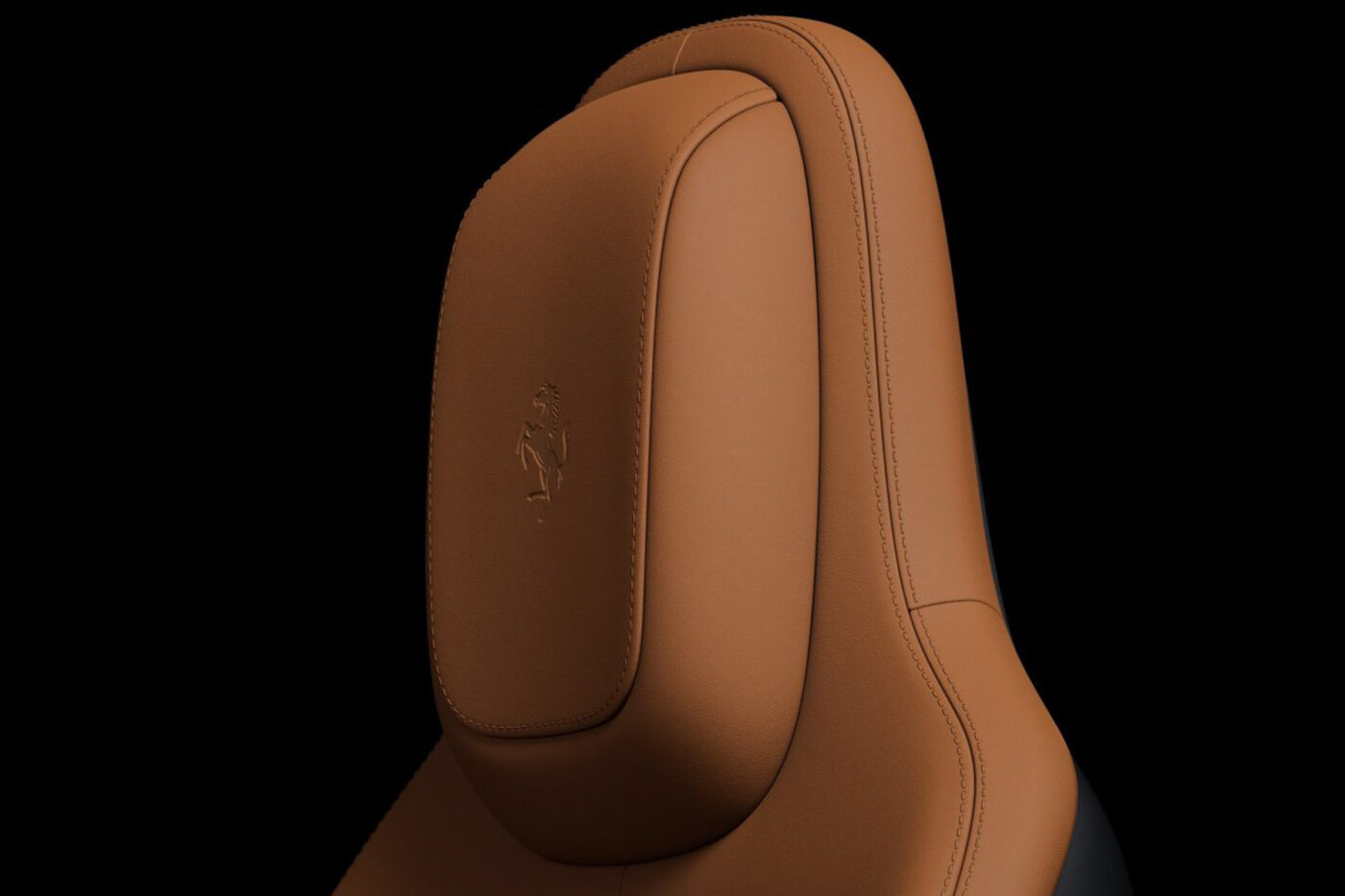
As the sports car manufacturer hints in its post, the latest announcement—aside from the casually revealed name—focuses primarily on the interior. Based on the first images, Ferrari has adopted a retro-inspired approach: the steering wheel, with its minimalist design and aluminium elements, resembles that of a classic sports car. Only the integrated indicator buttons and rotary dials (including those for driving modes) reveal that this is, in fact, a modern vehicle. The retro theme is also reflected in the instrument graphics. Below the driver-facing central touchscreen, classic toggle switches and an aluminium grab handle are featured.
All essential controls on the steering wheel and centre console are analogue—including the gear selector. “The Ferrari Luce’s interface is designed with clear organisational principles. Controls and displays are grouped functionally, with the most essential commands and feedback directly in front of the driver,” Ferrari explains.
The steering wheel features two rotary dials known as ‘Manettino:’ the one on the left is called the ‘E-Manettino’ and controls the drive modes, offering a choice between ‘Range,’ ‘Tour,’ and ‘Perfo (Performance). This allows the driver to manage power and range. The power display in the cockpit indicates that power is limited to 50% in ‘Range’ mode and 70% in ‘Tour’ mode. Only in the ‘Perfo’ setting is 100% power available. The right ‘Manettino’ adjusts the driving dynamics, enabling the driver to configure the powertrain and suspension characteristics for ice, wet, dry, and sporty driving conditions. Here, the electronic stability control (ESC) can also be deactivated. An interesting detail: the inclusion of an ADAS button for autonomous driving systems suggests that the Ferrari Luce may not always be controlled by a human driver.
For its first battery-electric model, Ferrari has also introduced a new display: a ‘Torque Meter’ above the tachometer, similar to the shift indicator in combustion-engine sports cars, signals the optimal moment for the driver to increase torque. Torque is controlled not only via the accelerator pedal but also using the former shift paddles on the steering wheel. “Paddles allow manual control of torque for progressive acceleration, combined with recovered power from regenerative braking,” Ferrari explains.
0 Comments