



Timo Weil
Senior Expert Attribute & Testing, smart Europe
Timo Weil studied Automotive Service Engineering at CDHAW Tongji University in Shanghai, China, and later joined Mercedes-Benz as a development engineer. There, he co-developed the last smart fortwo and also helped define the new #1. In 2025, after holding various positions under the Mercedes umbrella, he returned to Smart Europe to specifically shape the European version of the new two-seater as a whole-vehicle development engineer.
linkedin.comInside the Smart #2: Timo Weil explains key vehicle features
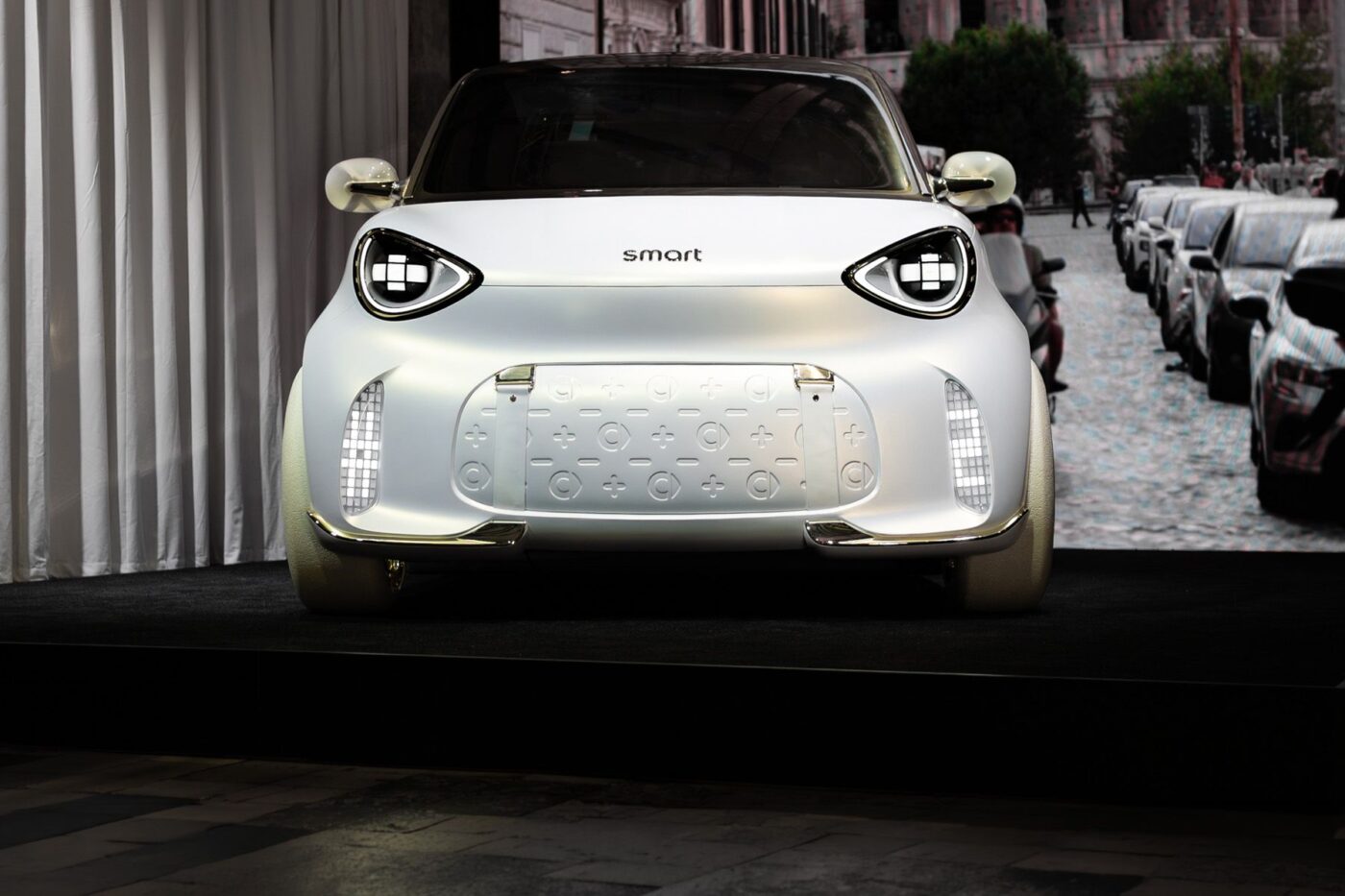
The Smart #2 is designed to bring the brand’s original ultra-compact two-seater concept into the electric era. Smart is equipping the model with a dedicated platform, a turning circle of less than seven metres, a 35.7 kWh battery and a targeted range of around 300 kilometres. The company also promises a charging time from 10 to 80 per cent in less than 20 minutes. As reported recently, the vehicle is expected to start at less than €22,500.
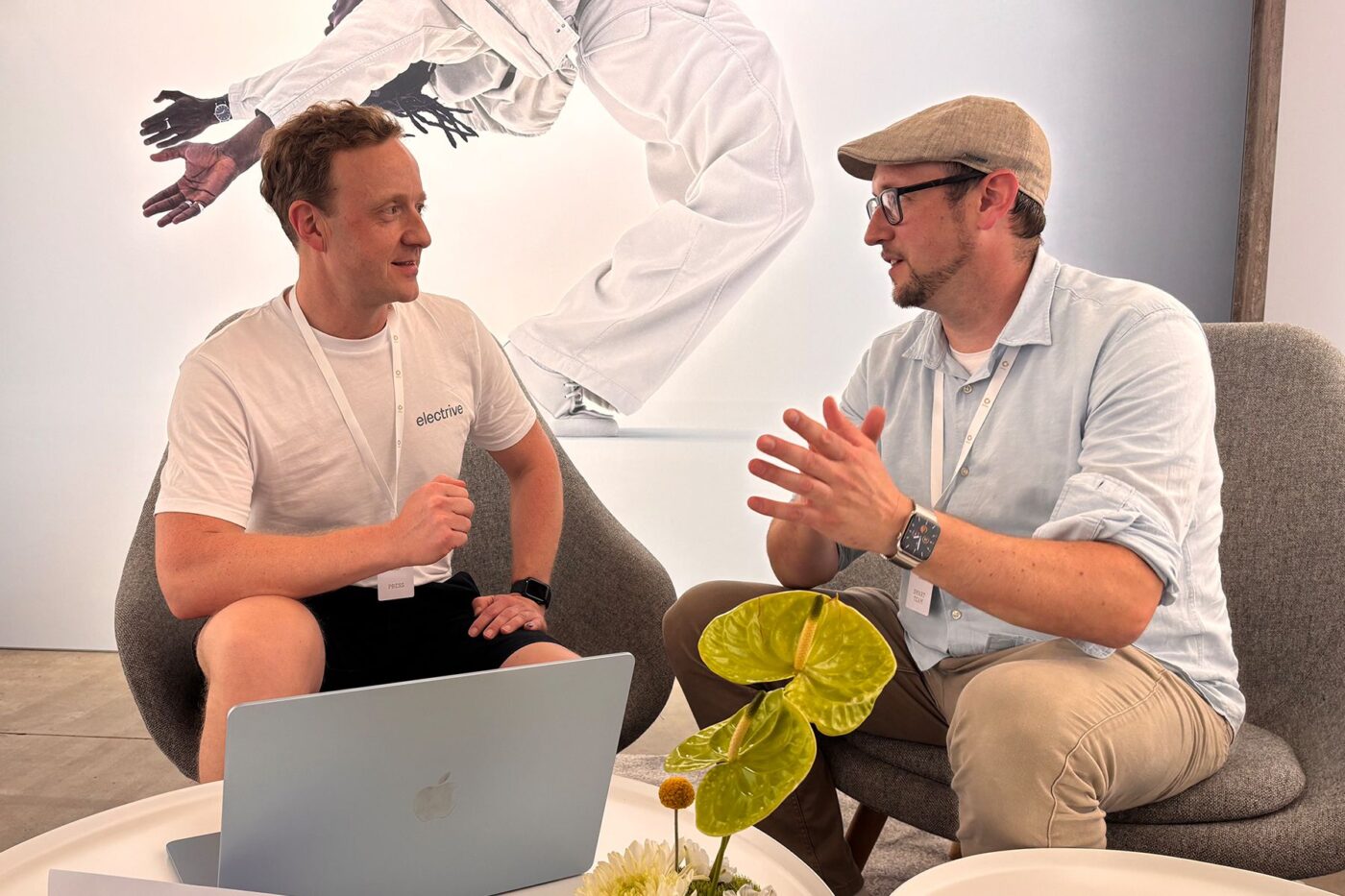
In this interview, Timo Weil, the lead vehicle development engineer who worked closely with colleagues from Mercedes’ partner Geely in China, discusses the technical foundations of the new electric city car. Topics include the packaging of the electric platform, the return of the Tridion cell, the new interior concept, and the rear-axle design. We met Timo Weil at a press event in Rome, where the key features of the new vehicle were presented.
Mr Weil, the Smart fortwo has long been synonymous with urban mobility. Its presence here in Rome is a testament to that. What must the new Smart #2 achieve technically to credibly fulfil this role again in 2026?
From an engineering perspective – particularly with a view to Europe – it is crucial to retain the strengths of the old two-seater while addressing the weaknesses that were particularly evident in the European market. One key issue is range. In the Smart EQ fortwo, it could drop below 100 kilometres in cold weather. We have definitively addressed this for the upcoming Smart #2.
Previous two-seaters always had to accommodate the internal combustion engine. With the new ECA platform, we now have a purely electric platform on which the new two-seater is built. This allowed us to remove the limitations imposed by the original combustion-engine platform used in the fortwo and further enhance the car’s driving dynamics. By eliminating the combustion engine and focusing on a purely electric platform, the Smart #2 will be more consistently designed and offer a superior driving experience.
Let’s focus on this platform. What are the three key innovations it incorporates, and why are they critical for the two-seater’s relaunch?
In my view, the most important innovation – as I’ve already hinted – is the new rear-axle design compared to the older two-seaters. We replaced the De Dion rear axle, a type of solid axle, with a state-of-the-art five-link rear axle. This is a first in the A-segment. It gives us entirely new possibilities for tuning the car: more comfort while maintaining the driving stability that remains our top priority.
Secondly, the new platform allows us to design the steering more directly than in previous models, making the car even more agile in urban environments. We retain the small turning circle, but the steering now offers greater directness and clearer feedback. This simply makes the car more enjoyable to drive.
The third point is the larger battery, which I’ve also mentioned. We are using state-of-the-art cell technology in the new battery, achieving over 35 kilowatt-hours – roughly double the capacity of previous models.
How this translates into exact range figures will be confirmed during homologation; we’re still in the midst of that process and can’t provide precise values yet. However, we will be setting the benchmark for range in the A-segment.
How were you able to retain the small turning circle?
Even the original Smart fortwo models had the motor and drivetrain at the rear, and this remains the case with the new platform. This allows us to turn the front wheels sharply without needing to accommodate a driveshaft there. The challenge lies more in reducing the number of steering wheel turns from lock to lock for a more direct response.
Achieving this requires precise tuning. We are currently investing significant effort in fine-tuning, with support from our European team, to optimise the steering for the European market. I am heavily involved in this process alongside our international team.
I have been part of the steering tuning process from the beginning. Our goal is to deliver one of the best steering systems in the two-seater segment that Smart has ever produced. I won’t compare it to larger models, but I believe the new two-seater drives at an entirely new level.
Does this apply to the rear axle as well? It’s no easy task to optimise a very short vehicle for driving dynamics, especially on roads like those in Rome, which aren’t always in perfect condition.
I believe the rear axle actually incorporates even more innovation than the front. A five-link rear axle is typically found in higher segments. Our international team of driving dynamics and chassis experts, working alongside our European colleagues, is focused on finding the best compromise. The driving stability of the two-seater must be maintained – this is essential for us because safety is our top priority.
The new rear-axle design allows us to combine this stability with additional comfort and feedback. It provides opportunities that were simply not possible due to previous technical constraints.
With the Tridion cell, Smart is reviving a well-known safety concept. How has this structure been adapted to meet the demands of a modern electric vehicle?
We can’t provide details on the exact implementation of the Tridion cell at this stage. However, we can confirm that the Tridion cell will return in the Smart #2. By reintroducing it, we want to emphasise – as we did in the past – that passive safety is a top priority in our development specifications. We aim to deliver a vehicle that sets the highest standards for both driving safety and passive safety, particularly because small cars like this often face scrutiny. For us, there is no compromise: it’s a compact car, but it must offer safety at the highest level.
Let’s move on to the drivetrain. Smart promises maximum dynamism in the smallest format. What does this mean technically, and what will drivers experience in everyday use?
We will offer a vehicle with a drivetrain that is typical for the A-segment but, thanks to its compact design and tuning, delivers a highly engaging driving experience. The new rear-axle design and steering are key factors here. On the chassis side, we are implementing the agility needed for urban driving. Additionally, we are fine-tuning the drivetrain – focusing on responsiveness and how the car reacts and behaves. This translates into a dynamic driving experience tailored for the city. Essentially, we are taking what defined the Smart City-Coupés of the past and evolving it for the future.
The battery offers over 35 kilowatt-hours. How did you resolve the trade-off between the small vehicle size, battery capacity, weight, space, and costs?
It’s a real challenge. But this is exactly why we became engineers: to continually push the boundaries and take technology to its limits. Of course, there are constraints we can’t control alone, such as costs. The rest is meticulous engineering: fitting state-of-the-art cell technology into the available space and extracting the best possible performance. I think this is why I became an engineer – to push the limits of what’s possible.
Did this development work primarily take place at Mercedes in Germany, at Geely in China, or through collaboration between the teams?
We work with an international team, including at our development headquarters. However, because the fortwo successor, the #2, is so important for Europe – where many customers are still waiting for a successor – the European team has been involved in the product development process from the outset. We play an active role in shaping and tuning the vehicle.
A range of around 300 kilometres is ambitious for such a small car. Where are the biggest efficiency levers? In the drivetrain, thermal management, or aerodynamics?
I don’t think there’s a single right answer to that. Maximising range – extracting the absolute best from the given battery – is always an interplay of all components. We need to optimise the drivetrain, while aerodynamics and thermal management also play significant roles. There isn’t one single lever; it’s about fine-tuning every dimension to achieve the maximum range.
The Smart #2 is expected to charge from 10 to 80 percent in less than 20 minutes. This means you need to dissipate a lot of heat from the battery quickly. How do you achieve this?
At this stage, we are not disclosing details about the vehicle’s thermal management. However, you can be confident that we have designed the overall system to handle the generated heat effectively and prevent overload.
Finally, a brief question about the interior with its continuous bench seat, as seen in the Smart Concept #2. What advantages does this concept offer in everyday use?
For me personally, the clear advantage is that I can simply slide across. If I’m parked in a tight spot – which is what the two-seater is designed for – and can’t exit on the driver’s side, I can easily move to the other side. That’s the benefit I see. Interior design isn’t my core expertise, but this aspect played a role in the development.
If you had to highlight one technical detail of the new #2 to instantly intrigue a former Smart fortwo driver, what would it be?
The turning circle.
In Rome, you still see a surprising number of fortwo models with combustion engines. When will the new electric Smart #2 shape the cityscape as prominently as its predecessor?
I would love to see the vehicle on every street corner here in five years. But I hope it doesn’t replace the old Smarts – instead, I hope it complements them, and that we soon see twice as many Smarts in Rome. That would mean we have both the models from the old world and many new ones together in the Eternal City, and preferably in other European cities too.
Mr Weil, thank you for the conversation.
0 Comments