


Canada commits $97 million to 155 clean transport projects
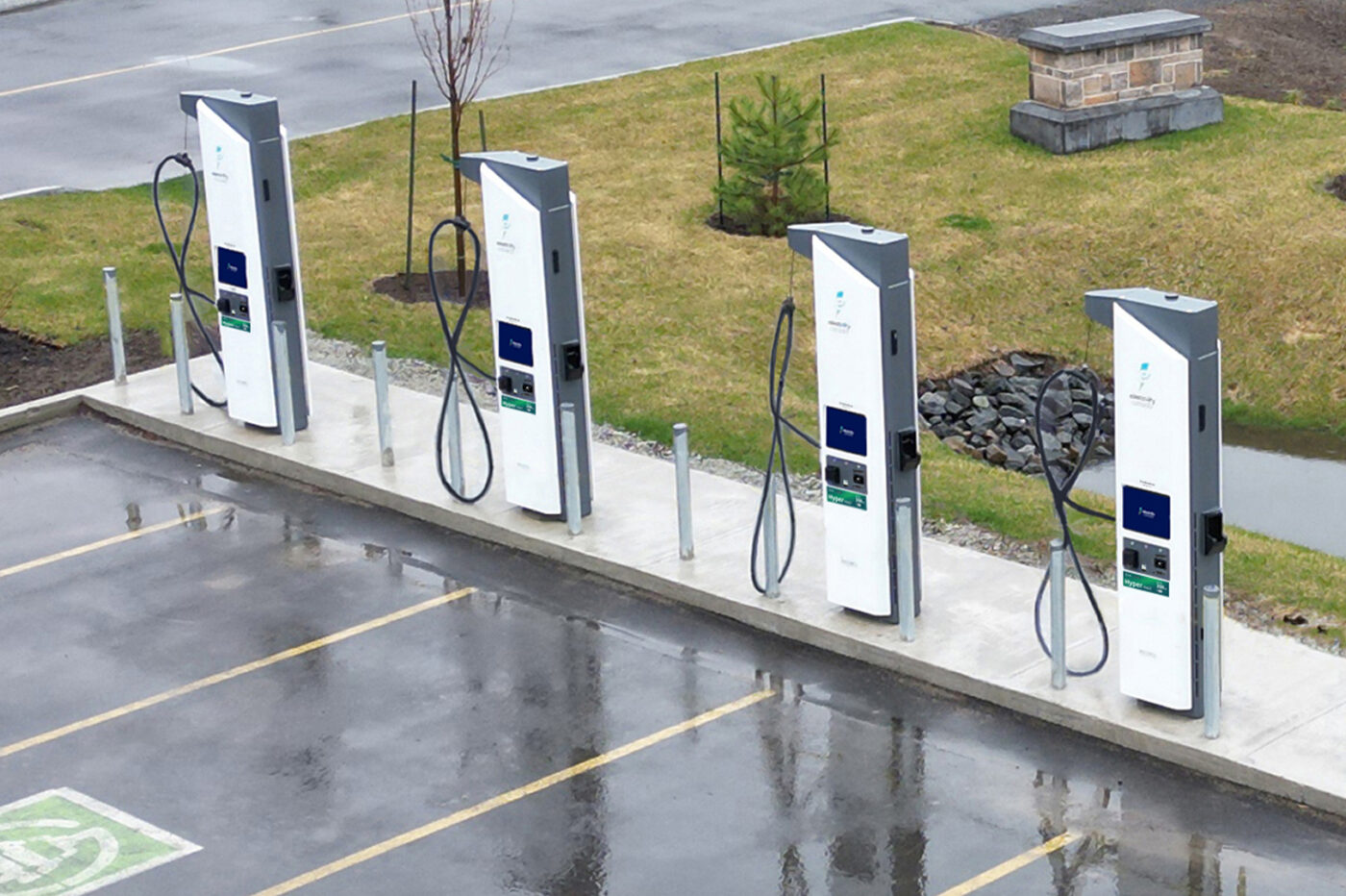
The Government of Canada has announced more than $97 million in funding for 155 clean transportation projects across the country, with the bulk directed towards expanding electric vehicle charging infrastructure. The investment forms part of the newly launched Automotive Strategy and is intended to accelerate EV uptake while strengthening domestic industrial capacity.
Of the total package, $84.4 million will support 122 projects under the Zero Emission Vehicle Infrastructure Program (ZEVIP), enabling the installation of more than 8,000 new EV charge points from coast to coast to coast.
The charging investments span public, workplace, fleet and multi-unit residential applications. Large-scale recipients include Pollution Probe Foundation with $7.3 million for 495 chargers nationwide and the Manitoba Motor Dealers Association with $6.5 million for up to 520 chargers. Provincial authorities such as the Ontario Ministry of Transportation secured $4.74 million for 76 chargers.
Major logistics and port operators are also included. DP World (Canada) Inc. will receive $4.375 million for 111 chargers in Vancouver, while GCT Canada Limited Partnership has been awarded over $5.4 million across two projects in Delta and Vancouver. Purolator Inc. will install 393 chargers in Ontario with support of $2.575 million. Residential and property sector projects account for hundreds of additional charge points, including 899 chargers at Strata Plan BCS 2143 in Vancouver.
Electrify America is listed among recipients with $4 million for 40 chargers across Ontario, Alberta and Quebec. Municipalities including Calgary, Vancouver, Regina, Mississauga, Kelowna and St. John’s are also beneficiaries, reflecting a geographically distributed deployment model. Northern regions are covered through projects in Yukon and the Northwest Territories.
According to the government, Canada has already installed more than 30,000 EV chargers through ZEVIP and related initiatives. The new tranche builds on that progress and aligns with the forthcoming National Charging Infrastructure Strategy, designed to attract private capital, reduce regulatory barriers and address grid integration and skills training.
“We know range anxiety makes it harder to choose an EV, which is why Canada is investing in our infrastructure — and with new EV chargers opening every month, we are seeing results”, said Tim Hodgson, Minister of Energy and Natural Resources. “Canada’s new Auto Strategy, including our National Charging Infrastructure Strategy, will build on this progress by injecting a major federal investment and catalyizing private investment in EV charging.”
Complementary funding for fleets and awareness
Beyond charging infrastructure, $5.7 million has been allocated under the Green Freight Program to support three projects aimed at reducing fuel costs and emissions in medium- and heavy-duty fleets. The funding will enable vehicle repowering, the purchase of low-carbon alternative-fuel vehicles and the implementation of logistical best practices to improve fuel efficiency.
In addition, $7.2 million will support 30 education and awareness projects focused on EVs, charging infrastructure and clean fuels. Eleven of these initiatives are led by Indigenous organisations and communities. Projects include curriculum development, online courses, stakeholder engagement, test-drive programmes and targeted outreach to underserved and northern regions.
Integration with Canada’s Automotive Strategy
The funding package is positioned within the wider Automotive Strategy unveiled earlier this month. In parallel, the Canada Infrastructure Bank is increasing its Charging and Hydrogen Refuelling Infrastructure Initiative by an additional $1 billion, bringing total allocation to $1.5 billion. More than $500 million has already been committed to FLO, Parkland and JOLT to enable up to 5,400 new public fast-charging stations.
The broader strategy also includes a five-year Electric Vehicle Affordability Program offering point-of-sale rebates of up to $5,000 for eligible battery electric and fuel cell vehicles from 16 February. Plug-in hybrid models may qualify for up to $2,500.
“Canada’s new Automotive Strategy is focused on protecting Canadian jobs, strengthening the economy and positioning Canada as a global leader in the industries of tomorrow,” Steven MacKinnon, Minister of Transport. “At the same time, the five-year Electric Vehicle Availability Program will help ensure Canadians have access to more affordable vehicles.”
canada.ca (announcement), canada.ca (projects), globalnews.ca (rebates)



0 Comments