


i-charging unveils charging system with up to 1.6 MW power output
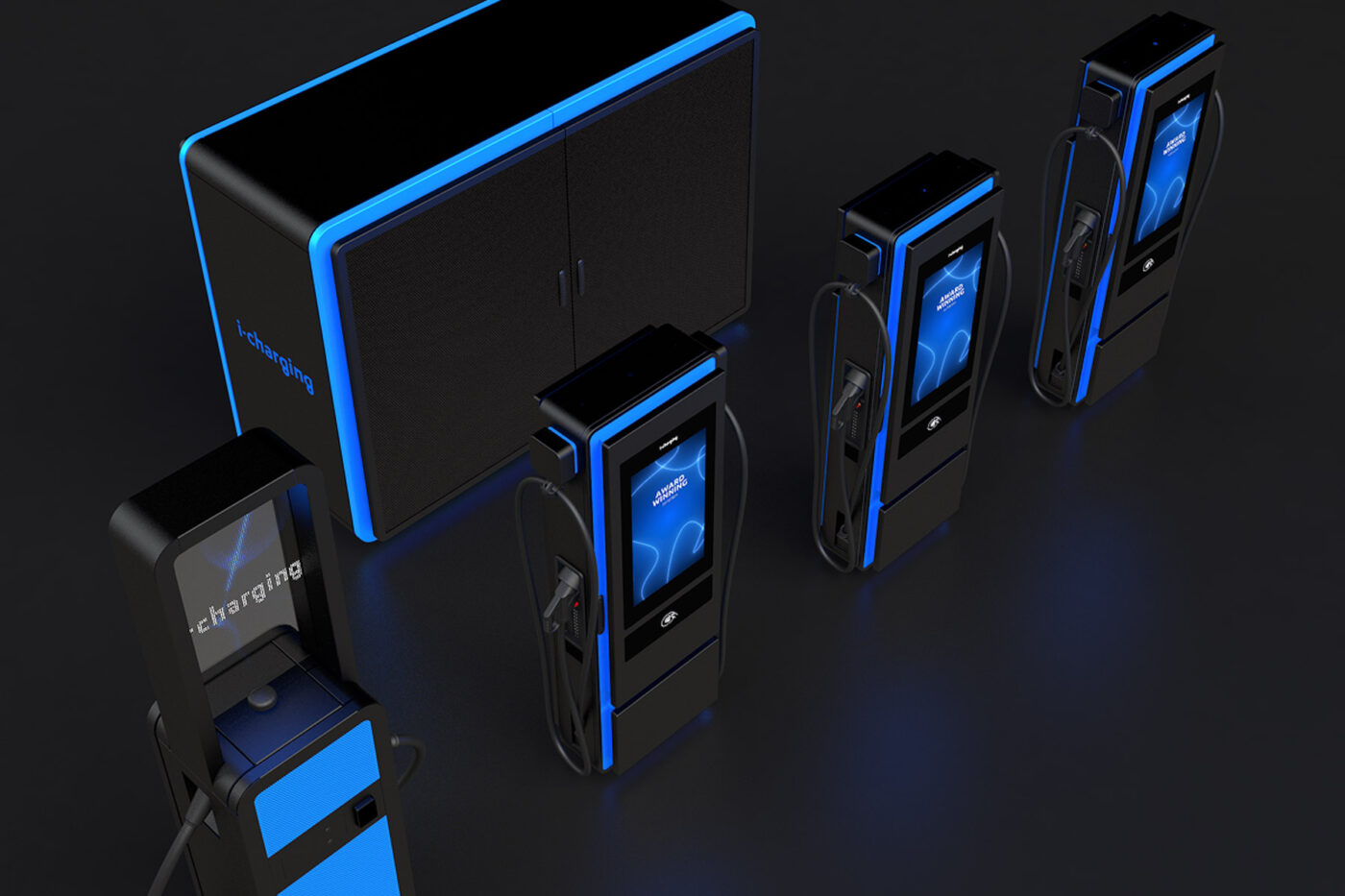
The MAX power unit can distribute its available power across connected charging points in 50 kW increments, as stated by the manufacturer, which is based in Porto. The system uses a split-unit design: a central power unit supplies multiple connected charging stations with the required direct current.
Key specifications at a glance: MAX supports vehicles with up to 1,000 volts and operates with up to 97% system efficiency. The power unit’s 1.6 megawatt power output can, as mentioned, be distributed across charging points in 50 kW increments. Each charging point can deliver up to 800 amperes of charging current (using a liquid-cooled CCS cable), while with MCS, this increases to up to 1,500 amperes. The operating temperature ranges from -30 to +50 degrees Celsius, and MAX supports OCPP 1.6 and 2.0.1 for backend system integration. First deliveries are planned for the third quarter of 2026.
With its unique design and individual components, such as the charging stations, the MAX power unit aims to address several ‘critical site constraints’ faced by charge point operators (CPOs) today. These include grid capacity constraints, limited on-site space, and flexibility in layout—requirements for an electric vehicle charging park on a greenfield site differ from those for a retrofitted charging system in an existing vehicle depot. Nevertheless, MAX allows for a unified hardware and software system to be used across all scenarios.
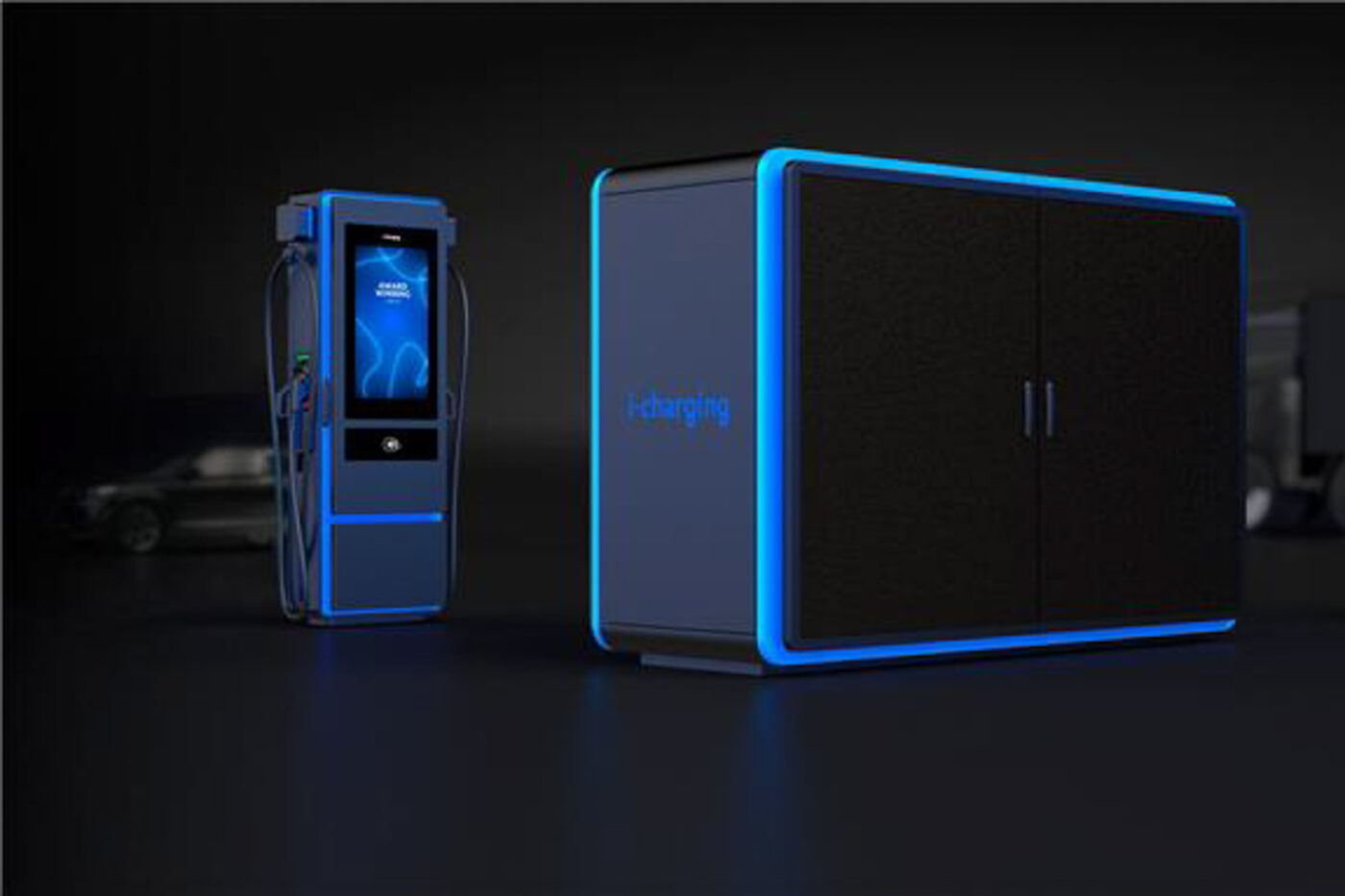
With conventional high-power charging systems, operators ‘make critical decisions upfront,’ explains i-charging, such as the required system power, charging standards, or the number of charging points. “When fleet composition changes, vehicle capabilities advance, or business models shift, traditional infrastructure requires replacement or limits operational flexibility,” the Portuguese company states—and aims to change this with the MAX system. Supported charging standards include CCS, NACS, GB/T, and MCS. The system is also retrofittable and adaptable—for example, if today’s electric trucks with CCS charging connections are replaced by MCS-compatible vehicles in the future. In such cases, not only can a different charging cable be fitted, but the power output can also be adjusted without replacing core systems.
“Operators can deploy mixed configurations serving vehicles via CCS alongside heavy-duty trucks via MCS from a single power cabinet, with the flexibility to adjust output configurations as fleet composition evolves,” the announcement states. “For public hub operators managing diverse vehicle types, this flexibility proves essential. A single MAX installation can serve passenger vehicles, delivery vans, and electric trucks simultaneously, with the ability to reconfigure user interface types and connector standards without replacing power infrastructure. Public transport operators can integrate pantograph charging systems for electric bus operations within the same platform.”
As different customer groups have varying requirements for their charging stations, i-charging offers tailored units for this purpose. For public charging parks, such as those for electric cars, the MAX power unit can be connected to up to four of the Portuguese company’s well-known ‘Blueberry’ models. A ‘Blueberry’ charging station features two connections, automatic cable management, and a 32-inch display. For charging heavy-duty vehicles, the MAX power unit can be connected to up to eight ‘i-light’ stations, each with a single connection—either CCS or MCS. These stations are taller and feature a 37-inch ‘transparent’ display. “The transparent display technology, combined with up to 1.6 MW per MCS output, addresses the specific requirements of commercial vehicle operations,” i-charging states.
Mixed operation of ‘Blueberry’ and ‘i-light’ charging points on a single MAX power unit is also possible—for example, when both passenger cars and trucks need to be charged at one facility or when vehicles with higher power demands are added to the fleet over time. In such cases, ‘i-light’ units can be integrated into an existing system with ‘Blueberry’ charging stations without replacing the power unit.
The MAX system also uses i-charging’s ‘patented dynamic power allocation technology,’ which the company already uses for other charging solutions. “Rather than dedicating fixed power to each output, which creates bottlenecks when some vehicles require maximum power whilst others charge slowly, MAX distributes 1.6 MW intelligently across up to eight vehicles based on real-time demand,” the announcement explains. “For fleet operators, the dynamic allocation enables faster vehicle turnaround and maximised infrastructure utilisation. Public hub operators benefit from improved customer experience and increased revenue per installed kilowatt.”
“In the past seven years we’ve been listening to operators describe this challenge”, said Pedro Silva, CEO of i-charging. “They need infrastructure today, but their business will evolve. Fleet composition changes. New vehicle technologies will emerge. MAX was designed around a simple principle: your infrastructure should grow with your operation, not constrain it.”
Source: Information via email

0 Comments