


Fraunhofer ILT identifies lasers as a key technology for Solid-State batteries
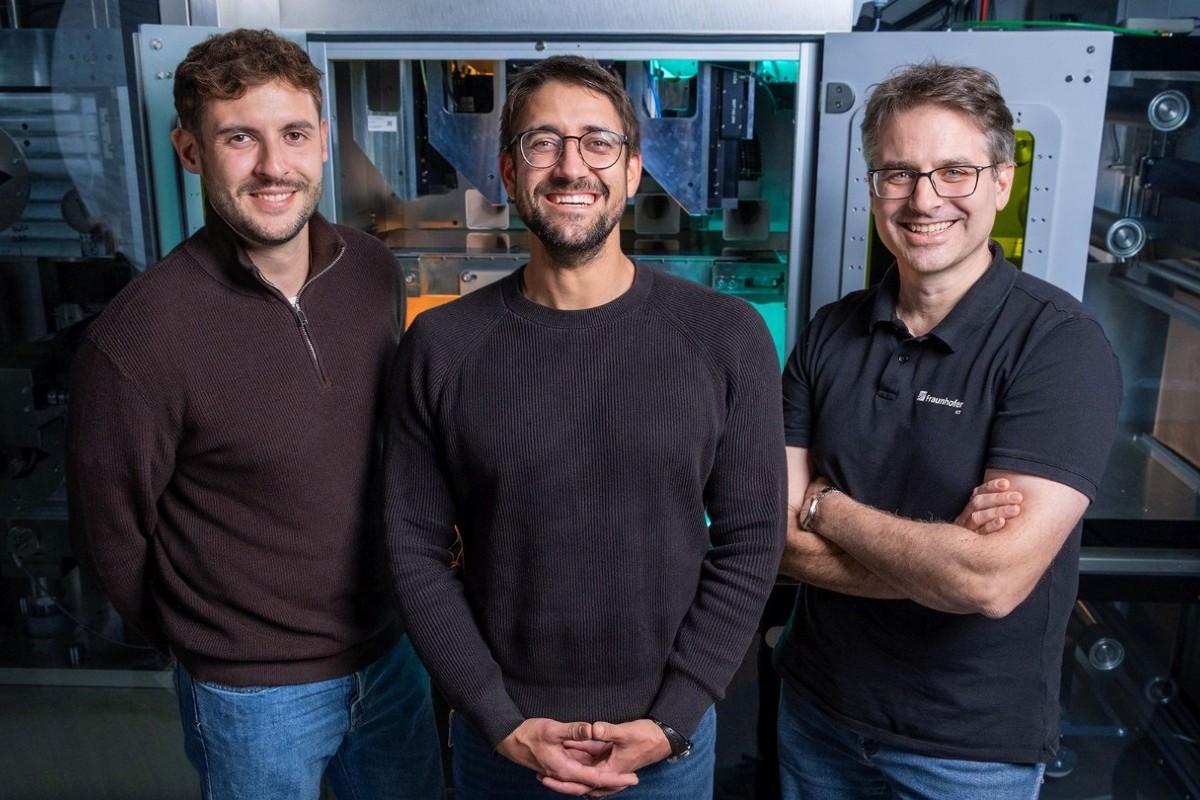
Lithium-ion batteries with liquid electrolytes are reaching their physical limits, which is why research into solid-state battery cells is underway worldwide. Fraunhofer ILT shares the view that batteries with solid electrolytes hold significant potential: “They promise higher energy densities thanks to lithium metal anodes, greater safety and a wider temperature window thanks to solid electrolytes, as well as new degrees of freedom in cell design,” as Fraunhofer experts state in a technical article. However, the path from promising laboratory results to industrial production is a long one – and laser technology could play a decisive role in this transition.
“Materials such as lithium metal and sulfide-containing electrolytes require new process strategies, and manufacturing requires investment in specialized dry room or inert gas environments. Laser technology can make a decisive contribution, for example through selective sintering of solid electrolytes, targeted structuring of interfaces, and contact-free cutting of ductile metals,” explain researchers at Fraunhofer ILT. This could position lasers as a key technology in the shift from laboratory cells to industrial solid-state batteries.
Three bottlenecks for industrialisation
“Solid-state batteries will exist alongside conventional lithium-ion cells for the foreseeable future and will primarily serve particularly demanding applications in the automotive industry, such as the luxury vehicle market,” says physicist Stoyan Stoyanov from the Cutting Group at the Fraunhofer Institute for Laser Technology ILT. However, significant hurdles must first be overcome for industrial implementation. Handling lithium-metal anodes presents particular challenges: the material is extremely sensitive to processing, according to the experts. “It reacts strongly with oxygen and moisture, easily forms passive layers, and can ignite under mechanical stress. Conventional cutting or rolling processes quickly reach their limits here.”
Even solid electrolytes are not straightforward to handle: oxide-ceramic materials such as lithium lanthanum zirconate (LLZO) must be sintered at around 1,200 °C. During this process, Fraunhofer ILT reports frequent lithium losses and the formation of secondary phases. Such losses are not only a technological issue but also an economic one, as they render expensive raw materials unusable. While so-called sacrificial powders can partially compensate for these effects, the process remains complex and highly sensitive to even the slightest fluctuations, according to the scientists.
Fraunhofer ILT identifies the interface between electrolyte and anode as another bottleneck: “High interfacial resistances reduce performance and increase the risk of inhomogeneities during lithium plating and stripping. Mastering this interfacial chemistry is the foundation for stable and long-lasting cells,” explains Florian Ribbeck from the High-Temperature Functionalisation Group at Fraunhofer ILT.
Furthermore, even in established lithium-ion production lines, high scrap rates remain a pressing issue. “This problem is exacerbated in solid-state cells, as there are currently no closed recycling paths for the materials, which are not yet standardized,” says Ribbeck. “Each defective prototype therefore means not only economic damage but also the loss of valuable raw materials. “Laser-based processes can help to increase process stability and avoid waste from the outset.”
Oxide-ceramic solid electrolytes
A promising research approach at Fraunhofer ILT involves processing oxide-ceramic solid electrolytes such as the aforementioned LLZO. This material exhibits high electrochemical stability towards lithium-metal anodes and is less reactive to environmental conditions compared to sulphide-based electrolytes. “At Fraunhofer ILT, we are investigating how laser radiation can be used as a locally limited and highly dynamic energy source to densify LLZO layers in a targeted manner,” Ribbeck continues. “The advantage lies in rapid heating combined with controlled cooling. This reduces lithium losses and avoids temperature incompatibilities within the cell assembly.”
Initial experiments have demonstrated homogeneous densification, although crack formation and delamination remain key research challenges. In addition to LLZO, NASICON-type electrolytes such as lithium aluminium titanium phosphate (LATP) are being studied. These materials share similar processing requirements but exhibit different stability windows.
Laser structuring to improve interfaces
Tim Rörig from the Surface Structuring Group at Fraunhofer ILT, together with Florian Ribbeck, is also exploring how the interface with lithium-metal anodes can be optimised through targeted laser structuring. Using ‘ultrashort laser pulses in the femtosecond range’, they introduce microstructures into the surface of the solid electrolyte. These structures are intended to increase the effective contact area and promote a more uniform current distribution, potentially reducing interfacial impedance. “We have shown that reproducible structures in the range of around 30 µm can be generated,” says Rörig.
However, the results so far also highlight the complexity of the interaction. “While the structured surfaces showed improved wetting in individual cases, the overall resistance of the cell sometimes increased.” The team suspects that both changes in the crystal structure and process-related defects play a role. Using Raman spectroscopy and other analytical methods, the project participants are currently characterising the structural changes in the crystal lattice after laser processing. In parallel, they are investigating targeted lithium plating to better control contacting, as well as concepts for ‘anode-free batteries’, where lithium is deposited only during the first charging process.
Lasers for cutting lithium-metal foils
Another focus at Fraunhofer ILT is the cutting of lithium-metal foils for use as anode material: “Lithium metal is considered a key component for the next generation of high-energy cells, but it poses considerable challenges for manufacturing technology,” explains Stoyan Stoyanov. “The material is soft, highly adhesive, and extremely reactive. Conventional mechanical processes such as rotary knives or stamping quickly lead to smearing, sticking of the tools, and inhomogeneous cut edges.” Additionally, mechanical processes are limited to linear cutting geometries, which severely restricts flexibility in cell design. Laser technology offers new possibilities here. As a contact-free and wear-resistant process, it enables precise cuts and allows for flexible contours.
However, both mechanical and laser-based processes require processing exclusively in enclosed inert gas or dry-room atmospheres.
The challenge remains complex
“Argon is particularly suitable because it prevents oxidation and thus enables uniform edges, but it is expensive,” explains Stoyanov. “Nitrogen is significantly cheaper, but it leads to the formation of lithium nitrides. Atmospheres containing water, on the other hand, promote oxides and hydroxides.” Such byproducts increase the energy requirements of the process and can simultaneously degrade the electrochemical properties of the electrode.
Studies are already underway to develop more cost-effective process environments while better controlling the interactions at the lithium surface. “These approaches are still at an early stage. In our lab demonstrator, we therefore use pure argon with a dew point below –70 °C, although other atmospheres are technically feasible.” In parallel, the researchers are working on concepts to integrate laser processes into scalable production environments, for example using compact mini-environments that can be selectively purged with inert gas.
“Laser processes continue to gain importance”
When transferring solid-state batteries from the laboratory to industrial production, the current production of lithium-ion cells serves as a valuable reference, according to Fraunhofer experts. “Many process steps, from electrode production and cell assembly to finishing, are comparable in principle, although the requirements for solid-state cells are significantly higher.” Laser technologies are already established in lithium-ion production. They are used, for example, in laser slitting for the precise longitudinal cutting of electrode foils, laser drying to remove solvents quickly and energy-efficiently, or laser notching for trimming current collectors.
“That’s why laser processes are becoming increasingly important,” Stoyanov is convinced. “Their contact-free, selective energy input enables high-precision machining that can be integrated into protected environments such as dry rooms or mini-environments. This makes the laser a tool that can be used to meet material requirements and take strict environmental conditions into account.”
The Fraunhofer Institute for Laser Technology ILT plans to consolidate its expertise along the entire value chain of solid-state batteries. The focus is on ‘laser-based manufacturing steps that are crucial for both material development and later industrialisation’. These include laser sintering of solid electrolytes, laser structuring to optimise interfaces, laser cutting of lithium-metal foils, and processes for contacting and integrating cells into the assembly.

0 Comments