


Alpitronic unveils new generation of the Hypercharger HYC400
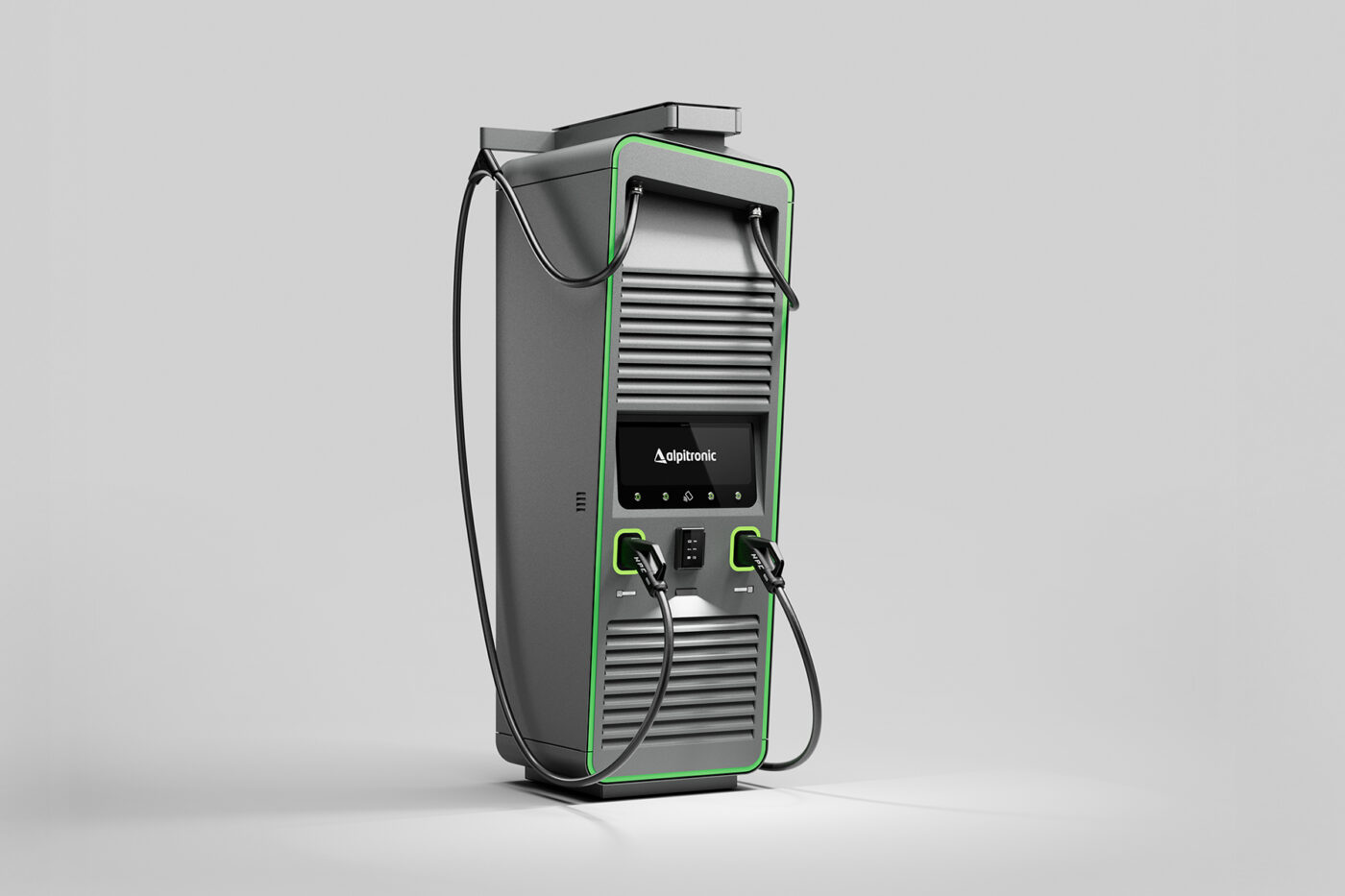
The centrepiece of the new generation is a front-facing display positioned lower on the charger. Its size has increased from 15.6 to 22 inches and it now functions as a touchscreen. Four physical buttons remain below the display, while Alpitronic has also redesigned the user interface.
On the previous HYC400, the payment terminal was located to the right of the screen. In the HYC400 Series 2, it has been moved below the touchscreen. At the same height, the charging connectors are positioned on the left and right – or on one side only, depending on the configuration. The system is complemented by floor lighting beneath the payment terminal that illuminates the area in front of the charger, while integrated sensors automatically adjust the brightness of the display and lighting.
With the new generation of its high-power charger, Alpitronic is placing greater emphasis on accessibility. According to the manufacturer, the HYC400 Series 2 provides barrier-free access to the operating elements in line with the DIN 18040-3 standard. In the previous HYC400, accessible operating elements and plugs were only available as an option, installed at a height of 1,050 millimetres in accordance with the same standard.
“In public charging operations, reliable and intuitive user guidance is as important as charging power in kilowatts,” says Philipp Senoner, CEO of Alpitronic. “With the HYC400 Series 2, we have placed an even greater emphasis on simple, self-explanatory operation. This improves the charging experience for all drivers while making operation more efficient.”
In practice, the limitations of the previous HYC400 can become apparent. If the charger is installed centrally between two parking spaces, wheelchair users may not be able to access the display to start the charging process if another EV is parked on that side. The HYC400 Series 2 could help address this issue.
However, challenges remain if the charger is positioned centrally behind two vehicles and the gap between them is too narrow to reach the operating elements. In such cases, the new model would not fully resolve the problem. Ensuring truly barrier-free access therefore also depends on how charging infrastructure is installed and operated. With the HYC400 Series 2, Alpitronic is at least offering a version of its high-power charger with a stronger focus on accessibility.
There are, however, almost no changes to the technical specifications. The new generation of the HYC400 retains the same dimensions as the previously known model, at 2185 × 732 × 663 mm. However, the Series 2 has a higher standby power consumption of < 100 watts compared to the previous HYC400, which is rated at 43 watts. While the HYC400 was offered with 3.5- and 5-metre charging cables, Alpitronic now provides only 5-metre cables for the HYC400 Series 2.
The maximum charging power remains at 400 kW and can still be distributed between the two charging points in 50-kW increments. The system is powered by up to four power modules, each providing 100 kW.
However, the new generation now uses the latest silicon carbide power stacks (SiC Stack Gen 2), which are already deployed in the company’s decentralised megawatt charging system HYC1000. Alpitronic has not disclosed specific technical advantages of the new stacks. Efficiency remains at the familiar level of up to 97.5 per cent for the company’s fast chargers.
While the previously offered HYC400 was limited to a maximum output current of 500 amperes (continuous) and 600 amperes (boost), the Hypercharger HYC400 Series 2 now supports a continuous current of 600 amperes. Both models operate within a voltage range of 150 to 1,000 volts.
However, the new generation of the Hypercharger does not replace the previous model. Both versions will remain available in Alpitronic’s portfolio across Europe, the company states. Operators can choose between the HYC400 and HYC400 Series 2 depending on site requirements.
Source: Information via email, alpitronic.it, linkedin.com
0 Comments