



First drive in the Kia PV5: Kia enters the electric van segment
When Kia presented its ‘Platform Beyond Vehicle’ (PBV) strategy two years ago, it signalled its intention to enter the light commercial vehicle market. Unlike many competitors, Kia’s PBV models are based on a dedicated platform and are complemented by proprietary software and vehicle-specific services. The objective is to establish a strong position in this segment.
The PV5 represents the first production model under this strategy. It is offered as a Passenger version for transporting people and as a Cargo variant designed for goods transport.
Distinctive design
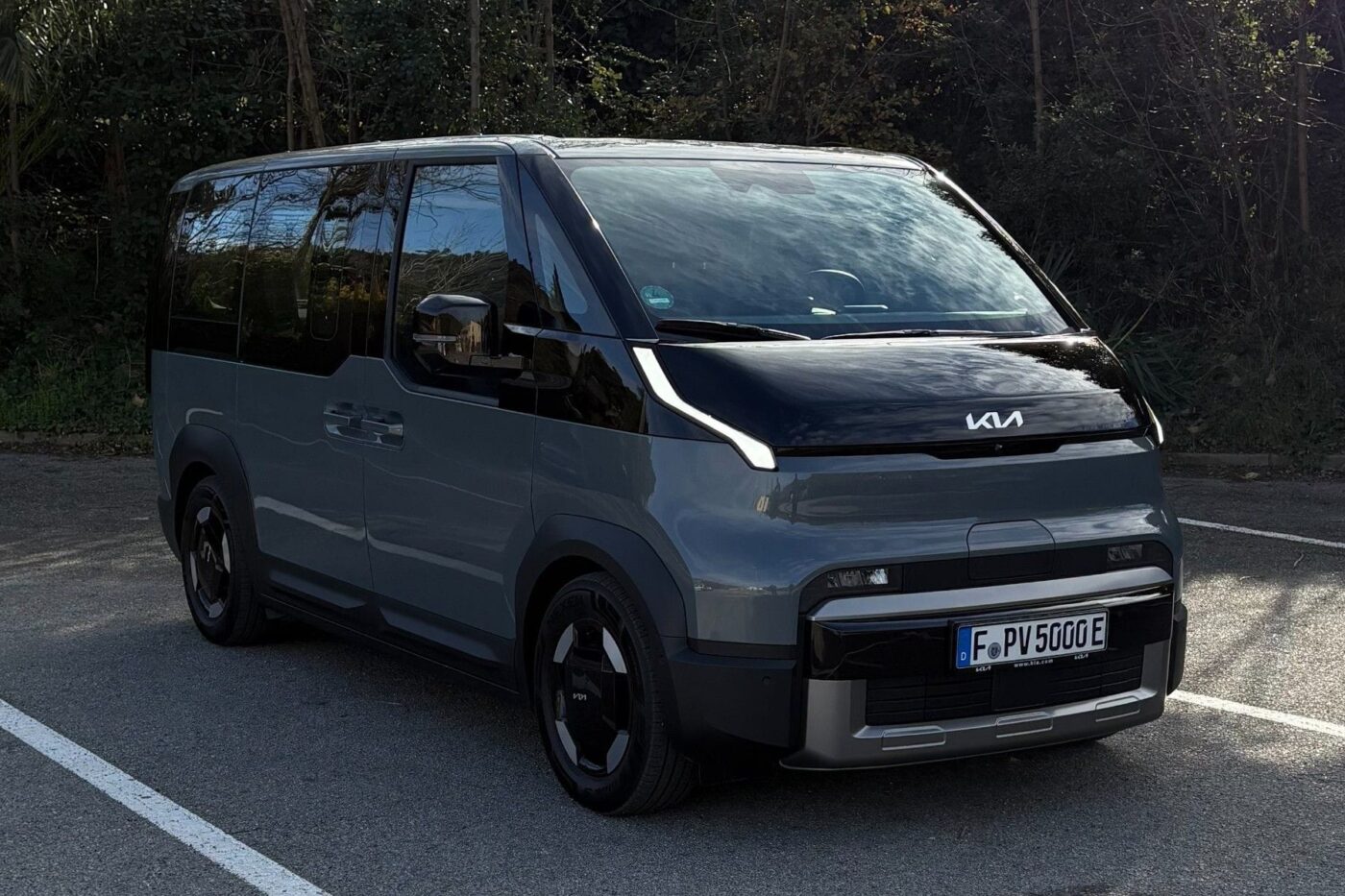
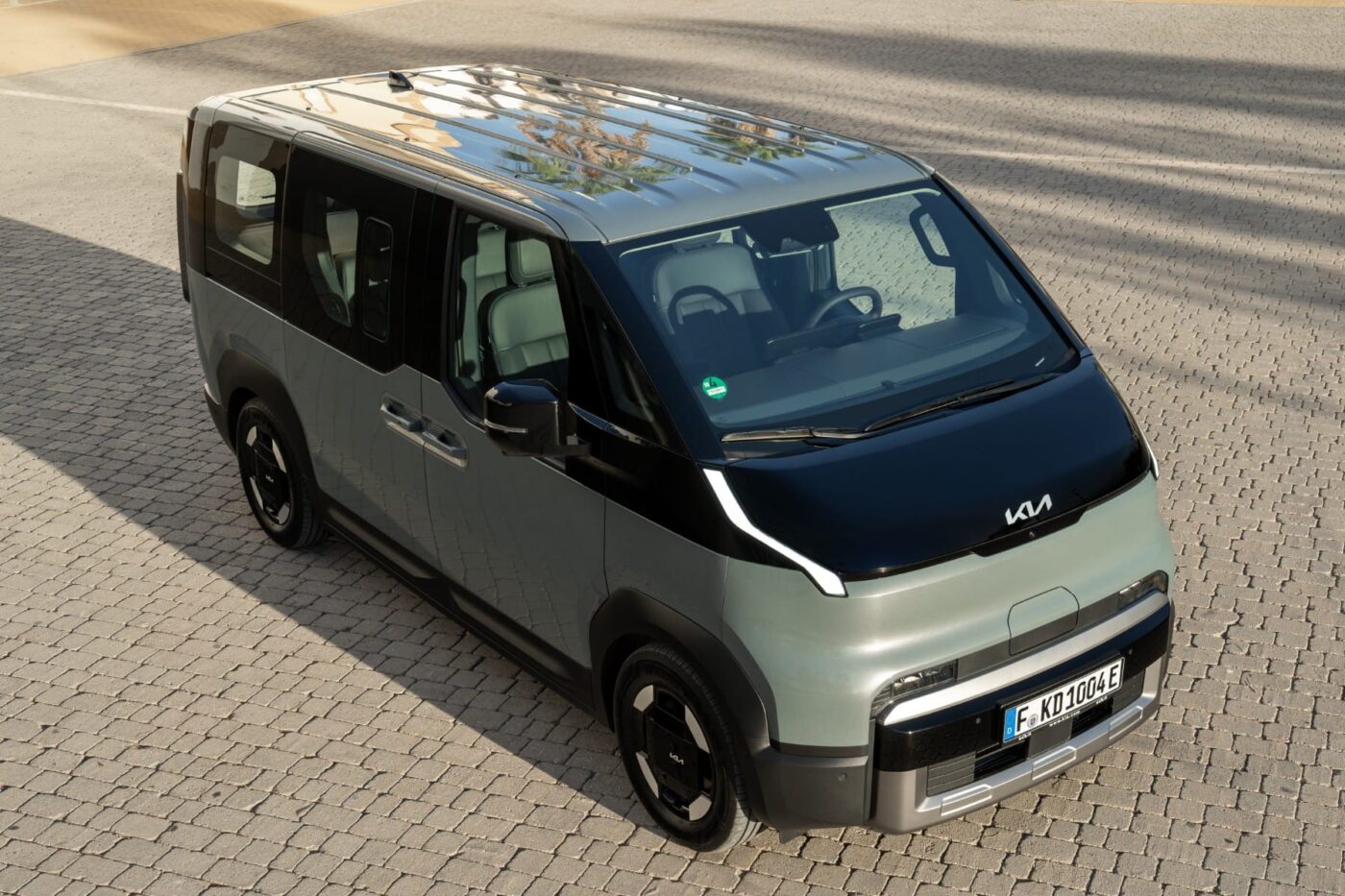
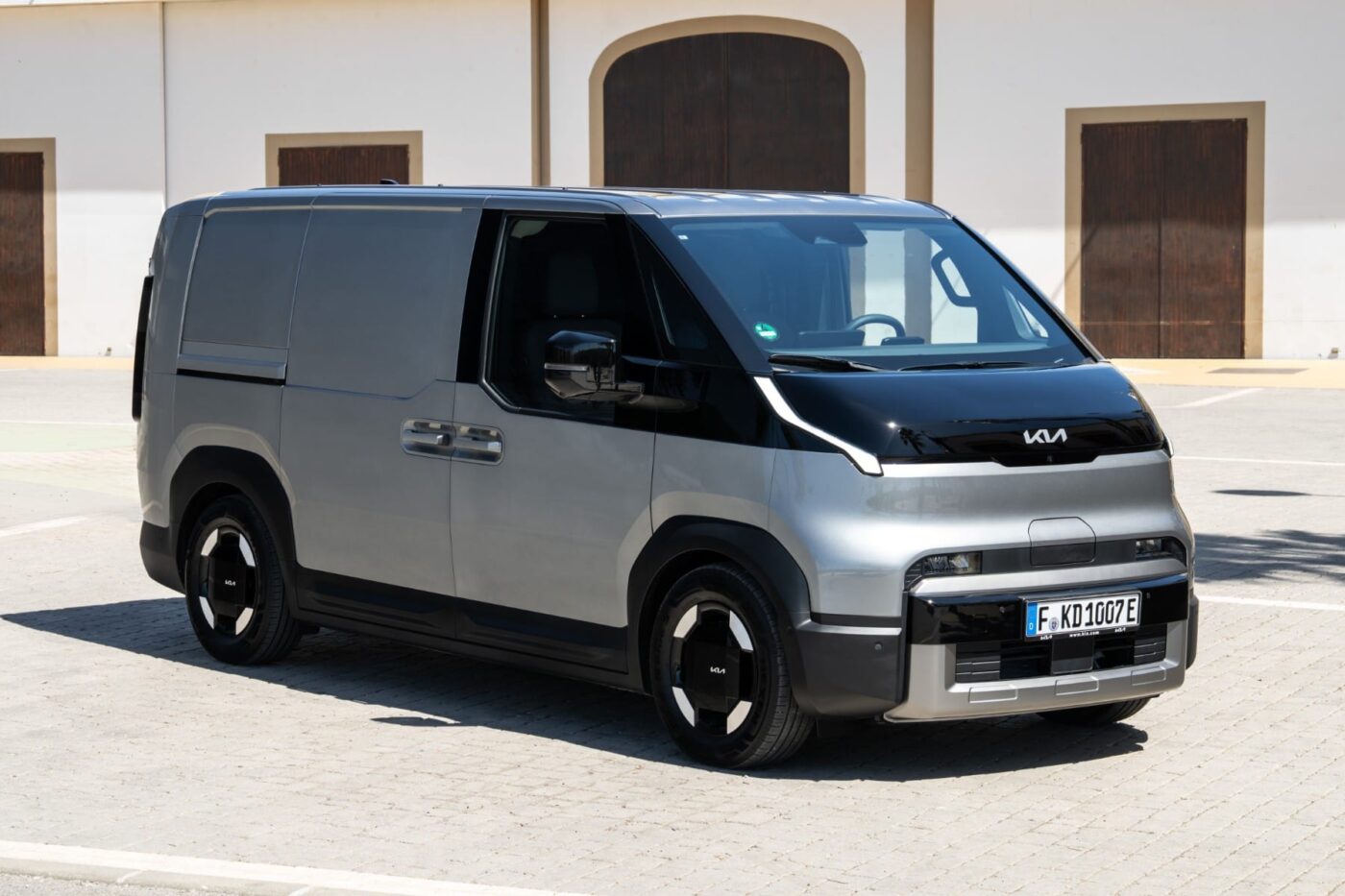
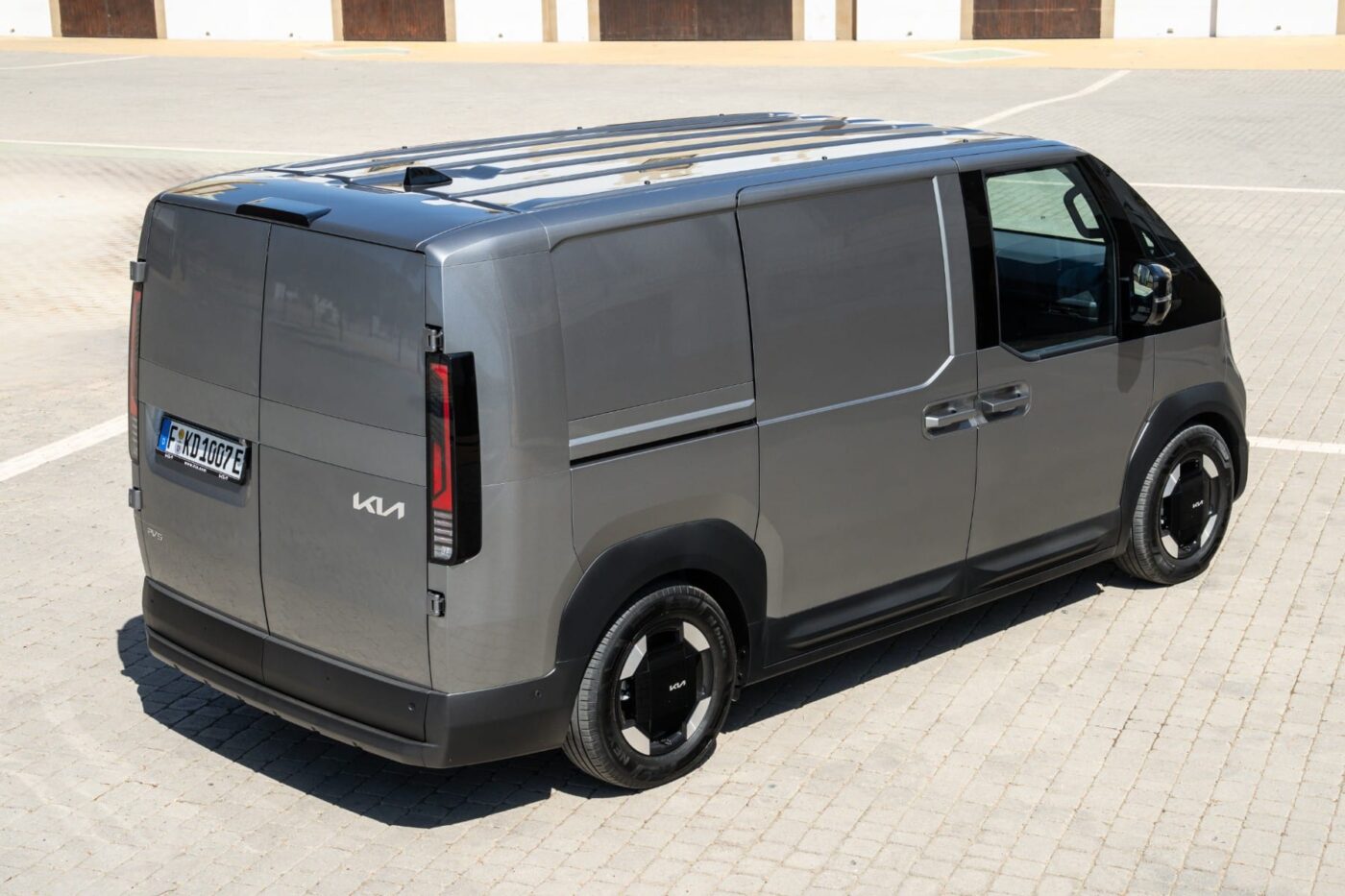
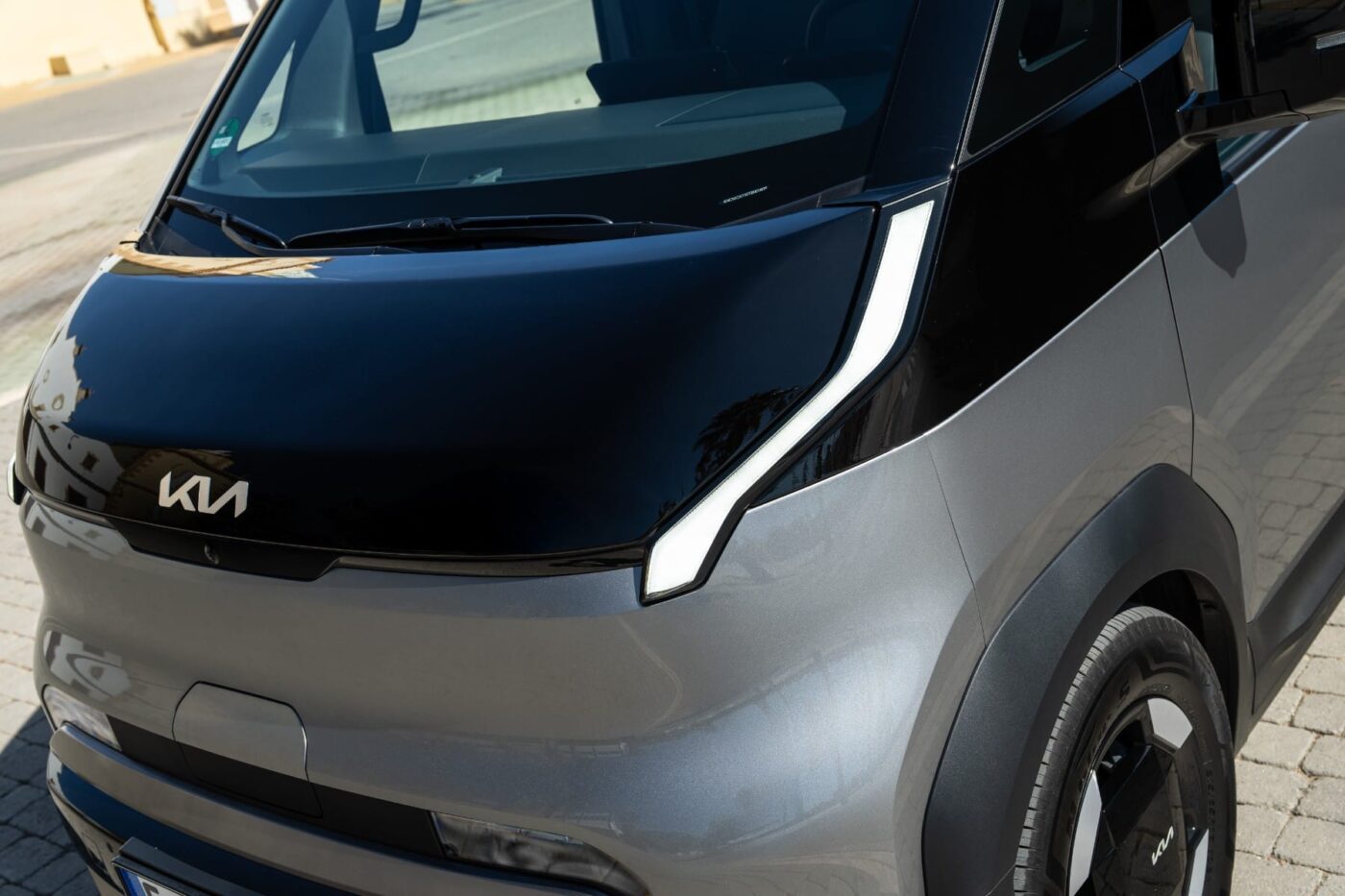
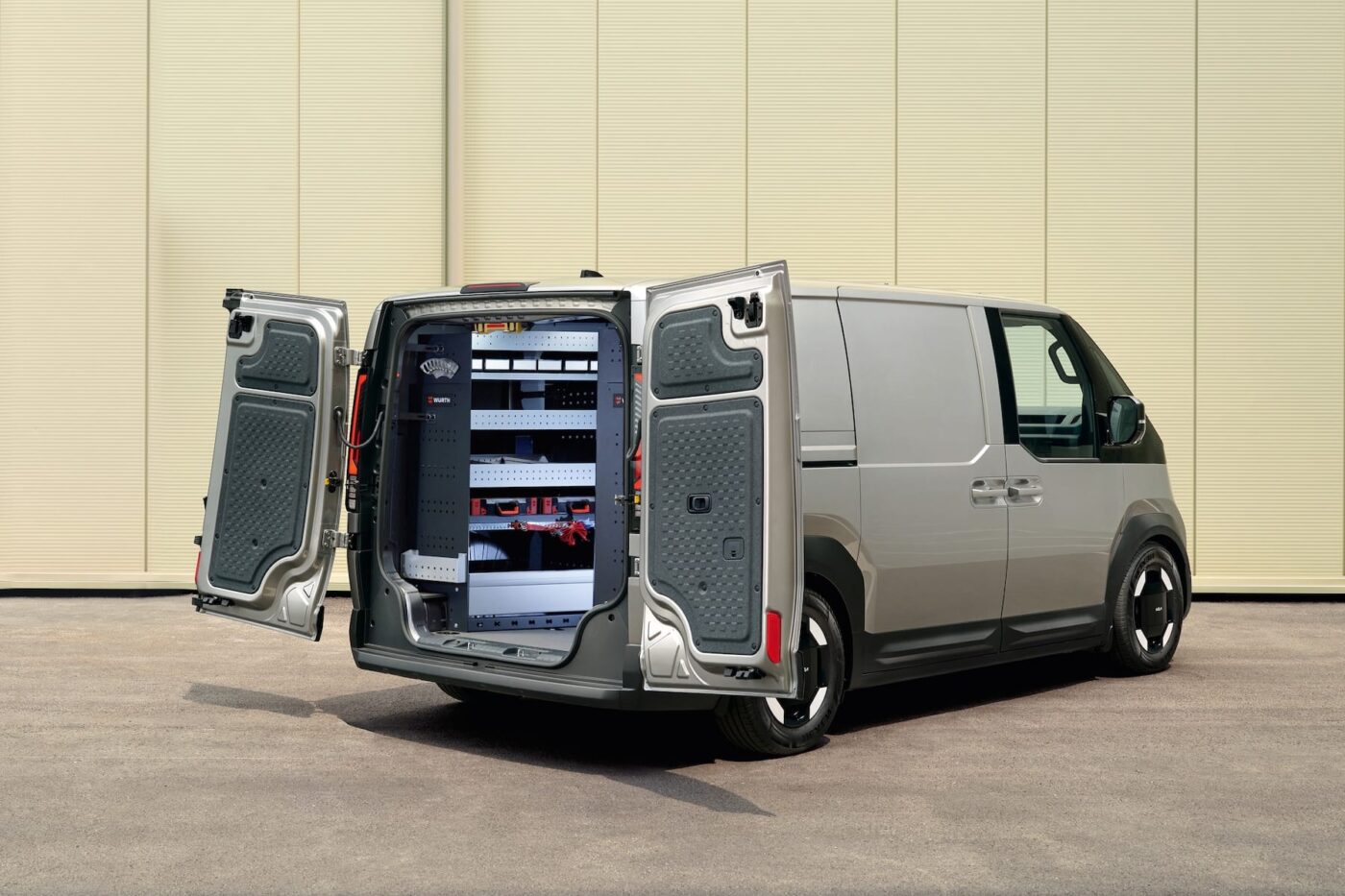
With the Concept PV5 and Concept PV7 studies – showcased, for example, at the IAA Transportation – Kia had already indicated that its PBV approach would be accompanied by a distinctive design language. The production version of the PV5, which we have now driven, adopts many of the previously previewed elements, including a largely enclosed front end and slim daytime running lights extending into the A-pillar. A further notable feature is the robust, three-piece front bumper. In the event of minor damage, individual sections can be replaced separately, which is intended to reduce repair costs.
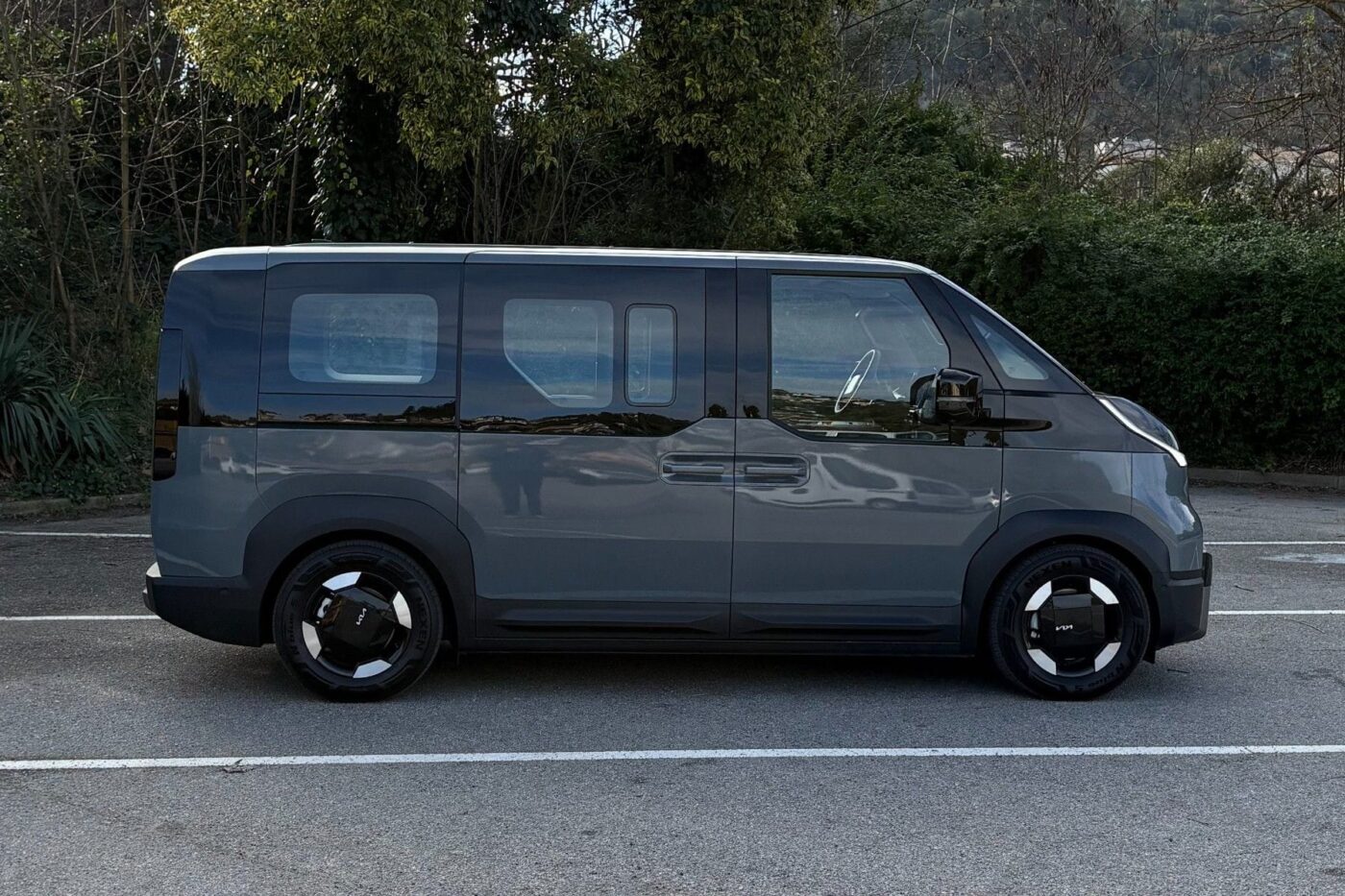
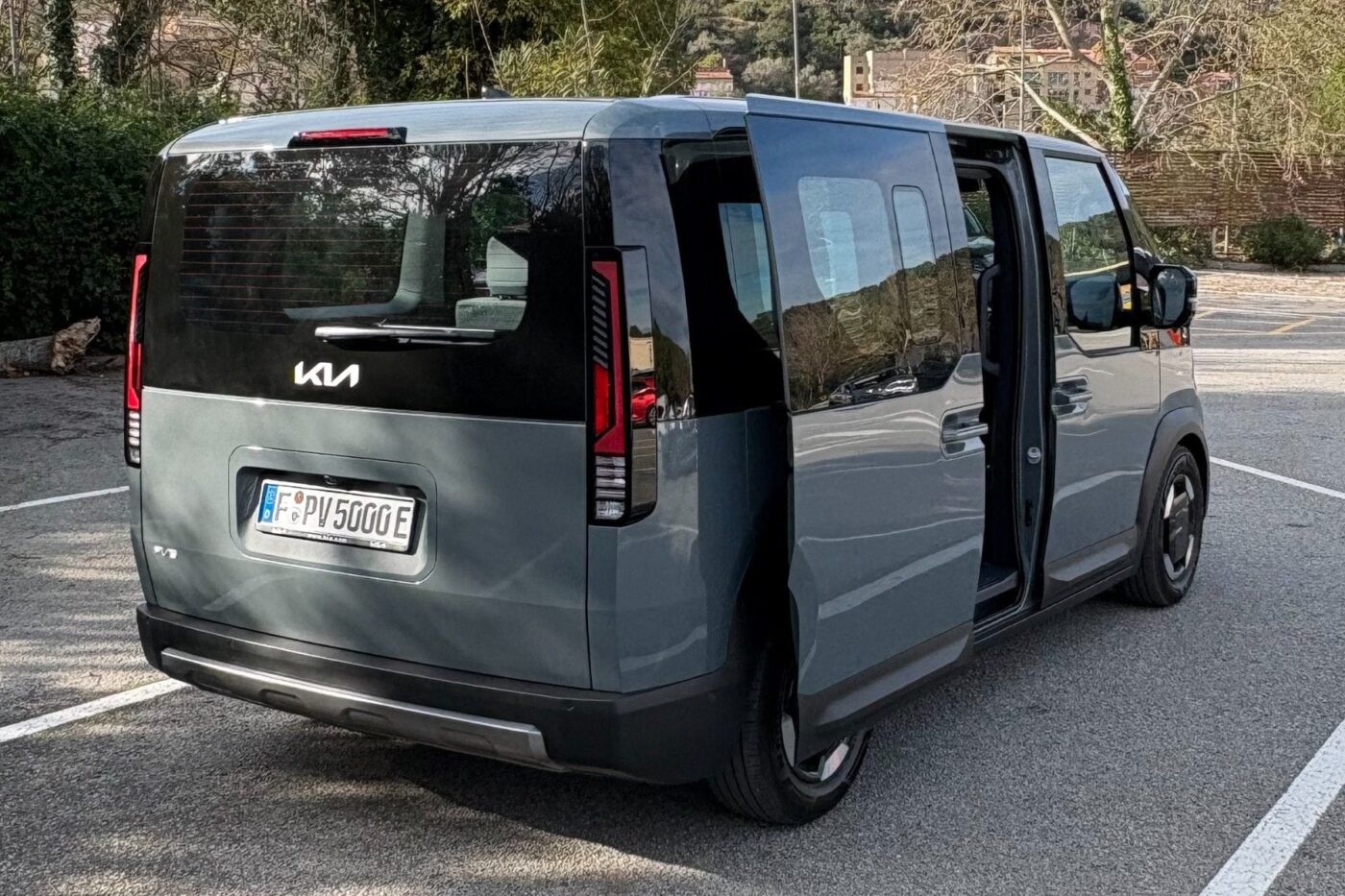
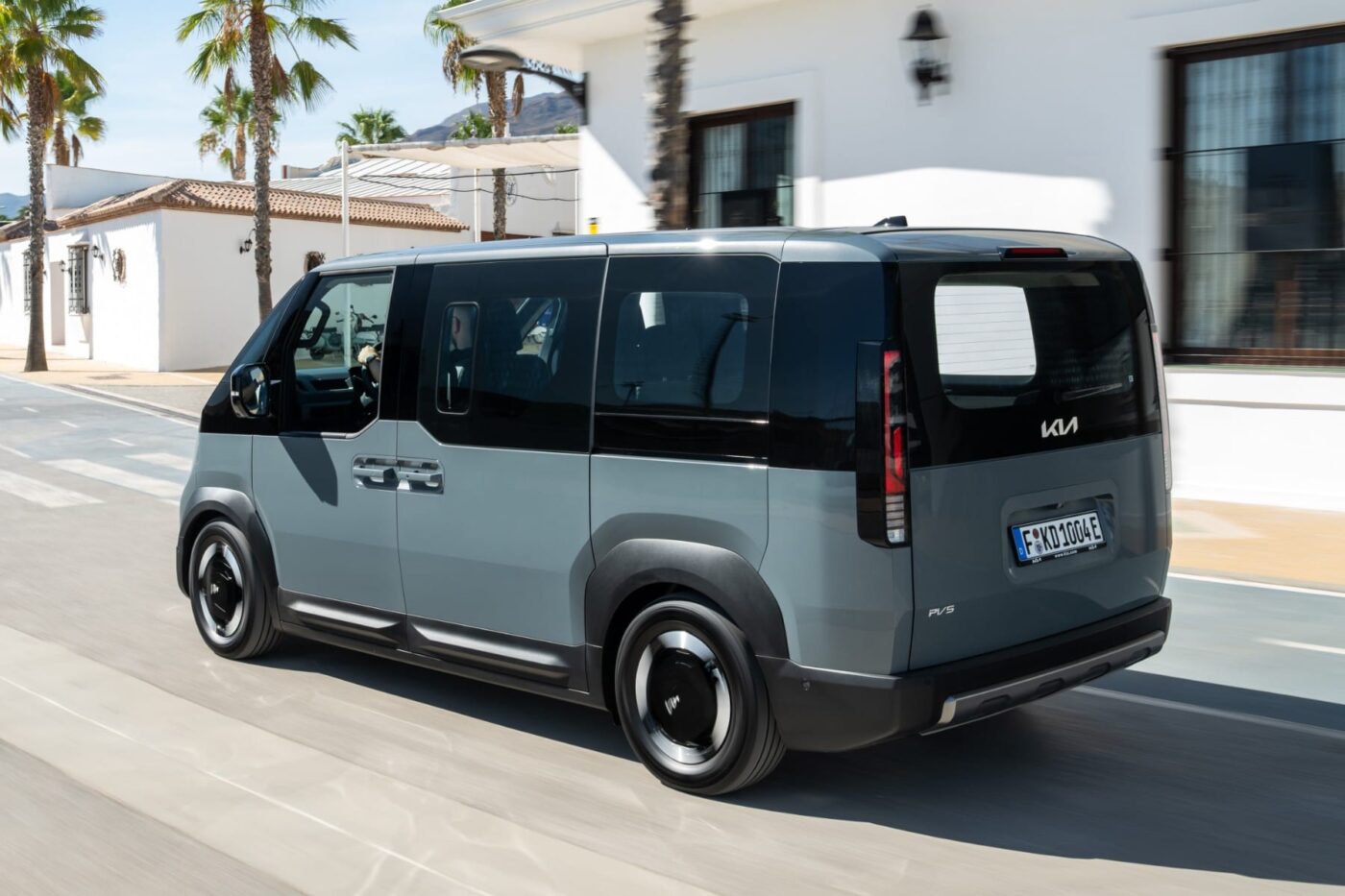
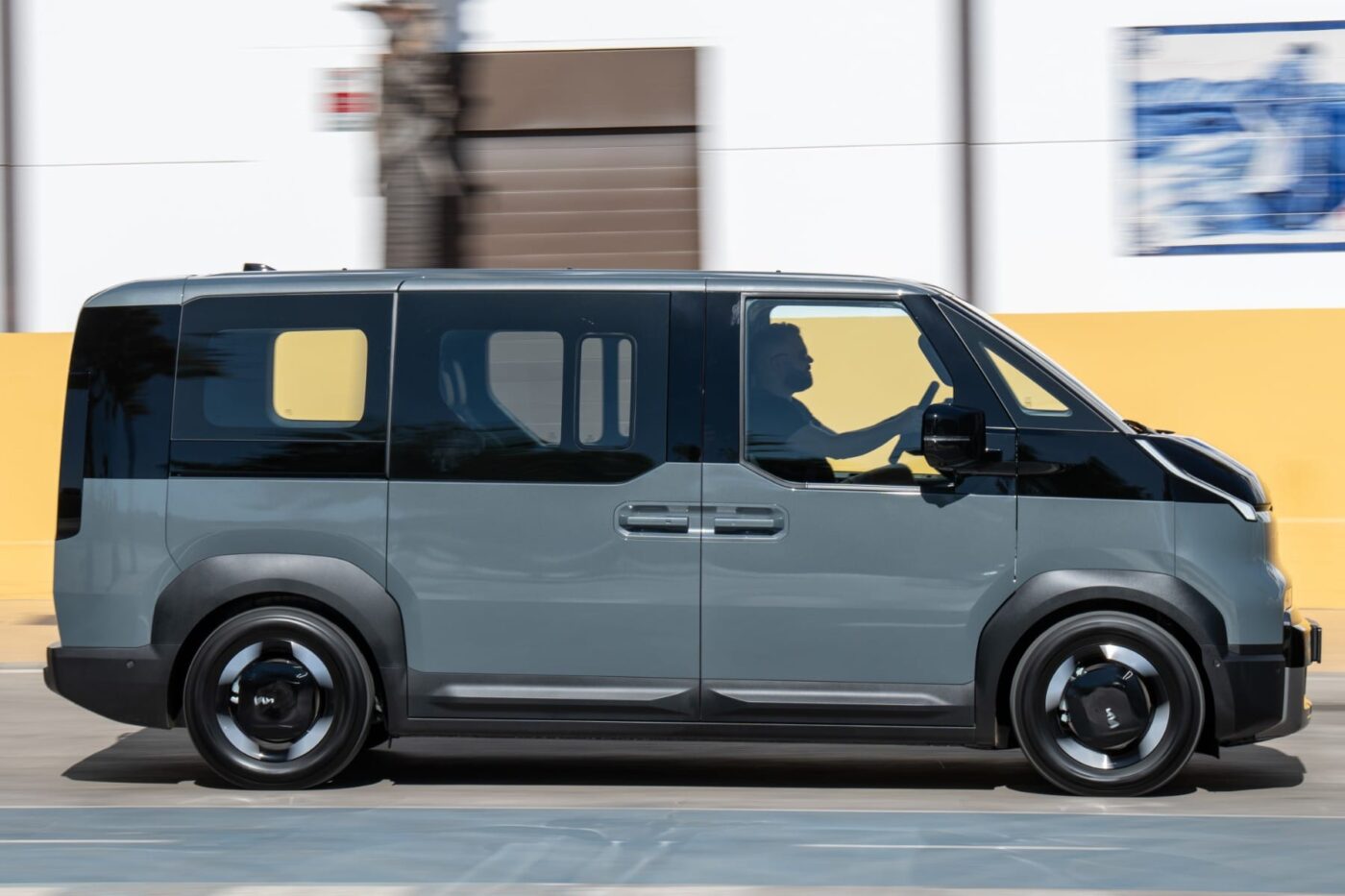
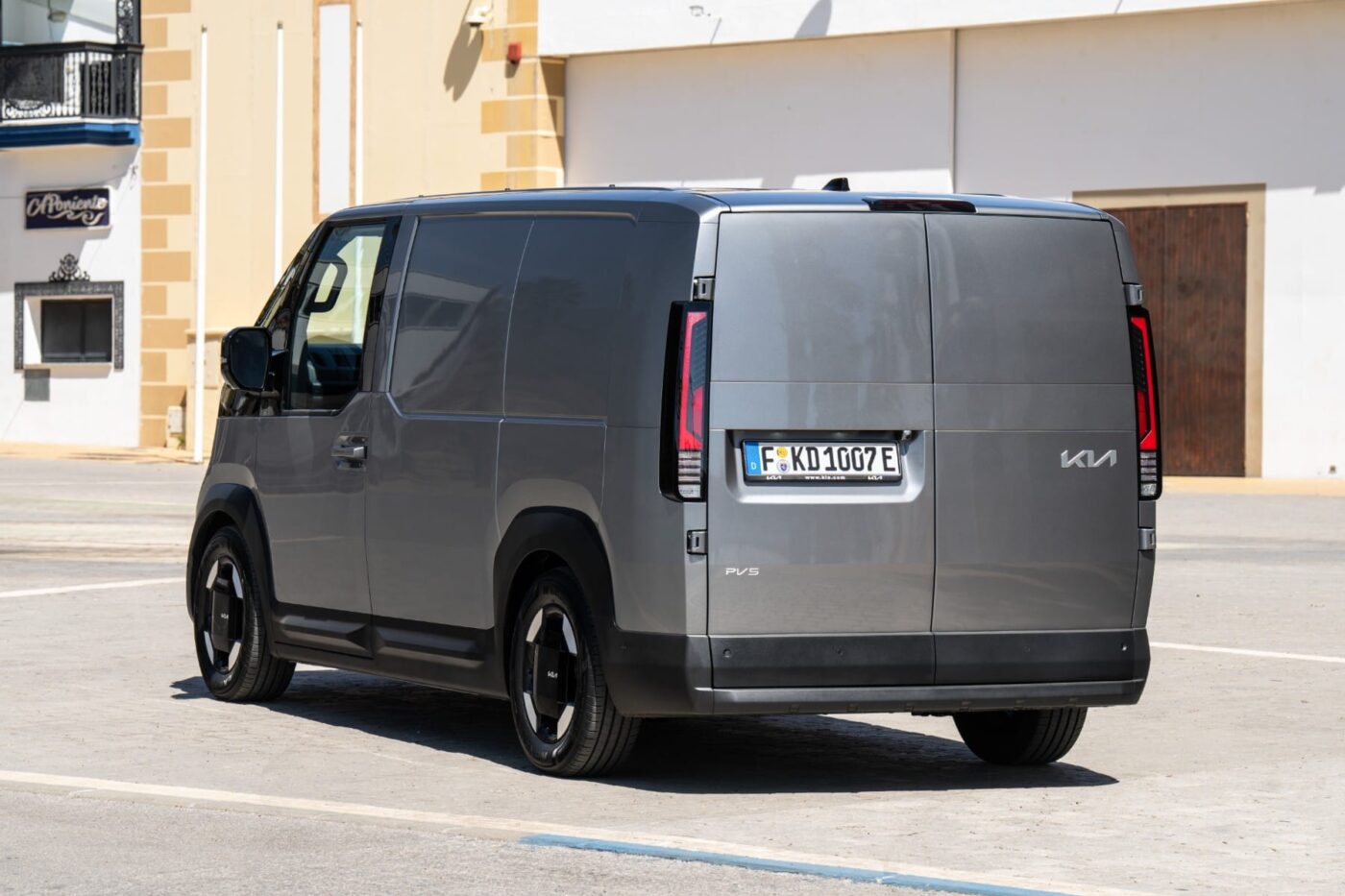
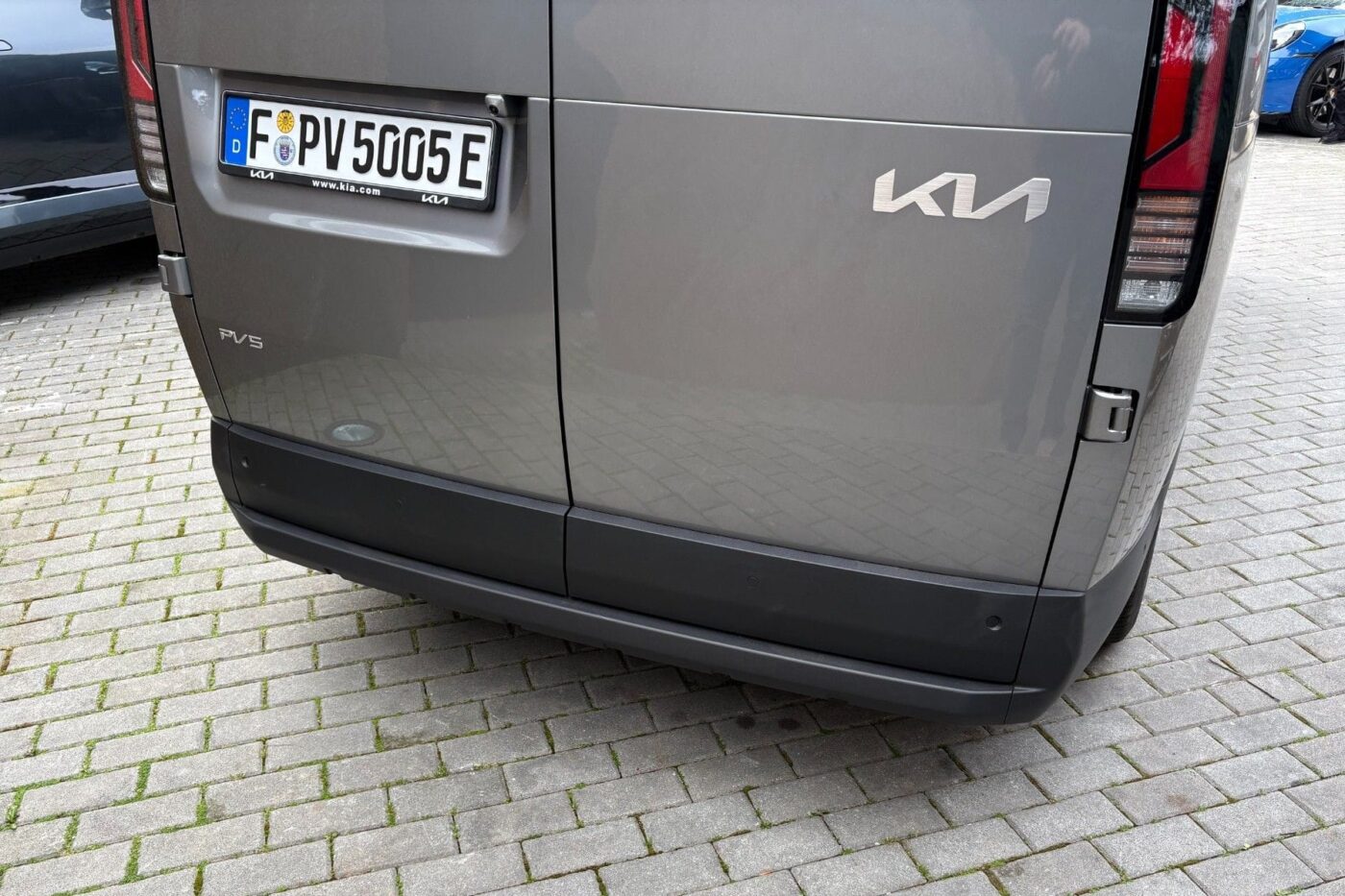
While the front section deliberately departs from the traditional van aesthetic, the rear remains more conventional. For cost reasons, Kia has opted for vertically arranged tail lights typical of the segment, which – unlike those on passenger cars – do not extend into the tailgate. In terms of proportions, the PV5 follows established commercial vehicle design principles: measuring 4.70 metres in length – comparable to the Volkswagen ID. Buzz with standard wheelbase – and standing 1.90 metres tall, its boxy silhouette is designed to maximise usable space in both the Cargo and Passenger variants.
Functional interior designed
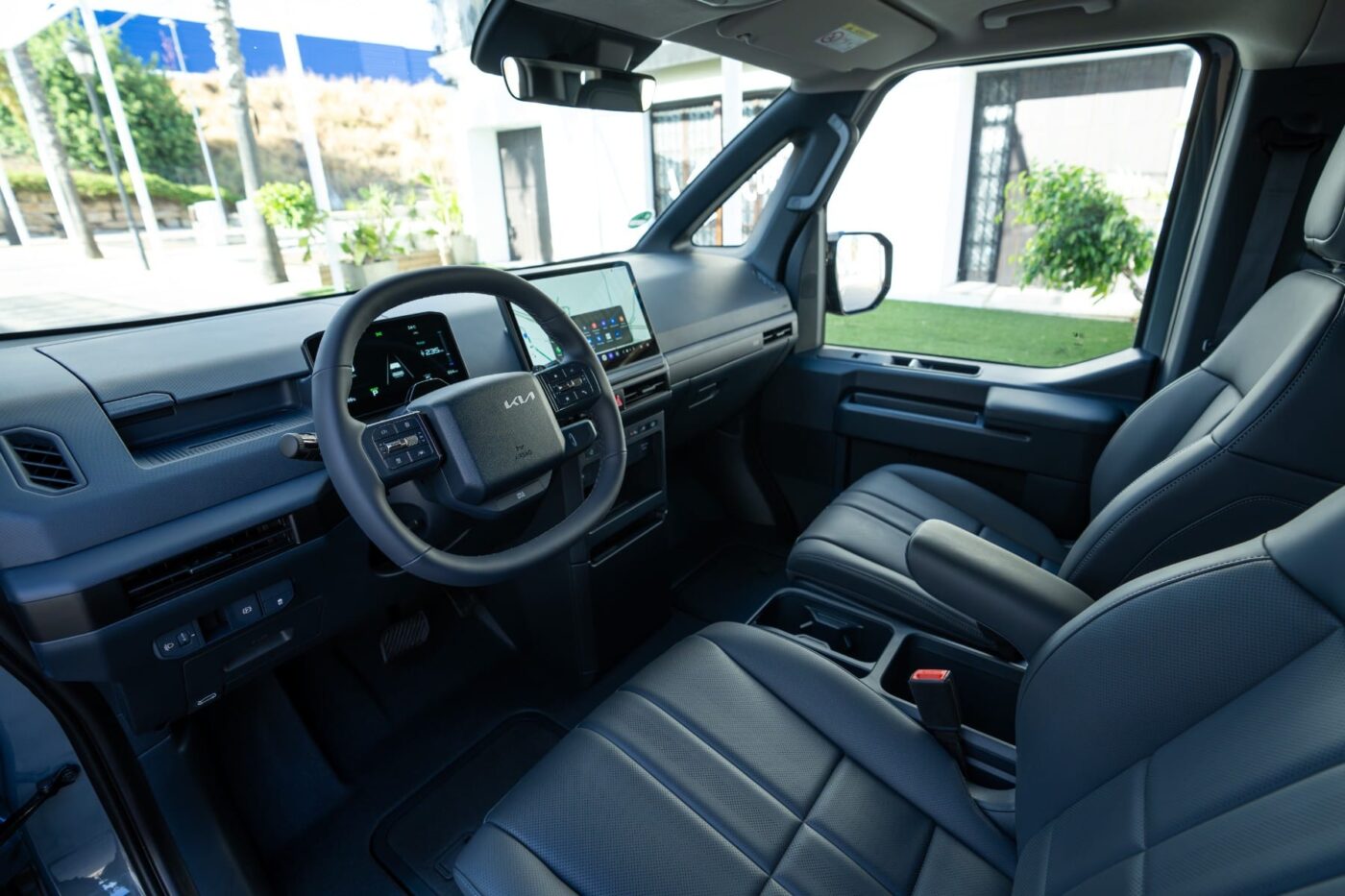
This functional approach continues in the interior. Despite the flat skateboard platform – more on that later – access is relatively high, and the seating position for the driver and front passenger is correspondingly elevated. As the drive components and power electronics are packaged beneath the short bonnet, and the commercial vehicle layout imposes additional constraints, there is limited scope for a lower front seating position. Further back in the cabin, however, the layout offers greater flexibility.
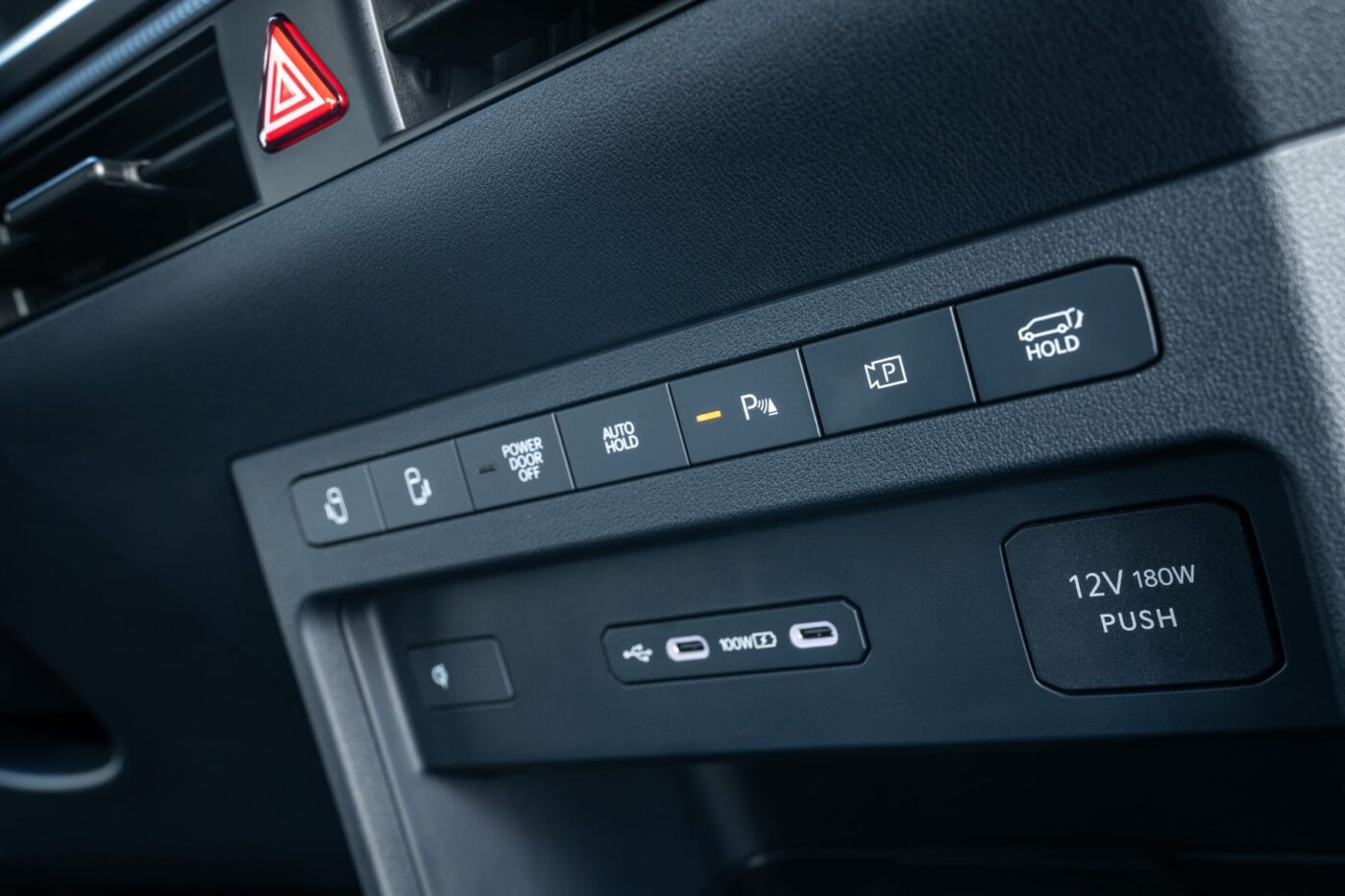
During the design process, Kia placed particular emphasis on providing the driver with the ‘best possible visibility’ to the sides. On entering the vehicle,the notably low lower edge of the windscreen is immediately apparent. In terms of materials, functionality takes precedence: hard plastics dominate, but they appear solidly finished and suitably durable for use in a commercial vehicle.
Familiar control layout, new software foundation
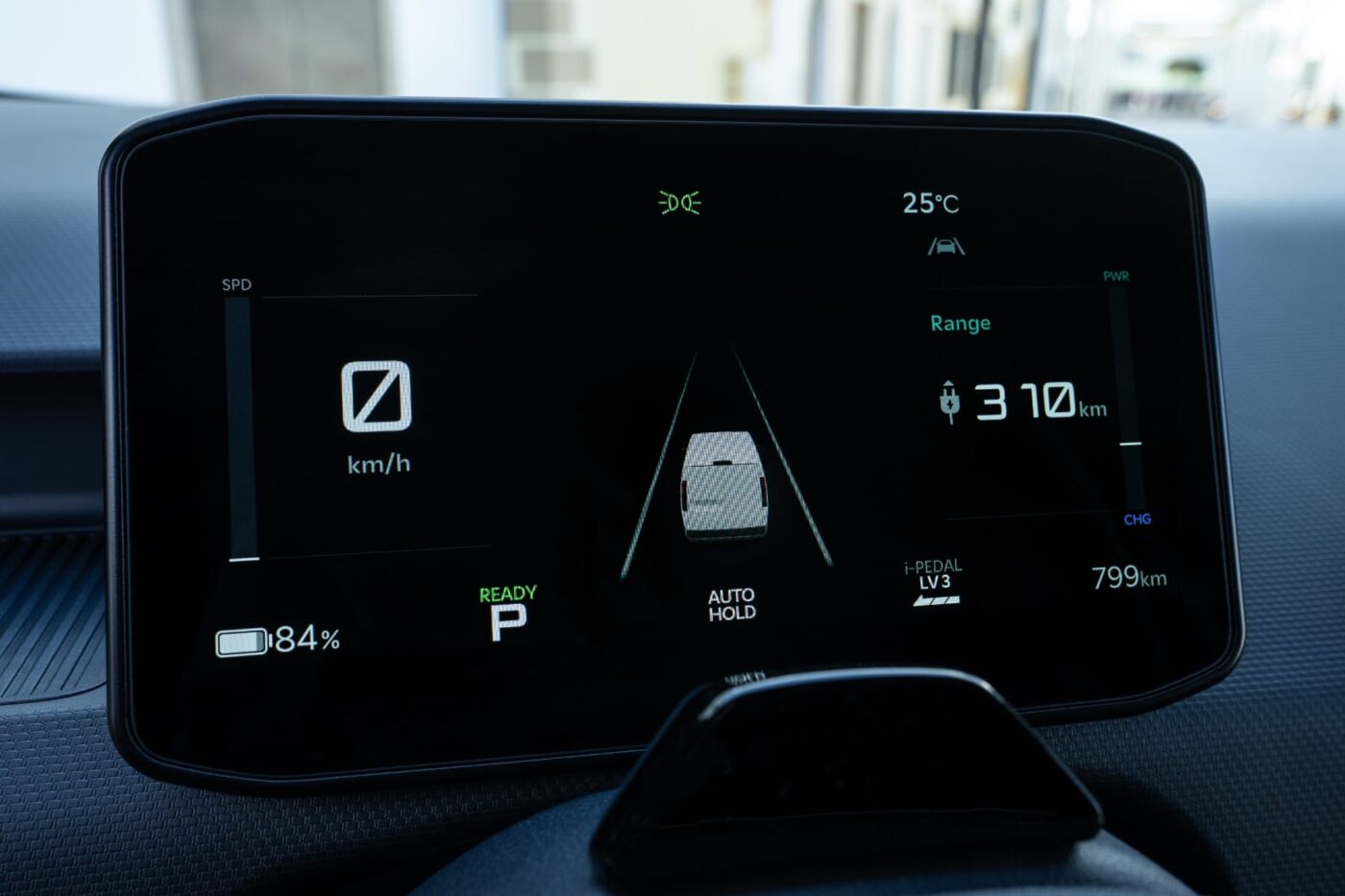
Drivers familiar with Kia’s electric passenger cars will quickly recognise the layout in the PV5. The steering wheel, control elements and the limited number of physical buttons in the cockpit largely follow the brand’s established design. The screen configuration, however, differs from recent Kia models: instead of a continuous display panel, the PV5 features a separate driver information display combined with a centrally mounted 12.9-inch touchscreen integrated into the dashboard.
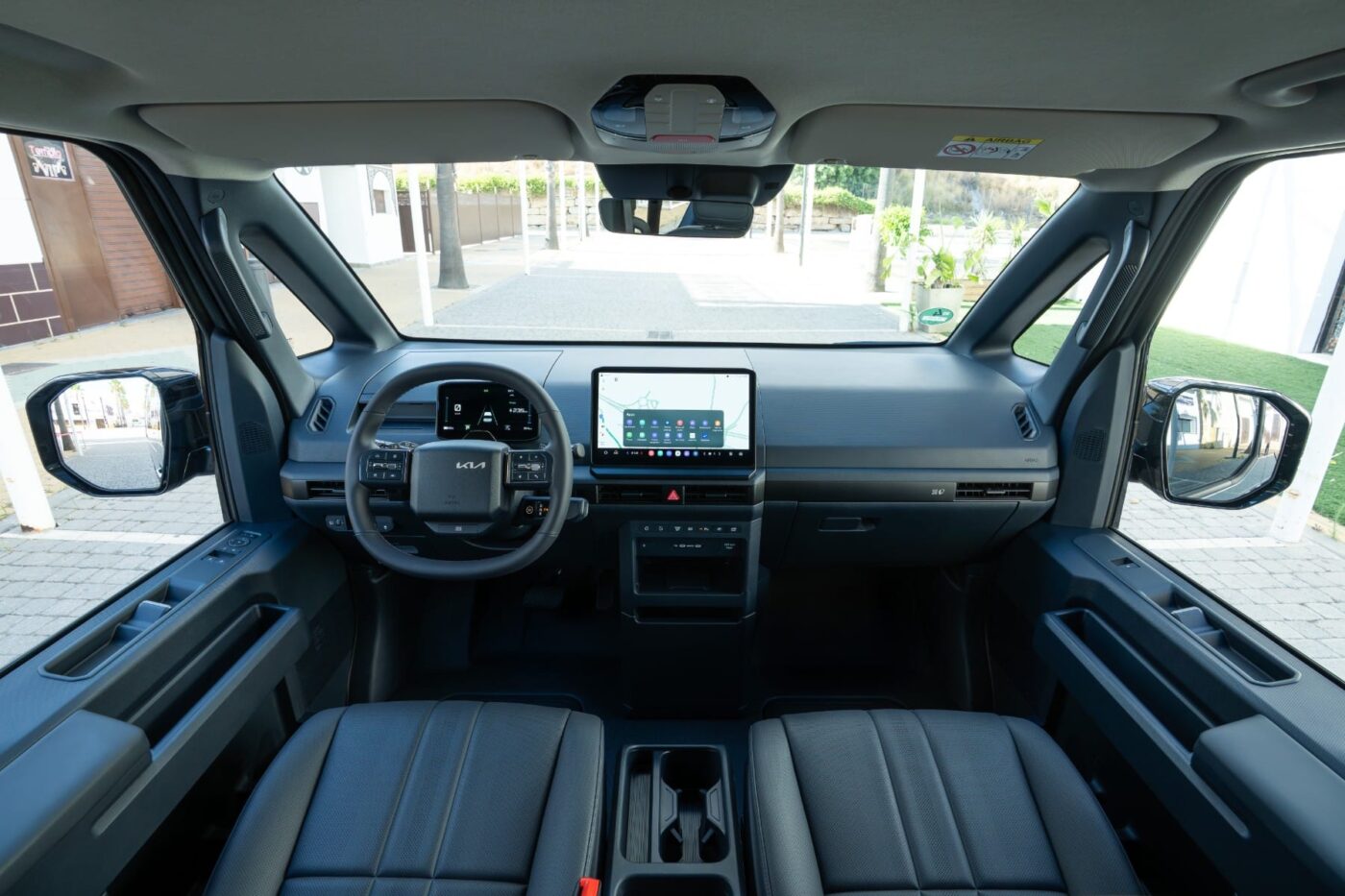
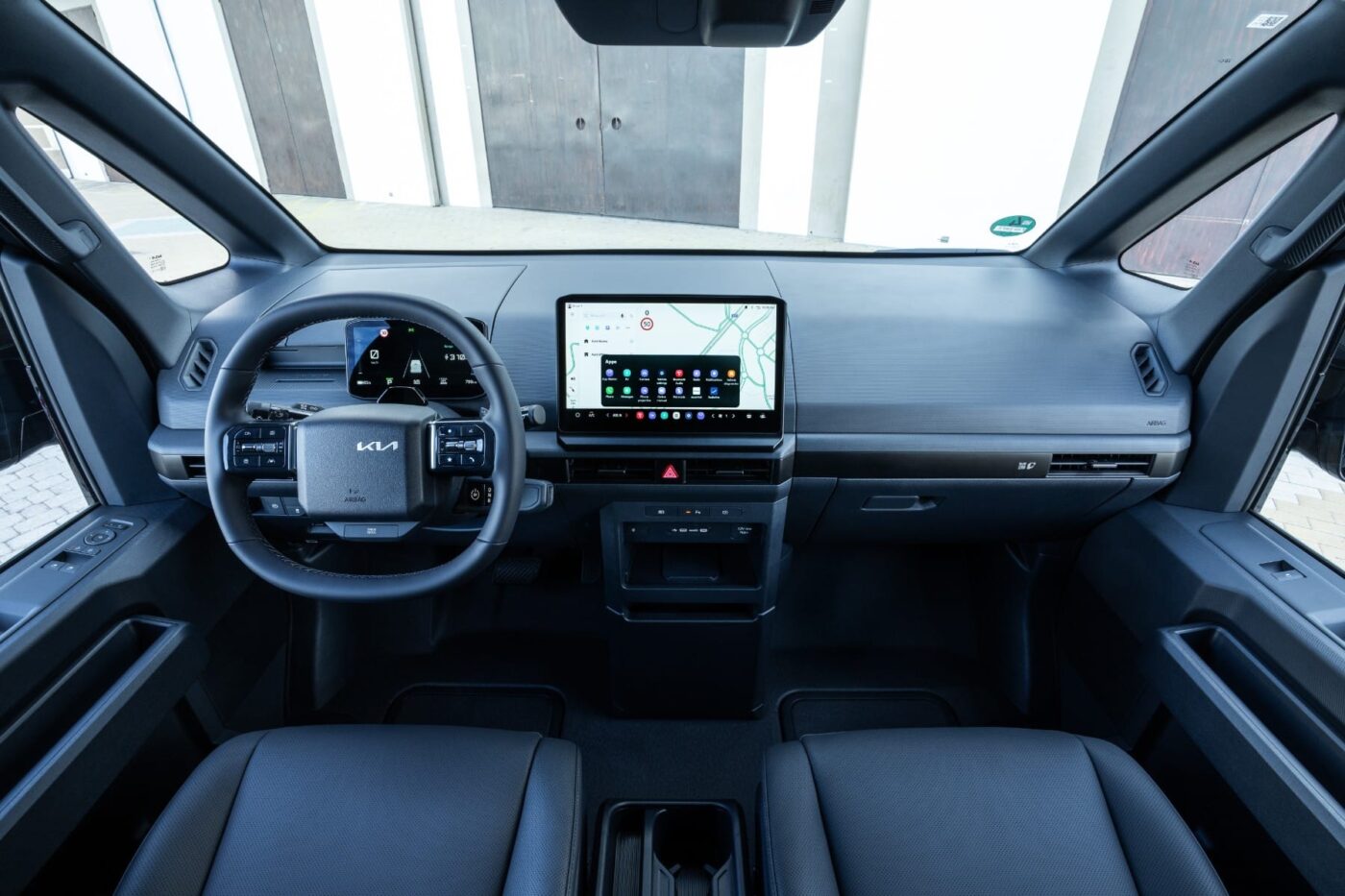
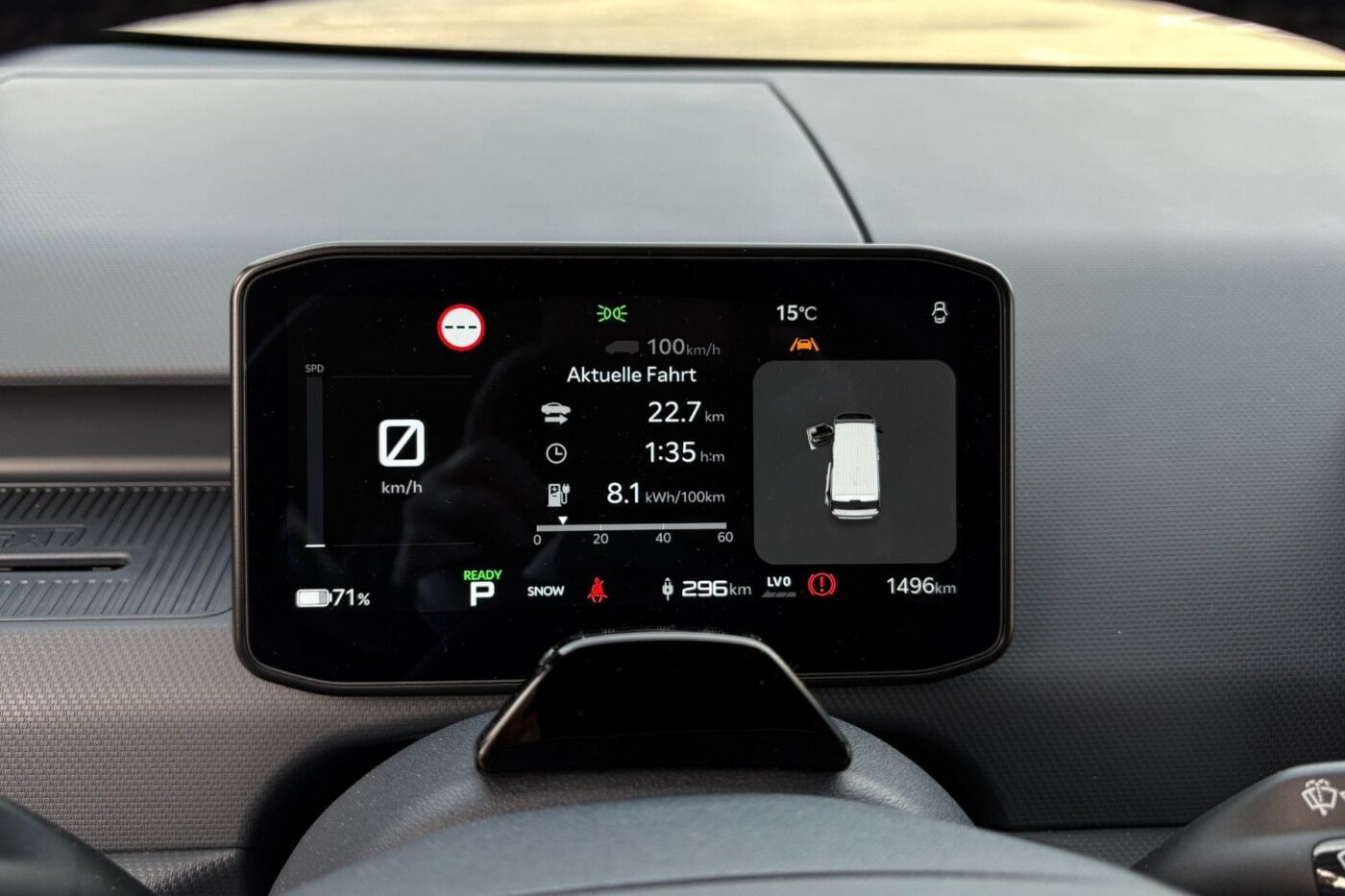
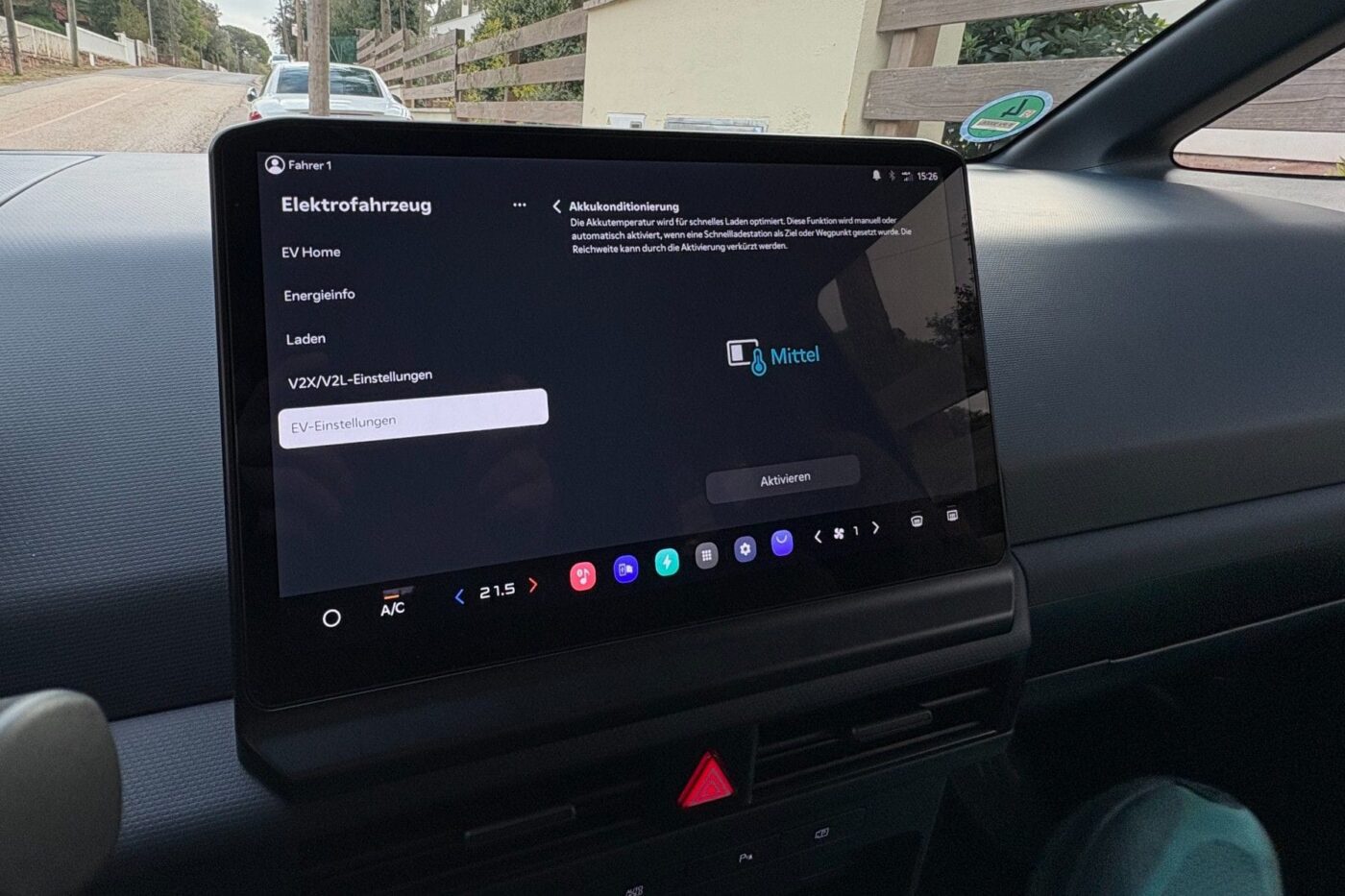
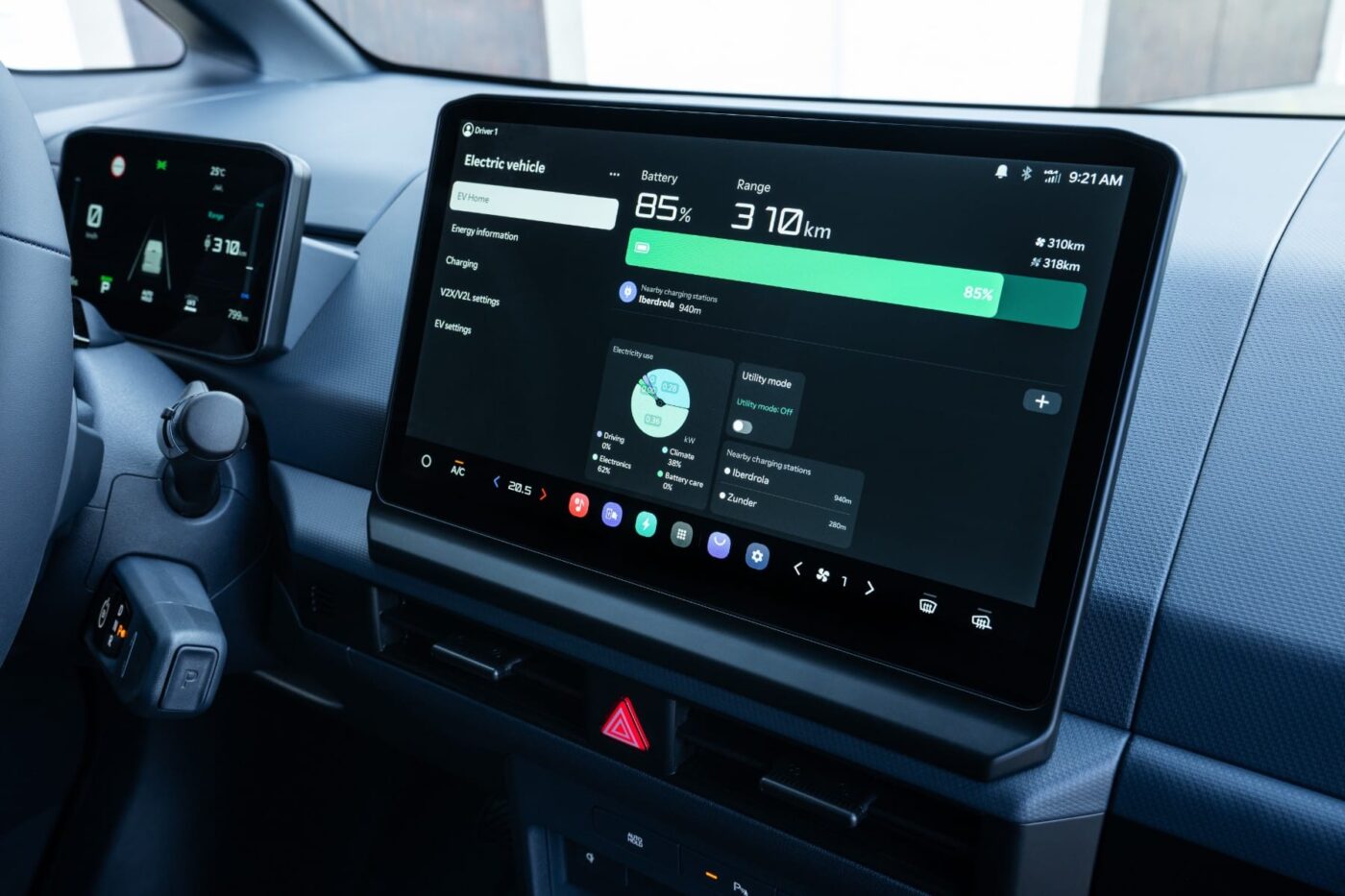
The infotainment system is new: the standard navigation and multimedia platform is based on Android Automotive OS (AAOS) and has been developed specifically for the PBV range. Additional applications – including fleet-specific solutions – can be integrated via a dedicated Kia app store, subject to manufacturer approval. Kia uses its own navigation system rather than Google Maps. Alternatively, smartphones can be connected wirelessly via Android Auto or Apple CarPlay.
Passenger Car Feel? Only Partially
Beyond the control layout and software, the technical configuration of a battery-electric van is decisive for day-to-day usability. The basis is a dedicated skateboard architecture. The PV5 does not utilise the familiar E-GMP passenger car platform; instead, it is built on the new E-GMP.S (‘Electric Global Modular Platform for Service’), developed specifically for commercial applications.
For both the Passenger and Cargo variants, Kia offers two front-wheel-drive powertrain options. The entry-level motor delivers 89 kW and 250 Nm of torque, enabling acceleration from 0 to 100 km/h in 12.8 seconds. The more powerful version provides 120 kW while maintaining the same 250 Nm of torque, reducing the sprint time to 10.6 seconds. In urban and rural driving, the test vehicle equipped with the higher-output motor proved sufficiently powered. The front-wheel-drive system responds promptly and delivers adequate performance for its intended use. The capabilities of the lower-output variant will need to be assessed separately. Both variants are limited to a top speed of 135 km/h.
Over the first few metres, the PV5 feels pleasantly manoeuvrable, not least due to its turning circle of just eleven metres. The steering is sufficiently precise, and the elevated seating position proves more comfortable than initially anticipated. However, when unladen, the rear axle – a compound crank design – responds more sensitively to potholes and transverse joints than the front axle with its double wishbone setup. In this respect, the VW ID. Buzz offers a more passenger-car-like level of ride comfort. On the positive side, sound insulation is effective: acoustic glazing and targeted noise-reduction measures keep wind and road noise at a moderate level.
Kia has evidently prioritised robustness and cost-efficiency over maximum suspension comfort in the PV5. The model is positioned less as a long-distance cruiser and more as an efficient working vehicle or shuttle. According to the manufacturer, a larger share of customers is expected to choose the Cargo variant over the Passenger version.
Battery and charging performance
For the battery, Kia uses a cell-to-pack system in which the cells are integrated directly into the battery housing without a separate module structure. Depending on the motor variant, two battery capacities are available: 51.5 kWh for the 89 kW version and 71.2 kWh for the 120 kW motor. Kia does not differentiate between gross and net capacity figures, stating that the quoted values are “close to net”.
Range figures vary accordingly. As a Cargo version, Kia quotes 297 kilometres and 416 kilometres (WLTP), while the Passenger variant is rated at 295 and 412 kilometres respectively. By comparison, the Volkswagen ID. Buzz Pro, with its 79 kWh (net) battery, achieves up to 459 kilometres. Stellantis models such as the Opel Vivaro-e, equipped with a 75 kWh (gross) battery, offer up to 350 kilometres.
At this stage, meaningful real-world consumption or range data cannot be provided, as the initial drive programme was too short to assess drivetrain efficiency under varying conditions. It was also not possible to evaluate the charging curve in detail. These aspects will be addressed in a subsequent, more comprehensive test.
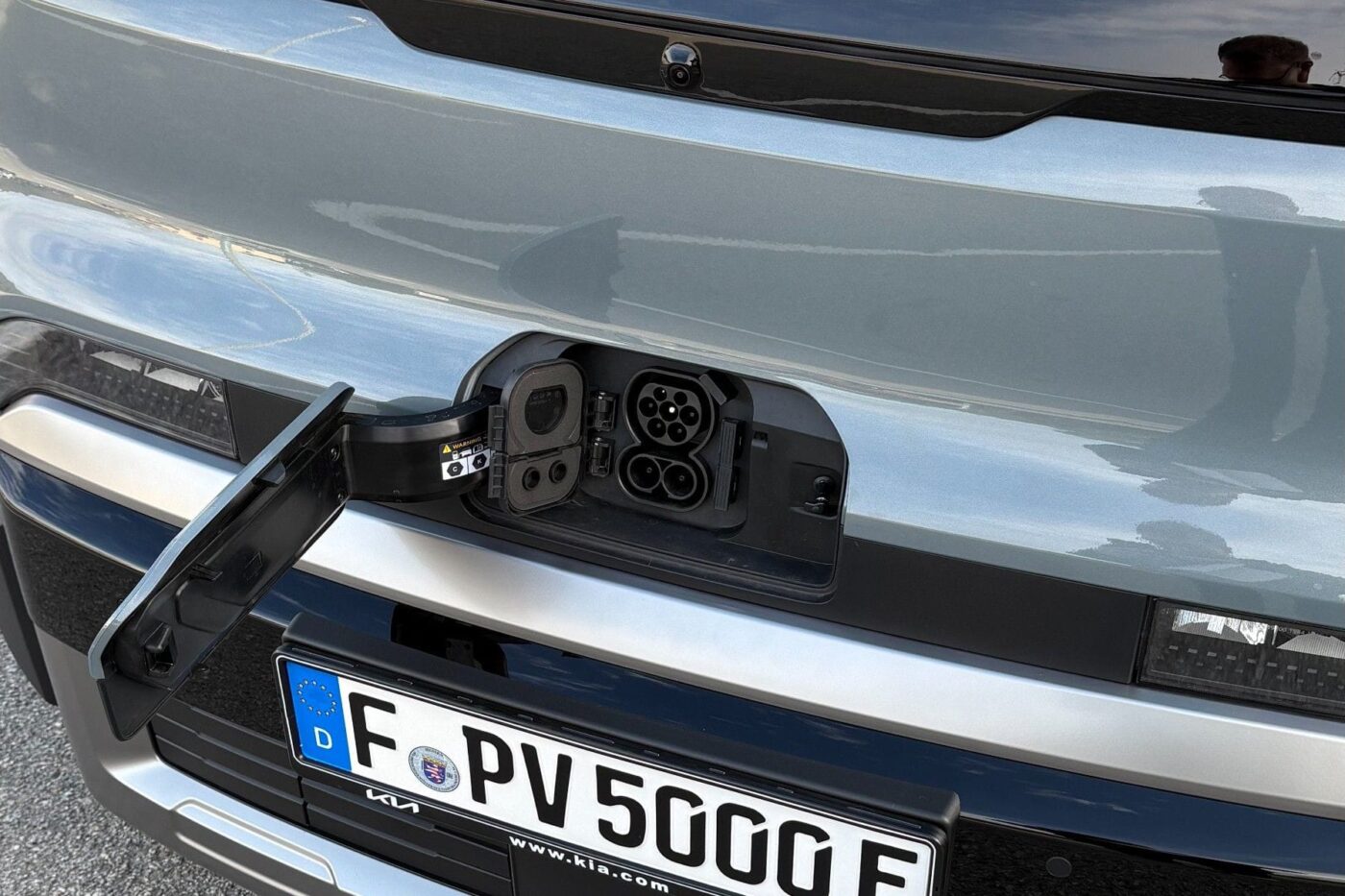
According to the manufacturer, the PV5 supports DC fast charging at up to 150 kW, irrespective of battery size. Charging from 10 to 80 per cent is specified at around 30 minutes. Within the competitive environment, this represents a solid figure, although the ID. Buzz, with a maximum charging capacity of 185 kW, completes the same process in 26 minutes.
For urban delivery operations or shuttle services, the available range and charging performance appear appropriately dimensioned. For longer motorway journeys or consistently high daily mileages, the larger battery option is likely to be the more suitable choice.
AC charging is supported at up to 11 kW. A full charge requires approximately 4 hours and 45 minutes with the smaller battery and around six and a half hours with the larger unit. A 22 kW onboard charger is not available.
Kia also offers an optional V2L (Vehicle-to-Load) function for the PV5. Preparation for V2X applications such as Vehicle-to-Home (V2H) or Vehicle-to-Grid (V2G) is included, although these features are not part of the standard specification and are reserved for higher trim levels.
| PV5 small battery | PV5 large battery | |
|---|---|---|
| Drivetrain | FWD | FWD |
| Power | 89 kW | 120 kW |
| Torque | 250 Nm | 250 Nm |
| Acceleration | 12.8 s | 10.6 s |
| Top speed | 135 km/h | 135 km/h |
| Battery | 51.5 kWh | 71.2 kWh |
| Voltage | 400 V | 400 V |
| DC charging power | 150 kW | 150 kW |
| DC charging time 10-80% | 30 min | 30 min |
| AC charging power | 10.5 kW | 10.5 kW |
| AC charging time 10-100% | 4:45 h | 6:30 h |
Intelligent charging stop planning
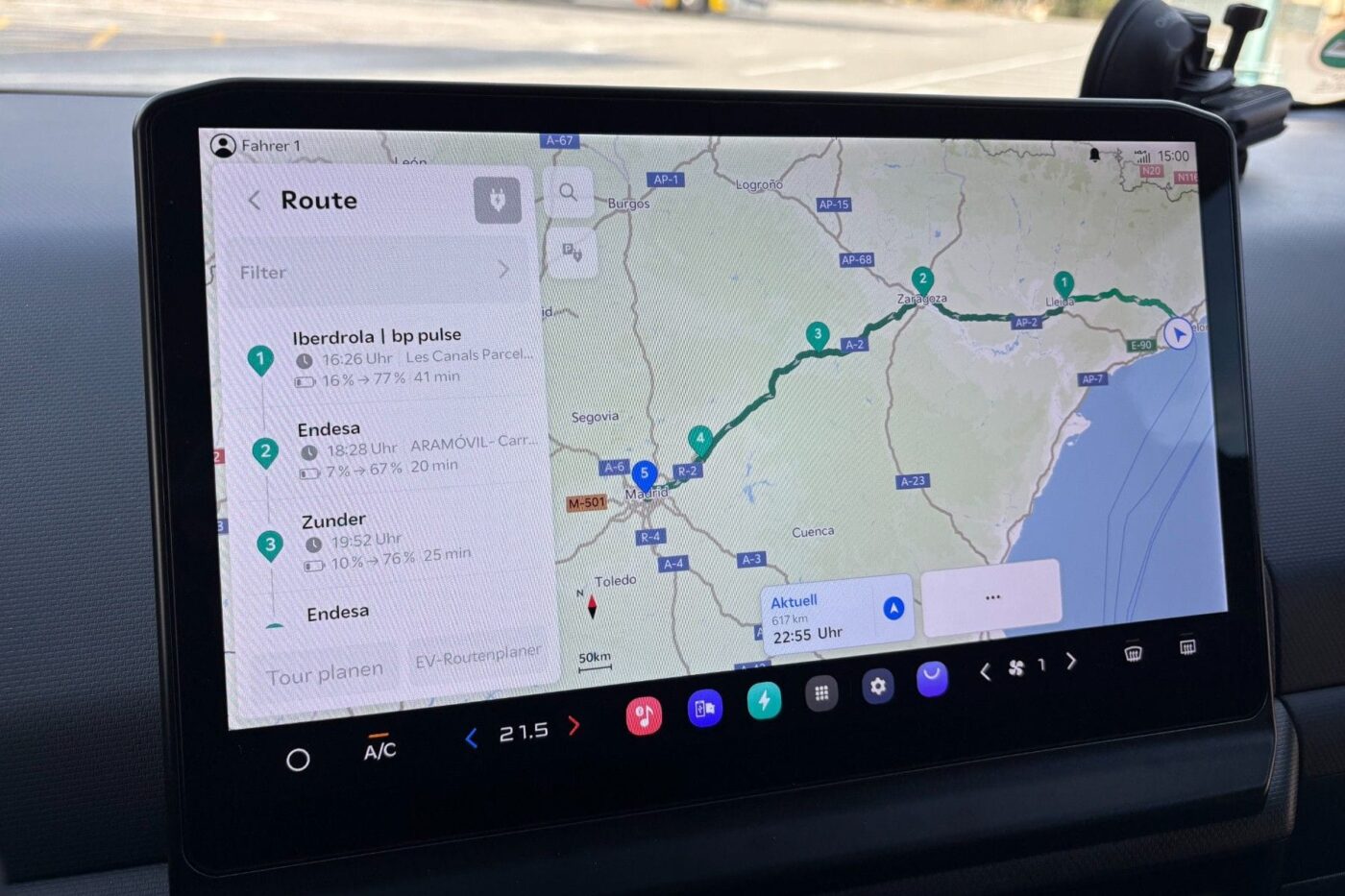
For longer journeys, the integrated EV route planner provides support. The system continuously analyses real-time vehicle data in combination with the selected route. If the calculated range is insufficient to reach the destination, it automatically suggests suitable charging stops. Route guidance is based on an algorithm that takes into account the current state of charge, live charging station data and the vehicle’s energy consumption. During the short test drive, this function could not be evaluated comprehensively.
However, initial route simulations proved noteworthy. For a calculated long-distance journey, the system guided the vehicle to the first charging stop with a projected state of charge of seven per cent – three percentage points below the previously defined minimum threshold of ten per cent. This strategy is technically plausible: arriving with a lower state of charge can enable higher peak charging power, shorter dwell times and, in some cases, a reduced overall travel time. Many competing systems adhere strictly to the predefined buffer and therefore calculate more conservatively.
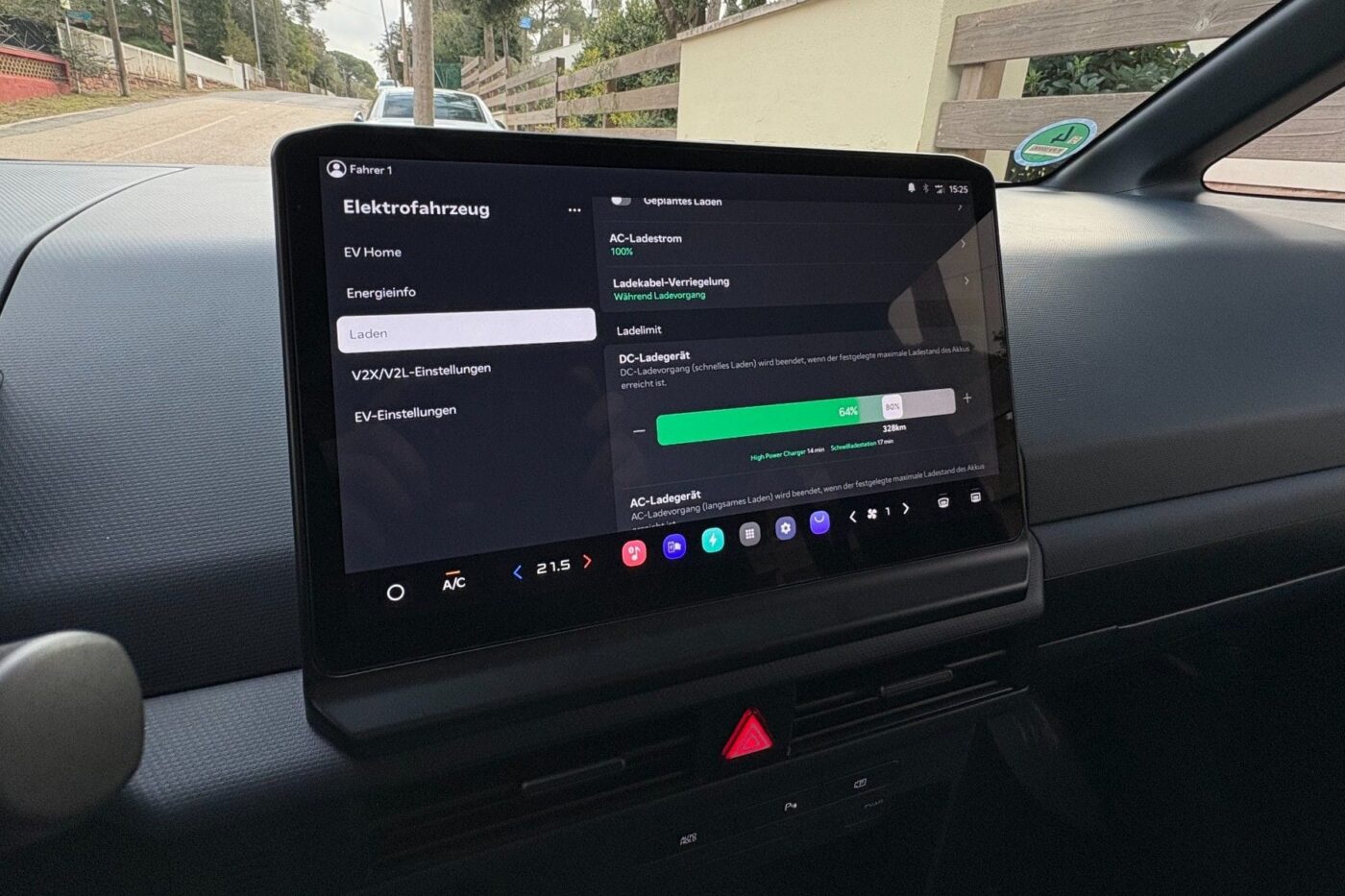
A further detail is the charging time display integrated into the infotainment system. Within the DC charging settings, it shows in real time how long a charging process at a high-power charger would take for a selected charging limit, depending on battery temperature and current state of charge. This level of transparency is not common in the segment. One potential improvement would be to position this information directly on the home screen rather than within a submenu – a change that could, in principle, be implemented via an over-the-air update.
To optimise charging performance in colder conditions, the PV5 features battery preconditioning. When navigating to a fast-charging station, the system preheats the battery in advance. The battery heater can also be activated manually, independently of the route planner.
Well-equipped standard model
All these features are included as standard – an uncommon offering in this segment. The same applies to the ‘i-Pedal’ system, which enables one-pedal driving, including when reversing. The system also maintains the appropriate distance to the vehicle ahead. Using the steering wheel-mounted paddle shifters, the level of regenerative braking can be adjusted or switched off entirely (settings 0, 1, 2, 3). A memory function ensures that the previously selected i-Pedal setting remains active after restarting the vehicle.
A broad range of driver assistance systems is likewise fitted as standard, although the short drive programme allowed only limited evaluation. Adaptive cruise control operated unobtrusively and adjusted speed smoothly, while the lane-keeping assist intervened early but without excessive steering input. A more detailed assessment under dense delivery traffic conditions or during extended motorway use remains necessary. Depending on the selected trim level, additional systems such as blind-spot monitoring and rear cross-traffic alert are available – features that can be particularly beneficial in urban delivery operations and during manoeuvring.
XXL-sized interior
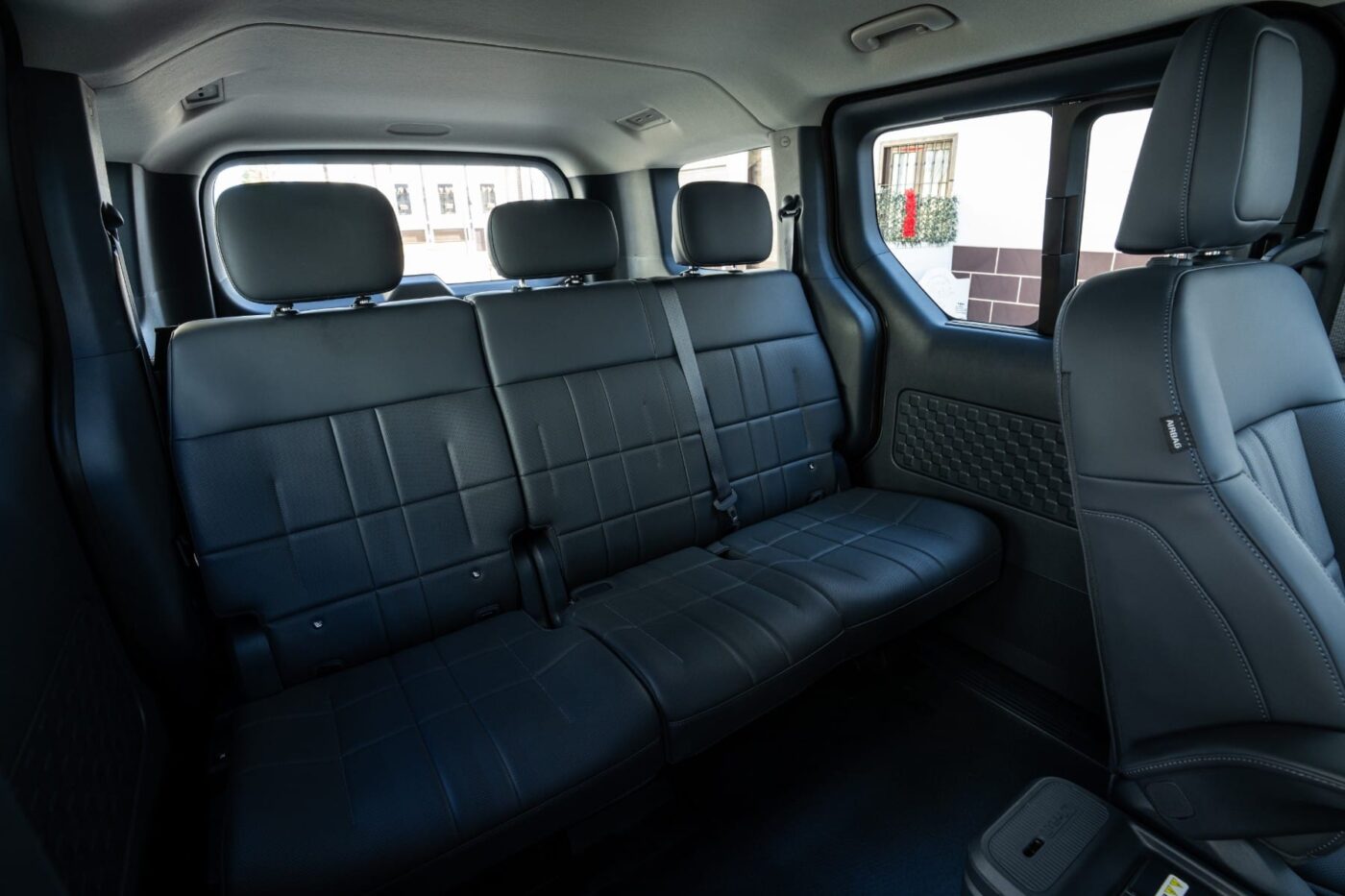
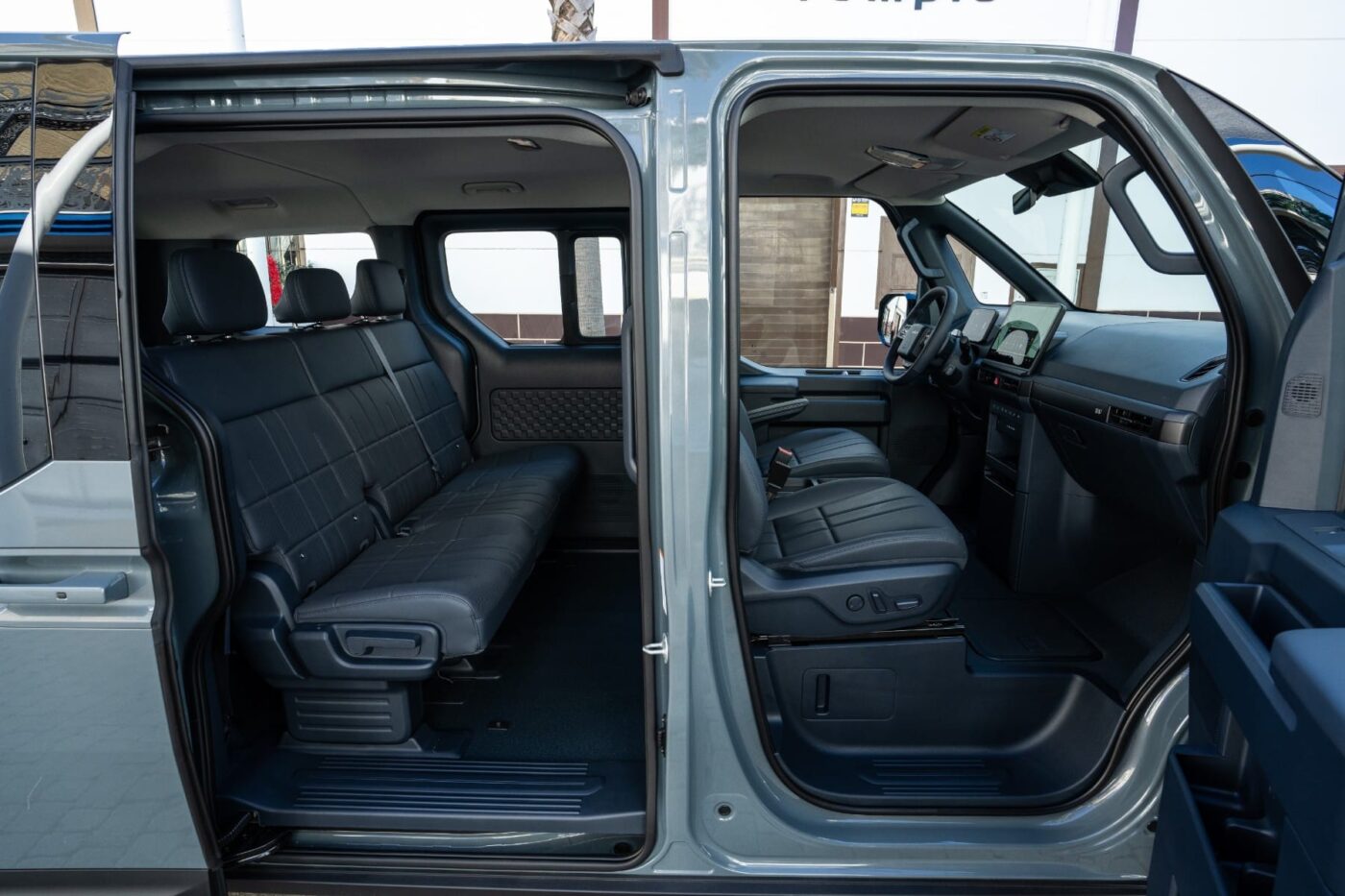
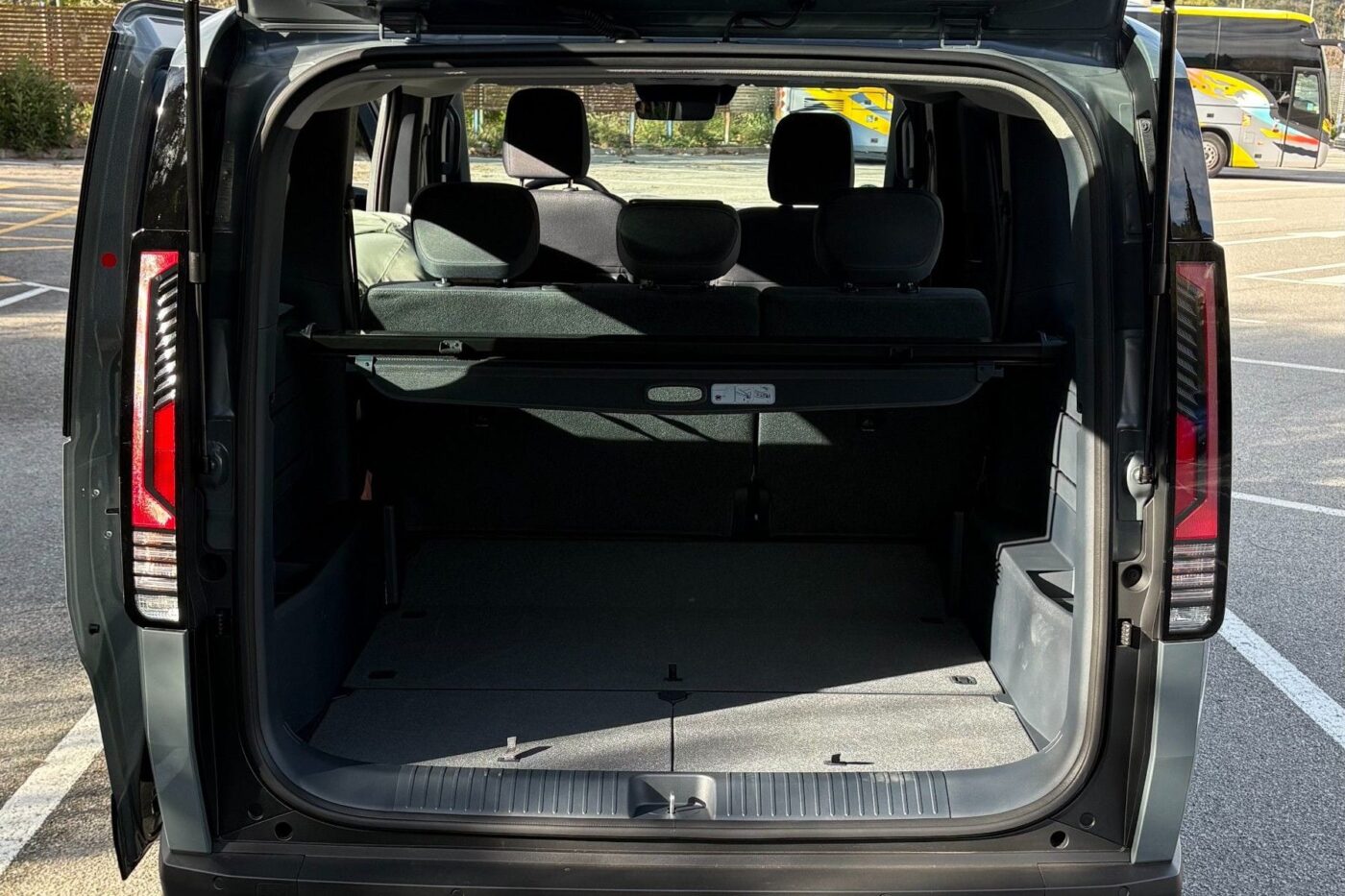
While driver assistance and comfort features play an important role, interior space remains the decisive factor in the light commercial vehicle segment. In the Passenger variant, occupants in the second row benefit from the high roofline and generous rear compartment dimensions. Headroom and legroom are ample, even for taller passengers, in line with the vehicle’s overall footprint. The standard sliding doors, which facilitate easier entry and exit, add to everyday practicality.
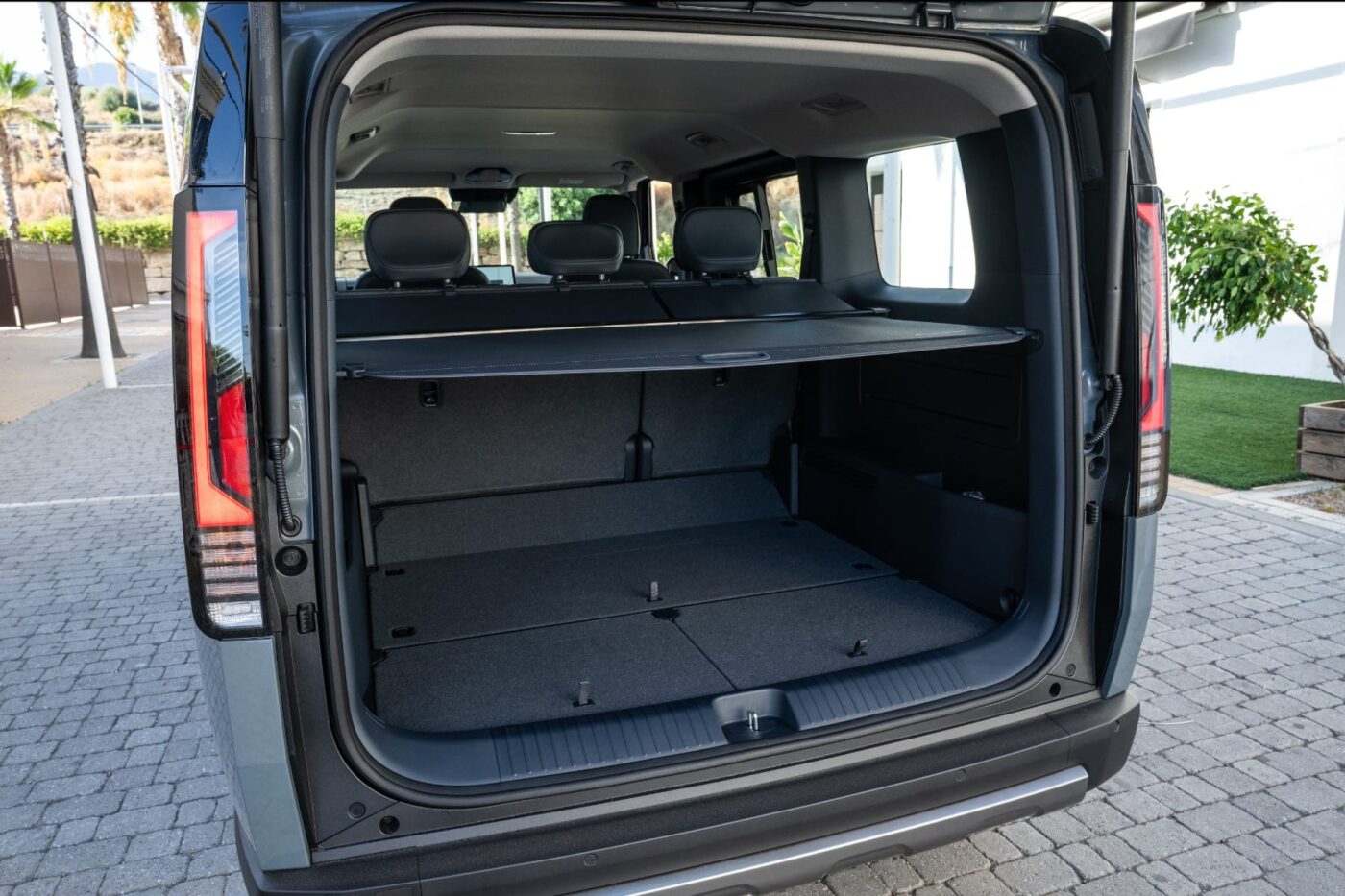
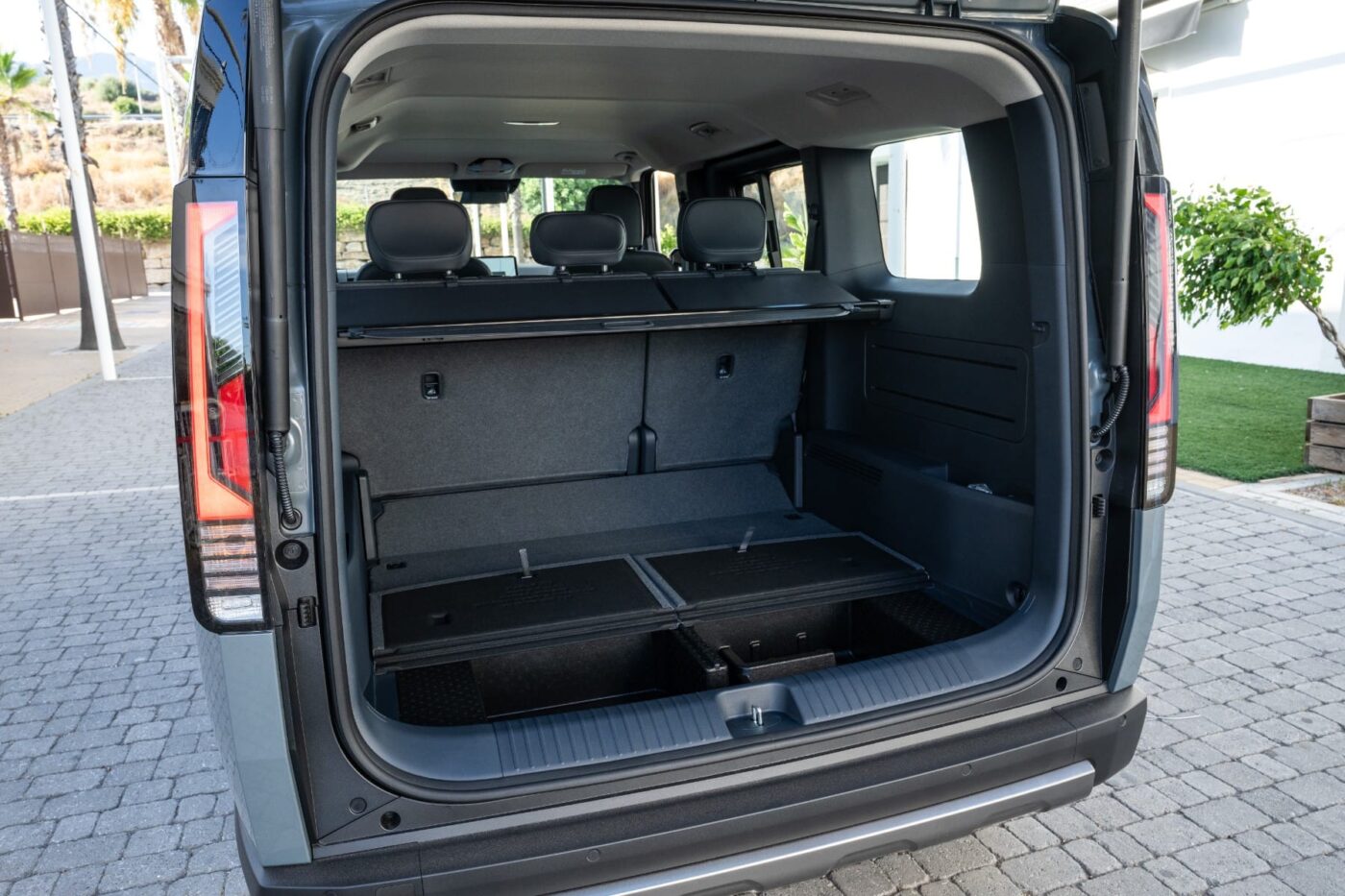
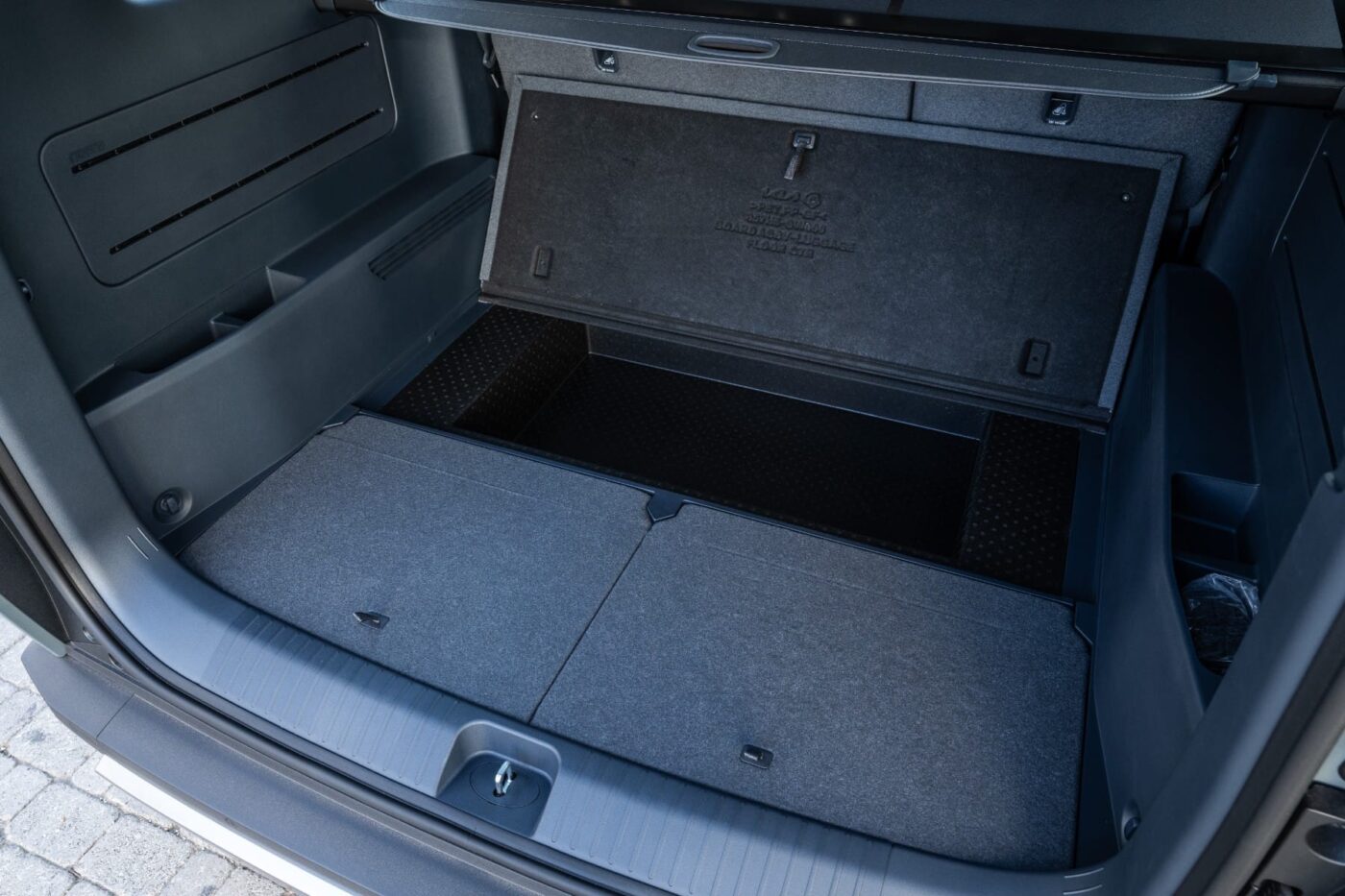
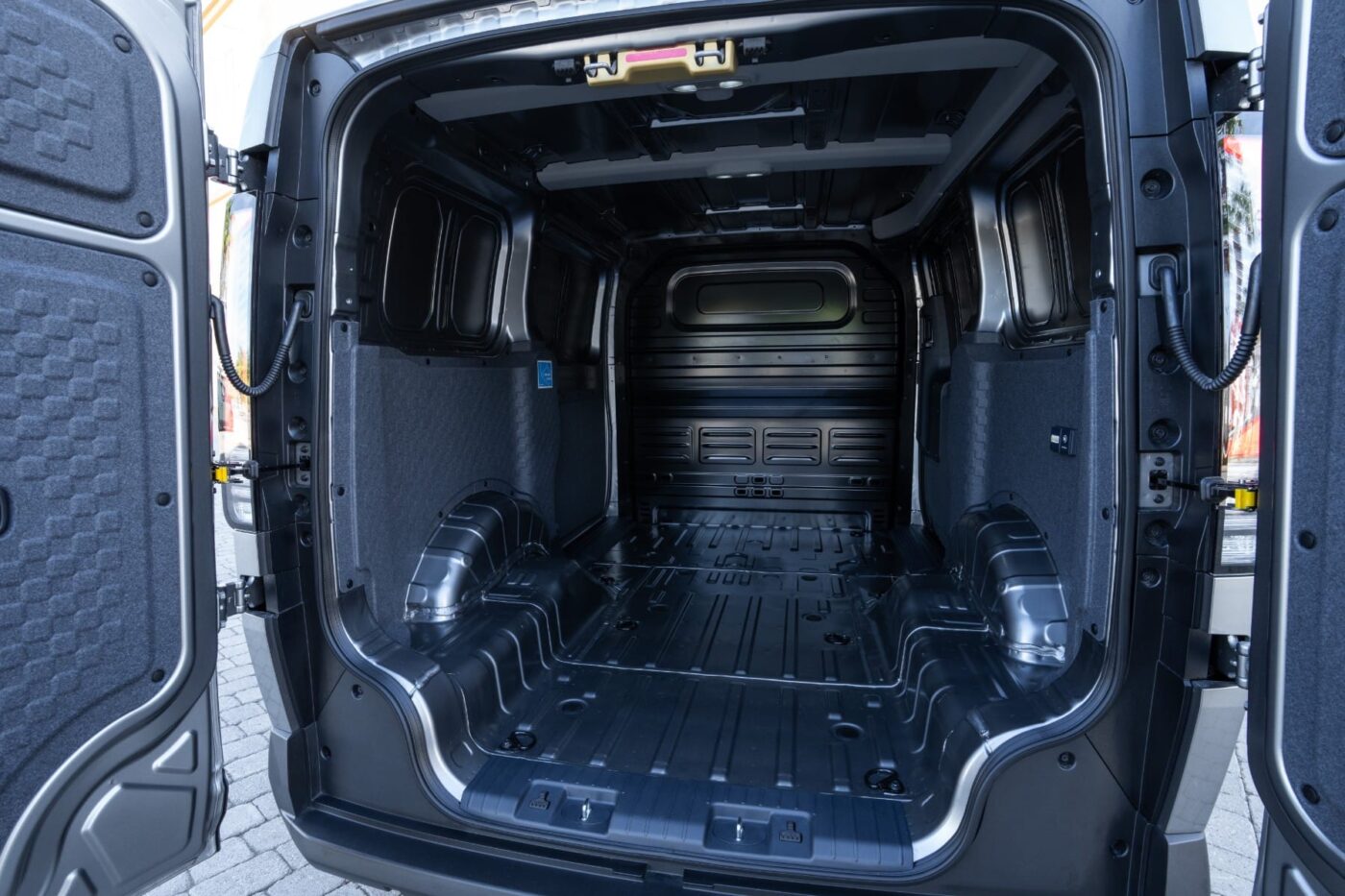
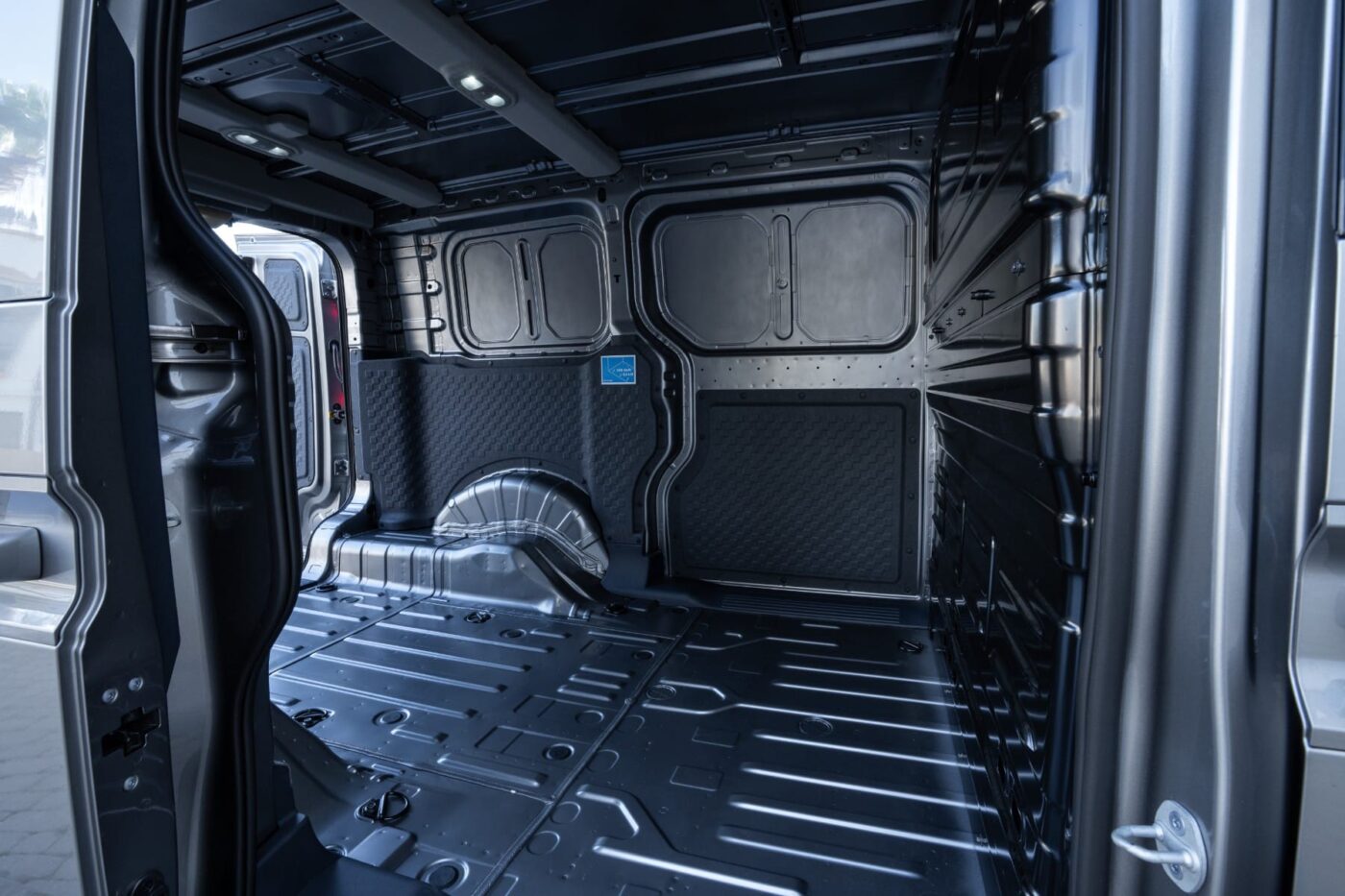
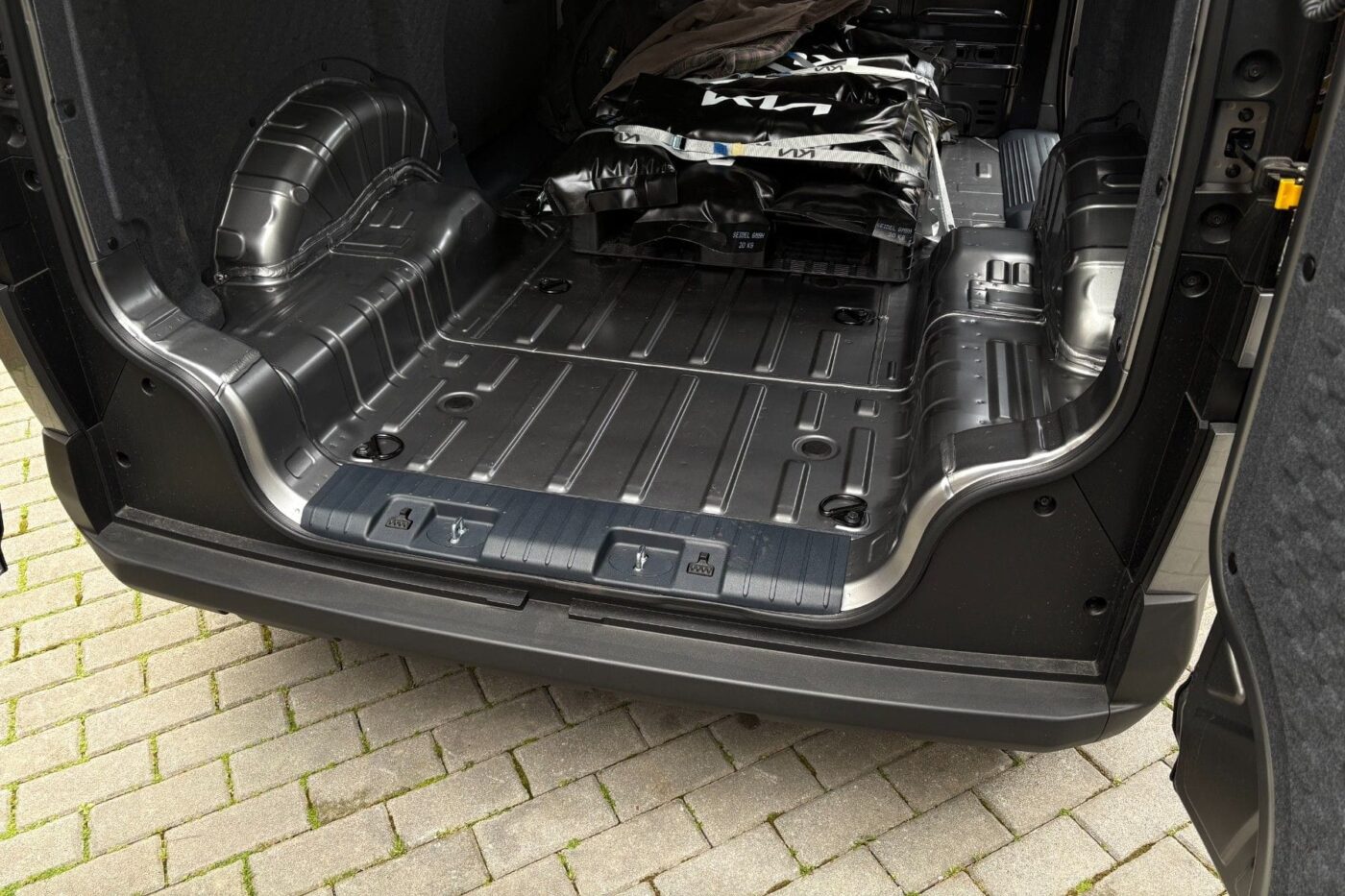
The luggage compartment is correspondingly spacious. With the rear seatbacks in place, capacity amounts to 1,330 litres (measured to the top of the seatback). Folding the rear bench increases volume to 3,615 litres (up to the roof, including the underfloor storage compartment). In the Cargo version, the load area is the primary focus. The currently available Cargo L2H1 variant offers 4.42 cubic metres of cargo volume. Depending on motorisation and specification, payload ranges from 620 to 790 kilograms. The permissible roof load is rated at 100 kilograms.
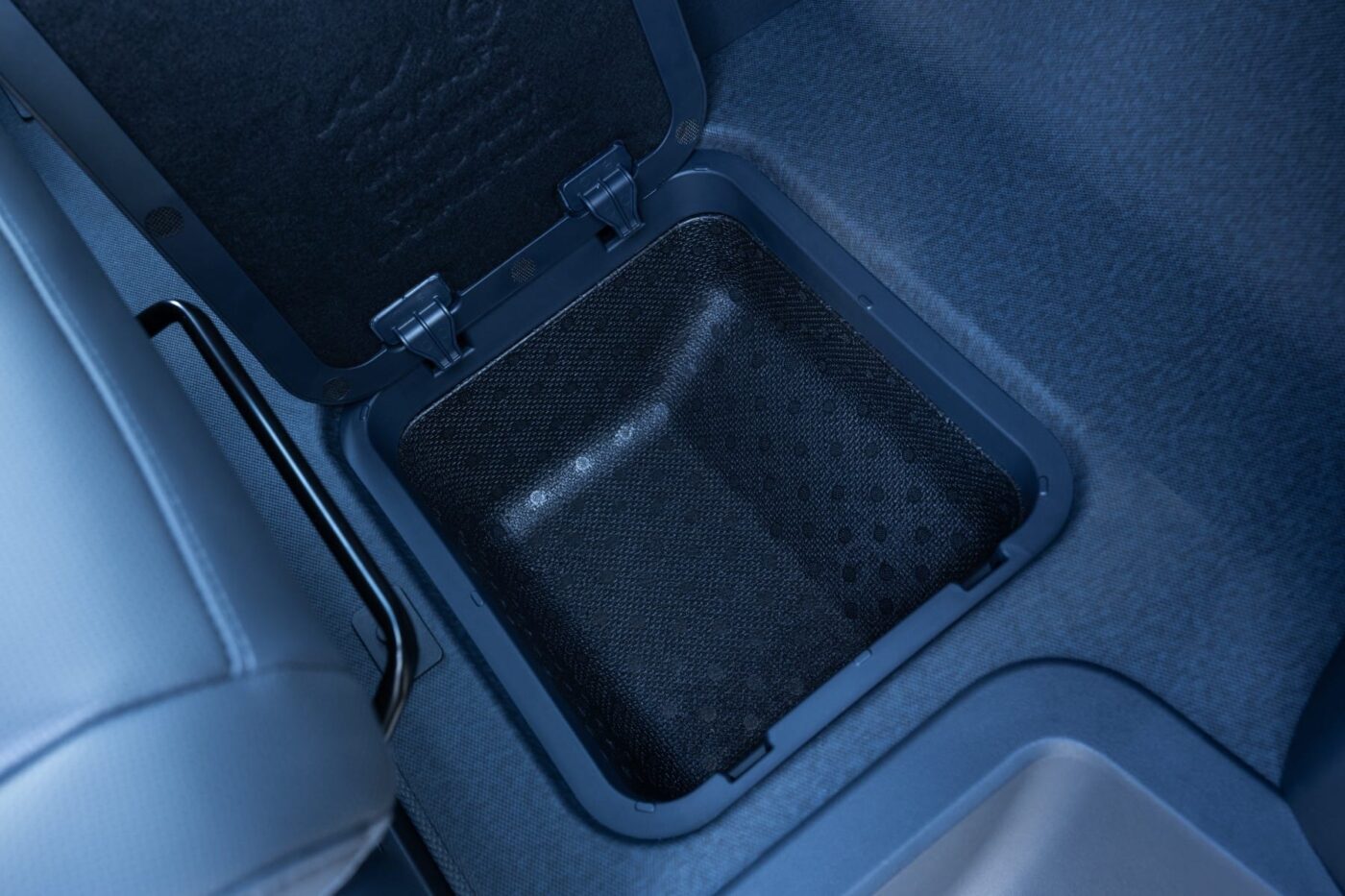
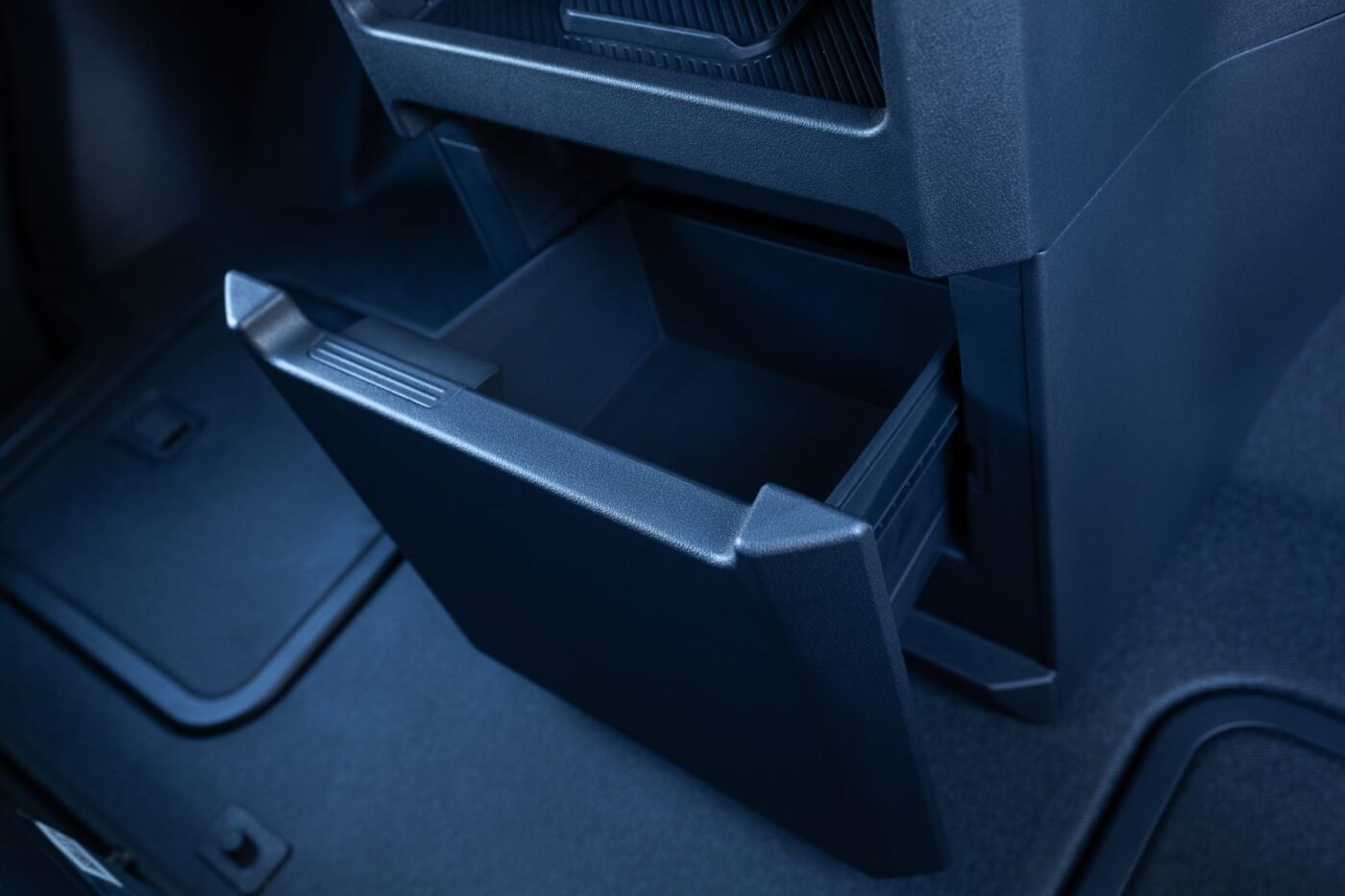
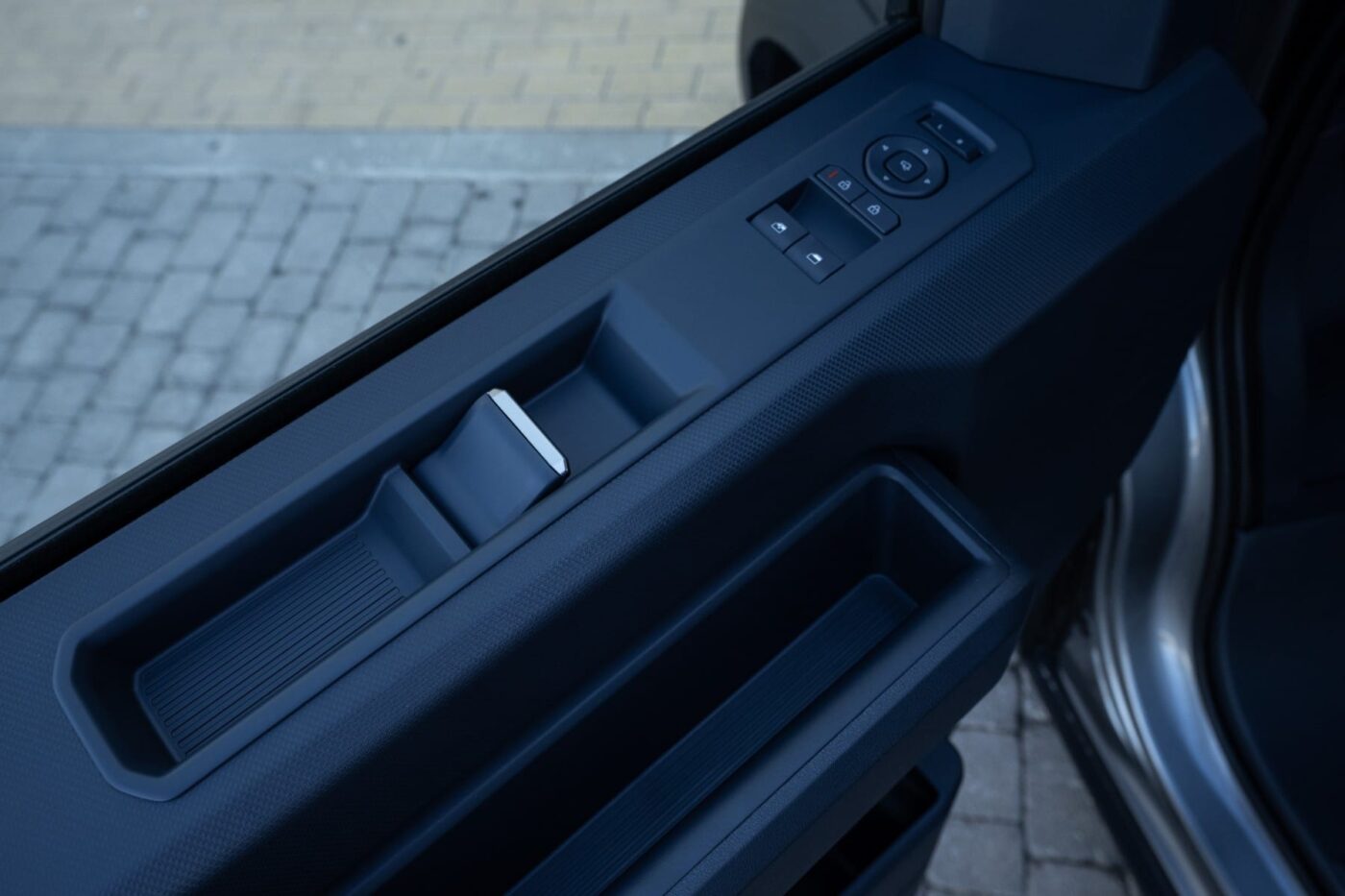
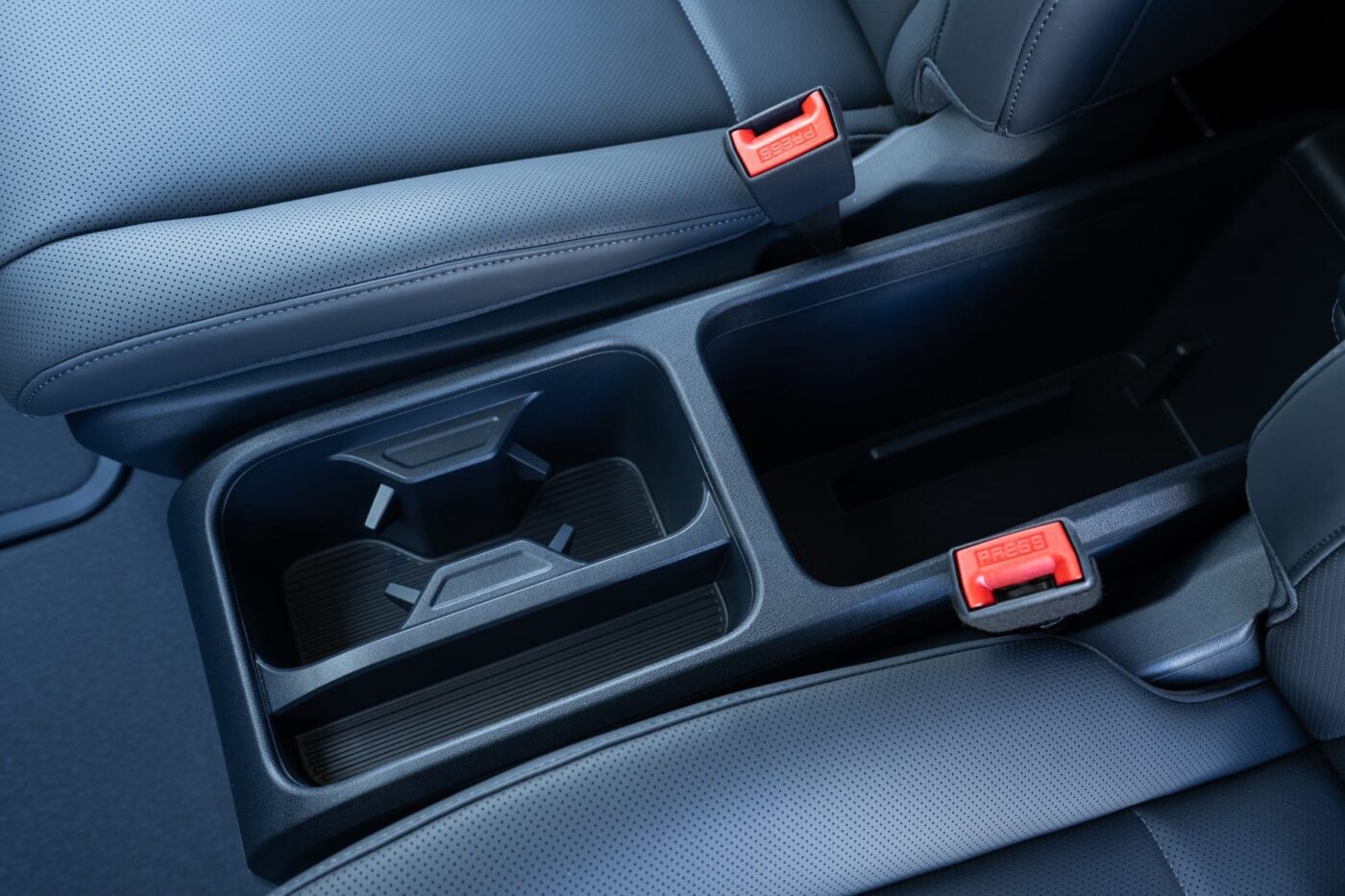
In both the PV5 Passenger and PV5 Cargo, the wide range of storage solutions stands out. Numerous compartments and stowage areas are integrated into the dashboard, front footwells, the sides of the driver’s and passenger’s seats, as well as along the side panels and floor of the load or luggage compartment.
The catch
Towing capacity, however, may require closer attention. For the Passenger variant, Kia specifies a braked towing capacity of up to 750 kilograms with the smaller battery and up to 1,500 kilograms with the larger battery. The Cargo versions, by contrast, are limited to 750 kilograms braked. This is attributed to the differing rear axle design in the Cargo model, which does not structurally support a higher towing load.
This specification is unlikely to change with forthcoming derivatives. Kia is planning a seven-seat Passenger version featuring a third row of seats, as well as a six-seat configuration without a front passenger seat. In addition, a wheelchair-accessible WAV (Wheelchair Accessible Vehicle) version of the Passenger model is under development, which will dispense with the second row of seats.
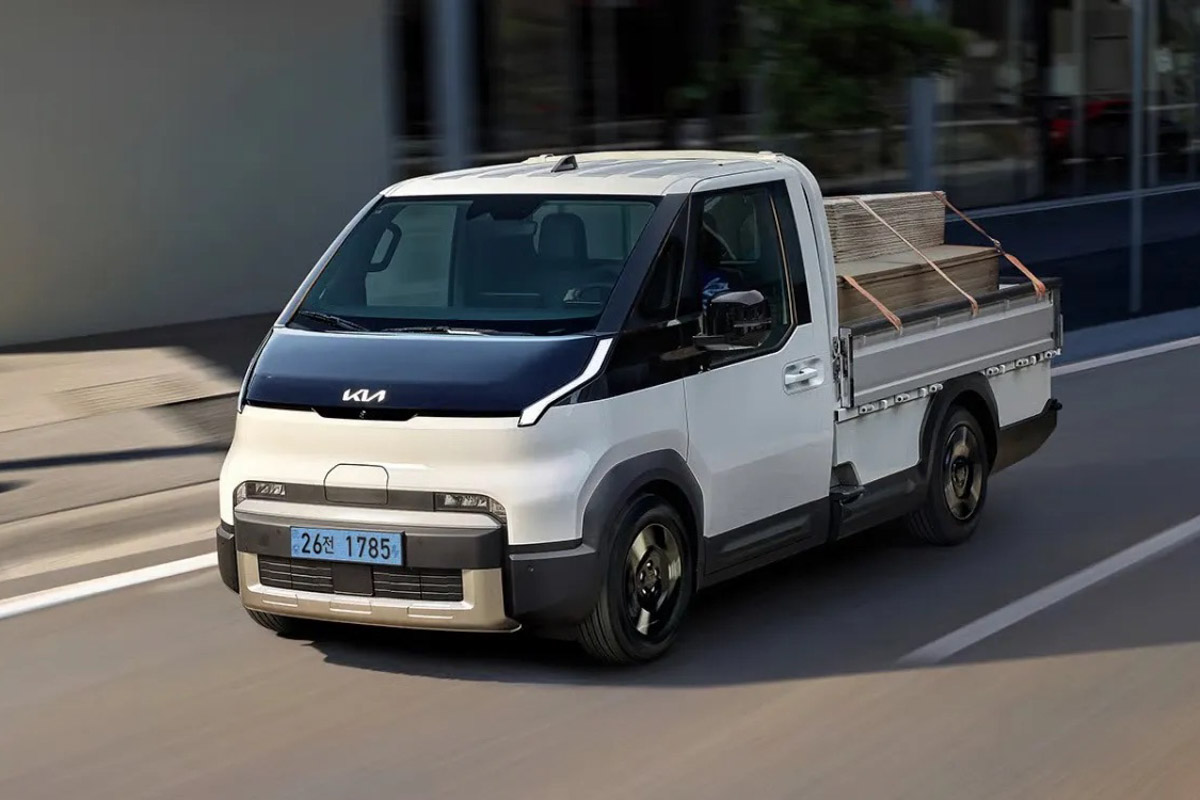
For the PV5 Cargo, the currently available long-wheelbase version with standard roof height (L2H1) will be complemented by a short-wheelbase L1H1 variant and a long-wheelbase, high-roof L2H2 version. A Chassis Cab derivative – comprising a cab and separate chassis – has been available to order since the end of 2025. Kia also plans to extend the PV5 range with factory-built conversions, including a Crew Van variant.
Conclusion
With the PV5, Kia has delivered a convincing market debut. The vehicle drives more confidently than might be expected in this segment, despite minor compromises in ride comfort. From a technical perspective, the PV5 presents a solid package: charging performance is competitive, the available ranges appear appropriately specified, and the standard driver assistance and comfort features are comprehensive.
In terms of pricing, the PV5 is positioned below many established competitors. In Germany, the Passenger variant starts at approximately €38,290, while the version equipped with the larger battery is listed at €43,540. For the Cargo model, Kia quotes prices of €39,190 and €43,805 respectively.
The PV5 does not aim to redefine the segment, but as a technically distinct and competitively priced alternative to the Volkswagen ID. Buzz and other established electric vans, Kia is entering the market with a clearly defined proposition. For commercial operators, tradespeople, delivery services and customers with substantial space requirements, the PV5 is likely to represent a serious option.

2 Comments