


CATL makes progress on its solid-state battery
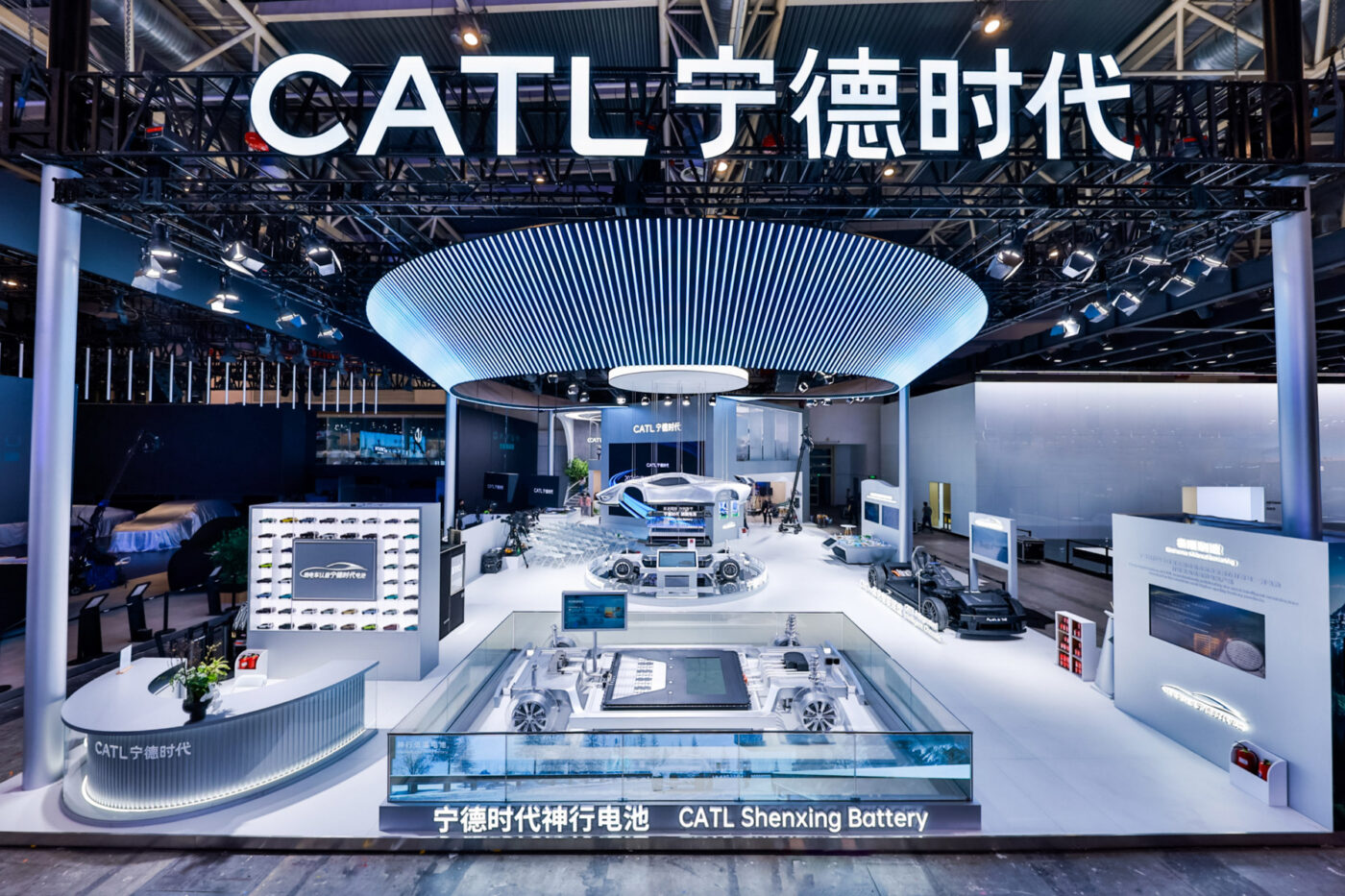
For years, CATL has been working towards producing a small series of solid-state batteries by 2027. A new patent now reveals how the Chinese battery giant plans to achieve this. The document was published on 5 March 2026 by the World Intellectual Property Organisation (WIPO) and is titled ‘Positive Electrode Sheet, Solid-State Battery Cell, Battery Device, Electric Device, Positive Electrode Active Material and Preparation Method Therefor.’
The patent summary indicates that CATL is focusing on a solid sulfide electrolyte. The anode active material comprises layers of a substrate material, a cobalt-rich material, and a coating. The first two layers contain a transition metal oxide, while the coating includes an electrolyte salt. According to the portal Electrek, this salt is a fluorine-containing lithium salt, which offers high thermal stability and can react with the sulfide electrolyte to form lithium fluoride. This reaction is intended to create a protective layer for the battery anode, mitigating the known instability of sulfide electrolytes.
While the patent itself does not include a timeline, the portal CarNewsChina reports that CATL has already begun pilot production of solid-state batteries with an energy density of 500 Wh/kg. Furthermore, ‘technical data indicates the company is currently at technology maturity level 4 and aims to reach levels 7 or 8 by 2027. This level signifies the transition from laboratory prototypes to automotive-grade cells ready for pilot-scale vehicle integration,’ the portal states. This aligns with the company’s goal of launching a small series by 2027, as well as China’s announcement that it will publish its first national technical standard for solid-state batteries in July this year.
CATL plans to introduce its battery, named Ningde Shidai All-Solid-State, without delay. The company’s short-term goal is to progress from 20-Ah samples to 60-Ah automotive-grade prototypes. Ah stands for ampere-hour, a measure of charging capacity. Meanwhile, CATL appears to be securing supplier services for future scaling. CarNewsChina reports that CATL recently reserved a capacity of 626,000 tonnes of copper foil from Guangdong Jiayuan Technology for the period 2026–2028, valued at approximately €8.4 billion. The portal interprets this as a significant material stockpile for semi-solid and solid-state batteries.
However, in October 2025, CATL dialled down expectations, stating that ‘scientific challenges have been largely resolved,’ but technical hurdles remained. Cost was a primary concern. “Sulfide solid-state cells are currently 3–5 times more expensive than conventional lithium-ion,” according to CarNewsChina.
CATL has been engaged in research and development of solid-state batteries for over a decade. According to an earlier statement by CATL’s Chief Developer, Wu Kai, a large R&D team is now dedicated to solid-state batteries and new battery systems. Collaborations with universities and other players in the battery industry are also expected to accelerate progress.
Speaking of collaborations: In early 2024, it was announced that a group of major Chinese battery and automotive manufacturers had joined forces to accelerate the commercialisation of solid-state batteries. CATL is among them. The alliance was initiated by the Chinese government, and the consortium, named the China All-Solid-State Battery Collaborative Innovation Platform (CASIP), aims to develop and produce competitive solid-state batteries and establish a supply chain by 2030.
In addition to CATL, the alliance includes battery manufacturers such as CALB, EVE Energy, SVOLT, Gotion High-Tech, and BYD’s battery subsidiary FinDreams Battery. It also comprises several state-owned automotive manufacturers, as well as private companies BYD and Nio. Other participants include representatives from government and academia. According to an earlier report by the Japanese newspaper Nikkei, influential state-backed funds are also listed as members of CASIP.
This demonstrates China’s determination not to relinquish its market-leading position in electric vehicle batteries due to a technological shift towards solid-state batteries. Against this backdrop, the new consortium will focus on fundamental research, key technologies, the joint development and production of electric vehicles with solid-state batteries, and the establishment of a corresponding supply chain. Notably, the Beijing-coordinated initiative brings together competitors who are often fiercely vying for market share.
carnewschina.com, electrek.co, ishare.ifeng.com (in Chinese)

1 Comment