


Berlin opens battery lab for sodium-ion cell research
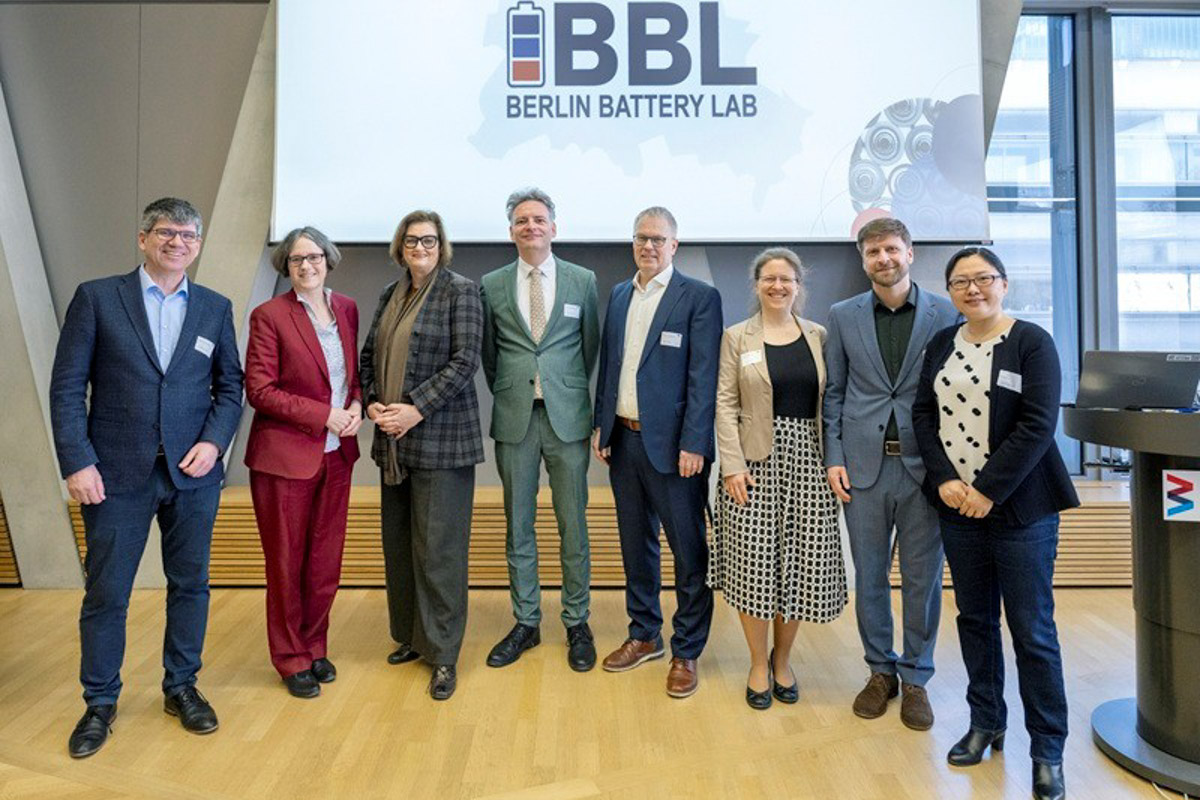
At the new research platform, BAM, HZB and HU are working together to develop new materials, investigate novel cell chemistries and manufacture battery prototypes, the partners said at the opening. The facilities will not be limited to the three institutions, however. “The research infrastructure of the Berlin Battery Lab is also open to external partners from science and industry and is designed to accelerate the transfer from research to application.”
This was already announced last May, when the three Berlin institutions signed a Memorandum of Understanding to establish the battery lab. The vision then and now remains the same. Berlin has developed into ‘a leading location for battery research’—particularly in alternative cell chemistries such as sodium-ion or lithium-sulphur batteries—the Berlin Battery Lab will serve as a central platform to ‘strategically integrate the complementary expertise of the participating institutions.’
According to the announcement, Humboldt-Universität is ‘one of the leading academic research institutions in the field of sodium-ion batteries,’ while HZB has been researching lithium-sulphur batteries for years and operates ‘BESSY II,’ one of the world’s most powerful X-ray sources for investigating battery chemical processes. Meanwhile, BAM possesses extensive expertise in battery safety and the development of innovative energy materials.
With the Berlin Battery Lab, the three institutions aim to create a research environment in the capital that systematically integrates fundamental research, material development, cell manufacturing, and safety testing at a single location.
“This bridges an important gap on the path to industrial application,” states BAM. “Start-ups and technology-oriented companies stand to benefit in particular: the lab is open for cooperation and aims to significantly support the development of locally produced, sustainable battery technologies.”
The State of Berlin is supporting the new lab from 2026 to 2028 with approximately €2.4 million from the European Regional Development Fund (ERDF).
“The Berlin Battery Lab illustrates Berlin’s strength in strategically bringing together top-level research and technological needs – through close cooperation between three outstanding partners and a short path from research to application,” said Science Senator Ina Czyborra at the inauguration. “Battery research is a key technology on the High-Tech Agenda. The Berlin Battery Lab strengthens Germany’s technological sovereignty by reducing dependence on critical raw materials and increasing the resilience of key value chains.”
Ulrich Panne, President of BAM, added: “Many new battery technologies are being developed in Germany, but they are not reaching application quickly enough. This is exactly where the Berlin Battery Lab makes a difference: here in Berlin, we bring together research, development and cell manufacturing while integrating safety considerations and regulatory requirements to help transfer sustainable innovations into practice.”
0 Comments