


Donut Lab to run safety tests on new solid-state batteries
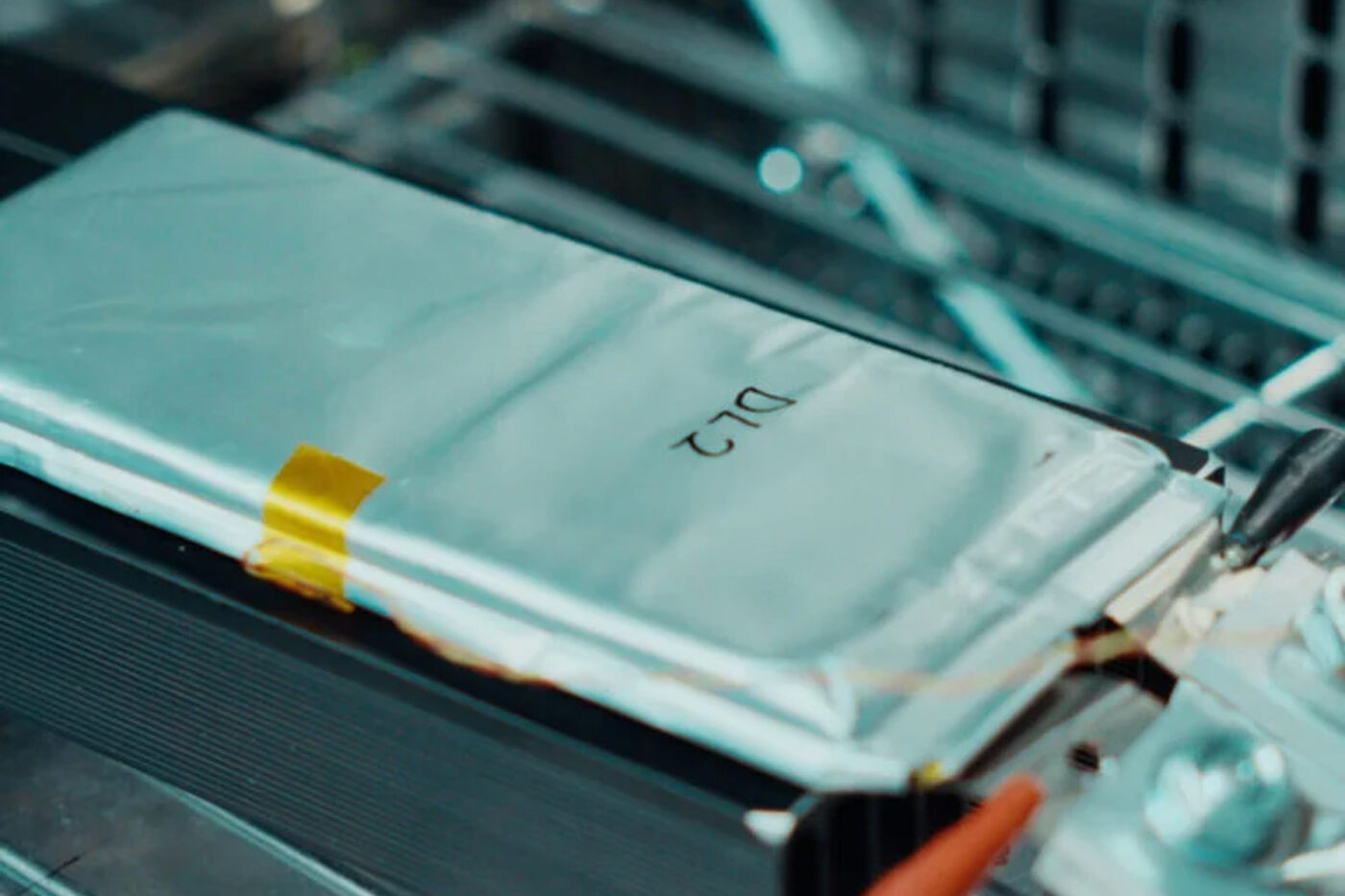
Following a pack-level charging test in a Verge Motorcycles electric motorcycle last week, the fifth test in Donut Lab’s ‘I Donut Believe’ campaign has now taken place. This time, testing focused on the cell labelled ‘DL2‘ from the previously published high-temperature test. During the charging process at 100 degrees Celsius, this cell lost its vacuum as the vacuum structure surrounding the battery was damaged. External observers concluded at the time that the cell must contain a conventional liquid electrolyte, as solid electrolytes (as allegedly present in the Donut cell) do not typically cause outgassing or the observed swelling of the cell.
However, Donut Lab now attributes the swelling not to outgassing of the electrolyte but to a different material failure: “The battery cell used in the test employed materials and adhesives from the lithium-ion battery sector, which are not designed for operation at temperatures of 100 degrees Celsius. It was generally assumed that the battery was completely damaged and would have experienced thermal runaway, a likely outcome for a lithium-ion battery”, as stated in a press release.
To demonstrate the safety of its solid-state cell – and indirectly prove that it is indeed a solid-state cell – the Finnish company decided to continue discharging the damaged battery cell. The reasoning: if a pouch cell with a liquid electrolyte had suffered such damage to its adhesive seam that air could penetrate, the liquid electrolyte would very likely have leaked out at least partially, potentially leading to a hazardous outcome.
“In a similar failure with a conventional lithium-ion battery, there would be serious consequences. The liquid electrolyte would leak, and the active materials would come into contact with oxygen, which could result in a fire or thermal runaway,” explains Ville Piippo, CTO of Donut Lab. “Lithium-ion batteries would not be operable after a collapse of the vacuum structure. Since the Donut battery is a fully solid-state battery, it is not susceptible to such reactions.”
The damaged DL2 cell was not only subjected to continued discharging after the damage incurred during the heat test. In the subsequent safety test, the battery cell was first put through five standard 1C charge and discharge cycles. “During these cycles, the battery cell functioned completely normally and safely, despite its vacuum structure being damaged,” Donut Lab stated. The cell was then charged over 50 cycles at a 5C charging rate, equivalent to a full charge in 12 minutes. The tests were conducted at 25 degrees Celsius, and the cooling plates used in earlier tests were attached above and below the pouch cell.
“During these cycles, the battery capacity stabilised at around 11 ampere-hours compared to the original 25 ampere-hours. However, during the five 1C cycles at the end of the measurement, the battery showed slight recovery,” the Finns reported. “The key insight from this test is that while performance declines early due to damage to the outer shell, it still ensures consistently safe battery cell operation without temperature spikes or fire hazards.”
Source: Information via email (press release in German), r2.dev (VTT report as PDF)

0 Comments