


No more funds: Canada pauses incentive programme for EVs
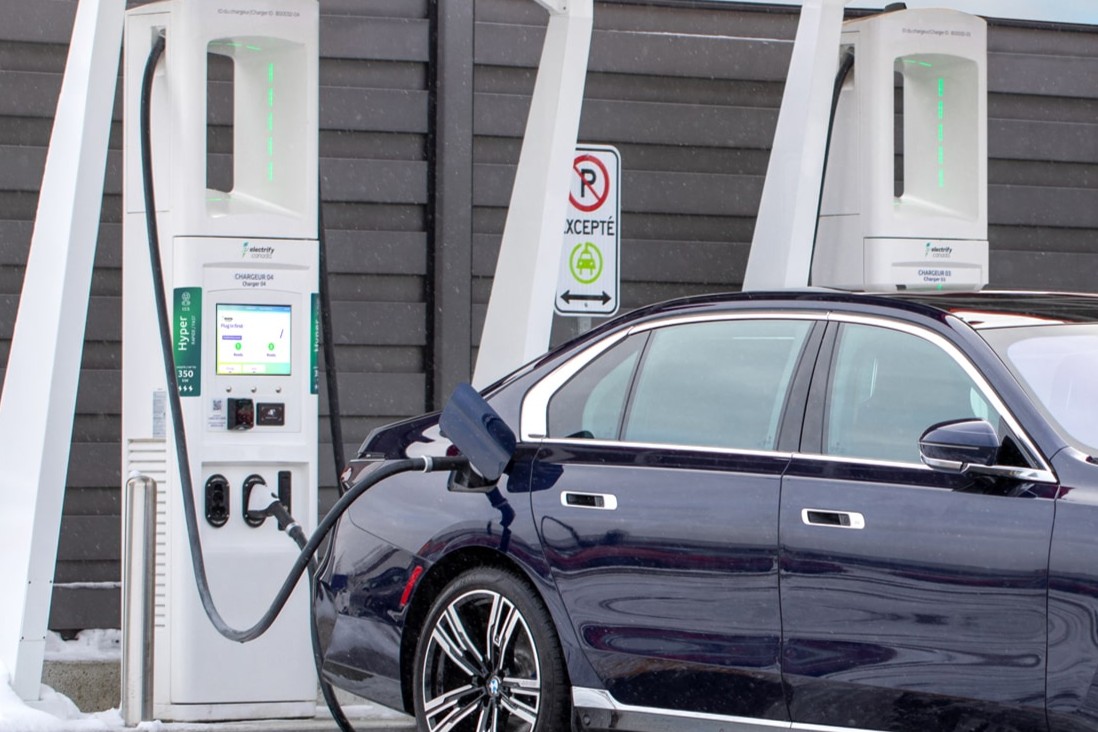
Customers who have already ordered their electric vehicle and whose application to the iZEV programme was pre-approved will still receive the incentive. All others will have to pay full price for their vehicle – or push back their purchase or lease.
It is also important to note that the Canadian government continues to speak of a pause. It is not clear when or if the incentive programme will continue. However, this is likely not the end of funding for electric vehicles. “Any updates to the Program will be posted on the Transport Canada website, and all authorised dealers and sellers enrolled in the Program will be notified,” Transport Canada writes in its frequently asked questions in response to “How long is the Program pause expected to last?”
The programme “officially paused on January 12, 2025, as the allocated funds were fully committed,” the Canadian transport ministry specifies. It also says that more than 546,000 electric vehicles have been partially funded through the programme since it kicked off in 2019 – so it is selling the pause due to lack of additional funding as a success.
“I am delighted to see the success of the iZEV Program,” Anita Anand, Canada’s Miniter of Transport and Internal Trade, commented. “Since 2015, our Government has been committed to building a greener economy and combatting climate change. We will continue to engage with industry, environmental groups, and across jurisdictions to foster collaboration in decarbonising the country’s transportation sector and becoming a global leader in zero-emission vehicles.”
Canada’s iZEV programme incentivised new electric vehicles and plug-in hybrids (bought or leased) with up to 5,000 Canadian dollars (about 3,400 euros). The Toyota Mirai also made the list of eligible cars as the only fuel-cell vehicle. Moreover, there are 122 eligible PHEVs and 149 eligible BEVs on that list – however, that includes all eligible variants of the same model.
On top of being new (pre-owned vehicles were not eligible for the incentive), passenger cars had to have a Manufacturer’s Suggested Retail Price (MSRP) of less than 55,000 CAD. Station wagons, pickup trucks, SUVs, minivans, vans and special purpose vehicles could have a price tag of up to $60,000.
According to Transport Canada, the subsidy scheme helped Canada reach a ZEV market share of 14.2 per cent in the first three quarters of 2024 – up from 11.7 per cent for the whole of 2023.
Medium- and heavy-duty zero-emission vehicles are not affected by the pause, as they are incentivised through a different programme called Incentives for Medium- and Heavy-Duty Zero-Emission Vehicles (iMHZEV), first introduced in 2022 and not scheduled to conclude until March 2026. “The pause process specifically applies to the iZEV Program, and any changes or adjustments made during this period are exclusive to that program,” Transport Canada specifies.
Update 26 February 2026
A new report by Bloomberg has revealed that Transport Canada officials were apparently aware of the fact that funding for the electric vehicle rebate program was at risk of running out several months before the department told the public about it in January 2025, as proven by recently leaked documents.
Additionally, the documents also show that officials were apparently caught off guard by how quickly the funds did, in the end, dry up. When the sudden pause of the programme was announced in January 2025, it left dealerships stuck with millions of dollars in outstanding claims. The Canadian government later stepped in to rectify the claims, leaving customers with the impression the rebates would return.
According to the documents, Transport Canada officials knew about the funding issues as early as November 2024. The issues was only revealed in January, however. Three days after the announcement, the programme was completely halted after $48 million in claims came in over a weekend; $43 million of which were from Tesla alone, resulting in another investigation about subsidy fraud.
“It was particularly shocking to those dealers that had not had a chance to file claims,” said Huw Williams, a spokesperson for the Canadian Auto Dealers Association. “Nobody in the industry could have ever anticipated they would slam the door overnight.”
The rebates ran from 2019 until 2025, offering between $2,500 and $5,000 off the price of new plug-in hybrid or battery-electric vehicle, with a maximum price of $55,000.
canada.ca, tc.canada.ca (FAQs), bnnbloomberg.com (update)
0 Comments