

After strategy shift: Ford cancels battery order with LGES
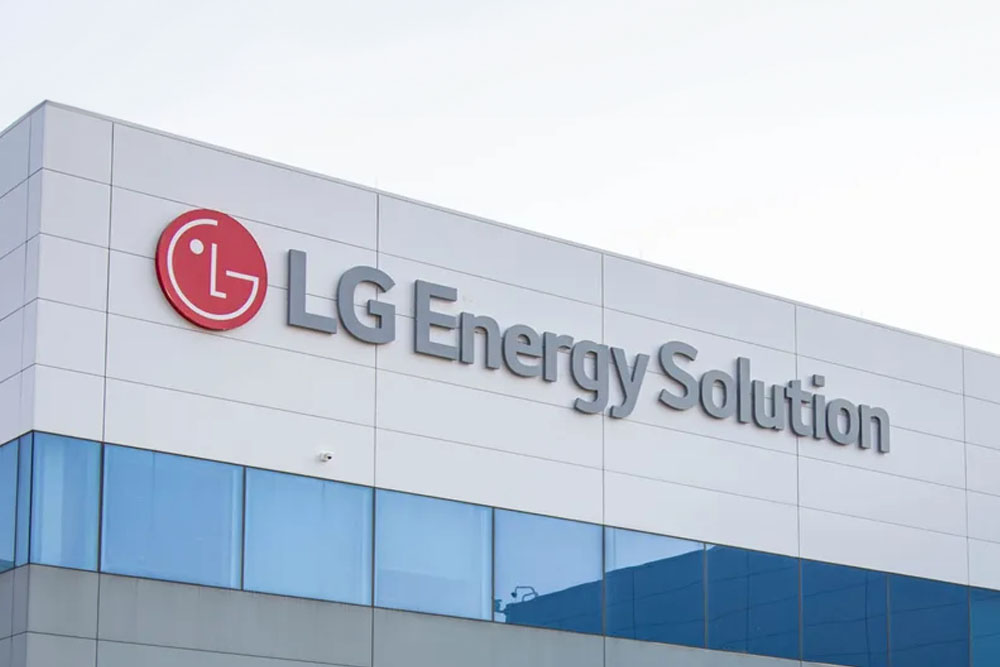
The contract had a volume of approximately 9.6 trillion won (approximately 5.5 billion euros), according to LG Energy Solution. Ford justified the step to LGES by citing its decision to halt production of several electric models. This week, the US carmaker announced that it will discontinue the battery-electric version of the F-150 Lightning pickup and replace it with an EREV variant. In addition, the pickup truck codenamed T3, which has not yet been unveiled, as well as several electric commercial vehicles, will not be launched at all.
However, the key issue is that the contract, which is now cancelled, appears to be the agreement that Ford and LGES only concluded in October 2024. That deal did not relate to the US models that have now been cancelled, but primarily to battery cells for light electric commercial vehicles in Europe, which were to be produced at LGES’s plant in Poland. At the time, two contracts were signed: one covering battery cells totalling 34 GWh, to be supplied between 2026 and 2030, and another covering 75 GWh with a delivery period from 2027 to 2032.
In other words, the batteries purchased at the time were intended for models that the US carmaker produces via its joint venture Ford Otosan (with Ford and Koç Holding) in Turkey and Romania. According to the portal Business Korea, this mainly concerns the next generation of the E-Transit. While the deal also stipulated that batteries for the current Mustang Mach-E would no longer be produced in Poland from 2025 but instead at LG Energy Solution’s plant in Michigan, North American Ford models were otherwise not affected.
Ford recently announced a new partnership with Renault for Europe, under which two European electric models will be built in France based on Renault platforms, in addition to the Volkswagen partnership around the MEB-based Ford Explorer and Capri produced at the Cologne plant. Beyond this, Ford has so far made no further announcements regarding changes to its European electric models, apart from battery updates for the Ford e-Transit Custom from Turkey and the Puma Gen-E from Romania.
It thus remains unclear which specific models the cancelled LGES battery cells were intended for and how this will affect Ford’s model strategy. As mentioned, the major cuts to the portfolio have taken place in the US. There, alongside the model decisions, Ford has also dissolved its battery joint venture with South Korean manufacturer SK On. Ford is therefore completely rethinking its battery-electric strategy and is pinning high hopes in the US on its own Universal EV Platform for more affordable electric cars, which is not due to launch until 2027. All new electric models planned up to that point have now been cancelled.
yna.co.kr, businesskorea.co.kr, reuters.com
This article was first published by Sebastian Schaal for electrive’s German edition.
0 Comments