

Germany launches new funding for H2 refuelling stations and trucks
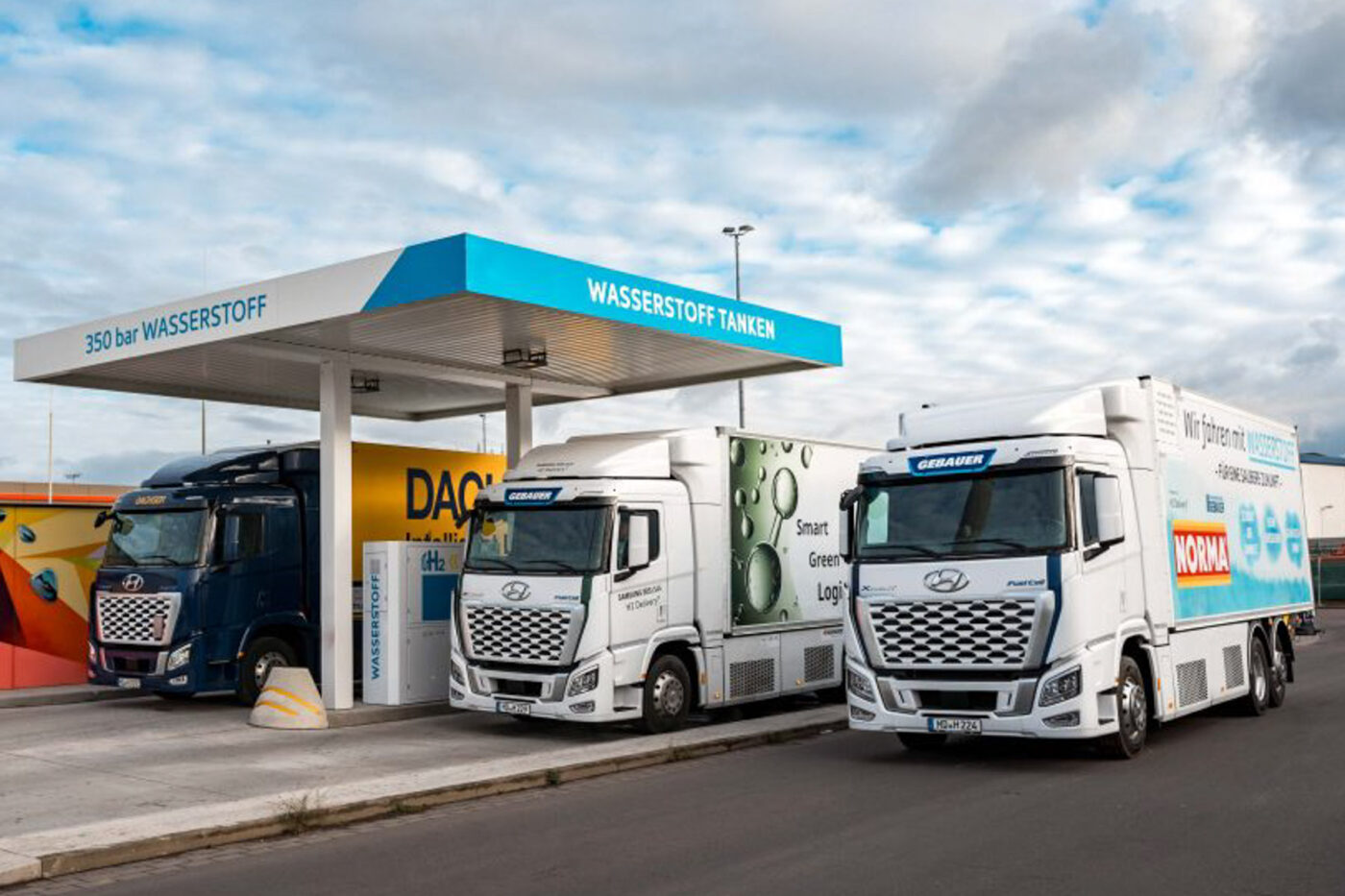
Initially, Tagesspiegel Background reported, citing information from government circles, that the funding call was expected to be published later this week. A few hours later, the Federal Ministry of Transport (BMV) made the funding public in a statement of its own. It spoke of the ‘establishment of a nationwide initial network of hydrogen refuelling stations for commercial vehicles.’
“The goal is to reliably support the market ramp-up of hydrogen trucks, thereby making an important contribution to climate protection and strengthening the transformation of the German automotive and supplier industry towards alternative drivetrains,” the BMV said.
Interested companies can submit their funding applications until 31 May 2026. The scheme does not focus on individual funding for refuelling stations or vehicles, but on packages ‘consisting of a station and trucks, which are intended to ensure a basic utilisation of the refuelling station as well as on-site refuelling options,’ according to Tagesspiegel Background. “The focus is on combined funding that links the construction of publicly accessible hydrogen refuelling stations with the procurement of hydrogen-powered commercial vehicles,” the BMV explained in its statement. “This approach ensures that new refuelling stations have sufficient basic utilisation from the outset, while haulage and logistics companies can rely on a dependable refuelling option at the same time.”
In this way, up to 40 refuelling stations and around 400 vehicles are to be funded, according to the information provided. However, the actual number may vary, as it will be determined ‘on the basis of the prioritisation of the applications submitted and the budgetary funds available.’
“At least 10% of the daily capacity (calculated over 24 hours) of the HRS (hydrogen refuelling stations) must be covered by existing and/or newly procured vehicles. In addition, vehicle fleets can also be funded at existing HRS sites or those under construction or in the planning stage, provided this fulfils the utilisation requirement,” the call states. Overall, the call covers four variants of package funding.
Up to seven million euros per application
The hydrogen refuelling station can receive a grant of up to 50 per cent of eligible investment costs, capped at a maximum of four million euros. For vehicles with hydrogen-based drivetrains, up to 80 per cent of the eligible additional investment costs (compared with a diesel vehicle) will be funded. However, vehicle funding within a package is capped at a maximum of three million euros, meaning that up to seven million euros can be approved per package application.
The combined funding for refuelling stations and vehicles aims to create a core network of hydrogen refuelling stations for heavy-duty transport, which will be partially utilised directly by the funded vehicles. Germany, in particular, plays an important role in the development of such infrastructure in European heavy-duty transport due to its position as a transit country.
“Hydrogen plays an important technical, economic and geopolitical role for climate-friendly heavy-duty transport and provides a useful complement to battery-electric drivetrains. That is why we agreed in the coalition agreement to support hydrogen refuelling infrastructure,” said Germany’s Federal Transport Minister Patrick Schnieder (CDU). “Today, we are putting this into practice: we are funding hydrogen refuelling stations and – in connection with these stations – hydrogen trucks. This resolves the chicken-and-egg problem: truck drivers find reliable refuelling options, and refuelling stations are utilised from the outset. Step by step, this will create a reliable core network – an important piece of the puzzle in the shift to climate-friendly drivetrains in heavy-duty transport.”
Germany must meet AFIR requirements
While the German coalition government has repeatedly advocated for ‘technology openness’ (see, for example, the EU’s CO₂ targets for new vehicles), the new funding call is likely only partially related to this. Primarily, Germany must meet the targets set by the European Regulation on the Deployment of Alternative Fuels Infrastructure (AFIR). Although Germany is already meeting the requirements for charging points for battery-electric vehicles, it still lags behind in the hydrogen sector.
Under the EU’s AFIR regulation, member states must ensure by 2030 that at least one publicly accessible H₂ refuelling station exists in all relevant urban nodes. Additionally, an H₂ refuelling station must be available at least every 200 kilometres along the TEN-V core network. The TEN-V core network includes key motorway routes such as the A2 from Berlin to Dortmund or the A9 from Berlin to Munich.
In mid-January, our German colleagues reported that Germany’s hydrogen refuelling network is even shrinking, with only around 50 public H₂ refuelling stations remaining—down from over 90 at one point. This decline is primarily due to older stations operated by H2 Mobility being decommissioned. These stations operated at 700 bar pressure and were primarily designed for fuel-cell passenger cars. However, this market did not develop as expected, so these stations were not replaced at the end of their lifespan but instead dismantled. H2 Mobility has since shifted its focus to commercial vehicles operating at 350 bar, which is more common for heavy-duty lorries and buses. Some of the new locations also offer 700 bar for passenger cars and vans. Currently, there are around 35 stations suitable for H2 trucks.
The big caveat: while 350 bar pressure is common for commercial vehicles, it is not necessarily the standard for the future. Daimler Truck, for instance, is known to be focusing on cryogenic, liquid hydrogen for its upcoming H2 semi-trailer trucks. While this does not make a significant difference for the fuel cell in the vehicle, it does for the tanks installed in the lorry and the refuelling stations. Whether gaseous hydrogen at 350 bar must be stored and dispensed or liquid hydrogen (sLH₂) at -253 degrees Celsius is used requires completely different technologies.
Furthermore, it remains unclear whether and how the new funding will address a well-known issue from Germany’s previous KsNI directive: under this funding programme, refuelling stations and charging points could also be funded alongside vehicles, but the infrastructure was only permitted to be used by the funded vehicles. Due to these restrictions, it was not possible to make the charging points or hydrogen refuelling stations accessible to third parties to increase utilisation and improve the economic viability of the investment.
The German Federal Association of Freight Forwarding and Logistics (DSLV) has welcomed the prospect of new funding. “A funding programme is interesting for testing technical developments in real time and providing manufacturers with direct feedback,” said Simon Brück, Head of Environmental, Climate, and Energy Policy at the DSLV, in an interview with Tagesspiegel Background. It is crucial that refuelling stations are guaranteed a certain level of demand to ensure their economic operation.
The investment must also be worthwhile for freight forwarders despite federal funding. Currently, H2 trucks remain a niche market in Germany, partly due to the lack of widely available serial vehicles. The market for battery-electric trucks is growing faster, with manufacturers estimating that by 2030, half of their sales will be battery-electric trucks. The remainder will consist of internal combustion engines running on diesel, HVO, or hydrogen—either as a combustion fuel or in fuel cells.
bmv.de, ptj.de (tender), background.tagesspiegel.de (in German)
0 Comments