


Svolt claims world-first separation of fire and electricity in battery design
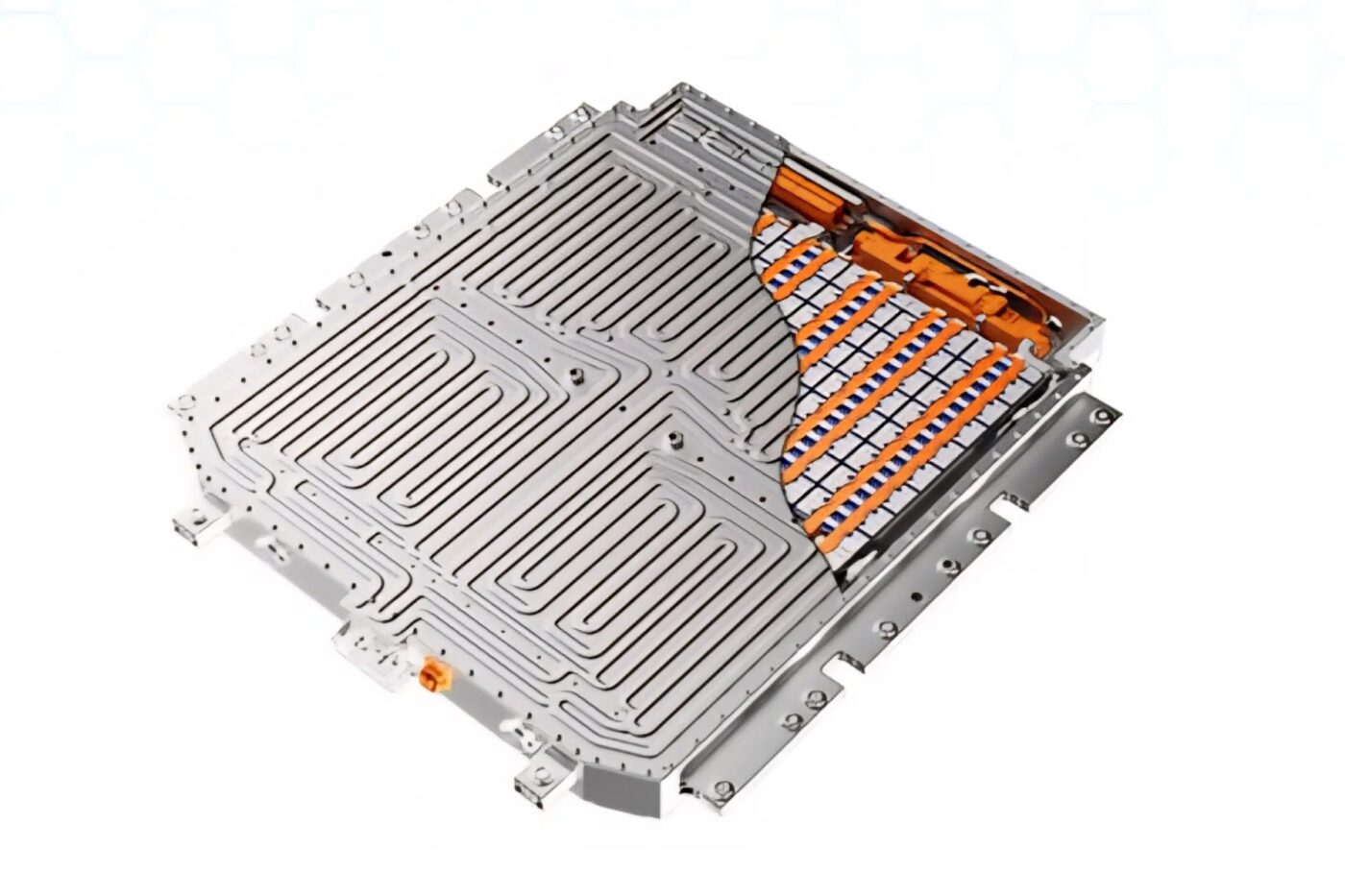
Battery pack fires can occur when thermal runaway takes place. This refers to an uncontrolled chain reaction within a battery cell, during which the cell continuously heats itself. The rising temperature accelerates chemical reactions inside the cell, which in turn generate additional heat. Beyond a certain point, the process becomes unstoppable: the cell can ignite—and neighbouring cells may also catch fire.
Although battery manufacturers have long strived to prevent such incidents, absolute safety can never be guaranteed. Svolt, one of the ten largest battery manufacturers in the world, has thus focused its development efforts on optimising battery safety to ensure that, in the event of a fire, no lives are put at risk.
In its new Dragon Armor 3.0 battery design, Svolt has spatially separated the electrical connections and pressure relief channels. This ensures that, in the event of thermal runaway, flames and gases are directed downwards and away from the passenger compartment—rather than towards the occupants. This is achieved by positioning the positive terminal on one side of the battery and the pressure relief channel for fire on the opposite side. This physical separation ensures both have their own independent pathways.
Svolt also states that its Dragon Armor 3.0 is the first battery to offer compatibility between prismatic battery cells and CTC/CTB (Cell-to-Chassis/Cell-to-Body) integration with separated heat dissipation. The battery’s total capacity has been increased by 7 to 10 per cent within the same housing dimensions, and the cell height has been increased by 5 mm. The top of the battery cell is impact-resistant, while the underside provides pressure relief and shared collision protection.
Combined with semi-solid-state technology, Dragon Armor 3.0 also delivers an 8 °C higher self-heating temperature for the battery cell, a 10 per cent longer safety buffer time, a 5 °C higher temperature threshold for the onset of thermal runaway, and a 25 per cent reduced likelihood of thermal runaway. The battery will enter series production in two variants: an 86-kWh battery pack for plug-in hybrids and a 115-kWh battery pack for battery-electric vehicles. Svolt initially introduced the first version of Dragon Armor at the end of 2022.

1 Comment