


ACEA: EU battery-electric vehicle market share continues to grow
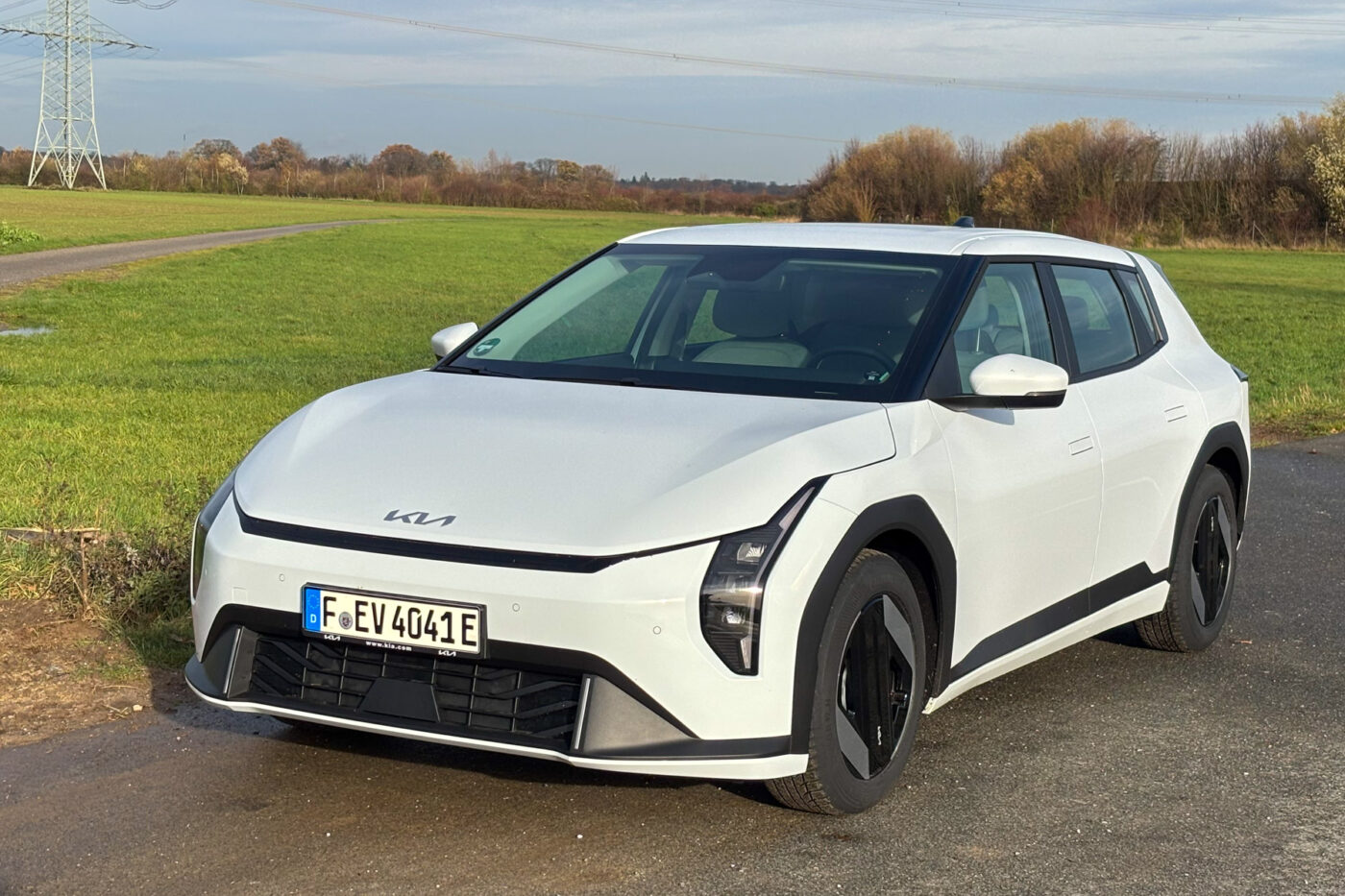
In January, 154,230 new battery-electric cars were registered in the EU, marking a 24.3% increase compared to the same month last year. This growth also raised their market share to 19.3% of all new car registrations, according to the European industry association ACEA. For comparison, battery-electric cars accounted for just 14.9% of new registrations in January 2025, meaning their market share has increased by 4.4 percentage points.
The rise in the market share of electric vehicles is not solely due to growth in absolute numbers, from around 124,200 to over 154,000 units, but also reflects the overall market’s performance. Compared to the previous year, the total market declined by 3.9%, with 799,625 new cars registered across the EU, down from nearly 832,000 in January 2025.
The trend observed in previous months persists across other powertrain types: plug-in hybrids (PHEVs) also saw an increase, with a 28.7% rise in January 2026—slightly stronger than that of battery-electric cars. However, in absolute terms, the PHEV segment remains smaller, with 78,741 units registered. By far the largest powertrain category is hybrids (HEVs), which grew by 6.2% to 308,364 vehicles. Internal combustion engine (ICE) vehicles, on the other hand, suffered double-digit declines: petrol cars fell by 28.2% to 175,989 units, while diesel cars dropped by 22.3% to 64,550 units, according to ACEA’s figures. With a 38.6% market share, HEVs continue to gain prominence, while pure petrol cars, at 22%, now only narrowly lead battery-electric vehicles.
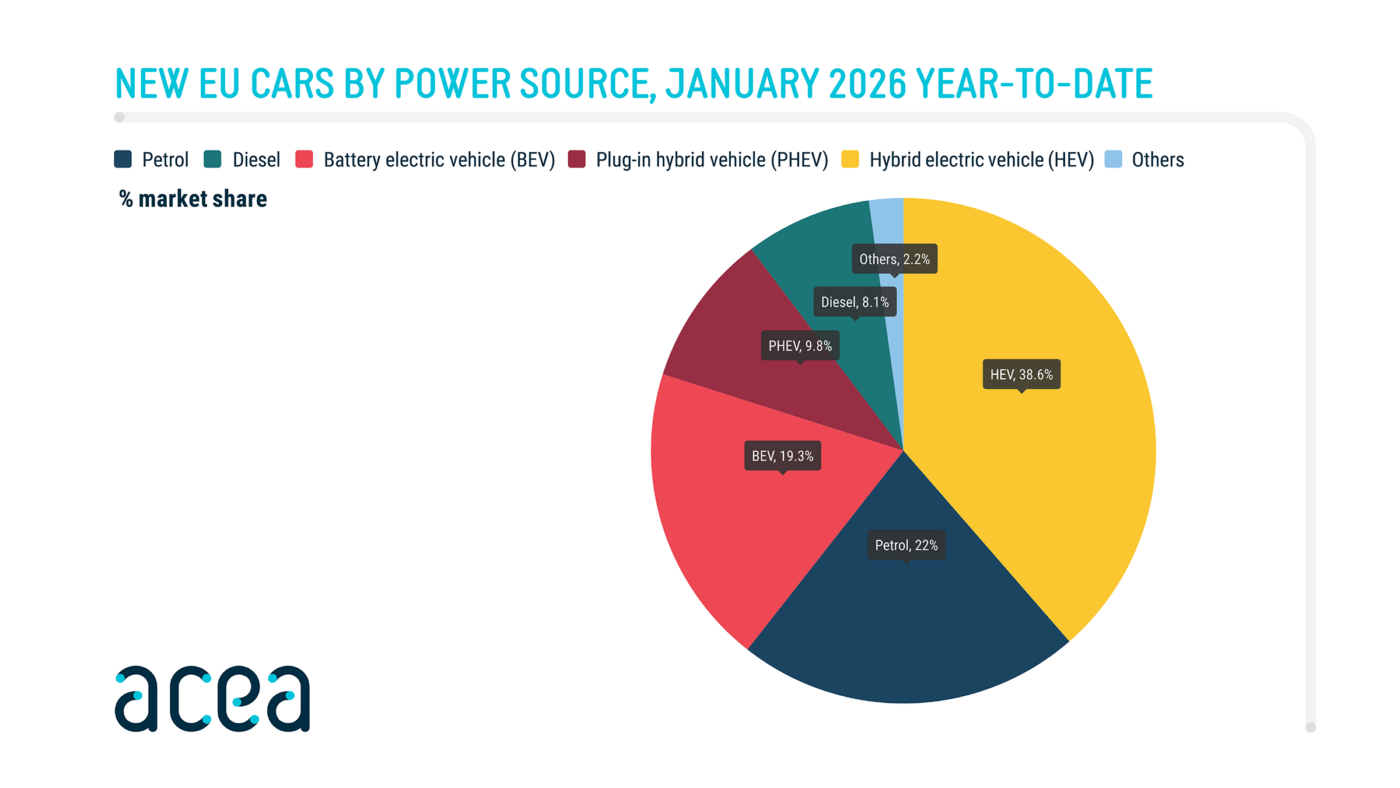
However, a familiar caveat applies: ACEA does not further break down HEVs by their degree of electrification. This category includes full hybrids, mild hybrids, and 48-volt hybrids. As a result, it also encompasses vehicles that, for example, use a small electric motor solely for start-stop assistance or turbocharging but cannot drive even a single metre on electric power alone. For customers, these vehicles feel like conventional ICE cars, even though they are officially classified as hybrids. Thus, the decline in ICE vehicles is partly shifted to hybrids without significantly reducing climate emissions.
A closer look at BEV registrations reveals mixed results across the EU’s four largest markets, which account for 60% of all new battery-electric car registrations. France (+52.1%) and Germany (+23.8%) saw increases in BEV registrations, while Belgium (-11.5%) and the Netherlands (-35.4%) experienced declines. Germany remains Europe’s largest market with 42,692 electric cars, ahead of France (30,307 BEVs) and the non-EU market of the United Kingdom (29,654). Despite the decline, Belgium remains in the five-digit range with 12,131 units, while Denmark also stands out with a notable increase of 52.7%, reaching 10,618 electric cars. The Netherlands, however, with 7,165 BEVs (down from 11,089 the previous year), now lags behind Italy (9,423, +40.7%) and Ireland (7,305, +48.4%).
The highest growth was recorded in Poland, with a 216.1% increase, rising from 1,121 BEVs in January 2025 to 3,544 this year, marking a significant development for the Polish market. Croatia also saw substantial growth, with registrations doubling from 69 to 138 electric cars. Lithuania experienced notable growth of 65.2%, albeit on a smaller scale (from 161 to 266 BEVs). This is followed by Denmark and Finland, each with a 52.7% increase (in Finland’s case, from 1,641 to 2,505 electric vehicles).
In non-EU European markets, growth trends have recently mirrored those in the EU—though not at the start of 2026. The UK, the largest single market in this group, remained almost flat with a 0.1% increase, while electric car registrations in Norway (along with the country’s entire car market) plummeted at the turn of the year, as previously reported.
In its manufacturer statistics, ACEA still does not differentiate by powertrain type. Therefore, only Tesla, as a pure battery-electric car manufacturer, can be assessed here, as all other manufacturers also offer plug-in hybrids and ICE vehicles. According to ACEA, Tesla registered 7,187 new cars in the EU in January 2026, which is 1.6% fewer than the previous year (7,305). This gives Tesla a market share of 0.9% at the start of the year.
acea.auto (PDF)

0 Comments