


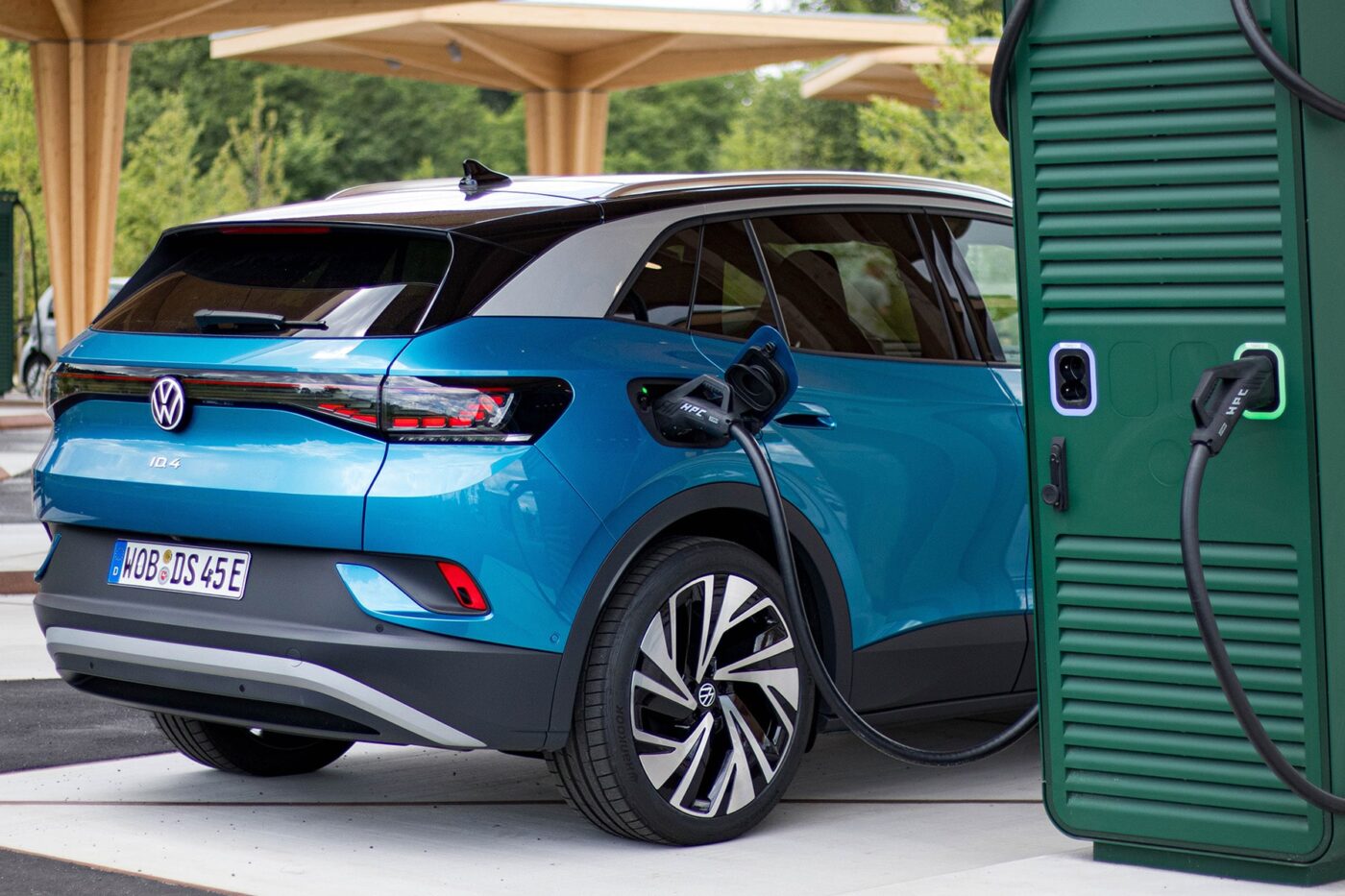
Charging success rate: a new metric to make EV charging more reliable
The metric considered most important in the expansion of public charging networks has shifted repeatedly over time. At times, the focus has been on simply counting charging points; at others, it has centred on installed charging capacity, the volume of energy sold, technical availability (also known as ‘uptime’), or combinations of these indicators.
A new metric to assess EV charging reliability is being introduced in Germany. According to the National Centre for Charging Infrastructure, the ‘Charging Success Rate’ (CSR) is intended to measure the success of charging processes in a precise and potentially standardised way.
The metric was developed by the centre in collaboration with electric mobility consultancy P3. It is designed to help institutions and, in particular, charge point operators (CPOs) better evaluate charging quality across their networks and identify areas for improvement.
The previously emphasised uptime metric reflects only the technical availability of charging infrastructure and does not capture whether a charging session can actually be completed from the user’s perspective. As outlined in a 19-page report by consultancy P3, a charging point may be considered fully operational even if a session cannot be initiated—for example due to interoperability issues between the vehicle, charger or backend systems.
According to P3, an analysis of more than 20,000 test charging sessions across Europe shows a user-centric charging success rate of between 80 and 86 per cent over the past 24 months—despite a theoretical uptime of 99 per cent.
To develop the ‘Charging Success Rate’, P3 carried out a more granular analysis of charging network data from its ‘Charging Radar’, including factors such as the duration of DC charging sessions. The consultancy identified the share of “regular” charging sessions, flagging those lasting less than four minutes as unusually short and likely indicative of an error.
Such short sessions accounted for around 6.3 per cent of the data set, meaning 93.7 per cent of sessions were classified as regular—well below the average uptime of 96.2 per cent recorded during the same period. While some charge point operators (CPOs) in the German sample came close to the 99 per cent uptime target, others lagged significantly behind.
One anonymised operator, referred to as ‘CPO D’, illustrates the gap: despite an uptime of 98.3 per cent, only 86.2 per cent of its charging sessions were considered regular, suggesting potential issues in around 14 per cent of cases.

The 86 per cent figure also reflects the average charging success rate across Europe in 2025. P3 analysed more than 20,000 CCS charging sessions over the past five years, covering over 80 vehicle models, more than 100 charging station types and 80 charge point operators (CPOs). While the success rate has improved markedly from 49 per cent in 2021, around one in seven charging sessions still failed from the user’s perspective in 2025. According to P3, most of these failures occurred before charging even started—and are therefore not captured by the uptime metric.
At the same time, the share of ‘regular’ charging sessions alone offers only limited insight, as it mainly reflects usage patterns. The newly developed ‘Charging Success Rate’ aims to provide a more comprehensive picture. It considers the entire charging process—from authentication and communication between vehicle and charger to authorisation, error-free energy transfer and achieving the desired state of charge, charging time and power.
According to P3, only by combining technical availability with user-centric indicators can the actual quality and reliability of charging infrastructure be realistically assessed.
CSR combines technical and user-centric KPIs
The ‘Charging Success Rate’ is measured using the OCPP communication protocol (version 1.6 or higher), the de facto standard for data exchange between charging stations (EVSE) and a charge point operator’s backend. OCPP provides real-time status data from individual charge points and entire sites, allowing detailed analysis of technical and operational performance throughout the charging process.
A successful charging session—referred to as “Charging Success”—is defined as the share of charging attempts that both initiate a transaction, meaning the station starts delivering power to the vehicle, and complete it without interruption. The metric can be applied at different levels, from individual charge points and sites to entire CPO networks.
To calculate the ‘Charging Success Rate’, P3 defines two sub-KPIs: the ‘Authentication Success Rate’ (ASR) and the ‘Transaction Success Rate’ (TSR). Authentication success refers to the share of charging attempts in which the charging station successfully begins supplying power to the electric vehicle.
The ‘Transaction Success Rate’, in turn, measures the proportion of charging sessions that are successfully completed by all users within a defined period, based on a set of specific criteria.
- Fault-free completion of the charging transaction – The charging transaction was concluded without technical errors that could have unexpectedly interrupted or terminated it.
- Problem-free unplugging – Users were able to unplug the vehicle without requiring manual intervention to release the connector from the vehicle.
The authors stress that the quality and reliability of charging infrastructure can only be realistically assessed by combining technical and user-centric metrics—an approach reflected in the ‘Charging Success Rate’.
The aim is for operators to adopt this standardised metric and establish a user-focused benchmark across the industry.
“Charging processes should function smoothly across the board and integrate seamlessly into daily life. Difficulties in starting a charging session or interruptions are not only frustrating for users,” said Johannes Pallasch, Head and Spokesperson of the National Centre for Charging Infrastructure under the umbrella of NOW GmbH. “How well charging works in practice will also be crucial for the continued success of electromobility. Operators should therefore be able to quickly and easily identify and resolve issues in the charging process. With the Charging Success Rate calculation methodology, we are making an important contribution to this, together with the P3 Group.”
“From the customer’s perspective, uptime is a necessary but not sufficient condition for a successful charging session. The analysis of field data reveals a significant discrepancy between the purely technical uptime assessment and the actual charging success from the user’s perspective,” adds Markus Hackmann, Managing Director of E-Mobility & Energy at P3 Group. “It is therefore essential to establish a user-centric metric that validly measures and reflects real-world charging success. With our approach to the Charging Success Rate, we are creating genuine transparency regarding the reliability of charging infrastructure for the first time, and—together with the National Centre for Charging Infrastructure—providing concrete starting points for improvement.”
nationale-leitstelle.de, p3-group.com (Whitepaper for download; both links in German)

0 Comments