


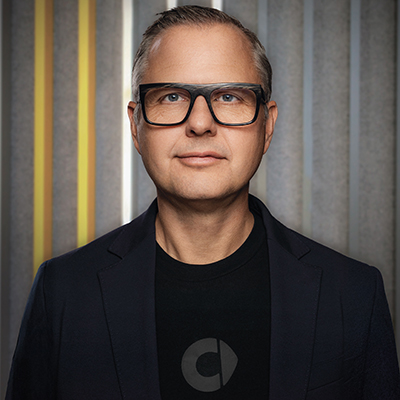
Wolfgang Ufer
CEO at smart Europe GmbH
Since 1 March 2026, Wolfgang Ufer has been the new CEO of smart Europe. He has many years of experience with the smart brand and its European markets. In recent years, he has been largely responsible for the development of smart in Germany.
linkedin.comsmart returns to its roots — and scales up in Europe: Interview with CEO smart Europe Wolfgang Ufer
What comes to your mind when you think of smart? For many, it is still the iconic two-seater — the compact fortwo that shaped urban mobility for more than two decades. But the brand has moved on. Today, smart is one of the few manufacturers with a fully electric line-up, and its portfolio has expanded significantly in recent years.
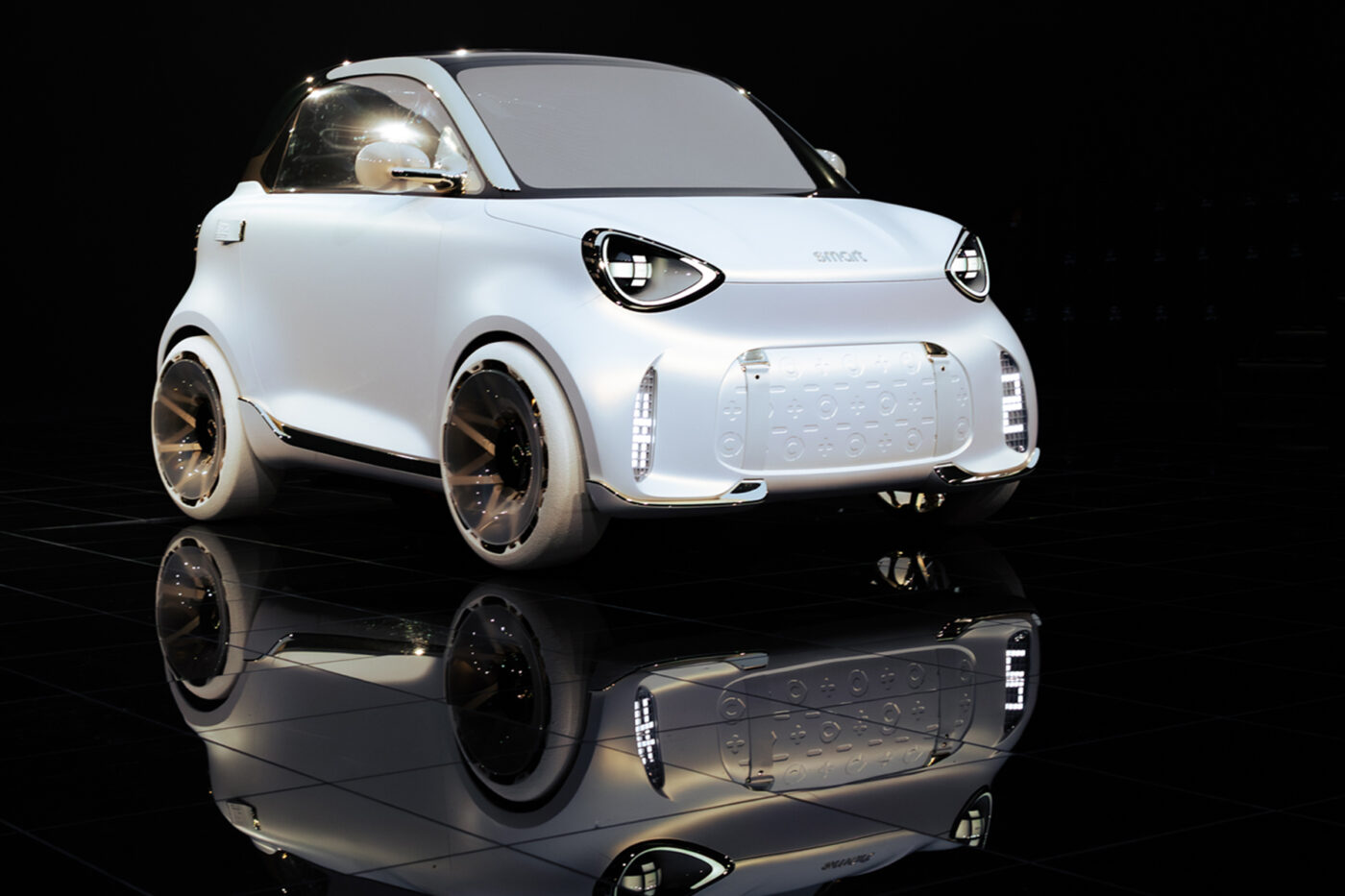
It started with the #1 and #3, followed by the #5 in 2025 — the largest smart ever built. Now, however, the brand is preparing to reconnect with its origins. At the Auto China in Beijing, smart offered a first glimpse of the new #2, bringing the two-seater concept back into the spotlight — this time as a fully electric reinterpretation.
Leading this next phase in Europe is Wolfgang Ufer. Having headed smart’s German business for years, he took over responsibility for the European market on 1st of March. His new role comes at a crucial moment: the foundations have been laid, the model range is in place, and the focus is now shifting firmly towards growth.
In this episode of eMobility Insights, electrive editor-in-chief Peter Schwierz speaks with Ufer in his first major audio interview since taking on the position. The discussion covers smart’s evolving brand identity, the role of its expanding portfolio and the significance of the upcoming #2.
Is the new model a return to the brand’s roots — or a step into a new era? And what does smart stand for in Europe today?
The interview is available as a podcast in German. You can activate subtitles on YouTube, or read the AI-translated and condensed transcript below for convenience.
First of all, congratulations on your new role at smart, Wolfgang. How were the first weeks for you? Have you already been able to make your mark?
The first few weeks have been very dynamic — that’s something I can say quite openly. At the same time, I set up a clear programme for myself and really dived into it. Of course, it helps that I’ve been with smart for a long time — 13 years now.But moving from Germany to a European role inevitably broadens the scope. Suddenly, a number of additional markets come into focus. Over the past weeks, I’ve taken a close look at these together with the team, and we’ve already been able to kick off several initiatives that are now starting to show a positive impact.
You’ve already touched on the key point. You know the German market inside out — but now your remit extends far beyond a single country. What changes when you shift from a national perspective to overseeing the entire European market?
The focus changes in that respect. But I also find it logical that I was chosen from my German role by our board to take over the European function. It makes sense because I was able to help build the new smart world over the past five years.
At the same time, I have been with smart for 13 years and know the smart fortwo environment very well. In one of my previous roles, I was responsible for 50 cities directly from headquarters, including sales and marketing. Many of them were European cities. That means I already know the markets, and I even know many of the larger dealer groups personally. That is of course a very good starting point for me now — to meet them again, to talk, to understand where we stand.
And it is still the case that the countries are in very different situations. While Germany is currently experiencing very exciting positive momentum, in other countries there are still some things to work on — not only for the brand, but also for electric mobility.
If anyone has internalised smart’s DNA, it’s you. In our earlier conversation, you described this as the right place at the right time. What defines this moment – for smart as a brand, and for you personally?
The enthusiasm is tangible. Six years ago, smart set out on a new trajectory — at a time when the brand was still largely defined by the two-seater concept that had shaped it for over 25 years.
That positioning no longer fits a standalone company structure. With Mercedes-Benz and Geely as shareholders, expanding into higher-volume segments became a strategic necessity. Over the past six years, that shift has taken shape: smart now has three models on the market, all contributing to growth.
What remained missing, however, was the brand’s core — the two-seater.
Now, in 2026, smart is preparing its return under this new constellation. The project builds on an experienced design team, including contributors to the previous generation (internal code: 453 series), and is driven forward under the leadership of Kai Sieber. The aim: to combine iconic design with state-of-the-art technology.
For the European lead, the significance is clear. Bringing the two-seater back to its home market marks a pivotal moment — both strategically for smart and personally. A rare opportunity to reconnect the brand’s origins with its future direction.bringing the two-seater back to where it belongs — onto European roads.
Yes, when people think of smart, many immediately have the image of the small urban two-seater in mind. That is the origin and DNA, and it was also the vision of smart pioneer Nicolas Hayek. But we now see a brand in change. So let me ask you directly: beyond the #2, what does smart stand for today?
We first of all stand for electric vehicles — fully electric vehicles. We remain true to that. We were one of the first to switch in 2019. In terms of segment, if we look at our current portfolio, we are moving into the D-segment with the #5. And if we imagine the range from the #2 to the #5, that is the area in which we want to operate — compact, lifestyle premium vehicles that stand out through technology, but especially through very good design.
That is our story. Of course, we are also very closely connected to Mercedes-Benz, complementing the portfolio as a second brand in the sales network. That is our strategy, and we will continue to optimise it in the coming years. And with the #2 we are now adding a very important vehicle that brings us back fully into play at the lower end — where many people have been waiting for us.
So no range extenders, hybrids, or so-called technology openness that is widely discussed in Germany?
No, we are very clear that we do not see plug-in hybrids in Europe. One must say that openly and professionally — that is the current position of smart in Europe. Personally, I am also not a fan of plug-in hybrids because I believe they can only ever be a bridging technology.
And if we look at our vehicles today and the technology we have brought to market — I don’t know whether you Peter were able to drive the #5 as I know we were together about a year ago when we presented it — it is a vehicle where I ask myself why I would need a combustion engine component. I drive the vehicle myself. I have driven 43,000 kilometres in seven months and had no problem charging or wasting any time. I can say very clearly that in practice it is no longer a problem.
That is why we are very clear in our strategy and remain fully electric.
You mention the #5. With that vehicle, smart is no longer just the urban niche brand that it used to be. And ultimately, an electric SUV with long range and high charging performance is now something many manufacturers have in their portfolio. So how do you position the smart brand in this context?
We, of course, need to provide a certain portfolio for customers in order to create a certain volume as a company. And for us that also includes a vehicle up to the size of the #5. But that is our outer boundary, which must be clearly said. What we bring into this is the smart DNA, which has always been important to us. Of course, in terms of external dimensions it is not the same as a fortwo, but many other features that matter to us are included, especially in design and space concept.
The same designers who are now also working on the #2 have contributed to the smart #5 as well. We have integrated that into the vehicle. And of course we can also bring technology into our brand world, which is excellent. That is why we launched the #5, and we are convinced it is a vehicle that fits into our portfolio.
We also see success — in fact, the #5 is performing positively. And we had the highest order intake ever for the #5 last month. So the vehicle is currently still growing, even though it has already been on the market for some months. We therefore still see opportunities in this segment. That gives us great pleasure, because I also have to admit: if you assess smart from its origin as a two-seater brand, you would not have necessarily come up with the #5.
But now that we have introduced it and it is increasingly visible on the roads, we see that it is completely fine for customers. And we are addressing a very specific customer group that is looking exactly for such vehicles — especially within a fully electric brand.
Looking at your customers, who is the typical smart customer? Is it also a ‘smart’ type of person, or how do you define your customers?
If you take the smart product range, including 1, #3, and #5, then we are not talking about beginner drivers. That must be clearly said. These are relatively high-income people, who consciously say they want to drive electric, or who have already driven electric vehicles — for example, from other brands that were very early pioneers — and then switch to us. Either because they find the car more attractive or because they have other reasons to drive it. That is the typical profile. These are not very young people — more in the range of 40 to 60 years. That is where the target group begins, and it is a high-income group.
That is the typical profile.The interesting thing is now the #2, because that takes us into a completely different world. We are talking about people between 18 and 86 years old.
I say 86 because my mother is 86 and a passionate smart EQ fortwo driver who is already interested in driving the new one. I always find it quite amusing how interested she is. But that shows the breadth we are dealing with. And we also have a very wide range of applications — from, for example, social care services that urgently need such a vehicle, to someone in Munich who says they want to go to the Viktualienmarkt and leave their large luxury vehicles in the garage and instead take their smart.So the spread becomes much broader. But these are the typical customers we see today.
That sounds like a brand that is continuing to develop. Let’s look at Europe, which is crucial for smart. When you look at the different countries, where do you currently see the strongest momentum for smart?
The strongest momentum I currently see is in Germany. That is a market that is showing very strong growth at the moment. You can also see that in the German Federal Motor Transport Authority (Kraftfahrtbundesamt – KBA) registration figures. And that is not all — there will be much more in the coming months. That is something we are very pleased about.
There are several factors at play. One of them is the impact of subsidies — something I would not have expected to this extent. After all, these incentives are quite narrowly defined and don’t really align with the customer base I described earlier, which tends to be more high-income. But that is definitely one factor. Then there are also other topics, for example the conflict in the Middle East, which has an influence on energy costs. And where many people are now either moving towards electric mobility or at least showing interest.
These impulses are clearly relevant for growth in Germany. At the same time, it is also very important for smart that our vehicles are increasingly present in the streetscape and therefore more visible and in demand. So Germany is definitely a strong market. But countries like Spain also show very good momentum. In France we see solid development. And we are growing very strongly in the Nordics, especially in Norway. There we have a lot of satisfaction — strongly driven again by the #5. It is always very market-specific. Those countries are very focused on such vehicles. Those are currently the key markets where we see strong growth.
Those are also markets with a much higher level of maturity in electric mobility — Norway in particular, where almost all new registrations are already electric. But you’ve raised a key point: external factors. Rising fuel prices driven by geopolitical tensions, as well as local subsidy schemes in Germany, continue to play a role. How do you see public perception of electric mobility evolving, and to what extent do these factors influence your business?
We all know there are cycles. And I would say the last five years were not exactly the peak phase of electric mobility. We have gone through very difficult periods. Now I believe we are seeing a counter-movement again — unfortunately, partly triggered by unpleasant situations. But overall, public perception is improving again, and people are understanding that electric driving makes sense.
At the same time, there is also technological development playing a major role. If you look at how charging times have evolved — from one generation of cars to the next, we are often at half the time or less — and range is improving at the same time. That is something you no longer see in combustion engines. So there is technological progress, plus macroeconomic effects. It varies by country, but overall there is movement in the right direction. We also see this in order intake, which is ultimately what matters in the automotive business. So I would say we are at the beginning of a new positive phase — and I believe it will not be short-lived.
When I look at media coverage in recent weeks, I think of many reports about high fuel prices. There is a lot of complaining at petrol stations. But the reference to electric mobility only comes up very rarely, even though it has long been an established and technically mature alternative. That always feels a bit too short to me. How do you see that?
Yes, that is the case. But I also do not feel comfortable when situations that are caused by things like war are then used for market or commercial gain. That is always a bit difficult, I think.
But the oil companies do it as well.
Yes, but I am speaking purely personally now. And it has always been the case. I remember the time when we sold smart fortwo models in California. Whenever petrol or diesel prices went up, we sold an incredible number of electric cars. Back then there were also good subsidies. That has always been the pattern. And somehow we seem to have forgotten how cheap fuels have been over the past months and years.
Now we are seeing a movement again that we have seen before. And of course, consumers then look at how they can move differently, what alternatives there are. At the same time, we also have an industrial policy situation that cannot be ignored. In Europe, we are still, in total, quite dependent on combustion engines, with supplier industries and OEM structures. So there is probably still a certain cap on how fast things move.
But the logic is clear: electric cars are becoming better and easier to drive, they are extremely fun to drive, they charge quickly, and they are now even becoming more attractive in terms of price, particularly in operating costs. That was already the case before, but now it is much more obvious. That is simply the truth. And anyone who says otherwise, in my view, has not calculated properly.
Does that mean in reverse that 2026 will clearly be a growth year for smart? After all, in Germany there are currently quite generous discounts on all three models, even despite subsidies.
That is, of course, clear. I’ve taken on the European role at a point where a strong foundation has already been established over the past years. We are now active in eleven markets directly, plus an additional six so-called GD (General Distributor) markets. In total, that means we are operating across 17 European markets — a footprint that has been built step by step. Now, however, we are moving into the next phase: scaling the business, with a clear focus on growth.
And that is what we will clearly demonstrate this year. We will show significant growth in every country. That is the target, and we are on track. We have already completed the first quarter and can say we are absolutely on the right path. We will show positive development everywhere. That is also necessary, because in the end, we need to move forward as a brand. And we are all the more pleased when we can then introduce the #2 and start selling it from next year. That will, of course, create a completely new situation in terms of volume. And you can imagine that very well, because you still remember how the earlier fortwo worked and what kind of volume opportunity it represents.
Before we get into that, let’s stay with growth — and your portfolio. Smart once stood for one car, one concept. Now, with the #1, #3 and #5, that has changed. How do you view this broader setup? And was it also driven by Mercedes-Benz and Geely to expand beyond Europe?
You have to think about it like this: when we started five years ago, the question was which cars we would enter the market with. At that time, the brand came from a Renault cooperation and we wanted a partner and platform that gave us more options, because we knew with just a single fortwo product as a company we would not survive. That would not work. So we wanted to grow in the compact segment and grow electrically. And we asked ourselves where growth was visible. Clear studies and analyses are showing where demand for electric mobility exists.
That is why we started with the #1 and #3, because there was strong growth in those vehicle segments. We are now operating up to the #5, which is the outer boundary. Within this range, we continue to look for opportunities to offer vehicles that meet customer needs — electric vehicles that fit those requirements. Of course, this also needs agreement with the shareholders. We are closely aligned with Mercedes-Benz in terms of dealerships and aftersales. Service is also handled via Mercedes-Benz.
So everything is coordinated in the portfolio. No vehicle is not approved in an early phase by the shareholder. It has to fit the overall portfolio. And from my perspective, it is also a very good complement to the Mercedes-Benz portfolio in Europe.
Smart has grown — in the truest sense — but the brand remains clearly recognisable. That brings us to the model many are waiting for: the #2. Even ahead of its market launch, it’s already taking on a certain iconic status, with early prototypes still heavily camouflaged in China. So the question is obvious: is this a return to smart’s roots?
If we briefly look at how we restarted: I often draw a picture with the #1, #3 and #5, and in the middle there was a gap — an open space, if you like.
And now comes the moment where we place the #2 — or fortwo, as many will still call it — into that gap. And I think many will then understand the brand much better again and perceive it more strongly, because we still have a large number of vehicles on the roads, for example in Germany. We are talking about 350,000 to 400,000 fortwo models still in use.That is enormous. In Italy the number is even higher. In cities like Rome — the mother of all smart cities — you see them everywhere. So this is a legend coming back. And we know exactly what it has to be. We are extremely motivated to get this car right from a design and engineering perspective. It will be the best two-seater we have ever built.
So it is a big promise you are making here. But I understand you correctly: this is not simply a return to the roots, but a reinterpretation of the idea? Because there is no other car like this in the European portfolio.
Exactly. But one thing is clear: the DNA of the fortwo or the #2 is non-negotiable. That DNA will be preserved. It is built into the new vehicle. It is about agility, about how it moves in urban traffic, about the size of the vehicle, and, of course, about it being electric.
These are aspects that nobody understands better than we do, because we have had this vehicle in the market for 25 years. So it is a reinterpretation, but anyone who sees the car will immediately understand: this is the new fortwo, this is the #2. There will be no doubt about it.
What can you already tell us about the car? We are still before the premiere, so no technical data — but what can customers expect? [editor’s note: the design of the car has since been presented]
We will not have to wait too long before showing a few things. We are still in the concept phase, but not for much longer. There are already images from our testing phase, where a two-seater is being tested on the road.
I cannot answer questions on exact dimensions, but from the images you can already see that a body from a previous smart fortwo “453 model” generation is being used for testing. So we can assume the new vehicle will be under three metres in length. In addition, it will be a very agile, fully electric vehicle that will outperform its predecessors in every dimension. And that is not too difficult for us — we now have access to excellent technology and the best designers in the industry.
Nicolas Hayek, as the visionary behind smart, always wanted a radically new city car — compact, stylish, customisable and already electric in concept, inspired by Swatch. So in a way, you are continuing that vision. How close are you to it?
I think he would not be unhappy with what we are doing. An interesting fact: many colleagues at smart come from the original smart era. Our Head of R&D in Europe, for example, worked on the early electric programme.
So we are probably closer to the original idea than ever before. We are building a very strong city car with features that will be explained in more detail later in the year — features that are extremely useful in urban life and extend the strengths of the fortwo even further.We are very excited about it. We are also seeing very strong demand already from people who still drive fortwos today and are asking for information.
It is a very exciting time.
What role will the #2 play in the portfolio? Emotional icon or volume model?
It will clearly be a volume model. We want to grow with the portfolio we already have, and we will continue to grow it further. But the #2 will be a volume model, absolutely. It has strong sales potential, and we will fully use that.
And for whom is this car being built?
For the same range of customer groups: from young drivers to the ‘young at heart,’ as we used to say — from 18 to 86 years old. We could use it in car sharing, in pooling, for social services, but also as a well-equipped premium small car for private users. So it will be very broad in its positioning, just as our DNA has always been.
Finally: if we speak again in two or three years, what would I recognise that shows smart has become even more successful under your leadership? Is it just the KBA figures?
It will definitely be significantly higher European sales figures. That we have successfully launched new model ranges. And that we have also updated the existing portfolio — in a way that is very positively received in the market.
That is my goal for the next two to three years. But not only mine, also that of the entire smart team. They are all passionate about the brand. They are doing a great job. We do not only have compact cars, we also have compact teams that do everything to ensure our success. And I have to say honestly: the brand deserves it.
Wolfgang, I wish you every success. Thank you very much for the conversation. I wish you, and all of you, exciting and smart weeks ahead, which will probably be strongly shaped by the #2 premiere.
1 Comment