


Ford to produce first LFP cells this year – thanks to CATL
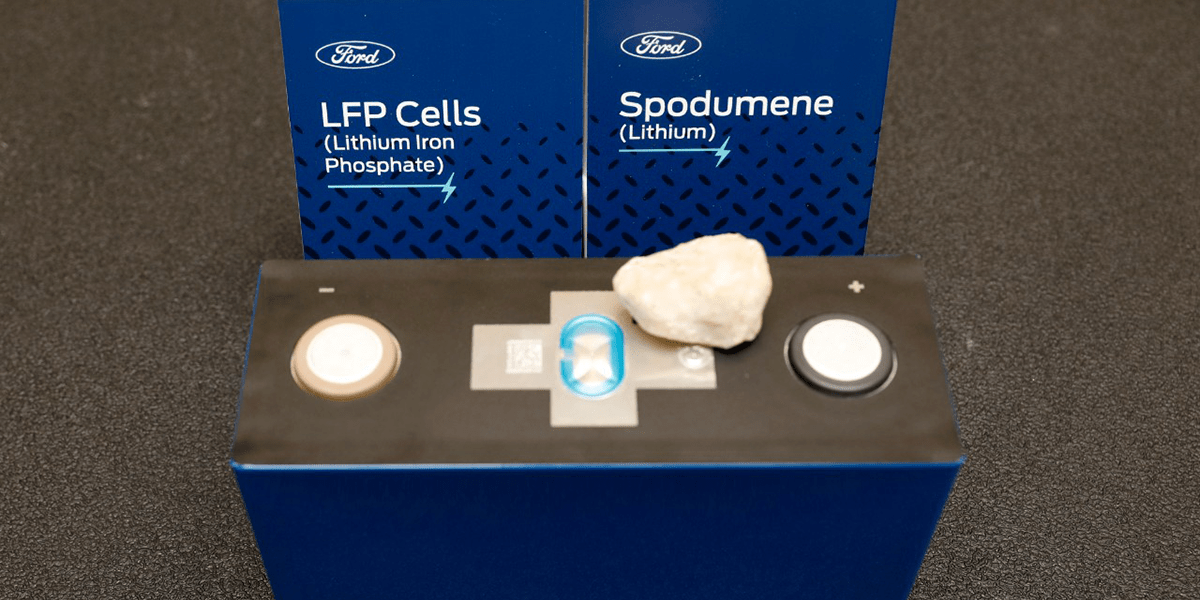
As reported by CBT News and other sources, Ford’s ‘D-Sample’ cells are already in production using materials ready for mass manufacturing and are undergoing final tests and validations. The goal is to integrate these prismatic LFP batteries into Ford’s new, affordable electric pickup based on the Universal EV Platform, which is set to launch in 2027. According to CBT News, Ford expects the plant to begin producing market-ready battery cells before the end of 2026.
To produce its own LFP batteries, Ford has, as is widely known, licensed technology from CATL. This approach gives the carmaker greater control than it would have in a joint-venture structure. The plant in Michigan, USA, is also fully owned by Ford. However, CATL plays a crucial supporting role: employees from the Chinese battery giant have assisted with the production ramp-up in Marshall by providing training and manufacturing expertise, as CBT News reports. In practice, while the factory is US-owned on paper, its operations rely heavily on Chinese support.
In 2023, Ford announced that the plant, named ‘BlueOval Battery Park, Michigan’, would begin producing LFP cells in 2026. Construction appears to be on schedule. At the time, Ford stated it aimed to employ 2,500 workers and achieve an annual capacity of 35 GWh – though this target referred to a later expansion phase. CBT News now reports that Ford plans to employ 800 workers at the plant by the end of this year, eventually increasing this number to 1,700. It remains unclear whether this will mark the final expansion stage, as the news website does not specify the plant’s planned output.
Ford’s adoption of LFP batteries represents a strategic shift away from its original NCM-based battery strategy. While NCM cells offer higher energy density, perform better in low temperatures, and generally provide slightly more power for the same energy content, LFP cells are significantly cheaper, their materials are more readily available, and they are more durable, resulting in a longer service life.
Against this backdrop, Ford dissolved its battery joint venture BlueOval SK with South Korean battery manufacturer SK On in December. Both parties retain ownership rights to the three existing plants in Kentucky and Tennessee. A key factor in this decision was SK On’s focus on NMC cell chemistries, while Ford is pursuing further diversification towards LFP and lithium-manganese-rich (LMR) batteries.
cbtnews.com, eu.detroitnews.com, fromtheroad.ford.com
Update 30.6.2026
Meanwhile, the Chinese side has also confirmed progress in ramping up the cell factory. At an event, CATL Vice President Meng Xiangfeng spoke about the successful launch of Ford’s cell factory in Michigan. However, this does not refer to the start of series production. Instead, the plant has begun pilot production. These prototype cells are currently undergoing rigorous testing to meet CATL’s quality standards. The company is targeting a defect rate of one in a billion. The plant is then expected to deliver its first regular batch of battery cells for Ford electric vehicles later in 2026.


0 Comments