


Renault improves efficiency of R4 and R5 powertrains
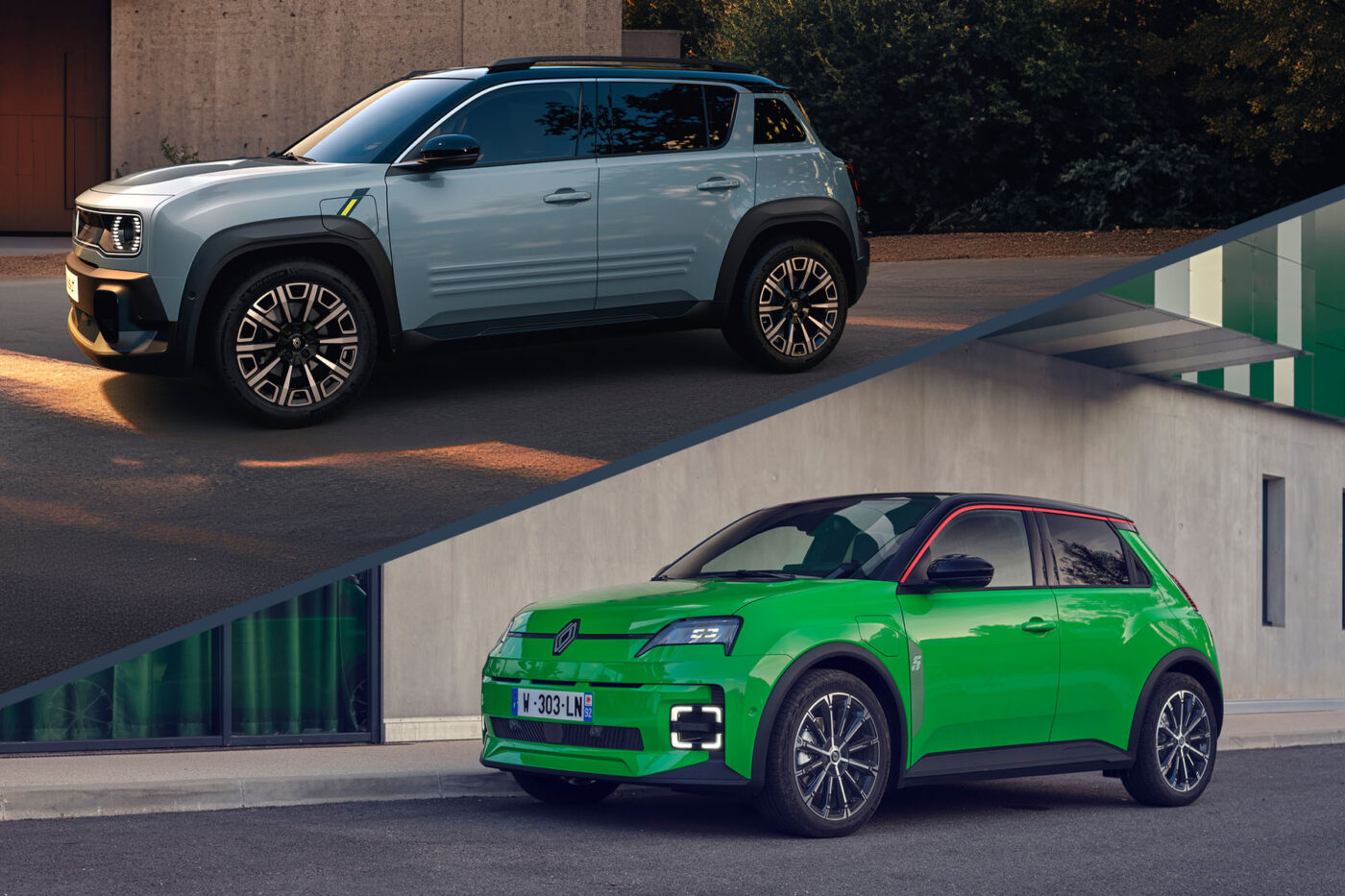
According to a report by Autocar, Renault is developing a new generation of electric motors. Citing Marianne Bataillon, Renault’s Head of Electric Motor and Battery Development, the publication reports that the carmaker is continuing work on improving the efficiency and performance of its second-generation drive units. Renault is focusing particularly on the inverter and the reduction gearbox. Bataillon said the upgrades are expected to reach the Renault 4 and Renault 5 by the end of 2026 or in early 2027.
Both models are currently based on Renault’s AmpR Small platform and are available with two powertrain and battery configurations. In the Renault 5, the Urban Range variant combines a 90 kW electric motor with a 40 kWh battery and offers a WLTP range of up to 312 kilometres. The Comfort Range version pairs a 110 kW motor with a 52 kWh battery, increasing the WLTP range to up to 410 kilometres.
The Renault 4 is offered with the same drivetrain options. Customers can choose between a 90 kW motor with a 40 kWh battery or a 110 kW motor with a 52 kWh battery. Renault quotes WLTP ranges of up to 308 kilometres and 409 kilometres, respectively.
Renault is developing the new powertrains to deliver higher output while improving efficiency, which is expected to increase driving range. According to Autocar, the updated systems will likely be based on further developments of Renault’s Gen 2 Evo electric powertrain. The drive unit made its debut in the new Twingo, where it is offered with an output of 60 kW. Renault plans to introduce more powerful and efficient versions in the Renault 4 and Renault 5. However, the manufacturer has not yet disclosed performance data or potential range gains.
The report adds that Renault is drawing on lessons learned from the development of its third-generation electric motors. This is likely a reference to the E7A drive unit, which Renault is developing for the next-generation Mégane and Scénic, expected to arrive from 2028. However, Renault does not plan to equip the Renault 4 and Renault 5 with the E7A system or switch the models to an 800-volt architecture.
The updated drive units for the Renault 4 and Renault 5 will arrive as new competitors enter the small electric vehicle segment. Volkswagen plans to equip the upcoming ID. Polo with a 155 kW electric motor and a 52 kWh battery, targeting a range of up to 454 kilometres. Skoda has announced similar specifications for the Epiq, pairing a 155 kW powertrain with a 52 kWh battery and claiming a range of more than 440 kilometres. Both figures exceed the current maximum WLTP ranges offered by the Renault 5 and Renault 4.
The difference is smaller in the entry-level versions with lower-capacity batteries. Volkswagen expects the ID. Polo equipped with a 99 kW electric motor and a 37 kWh LFP battery to deliver a range of up to 329 kilometres. Skoda quotes around 310 kilometres for the Skoda Epiq with the same drivetrain configuration.
By comparison, the Renault 5 achieves up to 312 kilometres with its 40 kWh battery, while the Renault 4 offers up to 308 kilometres. Any efficiency improvements from Renault’s updated powertrains are therefore likely to be particularly relevant for the models equipped with the larger 52 kWh battery, where the gap to upcoming competitors is currently more pronounced.
Regardless of the planned motor upgrades, Renault could also expand the battery options for the Renault 4 and Renault 5. In an interview with Auto Express, Adam Wood, Managing Director of Renault UK, said that LFP battery technology forms part of the company’s future product roadmap and specifically referenced the Renault 4 and Renault 5. According to Wood, the cell chemistry could be introduced in the Urban Range variants. However, he did not disclose a timeline, battery capacities or expected range figures.
Auto Express speculates that Renault could eventually replace the current 40 kWh NMC battery. The manufacturer has not confirmed such a move, and it remains unclear whether Renault would retain the existing capacity or introduce a smaller battery pack. For the Urban Range versions of the Renault 4 and Renault 5, LFP technology could primarily support the introduction of lower-cost entry-level variants.
autocar.co.uk (powertrains), autoexpress.co.uk (battery)

0 Comments