

Long-haul electric mobility: DAF introduces the XG and XG+ Electric
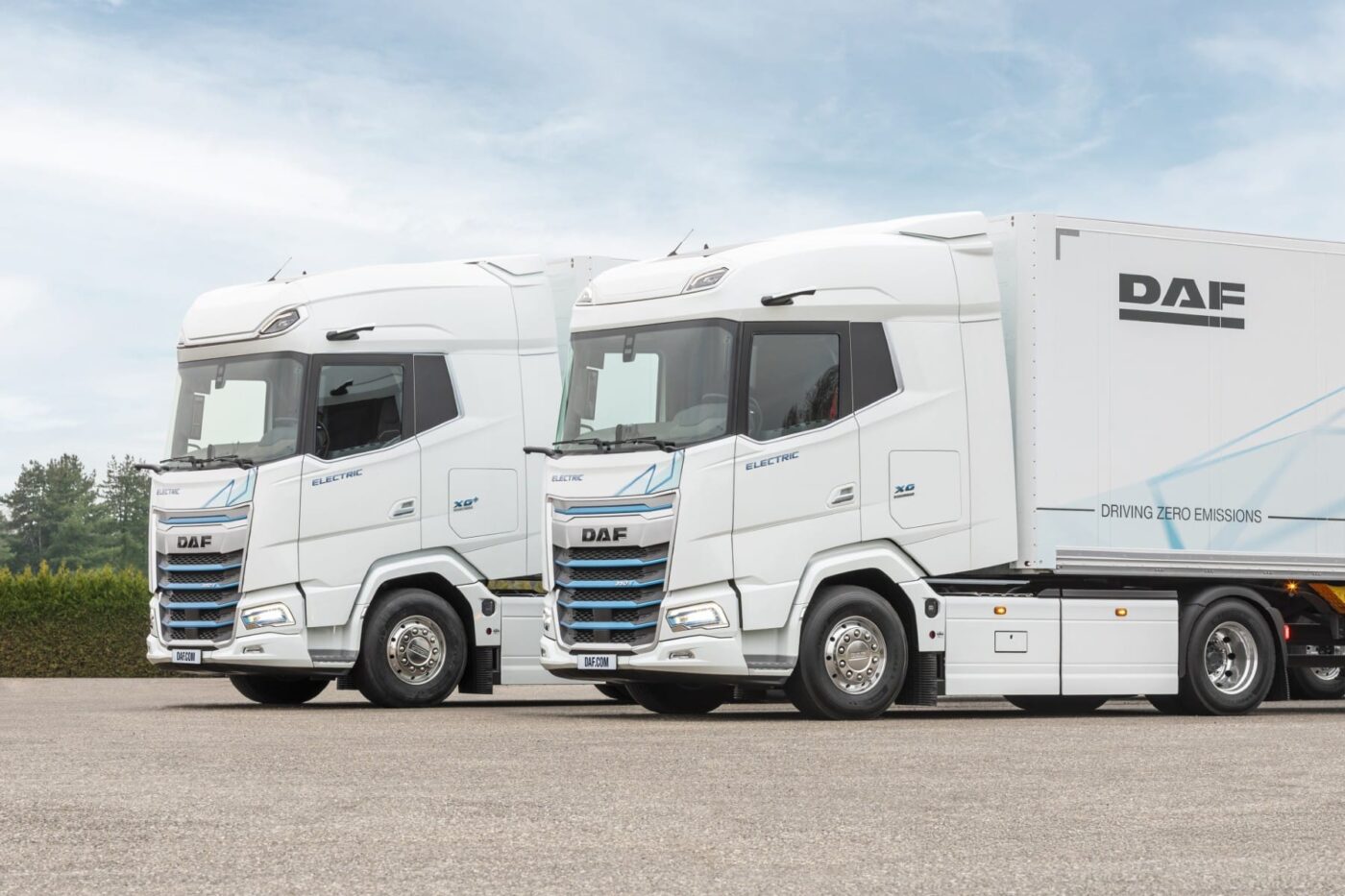
DAF is advancing its electric roadmap by now offering its long-haul trucks, the XG and XG+, with battery-electric drivetrains. This move is a logical step, as these two models share their technology with the already electrified XF. The transition to the battery-electric XG and XG+ was therefore straightforward. To provide context, it is worth looking back to 2021: at that time, DAF unveiled its new internal combustion engine model ranges for long-haul transport. For this segment, previously dominated solely by the XF, the manufacturer introduced the trio of XF, XG, and XG+—differing primarily in cabin size. This expansion was driven by new EU legislation at the time, which permitted increased dimensions and weights. DAF was quick to capitalise on these changes.
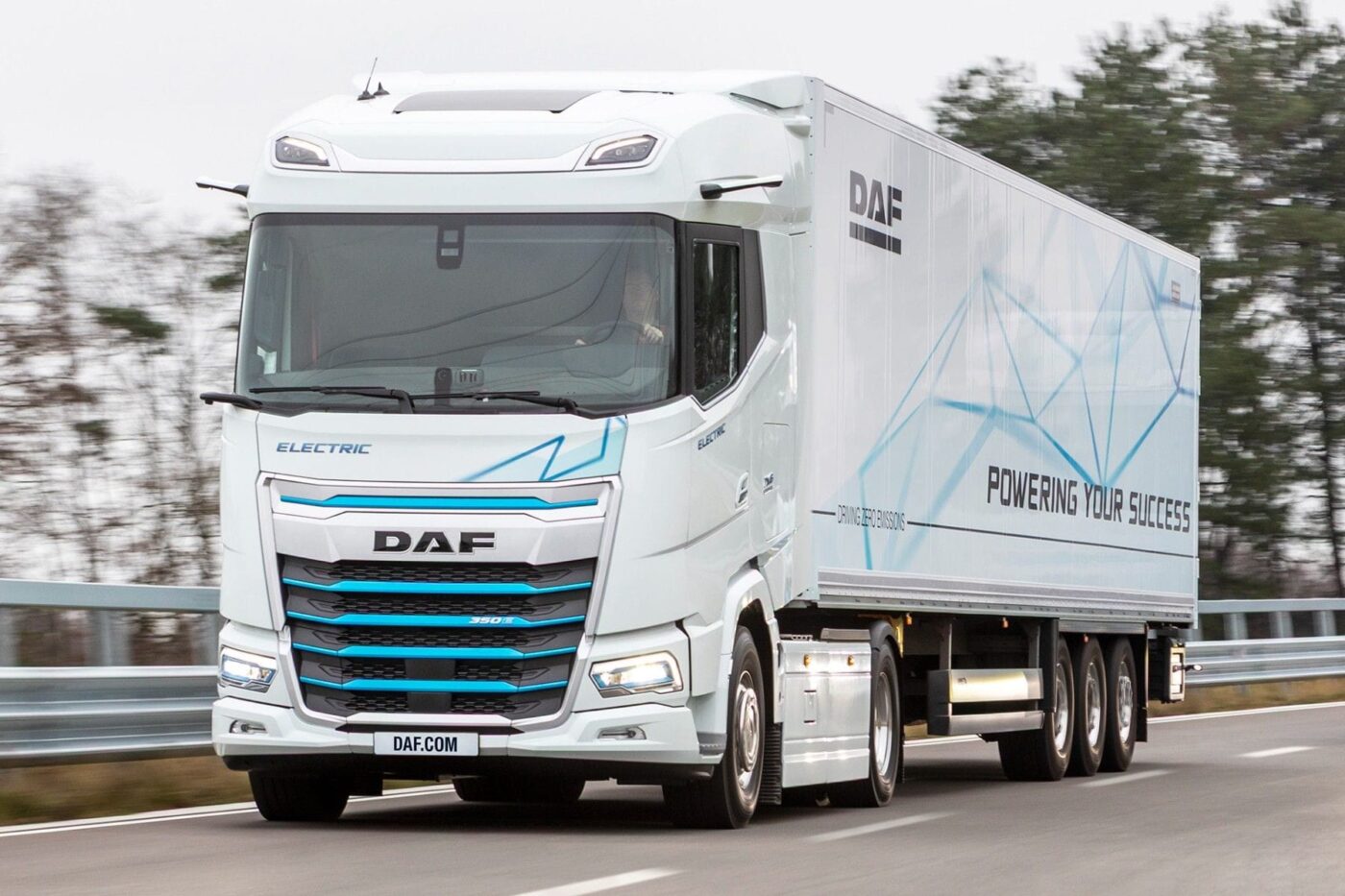
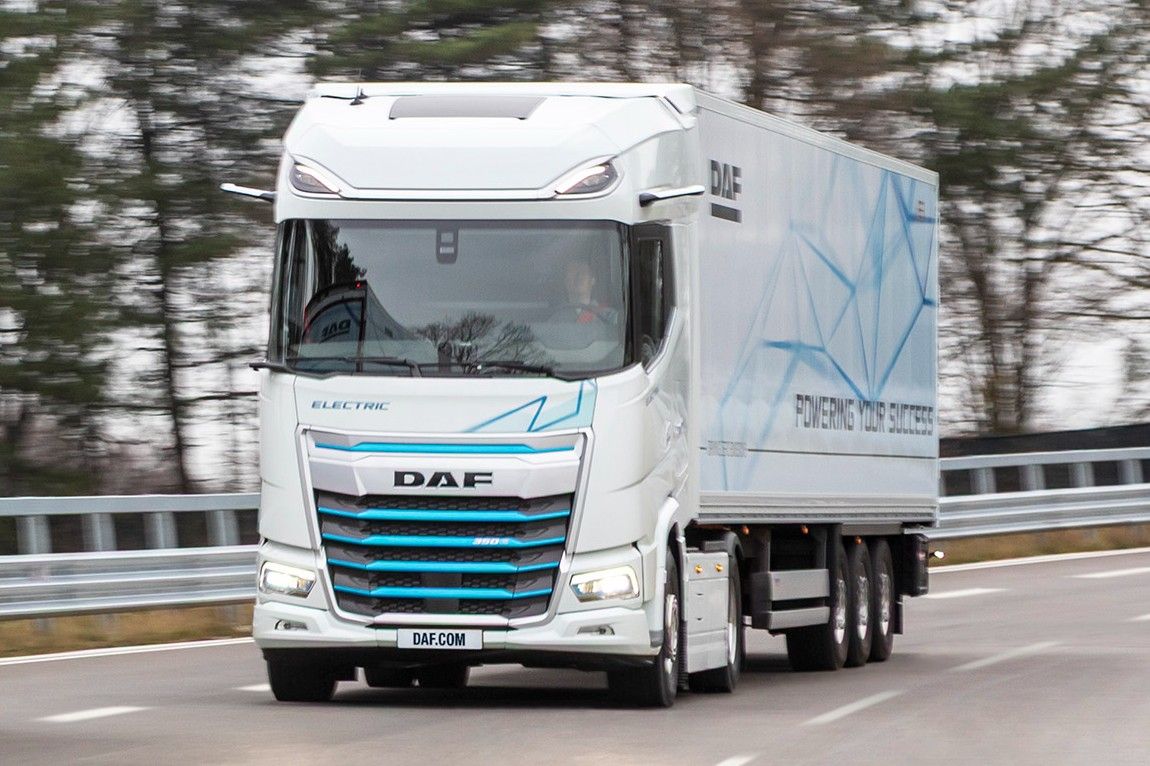
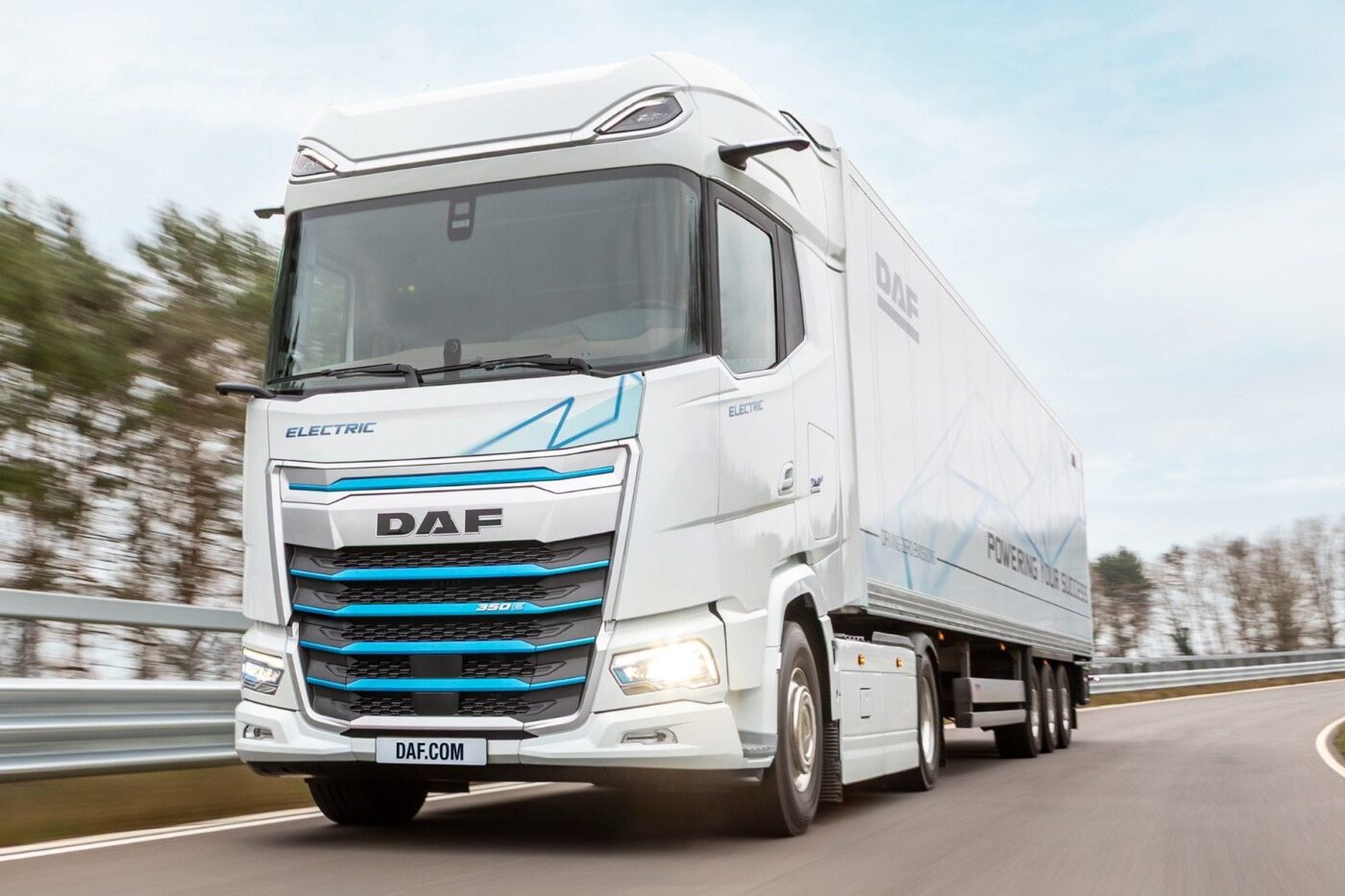
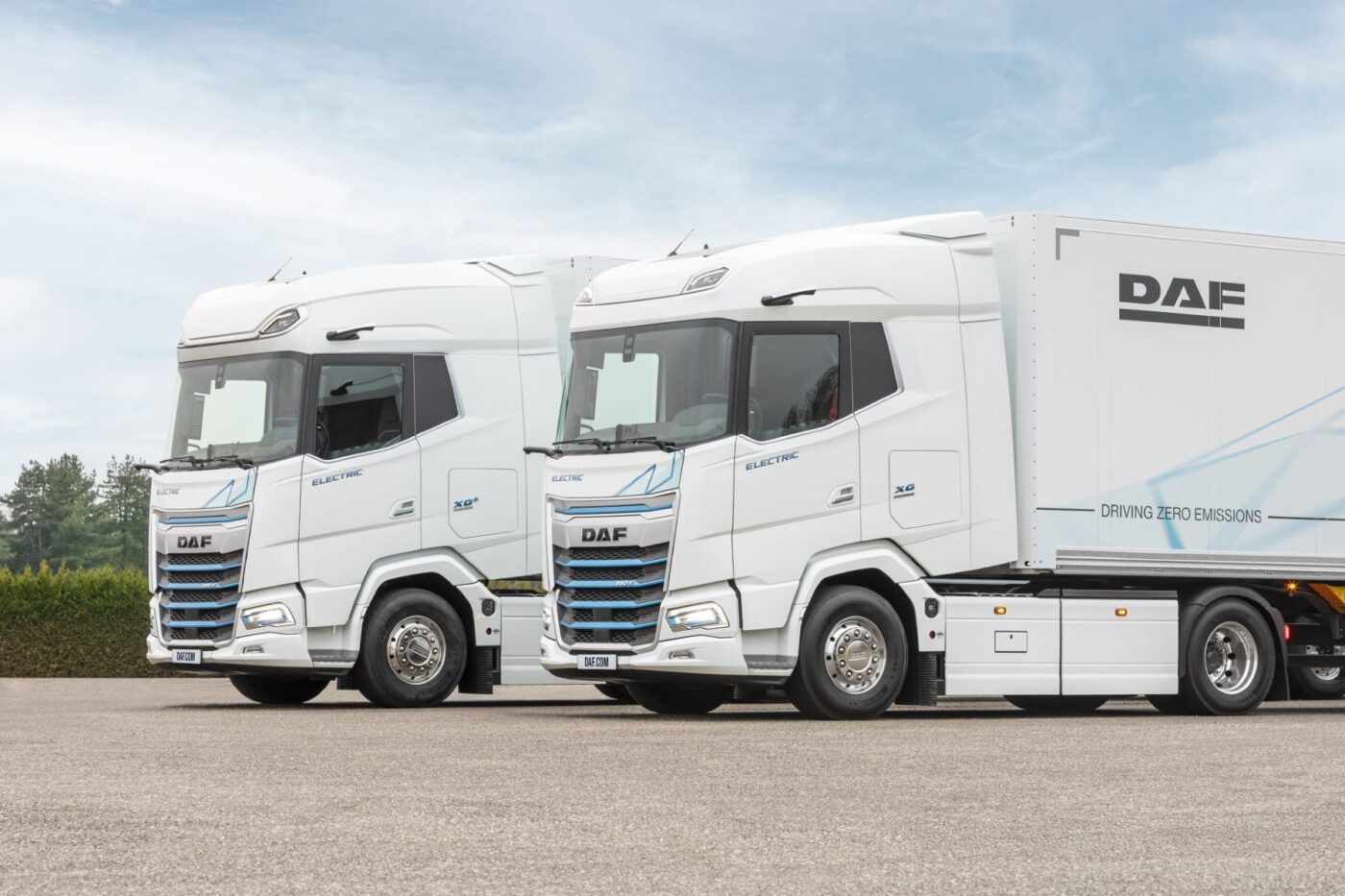
Going forward, the XG and XG+, which are considered luxurious in the trucking industry, will also be available as electric trucks with a range of over 500 kilometres. DAF positions the two models in its portfolio as battery-electric trucks for international transport, emphasising—just as it does with their diesel counterparts—their ‘superior driving comfort.’ Specifically, the cabs are 33 centimetres longer and taller than the XF’s cab. DAF states the total volume as 12.5 cubic metres, with a standing height of up to 2.2 metres. The bed offers a consistent width of 80 centimetres, maintaining top-tier spaciousness within the industry.
Available axle configurations: 4×2 and 6×2
DAF has confirmed that the XG and XG+ Electric will be available as 4×2 tractor units and 6×2 trucks with a steered trailing axle. However, the manufacturer has not yet specified when the market launch will take place or when the first deliveries can be expected. Technically, the two new electric models share their technology with the XF Electric, which, along with the slightly smaller XD Electric, has recently begun rolling off the production line in Eindhoven. All are electric derivatives of previously ICE-only model ranges. According to the Dutch manufacturer, the electric versions were considered from the outset during development, aiming to elevate DAF’s battery-electric transport to a new level.
The XG and XG+ Electric, along with the XD Electric and XF Electric, are essentially the second to fifth electric models in DAF’s current portfolio—alongside the smaller XB Electric (available as a 12-, 16-, and 19-tonne variant). The company’s first electric trucks—the tri-axle CF Electric (built from 2018, with a gross vehicle weight of up to 28 tonnes) and the rigid LF Electric (up to 19 tonnes)—are no longer available. The transition from the old to the current generation of electric trucks was not without challenges for DAF: although the XD and XF Electric were unveiled at the IAA Transportation 2022 in Hanover, series production was repeatedly delayed. It was not until the final quarter of 2025 that the company announced the completion of production, after around two and a half years of delays. The motto: thoroughness over haste. The recent ‘Truck of the Year 2026’ award bestowed upon the XD Electric and XF Electric underscores the maturity of the new electric truck generation.
Recharging with up to 325 kW
The new electric trucks are positioned as follows: the mid-sized XB Electric is designed for urban distribution, the XD Electric handles urban, regional, and interregional distribution, the XF Electric is intended for long-haul freight transport, and the XG and XG+ Electric are aimed at national and international long-haul operations. All models feature modular drivetrains with Paccar electric motors delivering up to 350 kW, alongside a range of LFP battery packs capable of charging at up to 325 kW.
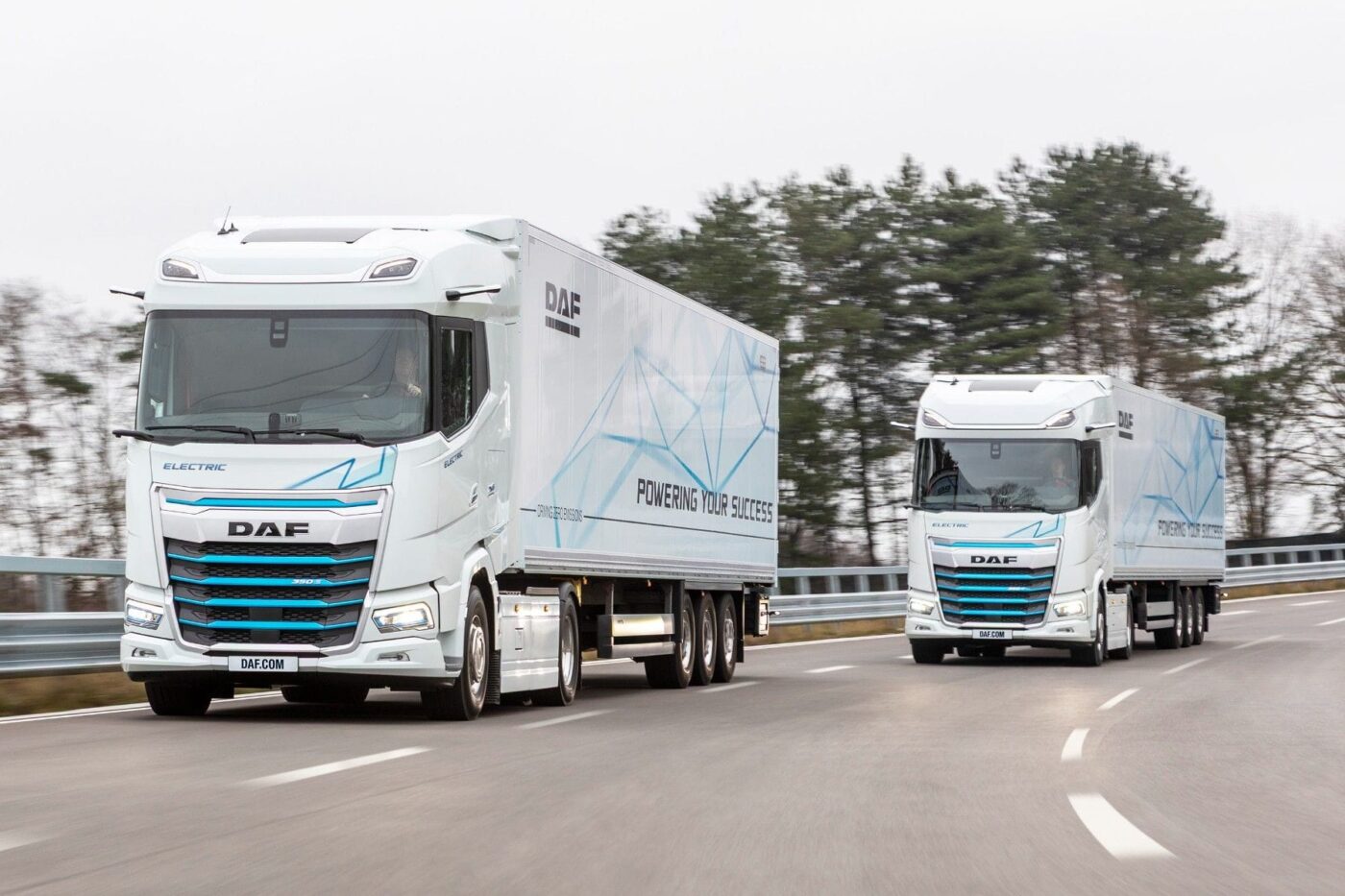
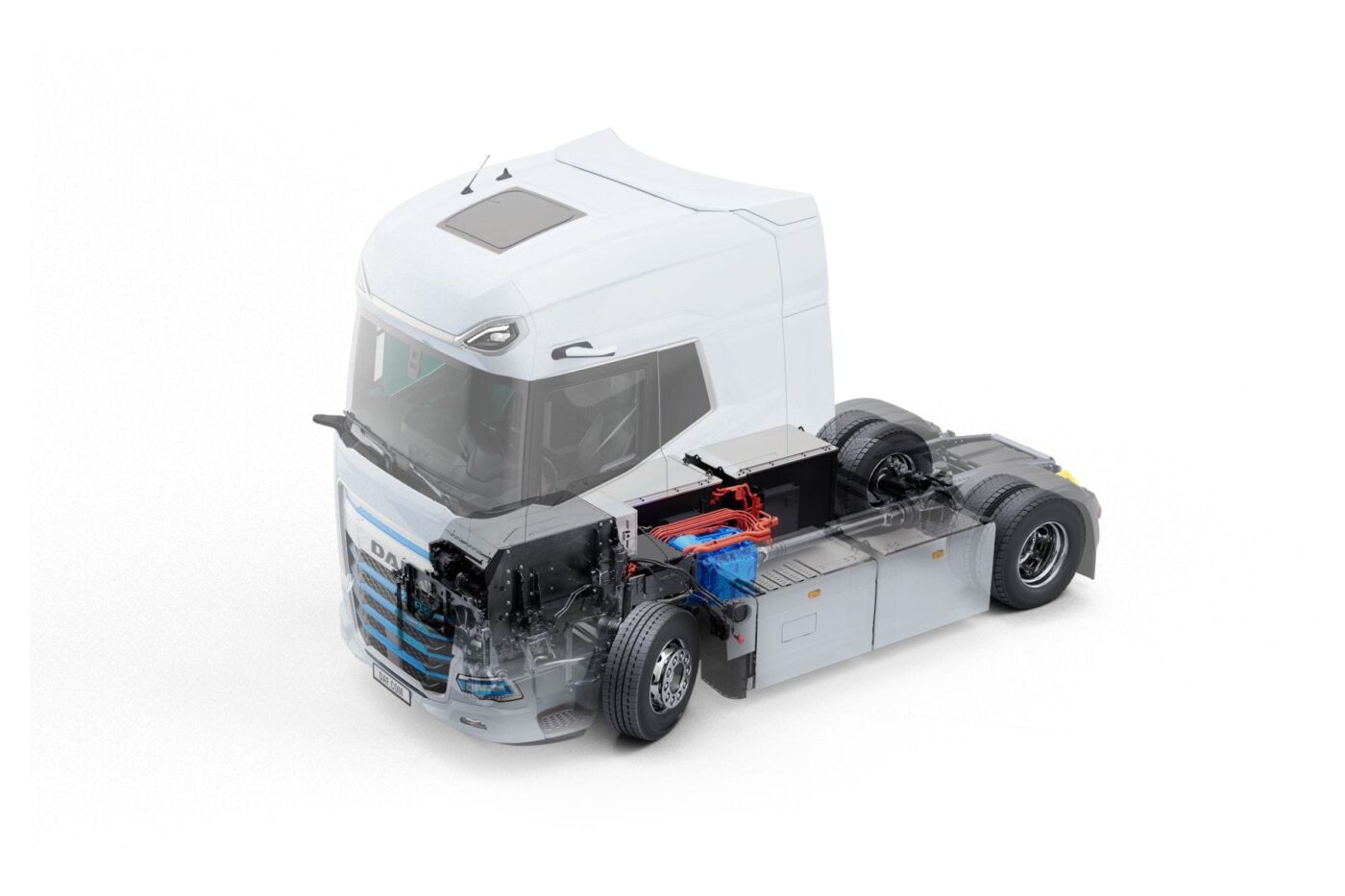
As a Paccar subsidiary, DAF leverages its expertise in motor technology: the vehicles are equipped with electric drivetrains from Paccar’s EX motor family, tailored to customer requirements. The Paccar EX-D1 motor is available in 170, 220, or 270 kW configurations, while the Paccar EX-D2 offers 270, 310, or 350 kW. Both motors are paired with a three-speed transmission from ZF. DAF has further increased the torque in the final development phase: while the previous maximum torque for the D1 and D2 was 1,200 and 1,975 Nm respectively, the latest data sheet now lists 1,500 and 2,400 Nm. The maximum regenerative braking power is 270 kW (D1) and 350 kW (D2).
XG and XG+ Electric Come with Paccar EX-D2 Drivetrain as Standard
The Paccar EX-D1 drivetrain is only used in the XD Electric for solo operation with a gross vehicle weight of up to 29 tonnes. The EX-D2, on the other hand, is designed for more demanding applications and is suitable for gross combination weights of up to 50 tonnes, according to DAF. It is the standard drivetrain in the XF, XG, and XG+ Electric. The CATL battery with LFP chemistry can also be configured in stages. The smallest configuration in the XG and XG+ Electric consists of three battery packs with a total energy content of 315 kWh. The largest option comprises five packs with a total of 525 kWh, offering a range of around 500 kilometres. The available ordering options are as follows:
| Vehicle | Electric Motor | Power | Torque | Number of Batteries | Battery |
|---|---|---|---|---|---|
| XG/XG+ Electric | PACCAR EX-D2 | 270 kW | 2,400 Nm | 3 to 5 | 315 to 525 kWh |
| XG/XG+ Electric | PACCAR EX-D2 | 310 kW | 2,400 Nm | 4 to 5 | 420 or 525 kWh |
| XG/XG+ Electric | PACCAR EX-D2 | 350 kW | 2,400 Nm | 4 to 5 | 420 or 525 kWh |
For DC charging, DAF specifies a charging power of up to 325 kW. An AC onboard charger is also expected to be available as an option for the XG/XG+ Electric, providing up to 22 kW charging power with alternating current. For charging from 10% to 80% battery state of charge, DAF states that DC charging at 325 kW takes around 45 minutes for three battery packs and approximately two hours for five packs. The battery comes with an eight-year warranty. Whether the electric trucks will feature an MCS charging port in the future remains unclear.
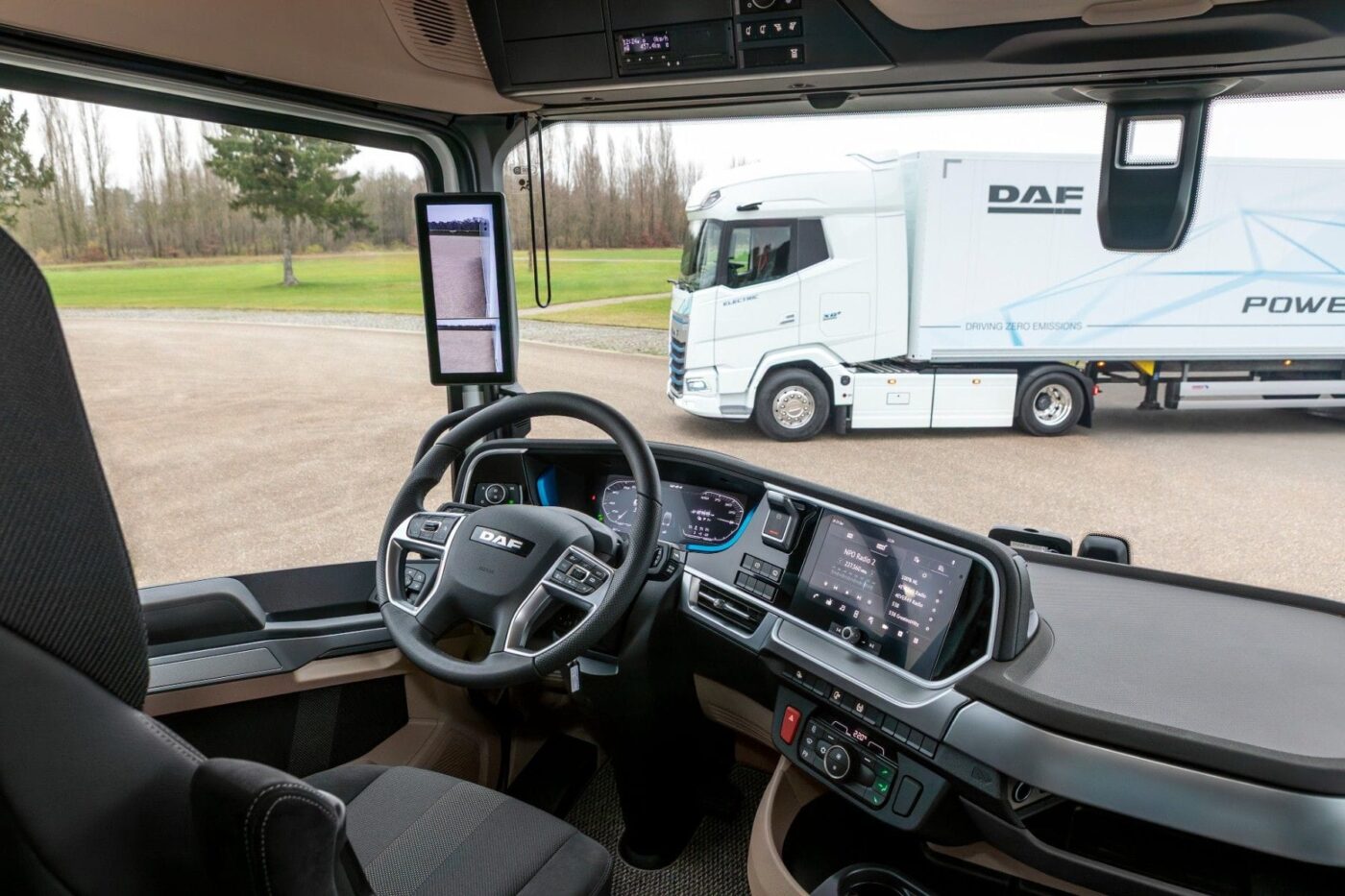
DAF highlights the strengths of its electric trucks as not only the drivetrains from parent company Paccar but also its proprietary battery management system and ‘outstanding aerodynamics.’ All cabs feature, among other things, a curved windscreen, rounded corners, and sealed seams and gaps to optimise airflow around the vehicle. Side skirts, spoilers, wheel arches, and digital cameras instead of mirrors further reduce air resistance.
Flexible positioning of battery packs
Regarding bodywork options, DAF promises the same flexibility as with its ICE models. This is made possible by the flexible mounting of battery packs on the chassis. Additionally, a feature already known from the XF Electric is expected to be introduced in the electrified XG and XG+: the one-pedal driving function, which allows the driver to adjust regenerative braking via the steering column lever. The desired braking power in the new generation of electric heavy-duty trucks can be set in increments of 33%, 66%, or 100%.
Externally, the electric models can be distinguished from their ICE counterparts by deliberately placed accents, particularly blue highlights on the grille and headlights. Inside the cockpit, a digital instrument cluster has been specifically designed to provide a quick overview of the electric drivetrain, including energy consumption, charging status, range, power output, and regeneration. The optionally available truck navigation system also displays charging locations.
Eindhoven becomes production hub
The new electric trucks are manufactured in Eindhoven. According to earlier statements from DAF, the construction of the dedicated hall and installation of machinery were completed in 18 months. However, the assembly plant opened in early 2023 is not an entirely new facility but a specialised production line for electric models, housed in a separate hall on the existing Eindhoven site, distinct from the ICE truck assembly line.
Production of the electric trucks in Eindhoven begins with a chassis manufactured in another part of the plant, delivered without a drivetrain but already fitted with the cab. The 4×2 and 6×2 tractor units and chassis are then completed in an eight-stage process on the electric truck assembly line, where all necessary components are installed. In addition to the vehicle assembly line, the new hall features a sub-assembly line for battery packs, while all high-voltage components, including batteries and drivetrains, are mounted onto the chassis on the main assembly line.
daf.com

0 Comments