

Geely aims for 75% NEV share by 2030
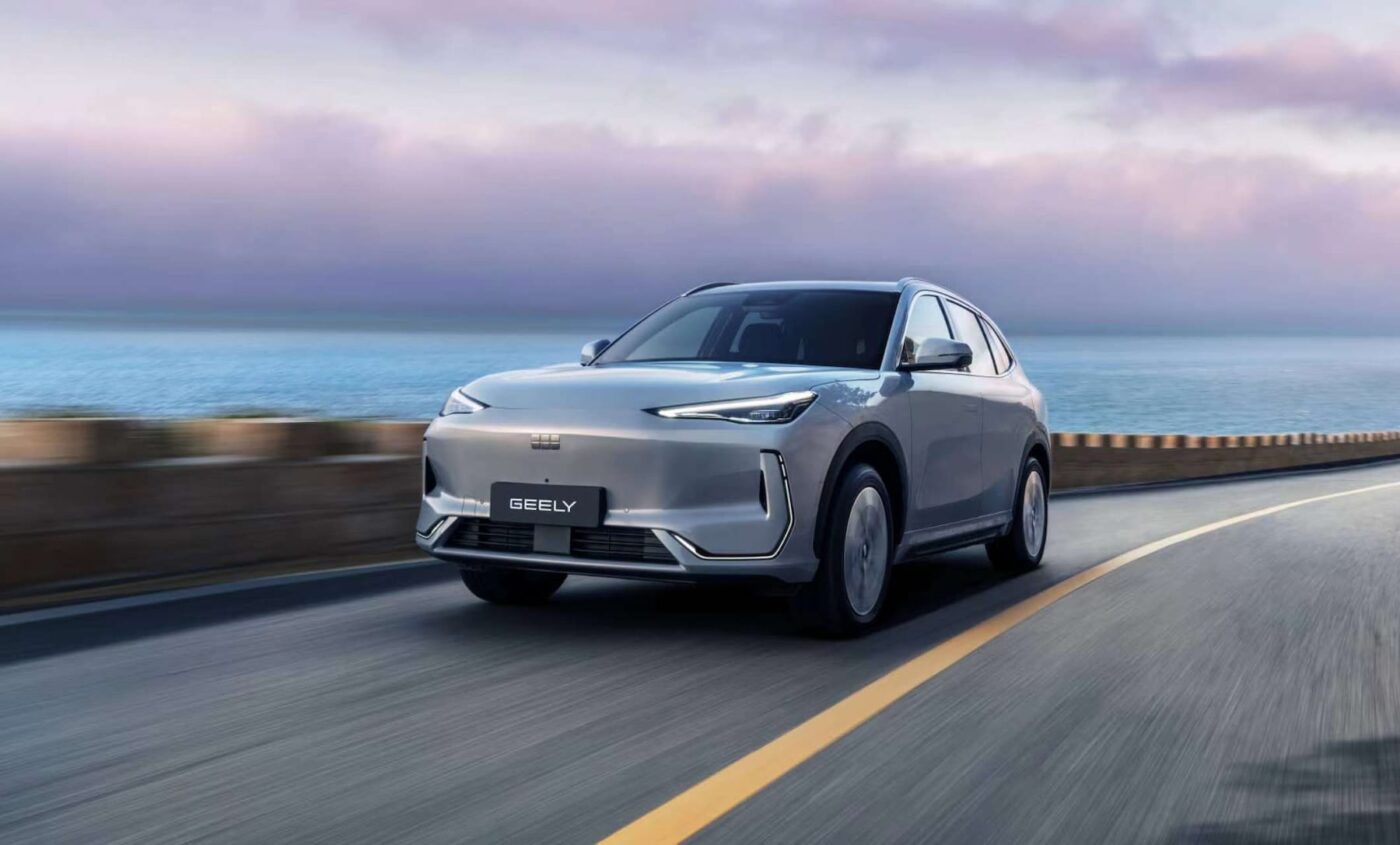
The new five-year plan is underpinned by the motto ‘One Geely, Leading through Innovation and Integration.’ As part of this strategy, the multi-brand group aims to strengthen global collaboration within the corporate group, build a strategic capability system, become a leading global automotive manufacturer, and take a pioneering role in the high-quality globalisation of Chinese companies.
Until now, the group’s numerous brands—Geely Auto, Geely Galaxy, Lynk & Co and Zeekr in China, as well as the global brands Volvo, Polestar and Lotus—have not cooperated as closely as the group would have liked. This is without even considering the Smart joint venture with Mercedes-Benz or the new partnership with Renault. As a result, Geely has included a shift from independent management of each brand towards deep global collaboration in its roadmap for the next five years.
Focus on proprietary ecosystem
Another key priority for the group, which celebrates its 40th anniversary this year, is to transition from competitiveness in product manufacturing to competitiveness through ecosystem services, and from a model based on size and cost to one driven by green and intelligent technology.
Geely’s vehicle targets are equally ambitious: the group aims to achieve global sales of more than 6.5 million vehicles (passenger cars and commercial vehicles) by 2030, up from nearly 4.12 million in 2025. This would represent a 58 per cent increase. At the same time, the share of new energy vehicles (NEVs) is set to exceed 75 per cent by 2030, compared to 56 per cent in 2025. NEV is a Chinese umbrella term for battery-electric vehicles, plug-in hybrids and range-extender vehicles—and theoretically also includes the less relevant fuel cell vehicles. Incidentally, Geely’s NEV sales grew by 58 per cent last year to nearly 2.3 million vehicles. According to its own figures, Geely was the fastest-growing group among the world’s top ten automakers in 2025, with total sales across all drive types increasing by 26 per cent.
Accordingly, Geely aims to become one of the world’s top five automakers by 2030. In 2025, Geely already ranked seventh in terms of unit sales, partly because it was the first time the group surpassed the four-million-unit mark. There is also a revenue target: Geely aims to achieve one trillion Yuan by 2030. At the current exchange rate, this would equate to around 122 billion euros. This would place Geely between Hyundai and BMW in terms of 2024 revenue, both of which, of course, also aim to grow further by 2030.
Targeting one-third of sales outside China
By 2030, the group plans to sell more than a third of its vehicles outside China. Geely also announced the development of ‘world-class new energy architectures’ to cover A to E segments, and plans to reduce the average research and development time—as well as total costs per model—by over 30 per cent.
Technologically, Geely aims to further strengthen its ecosystem, dubbed ‘Seven-Dimension.’ At its core are intelligent driving, intelligent cockpits, E/E architecture, vehicle architecture, batteries, electric powertrains and super hybrid drives. Geely also plans to gradually industrialise semi-solid-state and solid-state batteries. According to a presentation, the in-house development of its first solid-state battery pack is expected to be completed this year, with vehicle testing to follow.
zgh.com, cnevpost.com (solid-state battery)
0 Comments