


‘Battery Booster’ stalled between EU departments
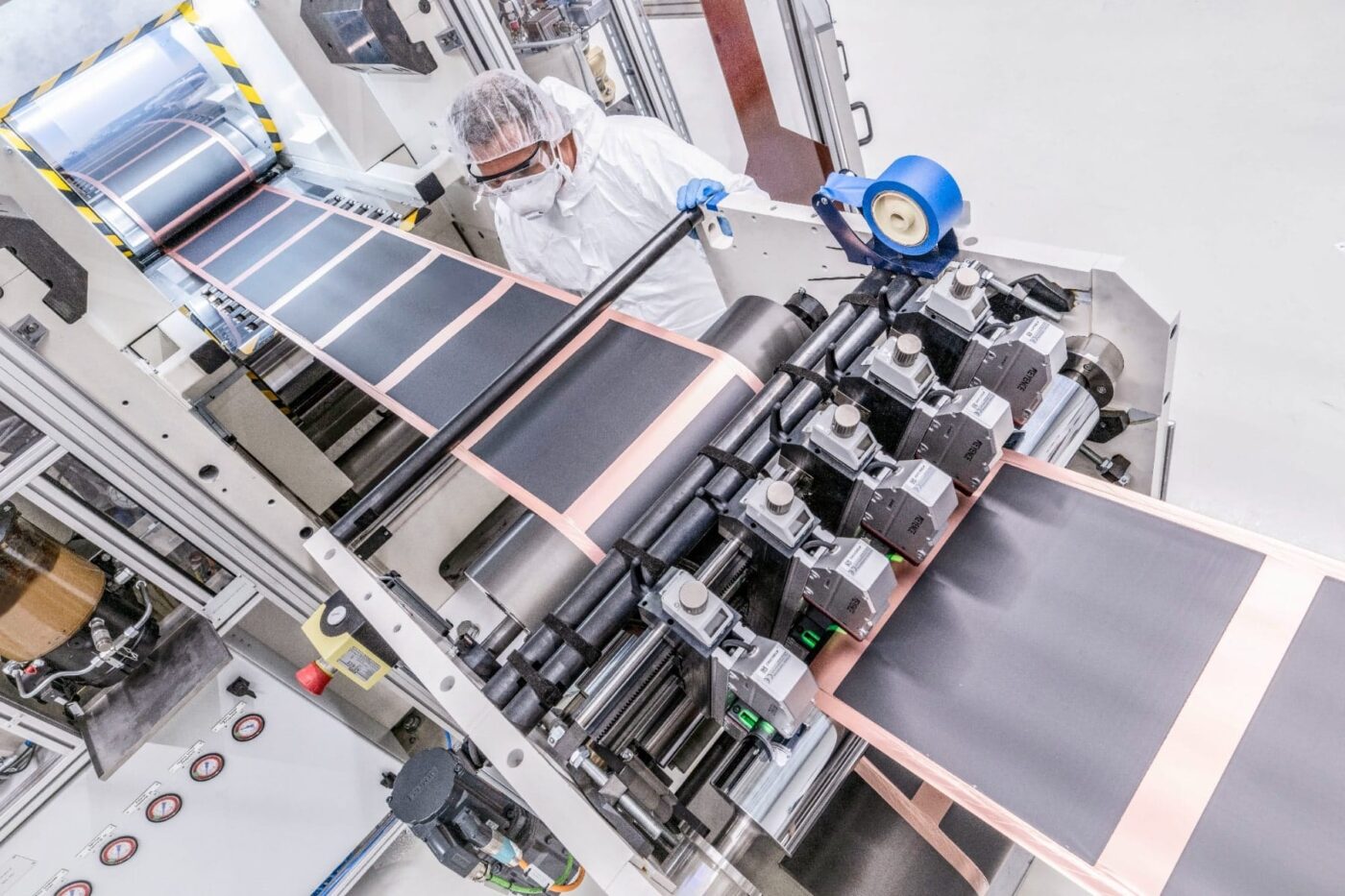
The message was clear: when the European Commission unveiled its ‘Auto Package’ in December (which aims to slightly soften CO₂ targets by 2035), it also introduced a €1.8 billion ‘Battery Booster.’ This initiative is designed to accelerate the development of a fully EU-based battery value chain—for example, through interest-free loans for cell manufacturers and supportive policy measures. “These measures will enhance the cost competitiveness of the sector, secure upstream supply chains and support sustainable and resilient production in the EU, contributing to the derisking from dominant global market players,” the Commission stated just before Christmas.
That the situation for the industry is indeed critical was underscored by an unusual statement from the battery cell joint venture ACC this week. The company’s management described investing in further battery factories (specifically, the planned cell production facilities in Kaiserslautern and Termoli) as ‘totally irresponsible’—while simultaneously demanding more support and faster action from policymakers.
However, according to a report by the German Automobilwoche, progress on the much-needed momentum appears to have stalled. While an EU strategy paper published at the end of January states that the first tranche from the ‘Battery Booster’ ‘ is aimed at reaching selected companies in 2026.’ However, negotiations between EU departments in Brussels over the details are still ongoing.
“The department of Industry Commissioner Stéphane Séjourné is driving the industrial policy initiative in favour of battery cell production, while the department of Climate Commissioner Wopke Hoekstra controls the purse strings and decides on the Innovation Fund, from which the interest-free loans to manufacturers are to be disbursed,” writes Automobilwoche. “Now, officials from both departments must agree on the formulation of the conditions—and so far, this appears to be the sticking point.”
According to the strategy paper, those interest-free loans are intended to support European battery cell producers during the ramp-up phase.’ This significantly narrows the circle of ‘selected companies’ eligible for funding. Following the collapses of Northvolt and Britishvolt, the remaining candidates are essentially the aforementioned joint venture ACC (backed by Stellantis, Mercedes-Benz, and TotalEnergies), Verkor (backed by, among others, Renault), and PowerCo (VW Group). AESC also produces battery cells in Europe, but it is not fundamentally a European company—with the emerging ‘Buy European’ policy being developed by Industry Commissioner Séjourné, AESC should probably not set its hopes too high for funding from the ‘Battery Booster.’ The same applies to the Taiwanese company ProLogium, which is building a solid-state battery factory in Dunkerque, France, and is also not yet in the ramp-up phase.
PowerCo, however, fits the criteria. In Salzgitter, battery cells have been produced since December 2025, with production set to ramp up steadily throughout 2026. Plans for a second production hall in Salzgitter have, for now, been shelved (the later expansion to 40 GWh remains optional), while PowerCo’s second plant in Sagunt near Valencia is expected to produce its first cells this autumn. ACC has had its facility in Douvrin operational since 2023, but continues to struggle with high rejection rates and is still working to ramp up production. Whether €1.8 billion in funding spread across multiple companies will be sufficient remains an open question.
For now, however, the priority seems to be surviving the capital-intensive start-up phase. As Automobilwoche reports, the EU is planning a new funding logic for the battery cell industry for the 2028–2034 budget period. Similar to the US Inflation Reduction Act (IRA) under former President Joe Biden, this would introduce direct subsidies per kilowatt-hour for cells produced in the EU.
0 Comments