


Fraunhofer reveals collaborative project ‘ProBatman’ on direct battery recycling
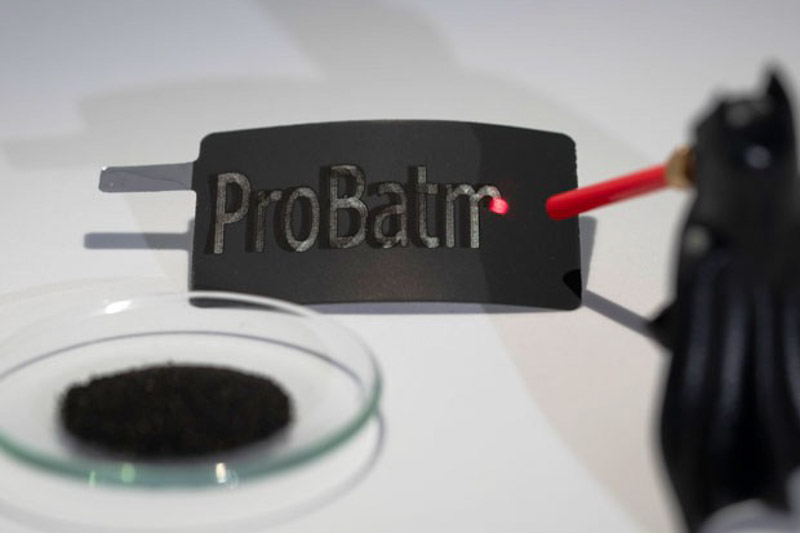
The ProBatman project (“Processes for the Direct Recycling of Cathodes from Cycled Lithium-Ion Batteries to Maximise Recoverable Functional Materials”) aims to recover as many material components as possible from end-of-life batteries. The research teams involved in this collaborative project seek to optimise each step of the recycling process chain to maximise purity and yield.
“The project, coordinated by Netzsch-Gerätebau GmbH, sees ambitious potential in direct recycling and the comparative resynthesis and reuse of recovered raw materials. ProBatman’s processing of the 340,000 metric tons of used batteries predicted annually from 2040 onwards could save up to 1.3 gigatons of CO2equivalents,” states the Fraunhofer Institute for Silicate Research ISC, home to the Fraunhofer Research and Development Centre for Electromobility (FZEB).
In direct battery recycling, the materials used in the battery cell are separated and recovered in their existing composition. In contrast, the more widely used hydrometallurgical or pyrometallurgical processes break down battery materials into their individual raw components, which must then be completely remixed—for example, to create new cathode materials.
As lithium-ion batteries increasingly contain fewer valuable materials such as nickel or cobalt, these conventional approaches are becoming “less profitable,” according to the Fraunhofer ISC. The ProBatman project therefore focuses on direct recycling, including the recovery of volatile components and conductive salts. For instance, the separation of lithium-ion-storing active materials from the electrodes, as well as the subsequent debinding and sorting, will be carried out using new technologies “as gently and precisely as possible.” The removal of the cathode coating, for example, will be performed using inductive and laser-based methods. The materials obtained in this way are analysed, purified, and “regenerated for reuse in a material-specific manner.”
The FZEB research teams and their partners will now optimise every individual process step—from the safe opening of the cell to the final materials—with a focus on scalability, environmental friendliness, and safety. “At the same time, all available process parameters and material data will be evaluated as part of a prospective life cycle analysis in order to identify further optimization potential and gradually transfer the technologies to a higher level of maturity,” states the Fraunhofer ISC. “This should make the entire recycling process attractive for battery manufacturers and specialized recycling companies.”
According to its own statements, the FZEB has already focused on the direct recycling of lithium-ion batteries in its research for several years and has worked on numerous projects in this area. In addition to the Netzsch Group as coordinator, the project involves the car manufacturer BMW, EurA AG, and the University of Würzburg. The project is scheduled to run until June 2028. Supporting the consortium are IBU-tec advanced materials AG, Trumpf Laser- und Systemtechnik SE, Jungheinrich AG & Co. KG, Zahner Elektrik GmbH & Co. KG, and Delfortgroup AG. ProBatman is also funded by the German Federal Ministry of Education and Research.
fraunhofer.de (announcement), fraunhofer.de (project overview)

0 Comments