


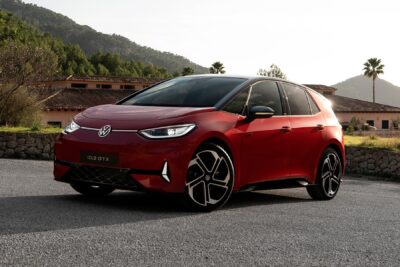
ID.3 facelift to be named ID.3 Neo
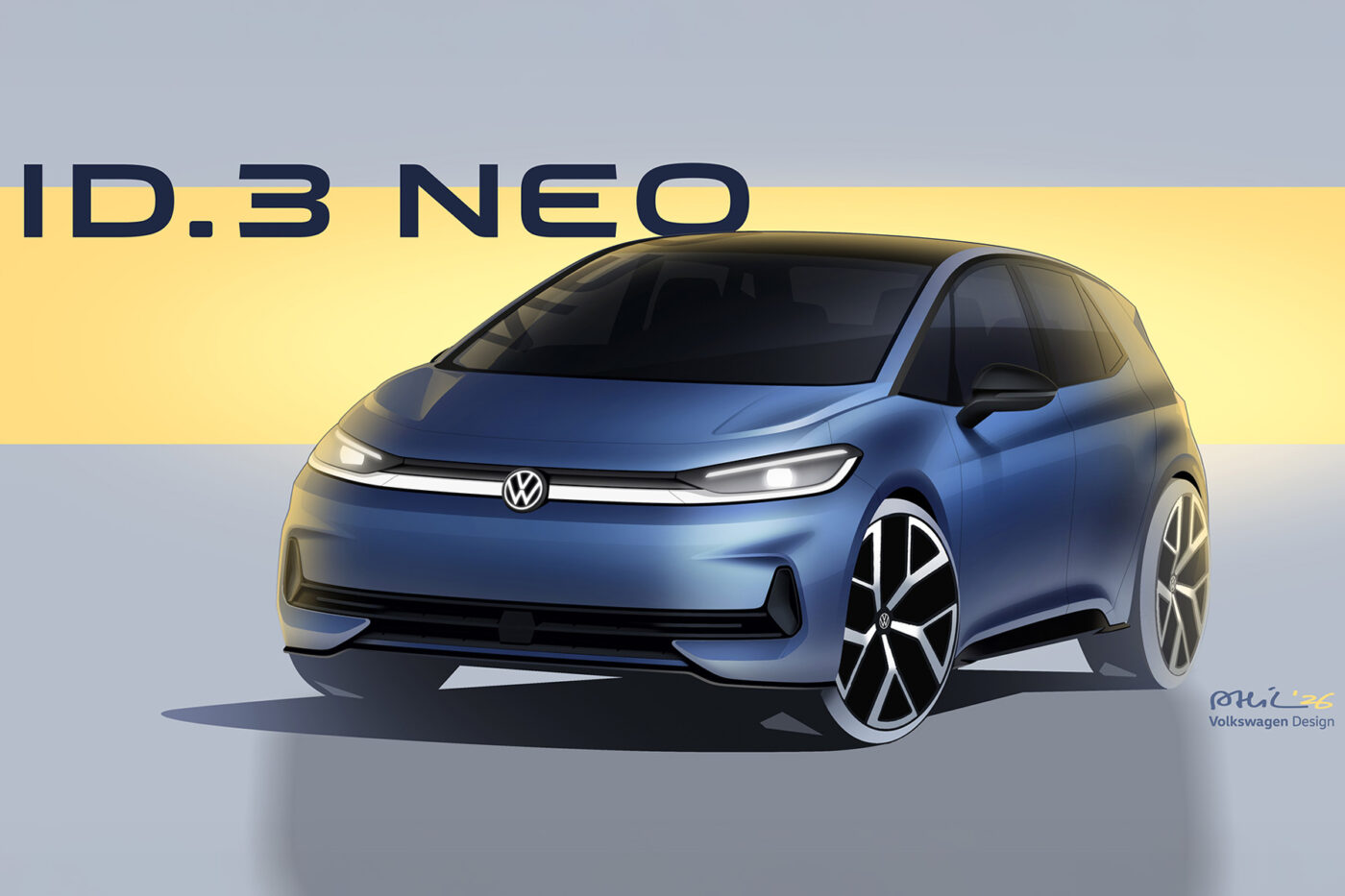
Details of the upcoming changes to the ID.3 and other VW models are gradually emerging. Following its facelift, the ID.3 will be renamed the ID.3 Neo, rather than the previously speculated ID. Golf. Meanwhile, media reports indicate that the ID.4 will be rebranded as the ID. Tiguan, while the ID.5 is expected to be discontinued. The battery-electric vehicles (BEVs) will also gain a range of new functions thanks to a new generation of onboard software. These include an enhanced Travel Assist with traffic light recognition and One Pedal Driving, which allows the vehicle to recuperate down to a standstill.
The ID.4, ID.5, and ID.7 are already available to order as the first models featuring this new software, its functions, and the new ‘Innovision’ infotainment system. The ID.3 Neo is set to follow soon. Volkswagen has scheduled the facelift’s premiere for mid-April. Kai Grünitz, Volkswagen’s Board Member for Technical Development, commented: “The new software generation brings more performance and an even better customer experience to the ID. models. The new Volkswagen electric models in the small and compact vehicle segments – ID. Polo, ID. Polo GTI, ID. Cross – will also soon be launched on the market with these new innovations, offering more flexibility in everyday life and for leisure activities.”
ID.4 to receive entry-level version with LFP Battery and 140 kW
With the launch of the electric small-car family and the comprehensive facelifts of the existing models, 2026 is set to be a landmark year for Volkswagen. The updates to the VW ID.3, VW ID.4/ID.5, and their corporate siblings extend beyond aesthetics and software to include powertrain improvements. Volkswagen’s latest announcement does not address this for the ID.3 – but it does for the ID.4/ID.5: “Pure entry-level models are equipped with the APP 350, a new 140 kW (190 PS) drive system that offers increased torque and lowers fuel consumption compared with the previous APP 310 motors. This enables the range of the ID.4 to be increased by up to 40 km (WLTP), for example. In combination with a new lithium-iron phosphate (LFP) high-voltage battery (58 kWh net), this is an impressive package that is robust and very efficient,” the company stated.
This development was anticipated: for months, it has been known that the electric SUV would transition to the upgraded MEB+ platform and, in the process, receive a new entry-level motor and, in its base version, a new battery with more cost-effective LFP cell chemistry. Further details include the replacement of door handle recesses with classic pull handles.
It remains unclear, however, whether the ID.3 will also switch to LFP cells in its entry-level version. Nevertheless, there are strong indications that this will be the case, as Cupra unveiled its Born facelift last week, complete with revealing technical data. After all, the Born is a close relative of the ID.3.
What we know: the Born will continue to offer three motor-battery configurations – 58 kWh in the base version and 79 kWh for extended range – with either a 170 kW rear-wheel drive or a 240 kW powertrain. The 79 kWh battery is well-established in the MEB platform and is also used in the ID.3. These powertrains will remain unchanged in the Cupra Born, though the brand now claims a range of ‘around 600 kilometres’ due to the facelift’s improved aerodynamics – previously, the maximum was 594 WLTP kilometres.
Cupra shows what is possible for the ID.3
The most interesting aspect of the Cupra facelift is the variant with a 58 kWh battery and 140 kW of power, replacing the previous 150 kW version. Unusually, the brand did not disclose the maximum DC charging power of the 58 kWh battery during last week’s presentation, stating only that the charging time would be between 20 and 30 minutes – a very wide range. This strongly suggests that Cupra is introducing the new LFP battery from the MEB+ platform but does not yet want to highlight it, as MEB third-party customer Ford did with the Capri (using the same specifications of 58 kWh and 140 kW).
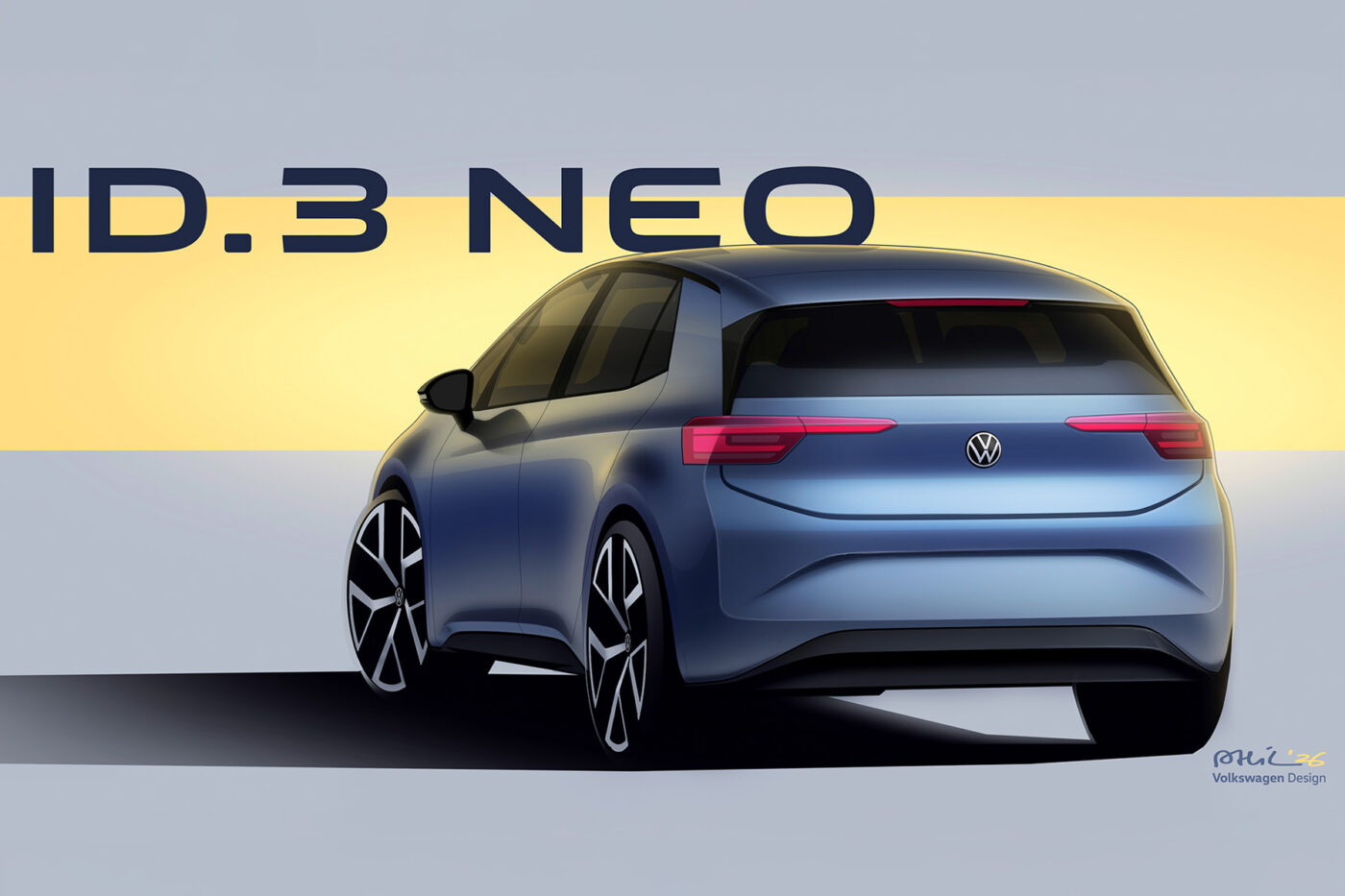
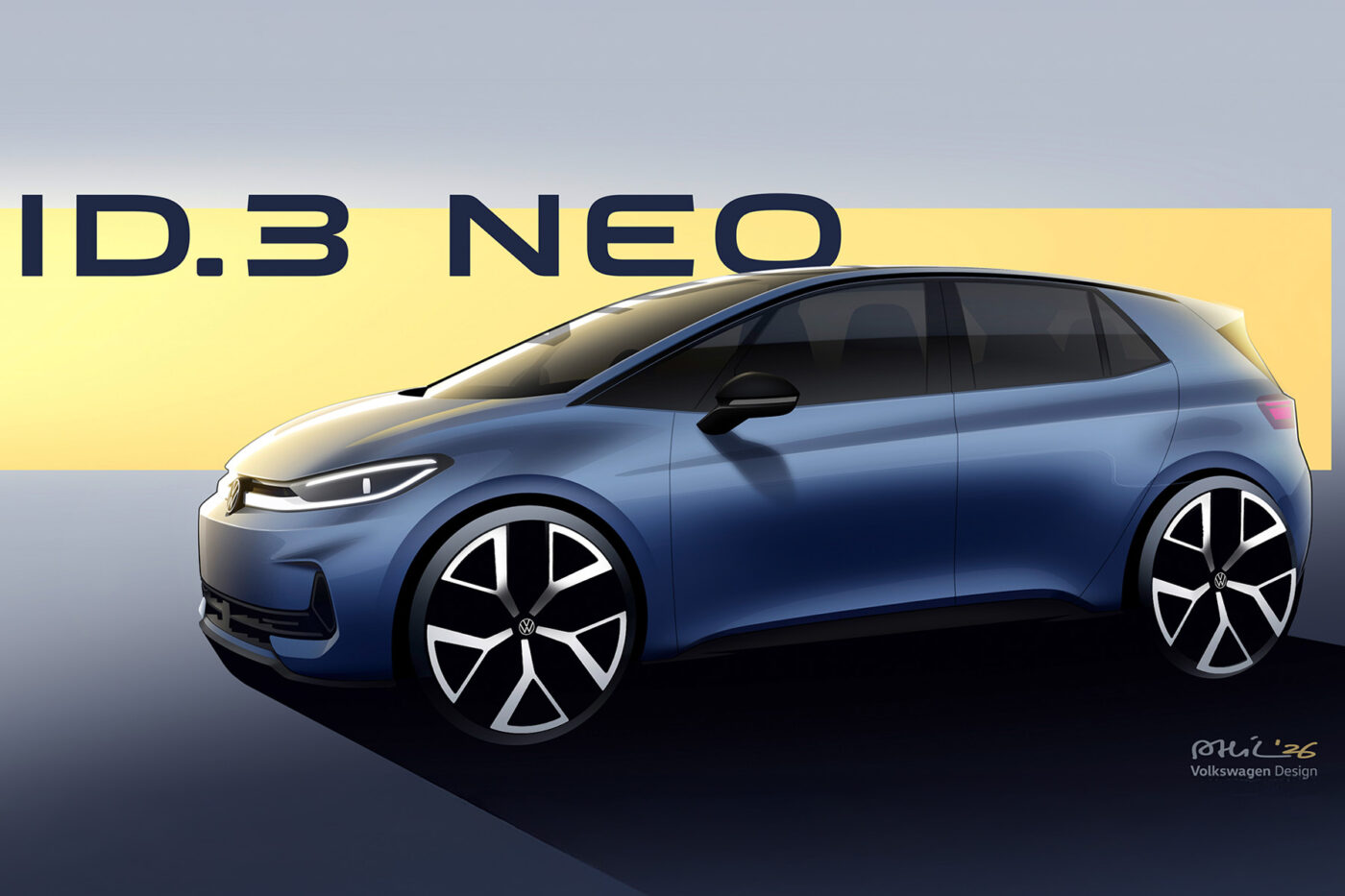
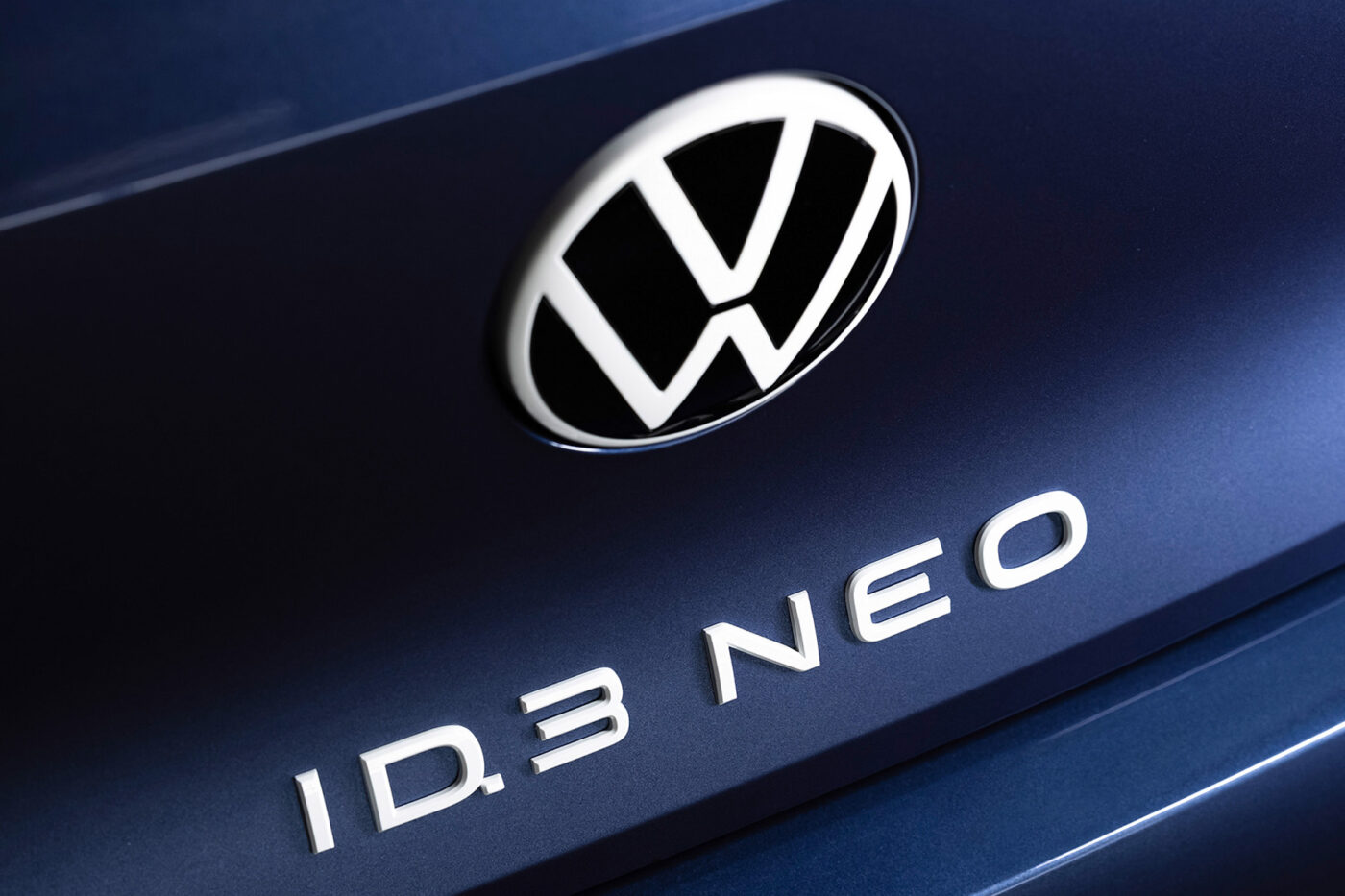
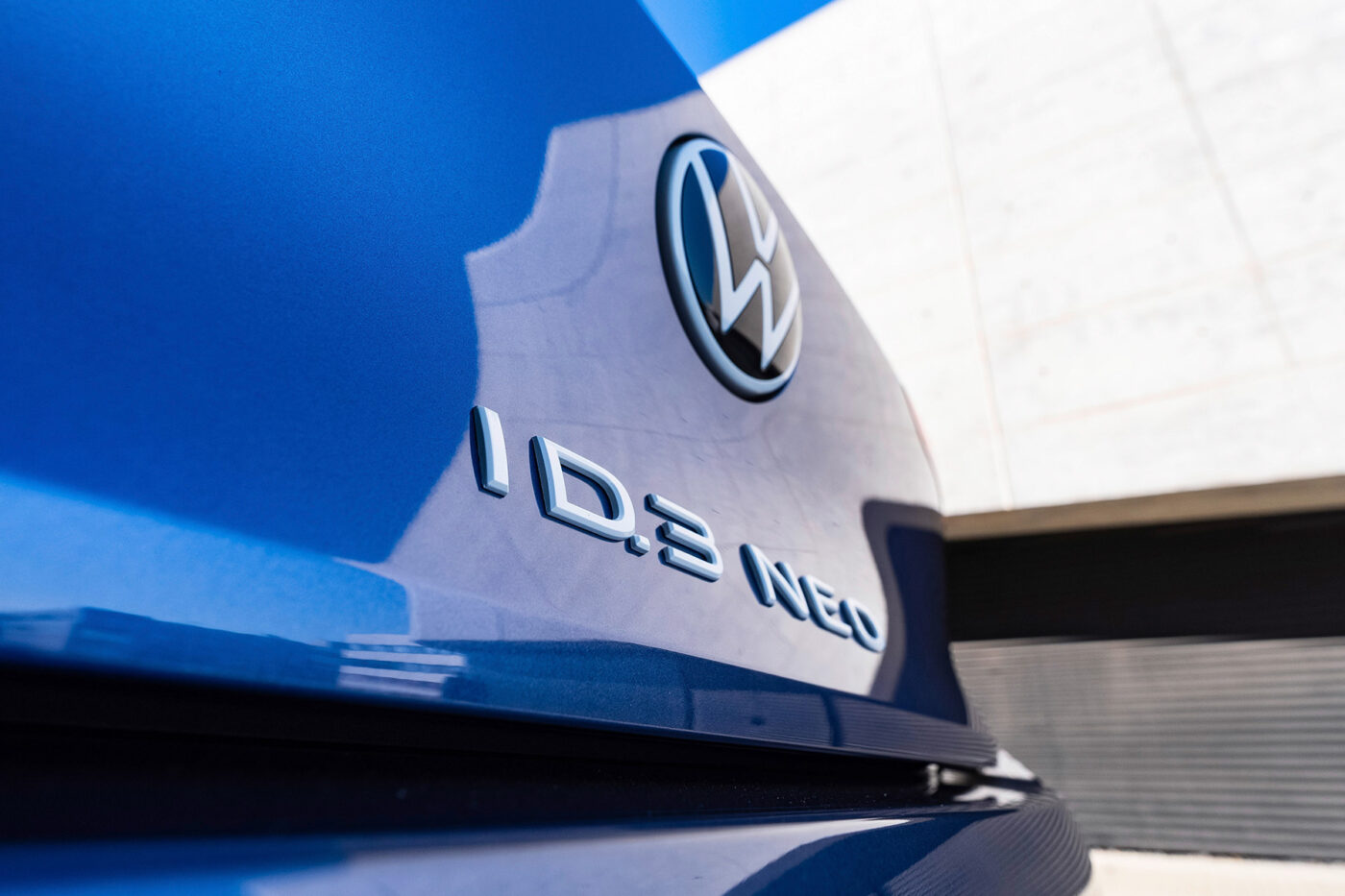
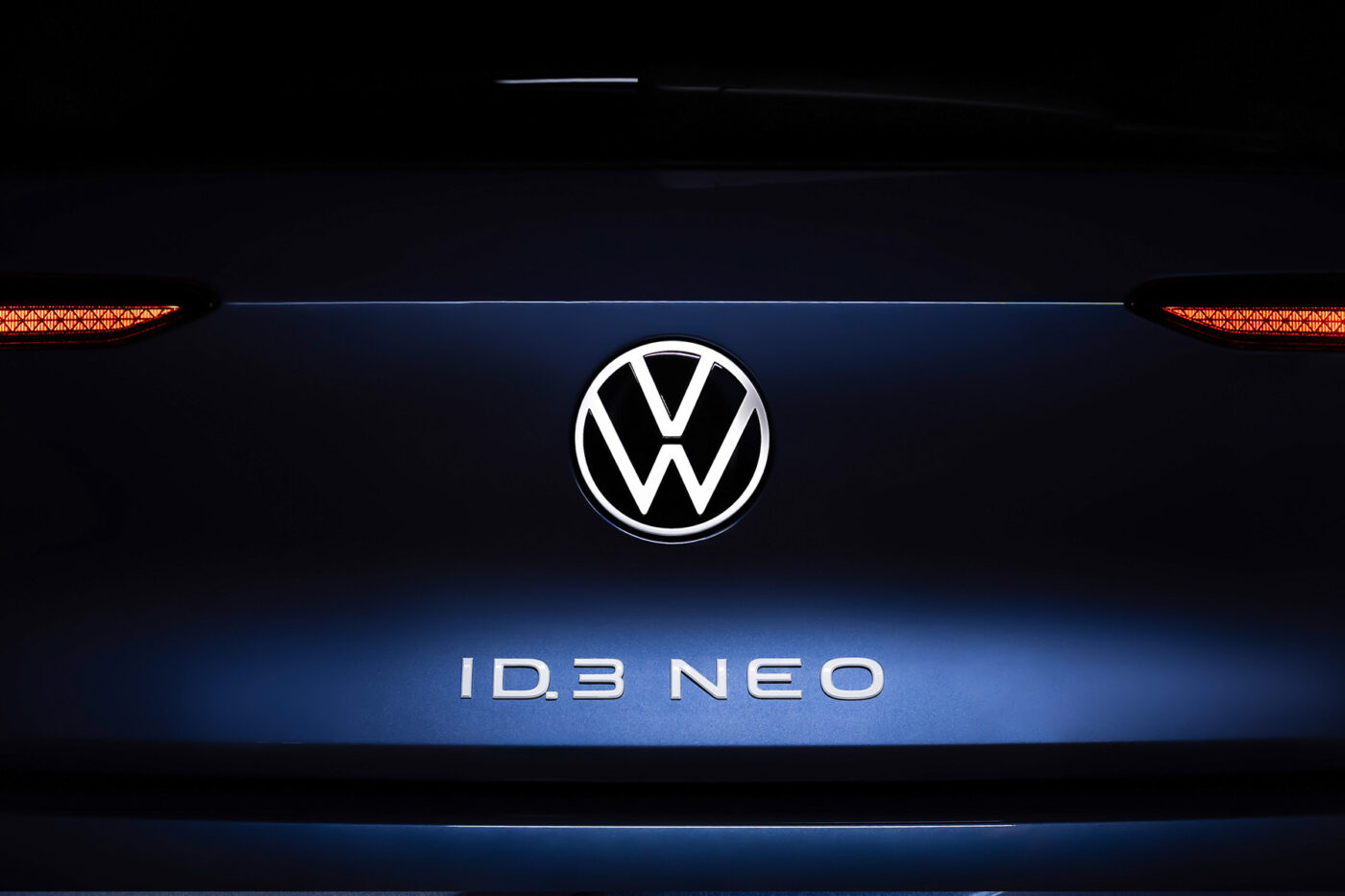
The 140 kW output suggests that this is the APP 350, already used in the Capri, with 350 Nm of torque. This motor, recently confirmed for the ID.4/ID.5, is considered more efficient than the older APP310. Cupra’s reluctance to emphasise this last week suggests that the brand may have wanted to leave the communication to another group company. However, Volkswagen has not yet followed up, leaving the ID.3 Neo’s powertrain details unclear for now.
In its latest announcement, Volkswagen prefers to highlight features such as the aforementioned One Pedal Driving and the new V2L (Vehicle-to-Load) function. After the facelift, the new-generation ID. models will support Vehicle-to-Load, allowing external devices to be powered with up to 3.6 kW. It is also already known that all future ID. models will reintroduce steering wheel push buttons. The ID.3 Neo is no exception.
Volkswagen’s press department also emphasises an optional digital vehicle key and new infotainment details: “A new app store has also been integrated into the In-Car Shop of the new infotainment system, which allows functions and services to be activated or extended digitally, flexibly and on a vehicle-specific basis,” the statement reads. Popular apps will be available for download, just like on a smartphone.
volkswagen-newsroom.com
0 Comments