


VW and Rivian conclude winter testing programme
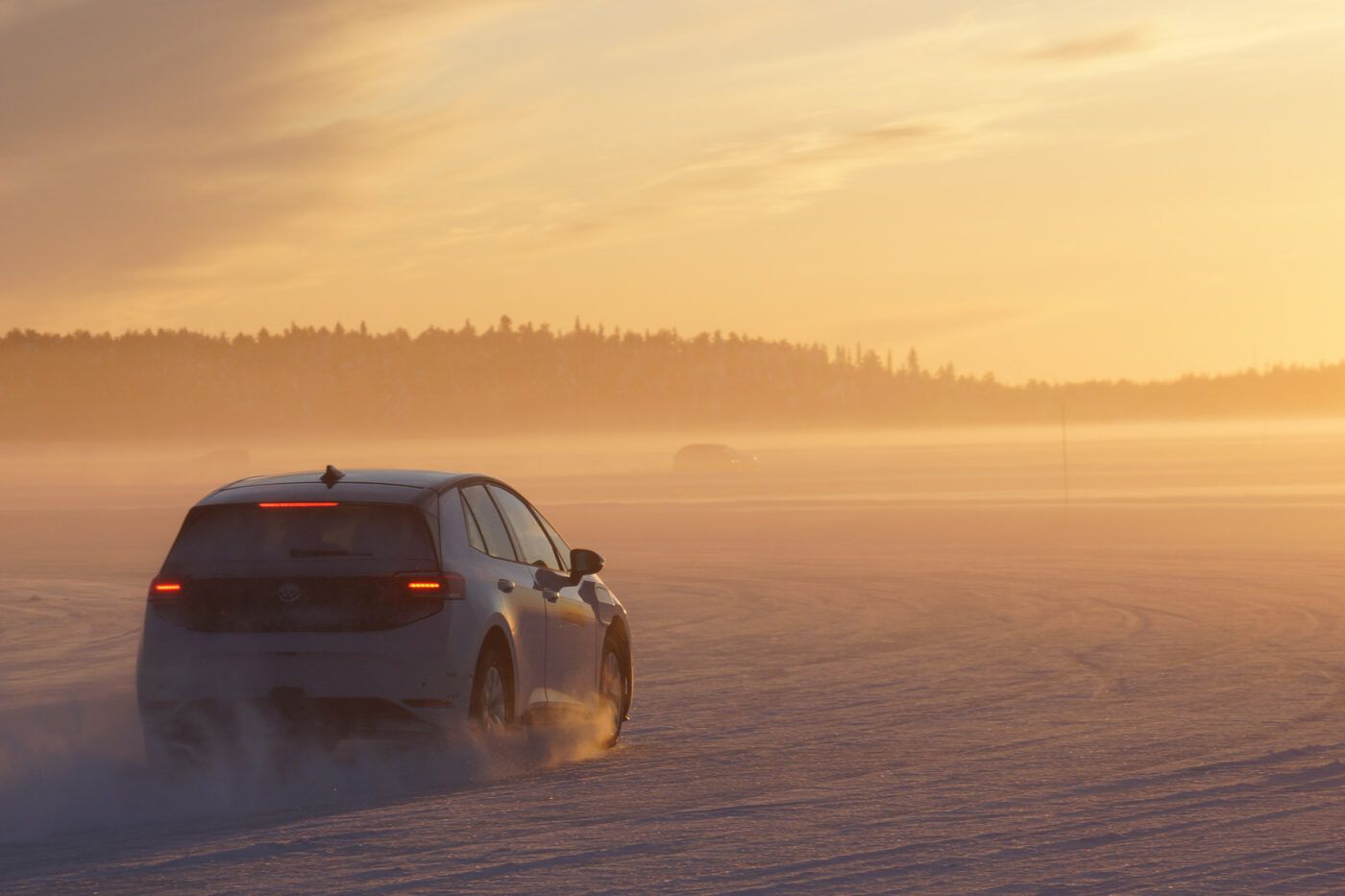
In a comprehensive multi-month testing programme conducted in Phoenix, USA, and Arjeplog, Sweden, a joint team from Volkswagen, Audi, Scout, and RV Tech validated the functionality and performance of electronics and software, as announced by the VW Group. Reference vehicles, including the VW ID.EVERY1 as well as models from Audi and Scout, were tested using RV Tech’s SDV (Software Defined Vehicle) architecture.
According to a press image published alongside the announcement, VW used a shortened ID.3 as a mule car for the compact battery-electric vehicle, which, under VW’s current naming convention, may launch as the ID. Up—rather than the previously planned ID.1.
The VW Group plans to deploy the SDV architecture—developed in collaboration with the US start-up—in battery-electric vehicles across markets in the Western Hemisphere. For China, VW has a similar partnership with Xpeng.
“Customers can benefit from highly automated driving features and advanced infotainment solutions that can be continuously updated via over-the-air updates,” the German automaker stated.
The recently concluded testing programme was divided into two phases. During test drives in Arizona, software functions were finalised, and functional tests were conducted in the reference vehicles to prepare them for the subsequent winter tests in Europe. The actual stress tests under extreme conditions then took place in Arjeplog, northern Sweden.
“The teams examined, among other things, the interaction between hardware and software for functions such as all wheel drive, traction control, and driving performance. Over-the-air (OTA) functionality was also validated,” VW announced.
The automaker expressed official satisfaction with the results. The tests demonstrated ‘that the SDV architecture already operates reliably under harsh winter climatic and dynamic driving conditions.’ It laid the foundation for the next development steps in the joint venture and further planning within the brands. Even in an interim review in November 2025, VW had praised its US partner.
“With the successful completion of the winter tests, our joint venture once again demonstrates the speed and precision of its work,” said VW CEO Oliver Blume. “The close integration between the joint venture, our brands, and the Group follows a clear objective: to excite people with products and technologies that set new standards. This is how we are driving development forward across the Volkswagen Group – with the ambition to become the global automotive tech driver.”
However, repeated reports and critical commentary suggest that progress behind the scenes has not always matched the narrative presented in Volkswagen Group’s communications around one of the CEO’s flagship projects. At the same time, Rivian is preparing intensively for the launch of its second model range, the R2, which is considered crucial due to the expected production volumes. The associated software development is also likely to require additional capacity, but Volkswagen’s official communications do not address these challenges.
Nevertheless, Volkswagen Group emphasises that its brands are building up their own software capabilities for software-defined vehicles alongside the collaboration with Rivian. Volkswagen Passenger Cars, for example, plans to launch a long-prepared qualification programme from early May. Software specialists will spend several months in practical phases at Palo Alto and other RV Tech locations, where they will deepen their understanding of the joint architecture and code base. Audi and Porsche are also preparing to introduce similar programmes.
At the same time, a company statement points to a potential shift in how the joint venture’s role may evolve: “Upon returning to Wolfsburg, these specialists will serve as internal experts and bring this expertise back into their development departments as multipliers. This will help to integrate brand-specific functions more quickly into future production models.”
0 Comments