


The Mobility House to offer free electricity for V2G customers
++ This article has been updated ++
The Mobility House has long been recognised as a pioneer in bidirectional charging and its sub-discipline, Vehicle-to-Grid (V2G) – the process of feeding electricity from electric vehicle batteries back into the public grid. This is something that the electric mobility community has been aware for some time.
The Munich-based company has moved significantly closer to this vision and plans to launch offers for free charging electricity this year, according to the German newspaper FAZ, citing discussions with founder and CEO Thomas Raffeiner and Chairman Herbert Diess.
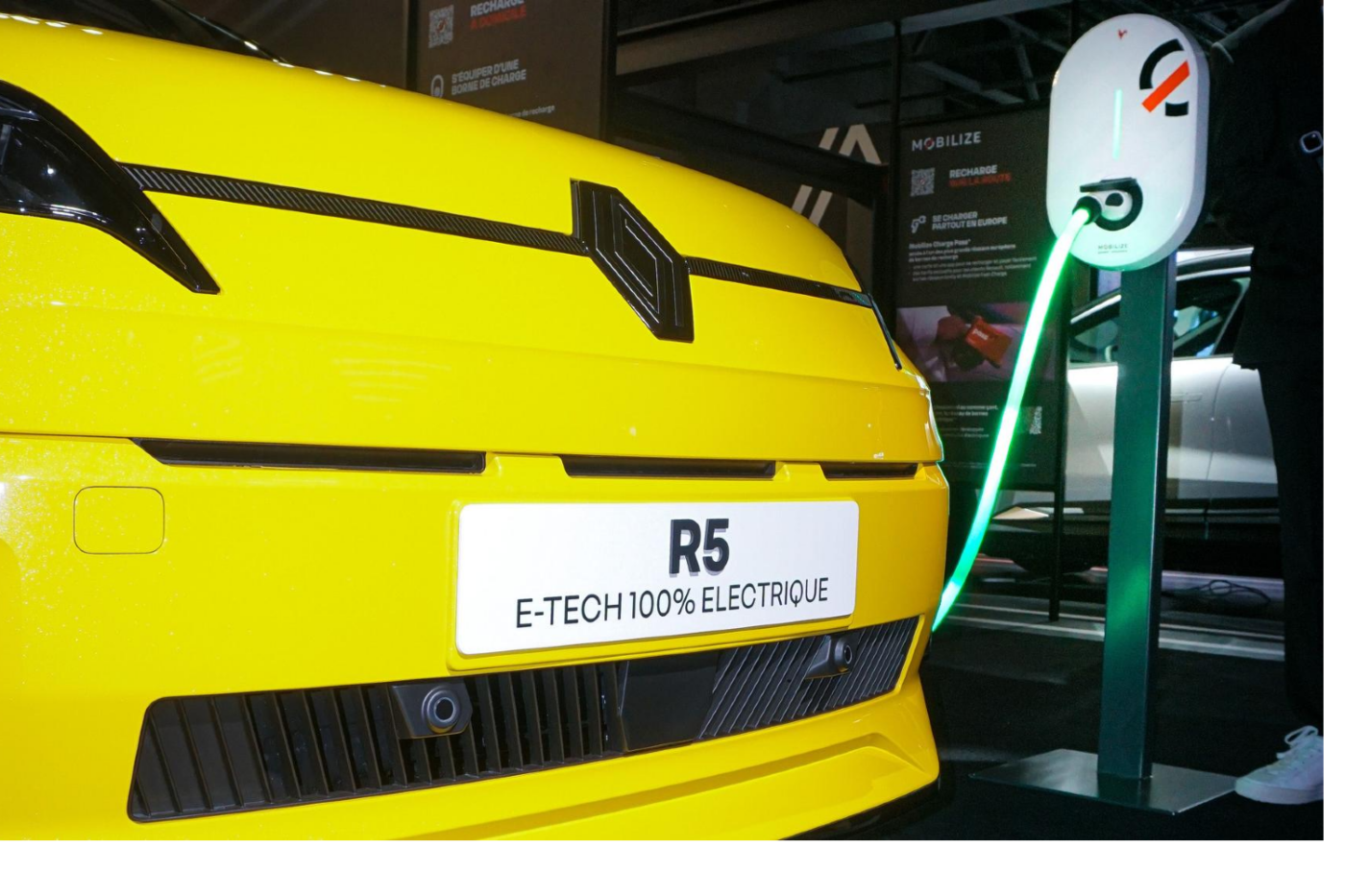
These offers, linked to a dedicated V2G electricity tariff from The Mobility House Energy for private customers, are set to be introduced this year for the fully electric Renault 5 electric as well as the new electric Mercedes-Benz GLC electric. In response to an enquiry from electrive, the company added that processes in Germany are ‘prone to delays,’ but confirmed that the offers are still planned to launch in Germany this year.
To benefit from free charging electricity, users will need to keep their vehicle connected to a V2G wallbox for a specified number of hours per day.
In response to an enquiry from electrive, The Mobility House adds that processes in Germany are ‘prone to delays.’ However, the company still plans to launch the offer in Germany this year with the Renault 5 and additional Renault models.
To receive free charging electricity, users must connect the vehicle to the V2G wallbox for a defined number of hours each day.
In parallel, The Mobility House shared on LinkedIn that practical experience with the world’s first V2G product for end customers, launched in 2024 in collaboration with the Renault Group in France, demonstrates the following: if an electric car is connected and available for bidirectional charging for an average of 14 hours per day, the charging costs for a driving distance of 10,000 kilometres can practically be reduced to zero.
The potential for V2G to enable cost-free electric driving (excluding vehicle purchase costs) lies in the constantly fluctuating demand for electricity. A V2G-capable electric vehicle can store electricity in its traction battery when there is, for example, a surplus of solar and wind power or when demand is very low at night. Conversely, the vehicle can feed electricity back into the grid via a special V2G-capable wallbox when demand is particularly high, helping to absorb peak loads and stabilise the grid. Prices fluctuate significantly during these periods, and The Mobility House can capitalise on the arbitrage effect – the price difference between buying and selling electricity. The Mobility House plans to pass these savings on to its customers in the form of free electricity.
“We are still small. But if our business model works – and the chances are high – electric cars will be able to drive for free,” says Herbert Diess, the prominent figurehead of The Mobility House and former CEO of the Volkswagen Group. The business model gains attractiveness from the fact that, since the turn of the year in Germany, the batteries of electric vehicles are treated the same as stationary battery storage systems, eliminating the double grid fee.
Initially, The Mobility House ties its vehicle-to-grid offerings to partnerships with carmakers and designs them as proprietary solutions. In practice, this means they only work with a specific wallbox and a specific vehicle model. “We strongly expect this to change over the coming years, with cross-platform standards emerging and OEM systems opening up,” a The Mobility House spokesperson told electrive.
E.ON and BMW to also offer V2G
E.ON has recently begun offering a special V2G electricity tariff for the new BMW iX3. While free charging is not explicitly mentioned, the costs for driving 12,000 to 14,000km can be offset through a bonus account. Customers receive €0.24 credited to their bonus account for every hour the car is connected to the special V2G charging station – regardless of whether electricity is being charged or discharged. The amount is capped at €60 euros per month or €720 euros per year, equivalent to around 250 ‘connection hours’ per month. For feeding electricity back into the grid, customers receive even more: every kilowatt-hour actually discharged is compensated with €0.40.
Another interesting package has been introduced by Octopus Energy and BYD in the UK: for a monthly subscription fee of £299, customers receive a BYD vehicle, a V2G wallbox, and electricity – the latter, however, only if the vehicle is connected to the wallbox for at least 20 times a month for 12 hours at a time.
faz.net (in German), linkedin.com (France; practical experience)
0 Comments