


BVG commissions fast-charging station for electric buses in Berlin
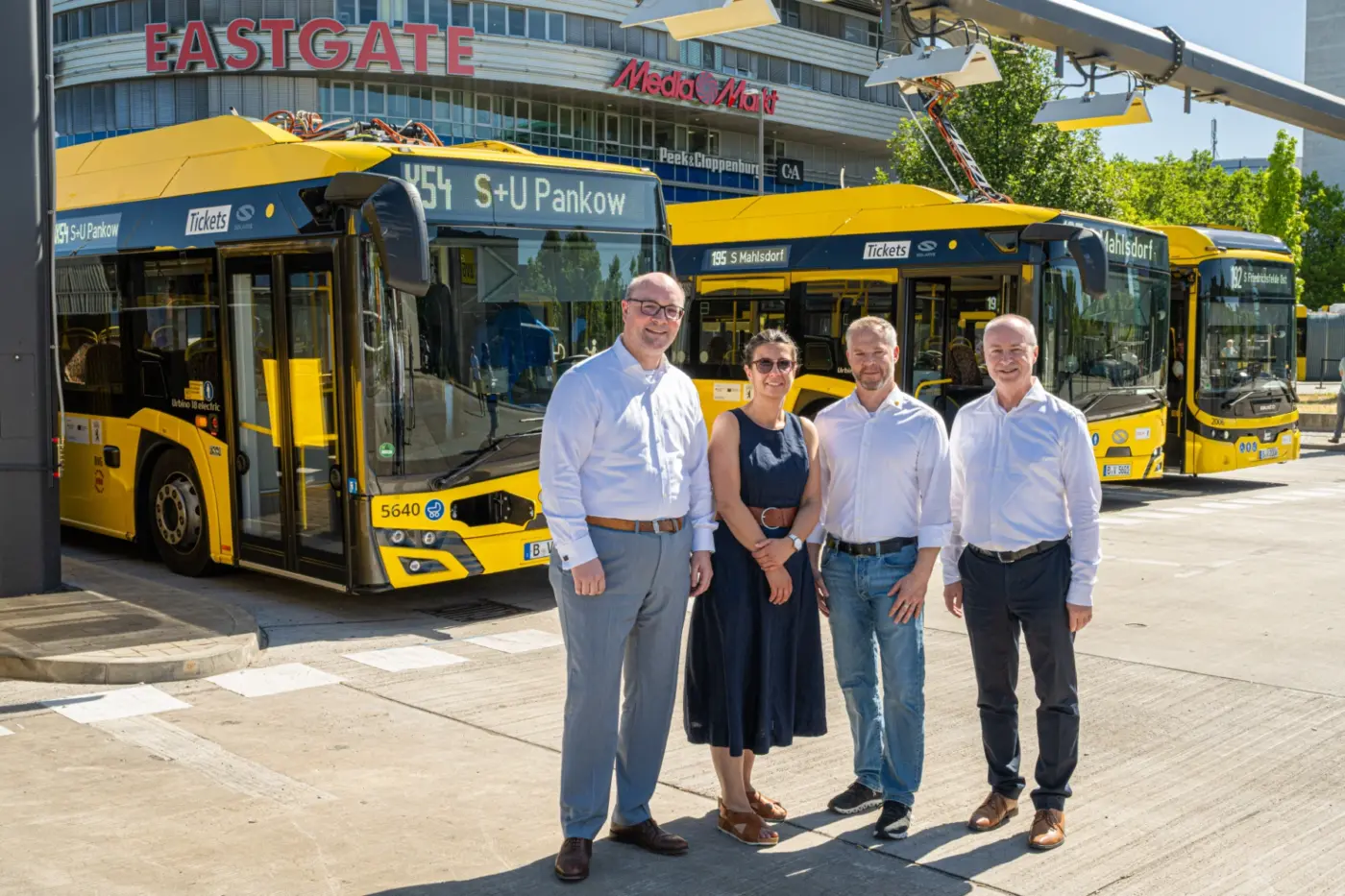
Electric buses operating on routes X54, 191, 195 and 291 will soon be able to recharge during scheduled layovers at the terminus near Marzahn S-Bahn station. The charging facility will allow the vehicles to remain in service for longer periods without returning to a depot for recharging.
The installation forms part of BVG’s ‘Stella’ project, which sees the deployment of fast-charging infrastructure at 20 bus termini across Berlin. According to BVG, construction is currently underway at six locations.
The fast-charging system consists of a charging mast with a crossbeam that supports several charging hoods. When a bus stops beneath the structure, a pantograph mounted on the vehicle connects to the charging hood, enabling high-power charging. The associated infrastructure, including a transformer station and a charging control building, is installed adjacent to the charging point.
The terminus charging stations complement BVG’s existing charging strategy. While most electric buses continue to recharge overnight at depots, the additional fast-charging infrastructure allows vehicles to top up their batteries during scheduled layovers. This extends their operating time in passenger service and reduces the need for depot charging during the day. On longer routes, intermediate charging can also be incorporated into regular operations from the outset.
At the same time, BVG is expanding its depot infrastructure for electric buses. The operator is constructing two new depots in Säntisstraße and Treptow, which will provide capacity for around 440 electric buses. The sites will also feature several hundred depot charging points, complemented by fast chargers for opportunity charging and short-term top-ups.
BVG is also continuing to expand its electric bus fleet. The operator plans to procure a further 270 battery-electric buses by 2027, increasing the total number of electric buses in service to around 550. As a result, approximately one-third of BVG’s bus fleet of around 1,500 vehicles is expected to be battery-electric by 2027.
The Federal Ministry of Transport is supporting the electrification programme with funding of €160 million. Additional support comes from the Berlin Senate Department for Mobility, Transport, Climate Action and the Environment, as well as from NOW GmbH and Projektträger Jülich through the funding programme for alternative bus propulsion systems.
0 Comments