


France opens third round of EV social leasing programme
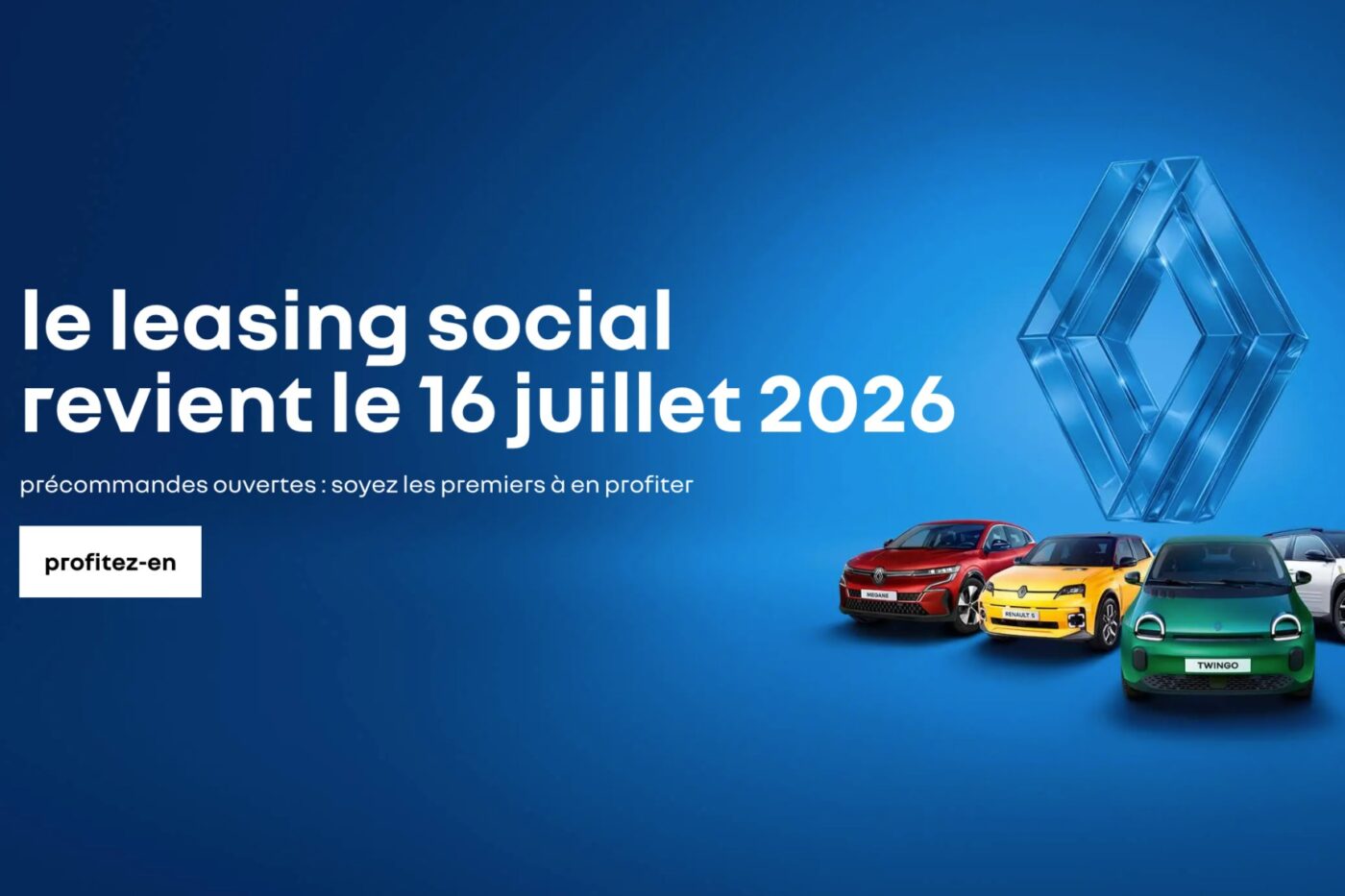
As announced in April, the French government has officially launched the third phase of its social leasing scheme for electric vehicles. The programme, known as ‘leasing social de voitures électriques,’ is primarily aimed at low-income commuters. To qualify, applicants must either travel more than 10 kilometres each day by private car or drive more than 8,000 kilometres per year for work using their own vehicle.
Applicants must also have a taxable reference income of no more than €16,880. The eligibility criteria have been slightly relaxed compared to the second funding round in autumn 2025, when the income threshold was set at €16,300 and participants were required to commute at least 15 kilometres per day.
As in the first two funding rounds—the initial programme launched in early 2024 and exhausted its allocation within six weeks—the French government aims to support the leasing of 50,000 battery-electric vehicles under preferential conditions. Monthly lease payments are capped at €200, with no upfront payment or deposit required. Contracts run for three years and include an annual mileage allowance of 15,000 kilometres. The final monthly rate varies by vehicle model. During the previous funding round, lease prices ranged from €95 to €195 per month.
Several carmakers have already announced their offers for the latest funding round. Citroën is making the ë-C3 available from €94 per month, depending on the chosen specification. Renault is offering the electric Twingo from €130 per month under the social leasing scheme, while the Renault 5 starts at €139 per month, with pricing varying by configuration.
Peugeot has set monthly rates from €149 for the E-208, E-2008 and E-308. Volkswagen has also joined the programme with offers for the new ID. Polo, the ID.3 Neo, the ID.3 and the ID.4. However, customers can only view the detailed leasing terms after entering a French postal code and selecting a participating dealership.
The low leasing rates are made possible through state subsidies. The French government covers 29 per cent of a vehicle’s purchase price, up to a maximum of €6,500 per vehicle. The subsidy can rise to as much as €9,000 if both the vehicle and its battery are manufactured within the European Economic Area (EEA). An additional €500 bonus is available if the electric motor is also produced in the EEA.
As in previous funding rounds, France has effectively excluded most Chinese-built electric vehicles from the programme through its eligibility criteria. Rather than restricting vehicles by country of origin, qualification depends on the model meeting a maximum CO₂ footprint threshold that accounts for manufacturing and transport emissions. In practice, vehicles produced in China are unlikely to achieve the required score.
gouv.fr (in French), europe-infos.fr
0 Comments