


Automated driving in urban traffic: final review of the STADT:up project
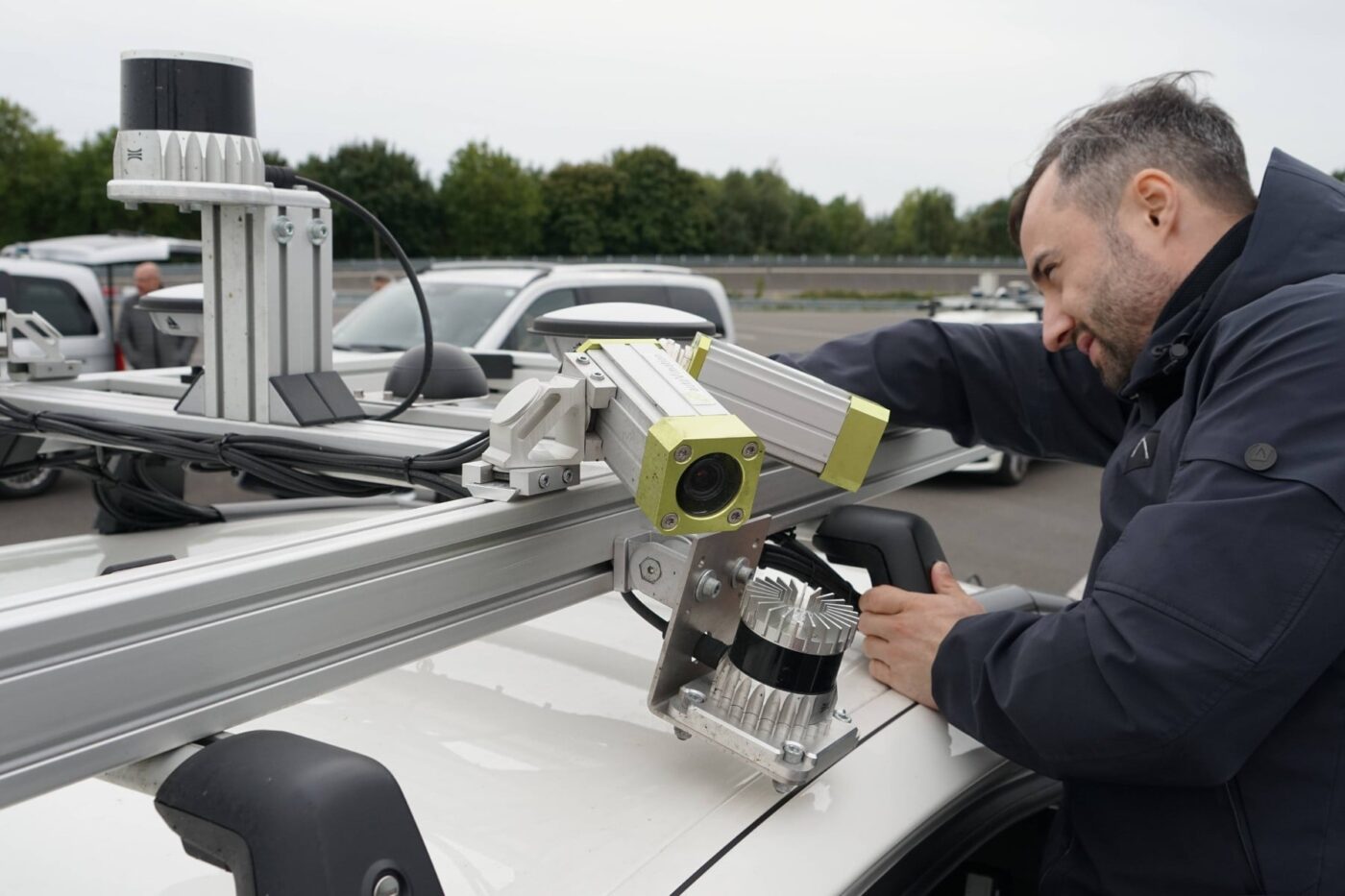
As part of a two-day concluding event at the Aldenhoven Testing Centre, the initiators of STADT:up (“Solutions and Technologies for Automated Driving in Town”) presented their collaborative research and development. The focus was on the technologies and concepts developed to enable seamless automated driving in urban traffic, with presentations complemented by live driving demonstrations.
The STADT:up project was launched on the premise that, while automated driving functions had already been introduced on German motorways three and a half years prior, urban traffic presented a far greater challenge. Dense and heterogeneous traffic flows, complex intersections, unpredictable situations, temporary obstacles, and interactions with pedestrians, cyclists, and other road users; the project partners argue that each of these demand robust, predictive, and cooperative driving behaviour from automated systems.
The project’s goal was then to enable seamless automated driving in urban traffic and permanently relieve drivers of their driving tasks – even under changing environmental conditions and in complex traffic situations. To achieve this, STADT:up developed an urban driving automation system that uses AI across the entire functional chain, including environment perception, data fusion, behaviour prediction, and manoeuvre planning.
Fabian Flohr, Professor of Machine Learning and Autonomous Systems at Hochschule München, stated: “Urban traffic is the toughest challenge you can pose to an autonomous vehicle. STADT:up has demonstrated that AI-based systems are already capable of handling this complexity—provided you have the right data and ask the right questions. At Hochschule München, we teach AI to interpret urban chaos through the eyes of pedestrians and cyclists. This enables autonomous vehicles to think ahead and make the unpredictable predictable.”
As part of the project, Hochschule München also developed a test vehicle, ‘AVA’. It not only recognises where a pedestrian is standing, but anticipates where they will go next. Equipped with cameras, LiDAR, and high-performance computing hardware, the system processes complex traffic situations in real time. According to Hochschule München, the result is a driving style that reacts early, before critical situations arise.
The STADT:up project involved automotive manufacturers Mercedes-Benz and Opel, Volkswagen’s subsidiary Cariad, and suppliers and technology companies Aptiv Services, AUMOVIO, AVL, DeepScenario, Ergosign, gestigon, Hella, Robert Bosch, Valeo, and ZF Friedrichshafen AG. From the fields of science and research, partners included the Federal Highway Research Institute (BASt), the German Aerospace Center (DLR), Hochschule München, TU Chemnitz, TU Darmstadt, and TU Munich. The project was funded through the “New Vehicle and System Technologies” programme of the Federal Ministry for Economic Affairs and Energy.
0 Comments