

Renault to build electric cars for Ford

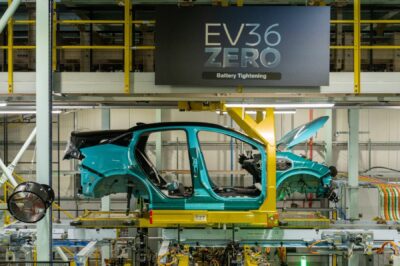
First, a look at the new partnership: the first of the two new Ford electric models based on Renault’s platform is set to launch in early 2028, as announced by both car manufacturers. “The new models will be based on the Ampere platform, leveraging Renault Group’s strong EV assets and competitiveness, and produced by Renault Group in the North of France, illustrating Ampere’s ElectriCity’s ‘state-of-the-art’ manufacturing capabilities and expertise,” Renault stated.
“Designed by Ford, developed with Renault Group, the two cars will feature distinctive driving dynamics, authentic Ford-brand DNA and intuitive experiences,” Ford added.
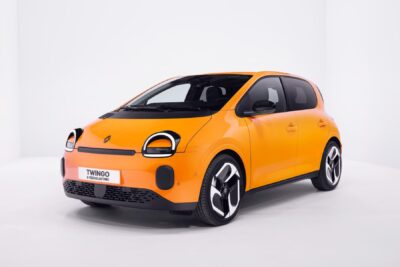
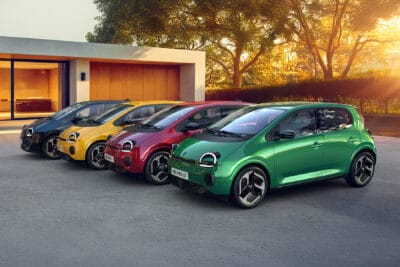
No further details about the two planned models have been provided. It therefore remains unclear in which segments the new electric Fords will be positioned or which specific platform from the French manufacturer will be used. The AmpR Small, for example, forms the basis for models like the Twingo, R5, and R4, while the AmpR Medium underpins models such as the electric Mégane and Scénic.
Limited Information on New Ford Models
Ford currently offers four battery-electric passenger cars in Europe: the BEV version of the Puma and the Mustang Mach-E are in-house developments, while the electric SUVs Explorer and Capri, built in Cologne, use Volkswagen’s MEB platform—in addition to electric variants of light commercial vehicles. Before the two MEB-based models were produced in Cologne, Ford manufactured the popular Fiesta supermini, and the internal combustion-powered Focus compact model was discontinued without a direct successor, costing Ford market share. As Renault offers suitable platforms for such models, electric successors to these popular Ford vehicles seem plausible—even though, as mentioned, no further details about the two new vehicles have been disclosed.
In addition to the collaboration on electric cars, the Renault Group and Ford have also signed a letter of intent to work together on light commercial vehicles in Europe. The partners aim to explore the possibility of jointly developing and manufacturing selected light commercial vehicles for the Renault and Ford brands. Ford already has a partnership with VW in this area: the new VW Transporter, including its electric version, is built by Ford in Turkey based on the (e-)Transit Custom, and Ford also manufactures its Ranger pickup alongside the VW Amarok (available mostly as a plug-in hybrid) in South Africa. Comprehensive partnerships are common in the light commercial vehicle sector. However, beyond the signing of the letter of intent, no further details are yet known.
CEOs Highlight Competitive Advantages
“This partnership shows the strength of our partnership know-how and competitiveness in Europe,” said Renault CEO François Provost. “In the long term, combining our strengths with Ford will make us more innovative and more responsive in a fast-changing European automotive market.”
Ford CEO Jim Farley added, “The strategic partnership with Renault Group marks an important step for Ford and supports our strategy to build a highly efficient and fit-for-the future business in Europe. We will combine Renault Group’s industrial scale and EV assets with Ford’s iconic design and driving dynamics to create vehicles that are fun, capable, and distinctly Ford in spirit.”
Alongside the new cooperation, Ford has also announced “a comprehensive new product offensive for Ford in Europe.” In addition to the electric vehicle partnership with Renault, Ford plans to introduce a new generation of multi-energy vehicles from 2028. This product offensive will be “driven by the introduction of new multi-energy, affordable cars and commercial vehicles designed to support customer choice on their journey to electrification and boost the company’s competitiveness in an aggressive market.” Furthermore, “new vehicles will enhance Ford’s existing product range.”
A key term in this announcement is ‘affordable’: Ford has faced significant criticism for discontinuing budget-friendly models like the Fiesta and Focus, while its new electric SUVs are priced above the €40,000 mark. Even the Puma Gen-E is significantly more expensive than its internal combustion variants. As a result, Ford has struggled to appeal to its traditional customer base while also lacking the distinctiveness (due to the use of Volkswagen’s MEB platform for its new models) to justify the substantially higher prices.
However, the new Ford partnership is not intended to replace the VW collaboration but to complement it. “Our cooperation with Volkswagen is delivering significant contributions to strengthening both our commercial vehicle and passenger car businesses. Ford’s current range of electric vehicles from the alliance are produced at its new Electric Vehicle Centre in Cologne, Germany,” Ford stated. This does not suggest an early end to the partnership, even though the two MEB-based Ford models have yet to meet expectations.
In its strategy update, Ford also called for “constructive political alignment” of CO₂ targets. “We need to enable everyone to benefit from electrification and letting customers choose – whether that’s fully electric or hybrid vehicles,” said Jim Baumbick, President of Ford Europe. “It is about making the transition more attractive and more affordable for all consumers and businesses, stimulating demand rather than stifling it.”
renault.de, ford.com (both on the partnership), ford.com (strategy update)
This article was first published by Sebastian Schaal for electrive’s German edition.
0 Comments