

Battery-electric cars dominate Norway – and its fleets
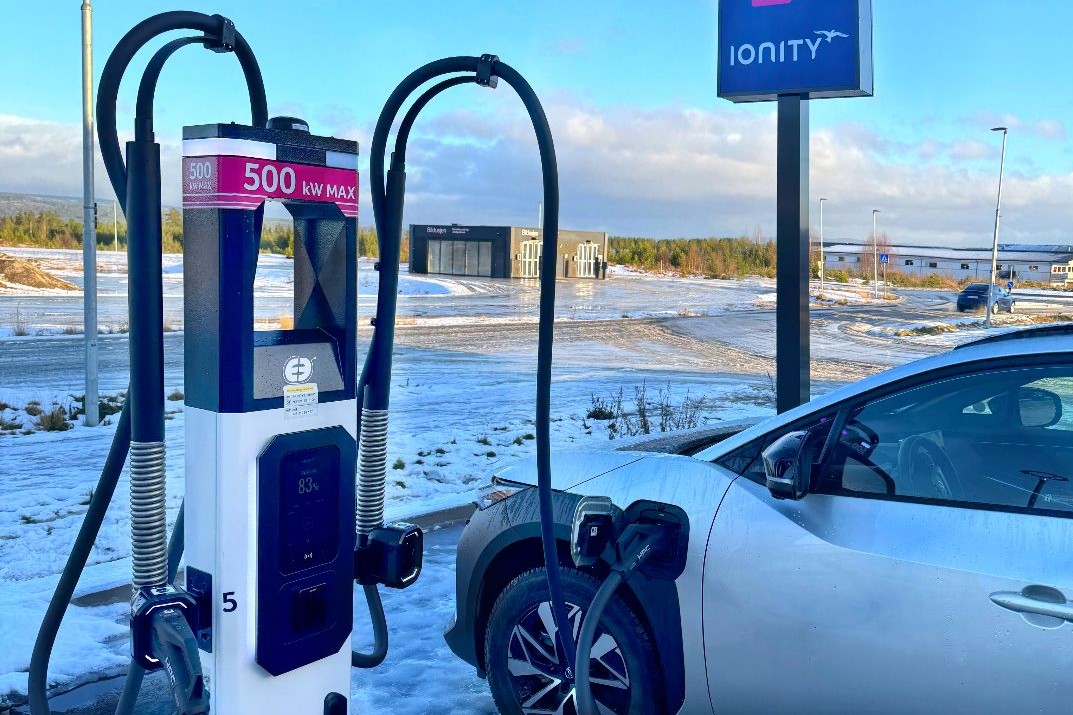
What a market penetration: battery-electric cars accounted for 95.9% of all new passenger car registrations in Norway in the past year. This represents a significant increase in the BEV share compared to 88.9% in 2024. The figures come from statistics published by the Norwegian Road Information Authority (OFV). In total, 179,550 passenger cars were newly registered in Norway last year, surpassing the previous record set in 2021. The country thus experienced a strong year for car purchases overall. Of these 179,550 cars, 172,233 were battery-electric vehicles – the aforementioned 95.9% – and many of them were Teslas. More on this below.
“2025 was an exceptional year for cars. We are seeing the effects of a long-term, targeted electric vehicle policy and how specific tax decisions have an immediate impact on the market,” says OFV Director Geir Inge Stokke. “The year-end surge was historically strong, and there is no doubt that the upcoming VAT change from 1 January 2026 contributed to many people securing a new electric car before the end of the year.”
In December alone, Norway registered 35,188 new passenger cars (+158% year-on-year), following an already strong performance in November. Both months reflected an extreme year-end surge in the market. The share of electric cars in December reached 97.6%, slightly higher than the annual average.
2025 will also go down in OFV’s records as the year in which the number of electric cars surpassed the number of diesel cars in the national fleet. This is hardly surprising, given that diesel car registrations have been declining sharply for years. The latest example: the remaining 4.1% of new registrations in 2025, which included petrol, diesel and hybrid vehicles. Pure diesel cars accounted for just 1%, while petrol cars made up only 0.3%.
“We can be proud that Norway has achieved its ambitious zero-emission target for new car sales. At the same time, it is important to remember that around two out of three passenger cars on our roads still run on fossil fuels, and there are regional differences in new car sales. While this is an important milestone, we must continue working towards a zero-emission vehicle fleet,” Stokke comments.
In terms of brand rankings, Tesla consolidated its position as Norway’s dominant car brand in 2025. The company set “several historic records in the Norwegian car market,” according to the OFV. Tesla surpassed its previous annual sales record at the brand level in Norway as early as the end of November. In total, 34,285 new Teslas were registered in the past year, corresponding to a market share of 19.1%. In other words, nearly one in five new cars in Norway in 2025 was a Tesla. The US manufacturer achieved this result despite a comparatively lower registration rate in December.
At the model level, the Tesla Model Y set a new annual record in Norway with 27,621 first-time registrations. “This is the highest number ever recorded for a single car model in Norway within a year,” Stokke notes. “Achieving a market share of nearly 20% in a year with record-high new car sales is remarkable in itself. That a brand can achieve such volumes with so few models speaks volumes about the demand and impact of Tesla in the Norwegian market.”
While Tesla dominated the year, Volkswagen delivered a strong finish: with 5,237 first-time registrations in December, the German carmaker achieved a market share of 14.9%, coming close to Tesla’s 16.2% for the same month. Over the entire year, Volkswagen recorded 23,938 sales (not all of which were BEVs) and a market share of 13.3%. Another trend highlighted by the OFV is the growing presence of Chinese car manufacturers in Norway’s new car market: “A total of 24,524 new passenger cars of Chinese origin were registered over the year, accounting for 13.7% of new car sales, up from 10.4% the previous year,” the authority states. BYD was the strongest Chinese brand in 2025, securing tenth place in the annual manufacturer ranking, ‘driven strongly by the BYD Sealion 7 model.’
However, the top 10 model list for the year continues to be dominated by established European, American and Japanese brands. Following the Tesla Model Y with 27,621 sales are the VW ID.4 (8,802), the Toyota bZ4X (7,274), the VW ID.7 (6,976) and the Tesla Model 3 (6,608). Ranks 6 to 10 are occupied by the VW ID.3 (5,572), the Volvo EX40 and EX30 (5,270 and 5,206), the Škoda Enyaq (4,837) and the Nissan Ariya (4,565).
Beyond the passenger car market, Norway’s van market is also shifting towards electric drive. In 2025, 29,650 new vans were registered, of which 45.2% were battery-electric vehicles. The bus market already boasts an electric registration share of 56.3%. The truck market, however, still lags significantly behind: of the 4,770 new trucks over 3.5 tonnes registered in 2025, only 17.3% were electric, while 73.2% still ran on diesel. Compared to other European countries and regions worldwide, this is still an outstanding figure.
ofv.no (Press release), ofv.no (December) ofv.no (Statistics)

1 Comment