


Farewell tariffs: Cupra Tavascan becomes first China import to fall under minimum price rule
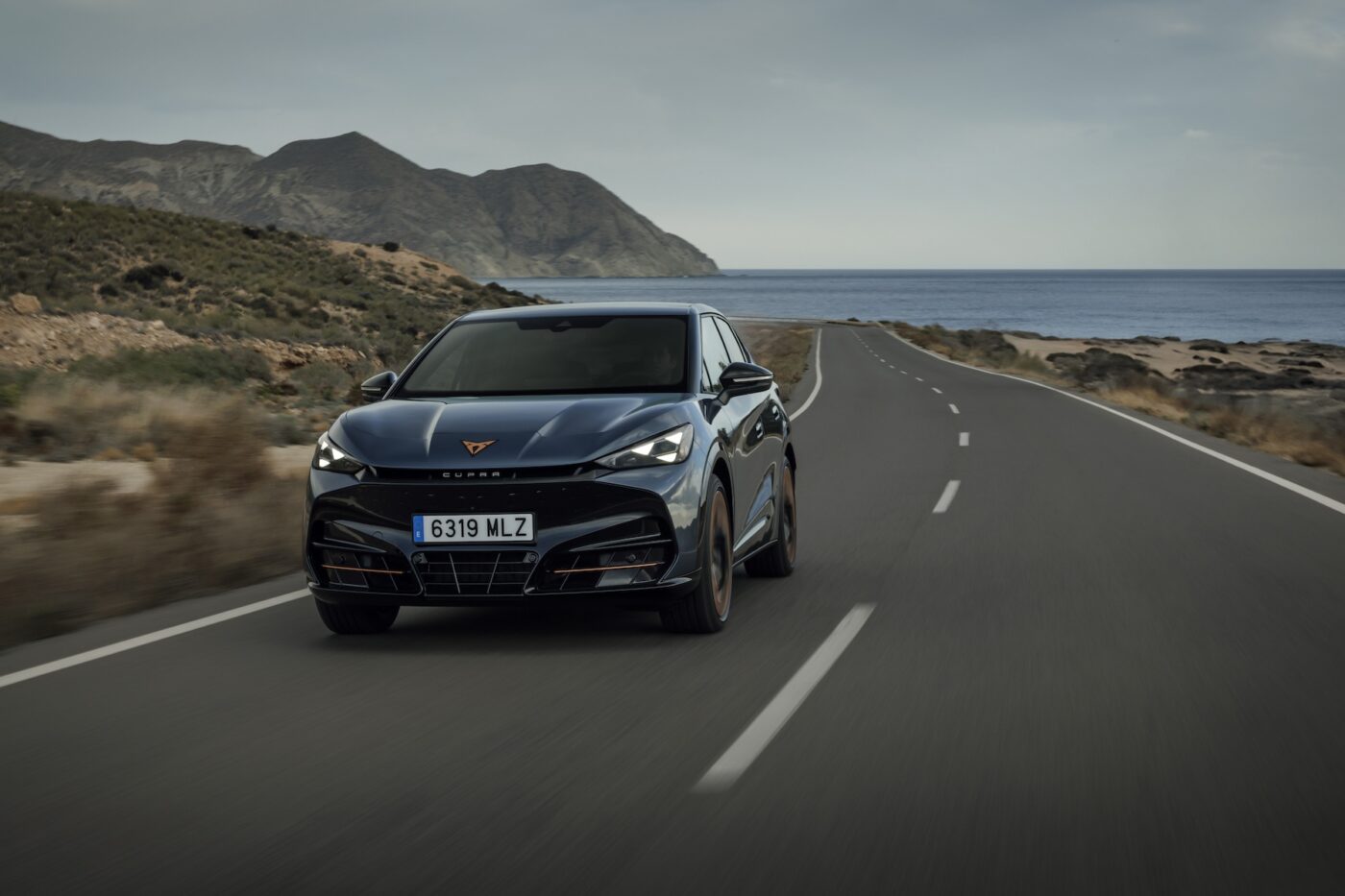
Volkswagen has successfully avoided additional duties on the Cupra Tavascan. The model is manufactured exclusively at the plant in Anhui, China, and exported to global markets, including the EU. Instead of duties, the minimum price rule now applies, for which the European Commission set the framework in January by developing guidelines for Chinese importers on price commitments. These minimum prices serve as an alternative for Chinese manufacturers to avoid flat-rate duties. However, the Cupra case demonstrates just how complex this process can be. Here are the details.
An agreement on minimum prices and further mechanisms to protect the EU market has been reached between VW Anhui and the EU, as evidenced by an implementing decision published in the Official Journal of the European Union on Tuesday. This marks the conclusion of a lengthy negotiation process. Volkswagen and Seat, the parent brand of Cupra, had already submitted a series of commitments on 10 October to circumvent the duties on the Tavascan, which have amounted to 30.7% since 2024 (comprising a 10% base duty and a 20.7% additional duty). Subsequently, the EU agreed to review the anti-subsidy duties.
Many details in the fine print
The agreement has been finalised: from now on, Seat must adhere to minimum prices for importing the model and comply with several additional conditions. The company said it welcomes the Commission’s acceptance of Seat and Cupra’s proposals. The Tavascan is a European project, developed in Europe and manufactured in China at a plant majority-owned by VW.
Now, let’s examine the fine print of the implementing decision, which is likely to be of great interest to other importers of Chinese electric vehicles. According to the document, the commitment offer comprised four main elements:
- Compliance with a minimum import price
- A fixed annual quota
- Compliance with formal requirements for all exports
- Submission of detailed sales reports, acceptance of inspection visits, the requirement to consult the European Commission in case of difficulties or questions during the implementation and subsequent application of the commitment, and further voluntary obligations.
But how is the minimum price calculated? Since the Cupra Tavascan was not yet in production during the EU’s anti-subsidy investigation period (1 October 2023 to 30 September 2024), the minimum price for the Tavascan will now be based on the price of a comparable Volkswagen model from Europe. This is one of two methods for calculating minimum prices as an alternative to existing duties. In January, the EU also paved the way for determining the minimum price based on the so-called CIF price during the EU investigation. Accordingly, the minimum price must match the price at that time—plus the margin of the imposed duties.
Furthermore, VW Anhui has committed to importing only a specific number of Cupra Tavascan units into the EU annually while refraining ‘from exporting other BEVs to the Union,’ as stated in the decision. However, the exact volume limit for imports is not specified. What is clear, though, is that VW Anhui had to commit to ‘not to sell any other vehicles (such as plug-in electric vehicles, hybrid electric vehicles or internal combustion engine vehicles) to the same customer.’ In this case, the purchaser refers to the importer, Seat.
Only specific sales channels allowed
The formal requirements are particularly noteworthy, as the EU imposes numerous conditions on VW Anhui and the importer, Seat. These include the obligation to issue commitment declarations, commercial invoices, and resale invoices. Additionally, the import of the Tavascan may only be carried out by a single importer and subsequently distributed exclusively through specific sales channels. The primary goal is to ensure transparency and traceability of the imported vehicles, as the EU clearly states in its decision.
The fourth point covers the reporting obligations and inspections outlined above. Among the further voluntary commitments is a pledge to undertake ‘BEV-related investment projects in the EU.’ This should not be difficult for Volkswagen, as the carmaker is already launching ongoing and upcoming projects in its home market. Other commitments include, for example, the setting of net sales prices.
In principle, price control is a more complex issue than it may initially appear. According to the EU decision, Seat has ‘to apply uniform policy on the approval of both re-sale prices and any subsequent support payments to its distributers in the Union, along with a clear traceability based on related documentation for each individual vehicle.’ For this purpose, Seat has also entered into specific commitments regarding fleet sales.
Volkswagen and Seat must also comply with the EU’s reporting system. The importer is required to use a special reporting system provided by the Commission for submitting reports. This system is based on ‘an individual alpha-numerical code’ and QR codes.
China criticises bilateral talks with individual companies
With all these requirements, the Commission deems the minimum price rule for the Cupra Tavascan sufficient ‘to eliminate the injurious effect of the subsidisation.’ The Chinese Chamber of Commerce has responded cautiously. In a statement during the ongoing negotiations on the Cupra Tavascan, it criticised the Commission for conducting bilateral talks with individual companies and urged it to strictly adhere to the principle of non-discrimination and continue its dialogue with the Chinese authorities. China also called on the Commission to disclose further details about the conditions of VW Anhui’s commitment offer.
The Commission, however, counters that in this specific case, it received a commitment offer from a single company “that contained sufficient elements to be considered practicable and met the conditions of Article 13 of the basic regulation, which formed the basis for initiating this review.” This regulation specifically refers to Regulation 2016/1037 of 8 June 2016 on protection against subsidised imports from countries not belonging to the European Union.
The EU Commission further argues against China’s criticism by pointing out that Volkswagen/Seat is the first and so far only manufacturer to have formally submitted a commitment offer. “Therefore, the approach of the Commission cannot be considered discriminatory, given that there was no other similar situation that should have been treated in the same way. The Commission rejected the claim.”
Since the end of 2024, several manufacturers in China, including BYD, Geely, and SAIC, have been subject to EU additional duties. These range from 7.8% to 35.3%, excluding the aforementioned 10% base duty. The duties apply specifically to battery-electric vehicles and electric vehicles with range extenders, while other hybrids (including plug-in hybrids) are exempt. This has recently led to an increase in imports of such vehicles from China.
Beyond Volkswagen, other European OEMs with production facilities in China are also affected by the duties. For instance, BMW imports battery-electric vehicles from China into the EU, and Mercedes collaborates closely with Geely under the Smart brand. Several automakers, including BMW, have already filed complaints against the duties with the European Court of Justice.
eur-lex.europa.eu, reuters.com

0 Comments