


Donut Lab presents first data on controversial solid-state battery
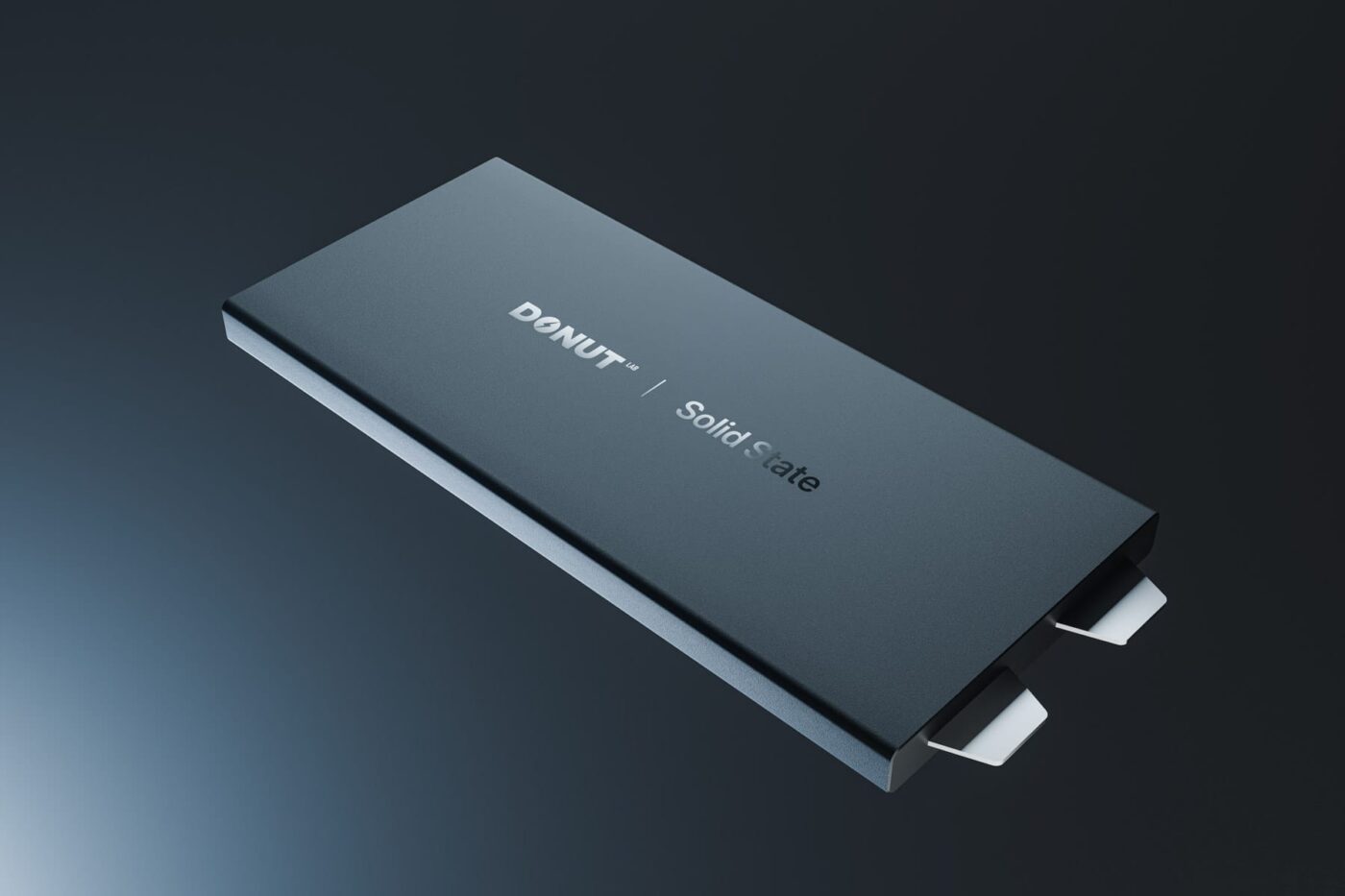
During its premiere at CES, the Finnish company shared only limited data about its potentially groundbreaking product. Key figures included an energy density of 400 Wh/kg, a charging time of five minutes for a full charge (not just 10–80%), and a lifespan of 100,000 cycles. The combination of these figures raised eyebrows—historically, significant improvements in energy density and charging speed have required trade-offs in durability.
However, as the trade show in Las Vegas only featured mock-ups of the alleged solid-state battery and no further details from the company, many questions about how Donut Lab achieved these impressive figures remained unanswered. In the aftermath, experts and YouTubers cast doubt on the development, while battery manufacturers expressed scepticism. “All the parameters contradict each other… Anyone with even a basic understanding of this technology would think it’s a scam,” said Yang Hongxin, CEO of the Chinese battery manufacturer Svolt.
“If we had presented full third-party validation right away, the controversy wouldn’t have ended—it would have simply shifted,” says Marko Lehtimäki, CEO and co-founder of Donut Lab. “If certain people don’t like the conclusion, they simply move the goalposts. If we had proven the technology works, they would have questioned its scalability. And scalability is the perfect breeding ground for doubt because it takes months or years to provide irrefutable evidence.” Such persistent scepticism would have made it significantly more difficult to secure funding for actual scaling.
For this reason, Donut Lab made a deliberate decision ahead of the technology’s launch. “We let the loudest voices in the industry speak first and spread the narrative that this technology simply cannot exist today. This way, everyone outside the battery sector can understand the magnitude of the breakthrough we aim to bring to market,” explains Lehtimäki. The logic is that Donut Lab can then silence these sceptics by presenting proof of its technology.
Donut Lab launches “I Donut Believe” campaign
This is now partially underway. On Monday, Donut Lab released test results from VTT, initially focusing solely on the claim that the Donut battery can be fully charged in five minutes. Independent results for all claims are yet to be published, as Donut Lab plans to unveil them gradually over the coming weeks as part of its dedicated “I Donut Believe” campaign.
So, what do we know so far? According to the VTT report, the research centre conducted a Solid-State Battery Performance Test using a cell with a capacity of 26 Ah. Two different test series were performed: one at 5C and another at 11C. In the 5C tests, the cell was initially charged at 130 amperes until it reached a voltage of 4.3 volts, after which it was charged at a constant voltage until the full 26 Ah was achieved. In the 11C tests, the initial current was 286 A, with the rest of the process remaining the same. The cooling method was varied: sometimes the cell was cooled on one side, and other times on both sides, using a passive cooling plate to simulate different thermal management solutions. Between charging cycles, the cell was discharged at 1C.
The results: in the 5C tests, 80% state of charge was achieved in 9.5 minutes regardless of cooling, while 100% was reached in just under 12 to 13.5 minutes, depending on the cooling method—12 minutes precisely matches the 5C target.
In the 11C tests, 80% was achieved in 4.5 to five minutes, and 100% in just over seven minutes. This does not fully meet the claim of a complete charge in five minutes but demonstrates the potential. In an electric vehicle, battery cells are actively cooled and monitored by a thermal management system, which could extract significantly more performance than in this laboratory test.
“The measurements show that the Donut battery allows remarkably high charging speeds even without active cooling,” states a press release. “While the test conditions do not precisely simulate the behaviour of the cell within a battery module, the results confirm the advantages of the Donut battery as part of a module. The battery cell requires no special compression and functions with passive cooling, simplifying the architecture of battery modules.”
However, it must be noted that the sixth charging test, where the cell was placed on only one cooling plate, had to be aborted when the surface temperature reached 90 degrees Celsius—somewhere between 80% and 90% state of charge. After a four-minute cooling period, the test was resumed.
“Under the defined test conditions, the cell was successfully charged at 5C for more than nine minutes, and 100% of the charged capacity was available during the subsequent discharge. The cell was also successfully charged at 11C for more than three minutes, with 98.4–99.6% of the charged capacity available after a full charge,” VTT concludes in its test summary.
Source: Info via email (press release), r2.dev (VTT report as PDF), youtube.com (Lehtimäki’s statements)


0 Comments