


Tesla plant in Grünheide reportedly running at 40% capacity
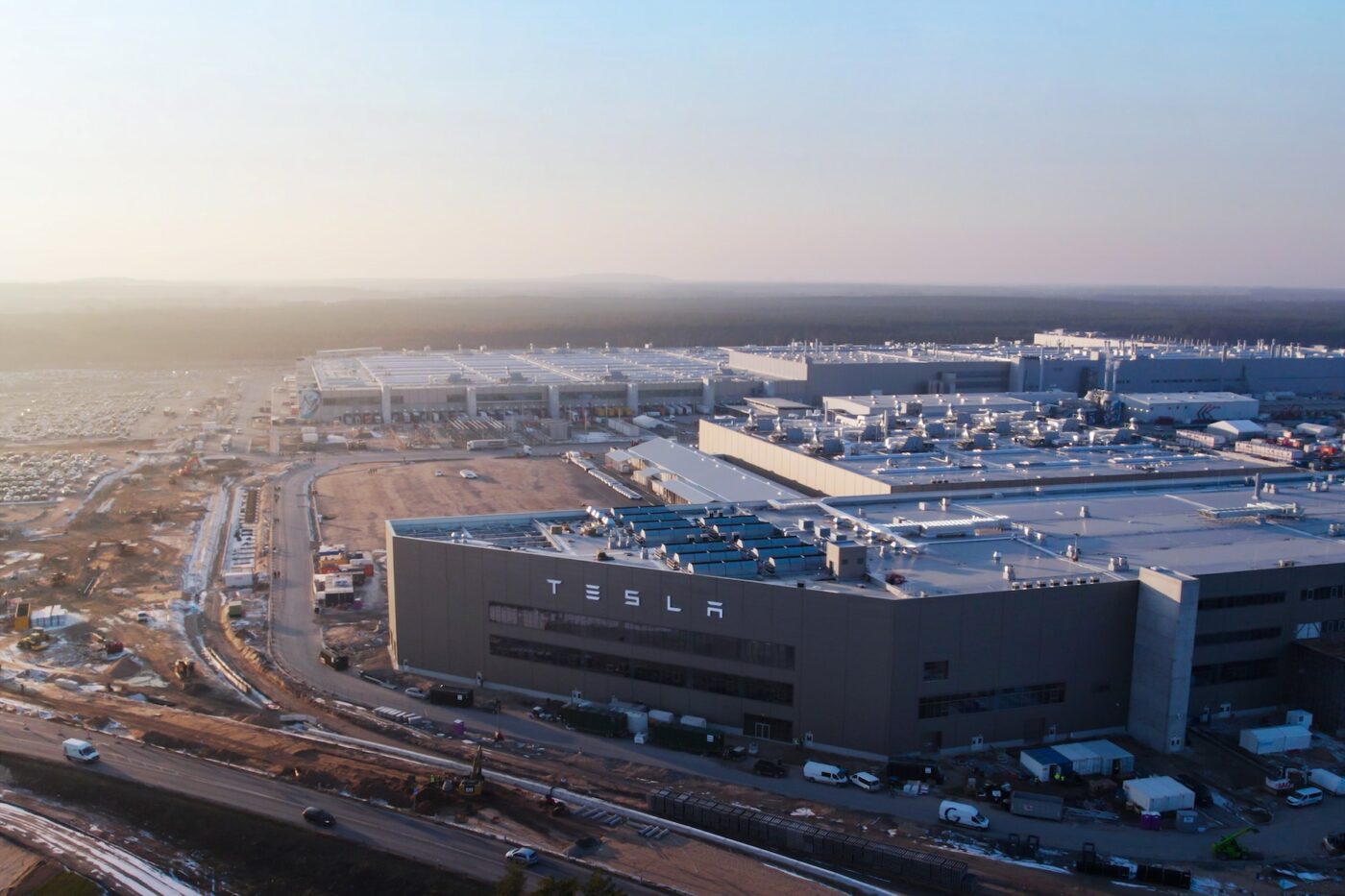
++ This article has been updated ++
According to data from Inovev cited by the German Handelsblatt, Tesla’s plant in Grünheide produced 149,040 vehicles last year. This marks a significant decline compared to 2023 and 2024, when output reached 211,235 and 192,801 battery-electric vehicles, respectively. Only the start-up year of 2022 saw lower production, with 50,300 Model Y units built following the mid-year ramp-up.
In its annual reports, Tesla has repeatedly stated that the Grünheide facility is designed for a capacity of more than 375,000 vehicles per year. Based on the reported figures, output in 2025 corresponds to an estimated utilisation rate of 39.7 per cent, down from 56.3 per cent in 2024. The profit margin for the past year is said to have amounted to 0.74 per cent.
Handelsblatt points out that Inovev’s dataset may include estimates that could be subject to subsequent revision. The figures are therefore not considered final. Tesla did not comment on the reported production data in response to the newspaper’s enquiry.
However, on Monday, plant manager André Thierig responded to the report on LinkedIn. In his post, he accused Handelsblatt of poor research and unprofessional reporting, claiming it pursued ‘only one goal – to run an anti-Tesla campaign together with [the workers union] IG Metall!’
Thierig stated that the reported figure of 149,000 Model Y units built in 2025 was incorrect. According to him, production exceeded 200,000 vehicles. “And that despite the fact that in the first quarter we paused production for the switchover to the new Model Y and then ramped back up to 5,000 units per week over several weeks.”
He also rejected the suggestion that he had been portraying developments in Grünheide in an overly positive light for months. “In 2025, we increased production every quarter compared with the previous quarter. Since the start of production in 2022, we have already built more than 700,000 Model Y vehicles in Grünheide! For the first quarter of 2026, we are also planning a further increase compared with the fourth quarter of 2025.”
Thierig also denied the reported profit margin of 0.74 per cent, although he did not provide an alternative figure.
Notably, like Tesla CEO Elon Musk, Thierig emphasised that the Model Y had been the world’s best-selling vehicle for three consecutive years. This claim remains contested within the industry, particularly by Toyota. A reduced output in Grünheide would not necessarily be surprising in light of weaker sales in 2025. Last year marked Tesla’s second consecutive year of declining global deliveries. While the decrease in 2024 was modest, the drop in 2025 was more pronounced, with deliveries falling by 9.1 per cent to around 1.6 million vehicles worldwide.
Although registrations of the Model Y built in Grünheide increased cumulatively by almost 70,000 units in markets such as South Korea, Thailand, Norway and Turkey, these gains did not offset the decline in the United States, China and Europe, where volumes fell by a combined 155,000 units.
Against this backdrop, ongoing discussions about a potential expansion of the Brandenburg site appear at odds with the reported production data. Shortly before the works council elections, Tesla CEO Elon Musk addressed employees in a video message, indicating that expansion plans could be reconsidered if the plant were not kept, in his words, free from outside influence. Musk has previously expressed scepticism towards trade unions, including a stronger role for IG Metall within the Grünheide works council.
In the same address, however, Musk emphasised the strengths of the site, characterising it as one of the company’s most advanced production facilities worldwide. He described Giga Berlin as an outstanding factory with a positive working environment and high production standards, both inside and outside the buildings.
The video message also touched on future manufacturing plans. Musk said the company had begun ramping up battery cell production in Grünheide. This statement contrasts with reports from mid-December indicating that cell production in Brandenburg was not expected to start before 2027, after the project had reportedly been paused since 2022.
Thierig also used his LinkedIn post to underline ongoing investment at the site: “The fact is that we are currently investing almost another 100 million in battery cell production, which will create several hundred additional jobs. Which other car factory in Germany can demonstrate this level of vertical integration?” According to the plant manager, Tesla has invested more than five billion euros in Grünheide since 2020.
At the same time, Thierig accused Handelsblatt of acting in the interests of IG Metall. Tensions between management and the union have intensified ahead of the forthcoming works council elections. A recent dispute over an allegedly recorded works council meeting has further highlighted the strained relationship, with parts of the conflict unfolding in public.
IG Metall Berlin-Brandenburg-Saxony also responded to the Handelsblatt article on Monday in a comment posted beneath Thierig’s statement. The union said the newspaper had contacted it before publication to ask whether the reported figure of 149,000 vehicles produced in 2025 was plausible. “Our answer was: ‘No, the figure is unrealistic. We do not know the exact numbers, but in our assessment, it must have been more than 200,000.’”
handelsblatt.com (in German), linkedin.com
0 Comments