



Survey: German logistics firms increasingly trust battery-electric trucks
The Öko-Institut titled its 41-page report ‘Acceptance of electric trucks in the logistics sector – results of a standardised survey.’ The authors set out to collect and analyse data on the market development of battery-electric trucks from the user perspective.
“Based on a large-scale standardised survey of decision-makers in logistics companies in Germany, this study presents insights from this practical perspective,” the Öko-Institut writes in the introduction. The survey itself was explicitly designed as a representative study.
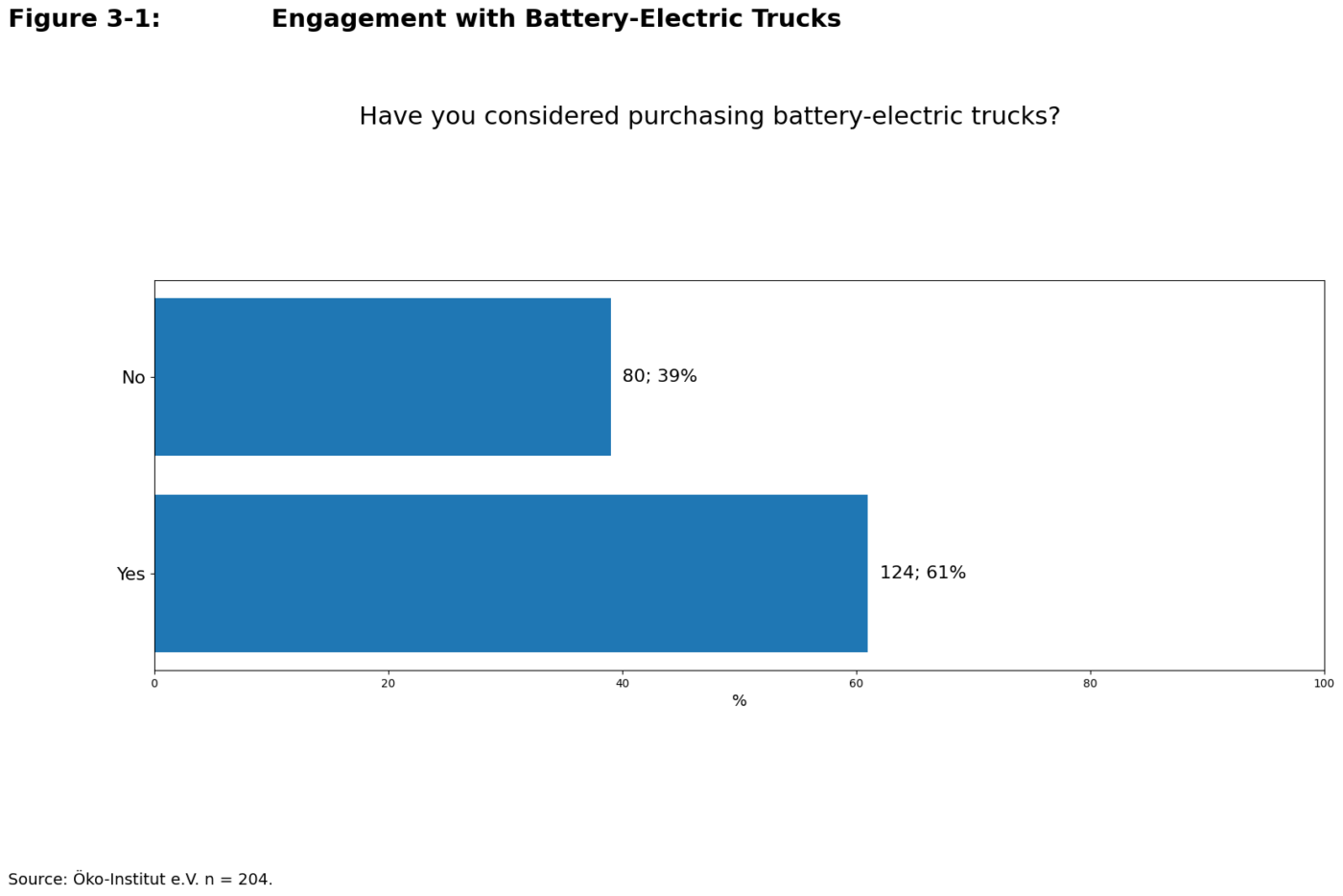
One key result: a majority of the companies surveyed are already looking into procuring battery-electric trucks (61 per cent). At the same time, most respondents (77 per cent) expect BEVs to be either standard (25 per cent) or at least partially deployed (52 per cent) by 2030. Compared to the previous survey from 2021, this represents a significant increase. At the time, only five per cent expected electric trucks to become standard by 2030, as the Öko-Institut notes.
In other words, among all alternative drivetrains, respondents see the strongest future potential in BEVs. Hydrogen, on the other hand, has lost considerable relevance in recent years. In the current survey, fewer than half of the companies expect hydrogen trucks to be used as standard or at least partially by 2030 – in 2021, that figure was still around 80 per cent.
Another key finding is that despite the growing acceptance of electric trucks, the sector still shows considerable knowledge gaps. “Fewer than a third of the companies surveyed were able to correctly classify the toll exemption for zero-emission trucks, even though tolls have a major influence on total operating costs,” the Öko-Institut states.
In Germany, zero-emission trucks are currently exempt from the national truck toll, which significantly affects operating costs. More than half of the companies (61 per cent) have also never compared the total cost of ownership of an electric truck with that of a diesel truck. According to the analysts, there are also gaps regarding infrastructure. “Two-thirds of the companies with their own depot do not know the available grid connection capacity at their sites.”
Many still take a wait-and-see approach
This fits with another conclusion of the report: many logistics companies remain hesitant. According to the authors, the survey shows that the practical requirements for using BEV trucks are often more favourable than assumed.
“Downtimes are sufficient for regular battery charging for the vast majority of vehicles.” Nevertheless, charging infrastructure remains a major barrier. Every second company cites the lack of public charging points as a reason for not procuring electric trucks. Meanwhile, around three-quarters of companies with their own depot currently reject investments in their own charging infrastructure.
For the survey, the Öko-Institut used a quota sample targeting decision-makers within logistics companies. Firms of different sizes from local, regional and long-distance freight transport were included. Aproxima GmbH conducted a total of 204 interviews on behalf of the Öko-Institut in July and August 2025 – enough to ensure the study’s representativeness.
The companies surveyed operate around 33 trucks on average in their own fleets. Half of the companies reported fleets of up to ten trucks, while 75 per cent reported up to 30 trucks. A small number of companies with very large fleets therefore pushed the average upwards. Notably, only very few companies already operate their own electric trucks. Specifically, ten companies – around five per cent of the sample – currently do so.
28 per cent plan to deploy BEVs by 2030
Experience with alternative drivetrains among respondents remains limited overall. Besides BEVs, companies reported occasional contact with gas-powered vehicles, biofuels, electricity-based fuels and overhead line trucks. However, procurement plans show a clear favourite drivetrain.
“More than a quarter of the companies (28 per cent) plan to deploy battery-electric vehicles by 2030. Biofuels are expected to be used in around one in ten companies by 2030. All other alternative drivetrain and fuel technologies are only of interest to up to five per cent of companies to the extent that concrete deployment by 2030 is planned,” the study states.
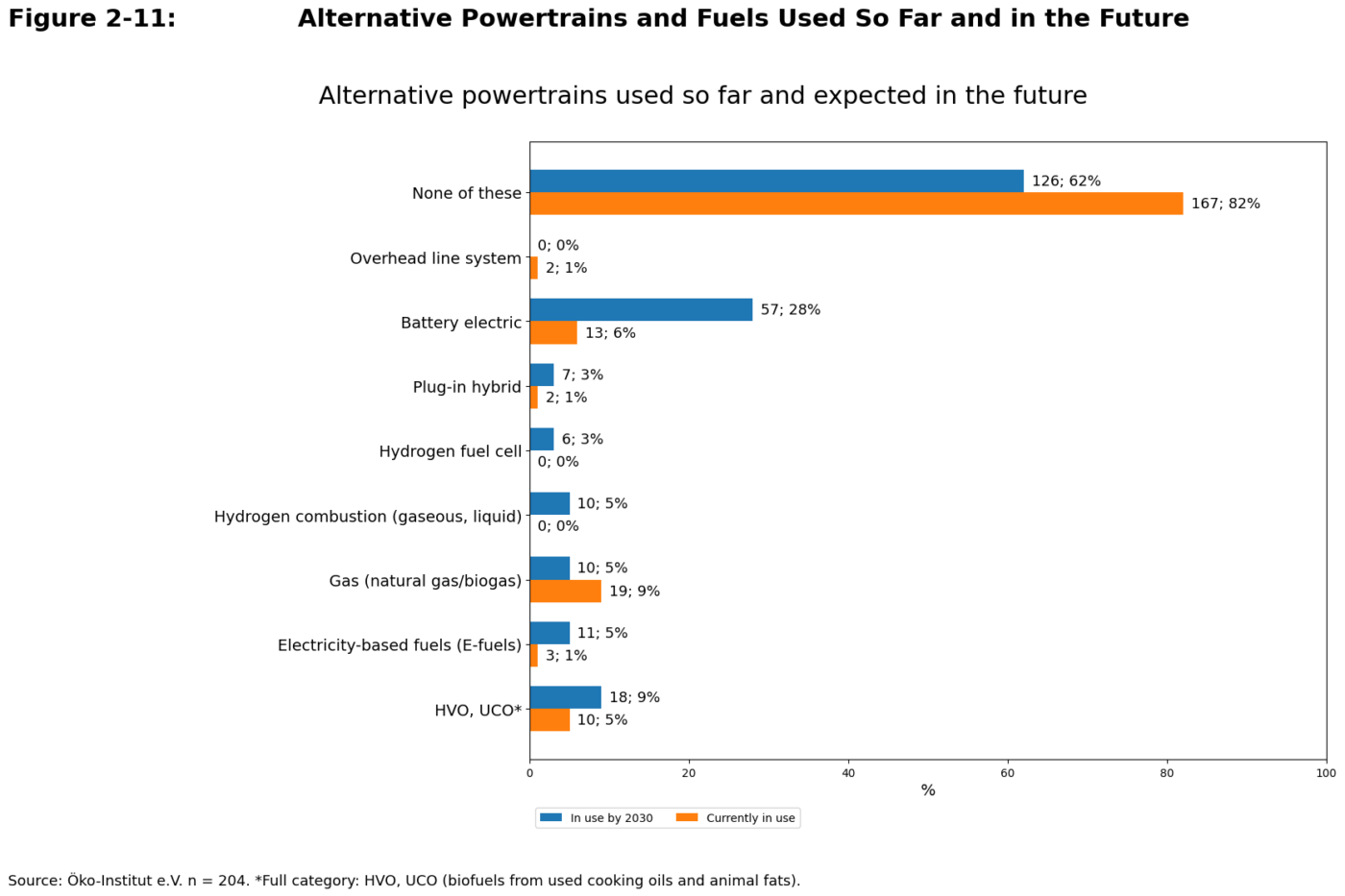
BEVs are thus clearly the most promising technology among the alternatives. At the same time, a large share of companies has not yet engaged with electric trucks at all – 39 per cent according to the report. These companies cite insufficient range, a lack of profitability and the limited availability of charging infrastructure as the main reasons.
They also mention unsuitable use cases, the operational climate, doubts about or rejection of the technology and company size being too small to handle the necessary financial investments.
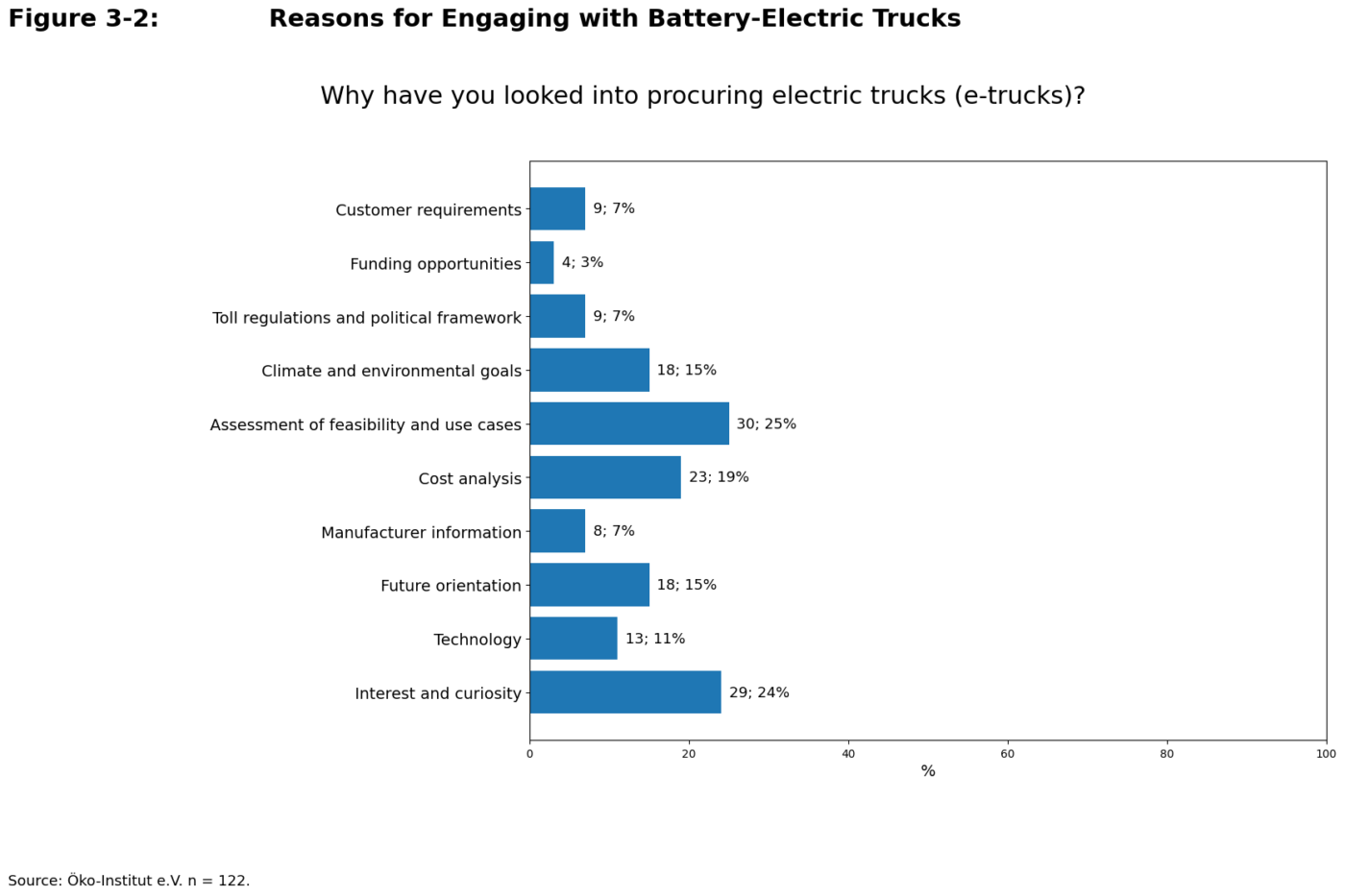
Companies that have already considered battery-electric trucks cite general interest in the topic, feasibility and possible deployment scenarios as key motivations. Cost considerations, future orientation, climate and environmental targets, the truck toll and customer requirements are also mentioned.
Another aspect is that leasing is particularly popular when it comes to future electric truck procurement. A quarter of logistics companies would procure electric trucks via leasing. Around a fifth can imagine purchasing an electric truck through financing. Hire for purchase is attractive for 15 per cent, while rental models appeal to 13 per cent. Only around one in ten companies would consider buying an electric truck without financing. And six per cent of companies that have considered electric trucks say procurement is not an option at all.
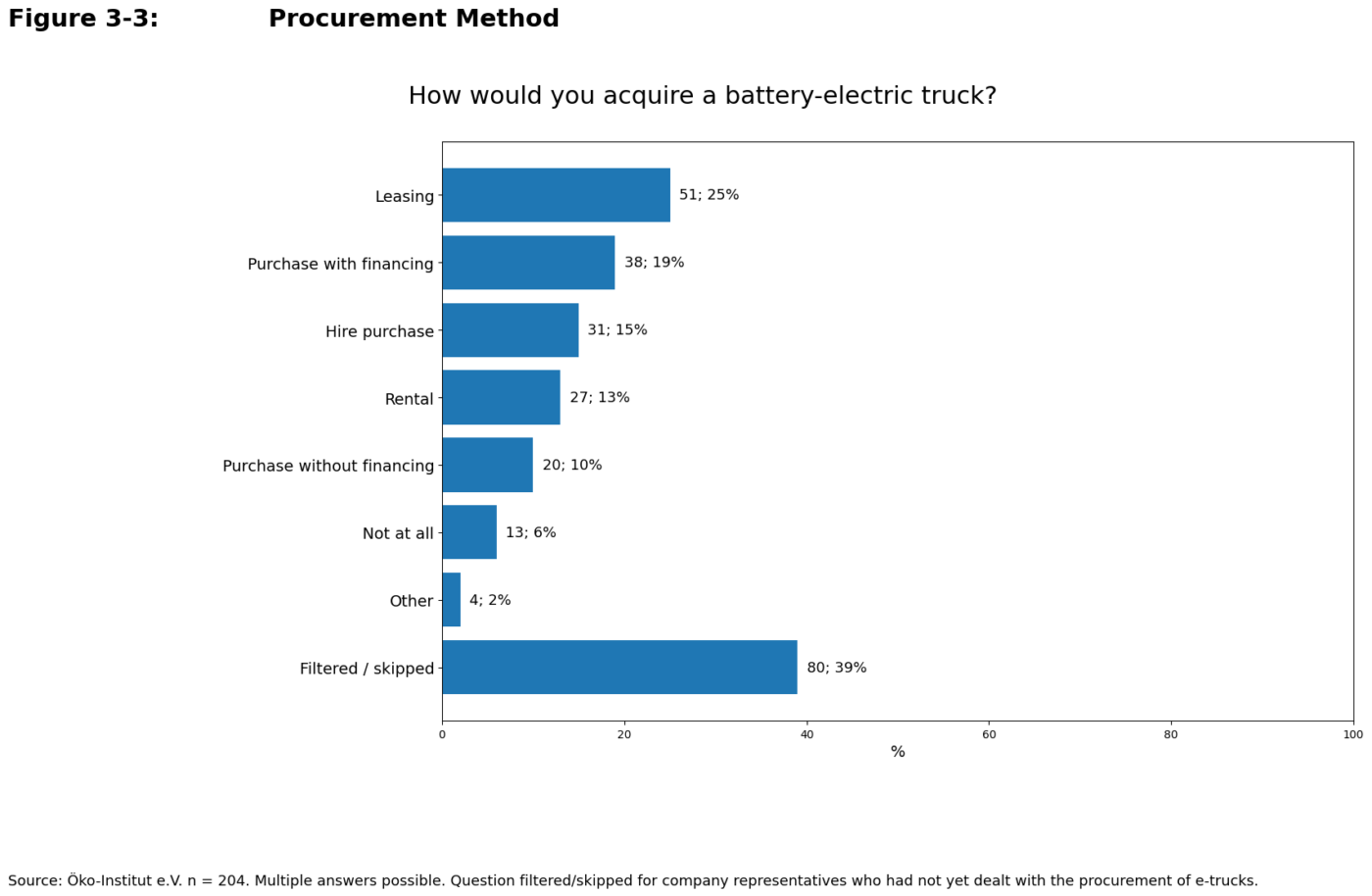
“Overall, companies prefer financing models that enable financial flexibility and avoid high upfront investments. Purchasing electric trucks without financing is therefore less attractive. Vehicle manufacturers and logistics companies could thus benefit if low-threshold leasing and financing options for electric trucks were available,” the authors conclude.
When it comes to site conditions, more than two-thirds of respondents operate their own depot (68 per cent), mostly owned by the company. The study also shows that eleven per cent of companies with their own yard have already invested – at least selectively – in truck charging infrastructure. However, the majority (73 per cent) currently have no plans to invest in truck chargers at their largest depot site. The remaining companies plan either selective or more comprehensive measures to enable truck charging on site.
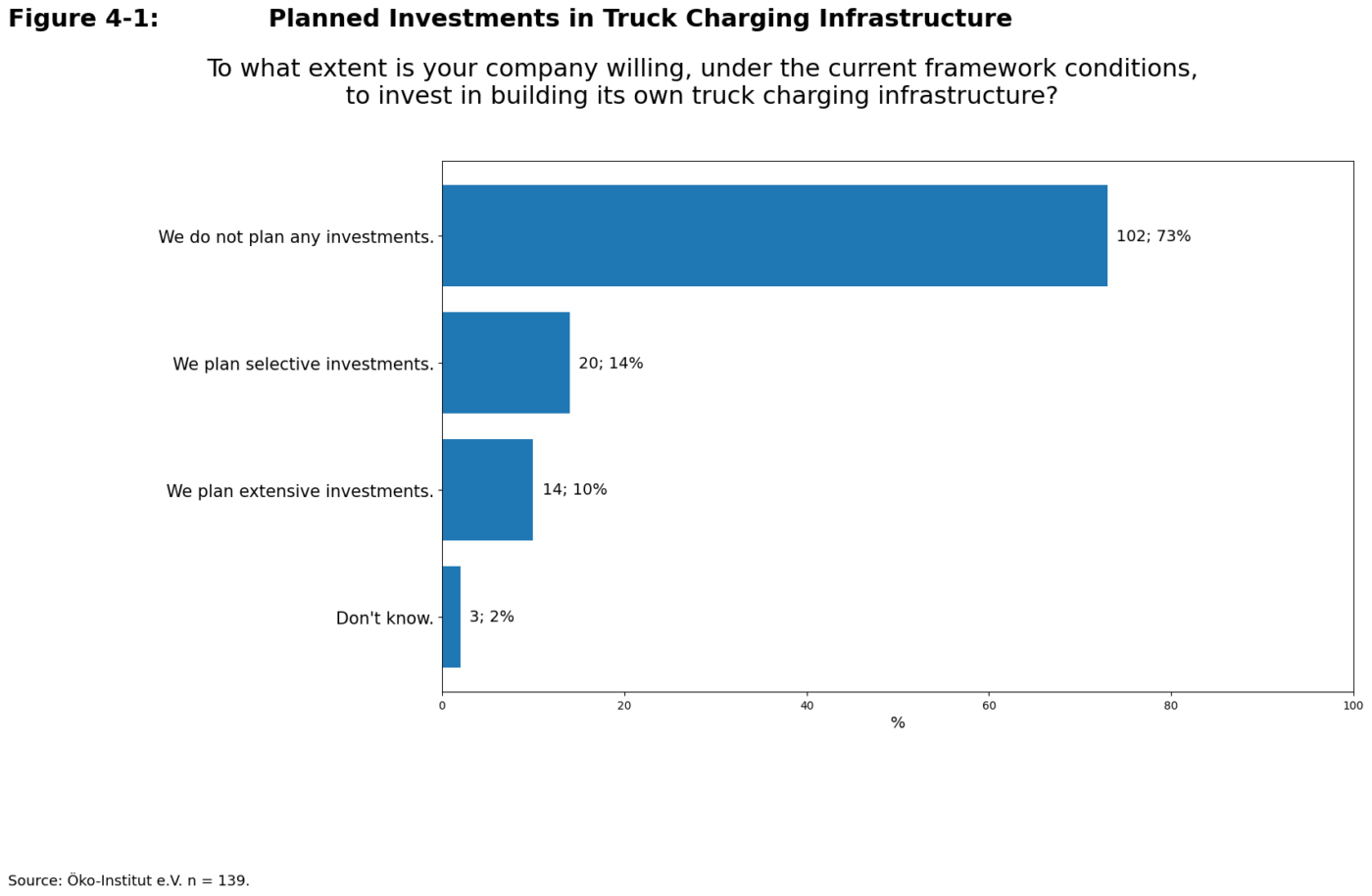
The limited interest in own charging infrastructure correlates with another finding. Most companies with their own depot (67 per cent) do not know the grid connection capacity at their locations. In addition, ‘most companies with their own depot cannot provide information about electricity prices. […] Against the background of this information gap regarding electricity prices, it can be assumed that an appropriate cost evaluation of electric trucks is possible in fewer than half of the companies with their own depot,’ the authors write.
Conclusion: progress, but still a need for information
In its conclusion, the Öko-Institut states that the responses provide a clear snapshot of the current market acceptance of electric trucks in Germany. A majority of logistics companies (61 per cent) are looking into the potential procurement of battery-electric trucks. However, only 28 per cent currently plan to deploy them by 2030. On average, the study also finds larger knowledge gaps among companies that have not yet dealt with electric trucks.
Another section of the report shows that the logistics sector is divided about its future overall. Around one third of companies view the future of the sector positively, around one third are neutral and around one third see it negatively – regardless of electrification.
Looking ahead, the authors highlight four key points:
- In some cases, logistics companies still show considerable knowledge gaps regarding key technical, regulatory and economic planning parameters for electric trucks. The aim should be to close these gaps quickly through appropriate measures in order to enable informed and forward-looking decisions.
- The survey provides initial indications on depot availability, electricity prices and other relevant planning parameters for fleet electrification. So far, no other representative data exists. In the future, this knowledge base should be expanded further to assess the challenges and potential of fleet electrification on a data-driven basis.
- For many assessments, clear differences emerge compared to early-adopter companies with experience in electric trucks. This shows how important it is for companies to gain early contact with the technology to reduce reservations and understand the relevance of key influencing factors (for example, grid connections).
- Practical trials show that the implementation of electrification cannot be accelerated indefinitely (for example, when expanding grid connections). It is therefore important to raise awareness among companies about implementation timelines at an early stage. At the same time, new approaches will be needed that can only succeed through cooperation. These include charging solutions for companies without depots and financing models for smaller companies.
oeko.de, oeko.de (study for download; both in German)
This article was first published by Cora Werwitzke for electrive’s German edition.



0 Comments