


TU Braunschweig strengthens battery research centre
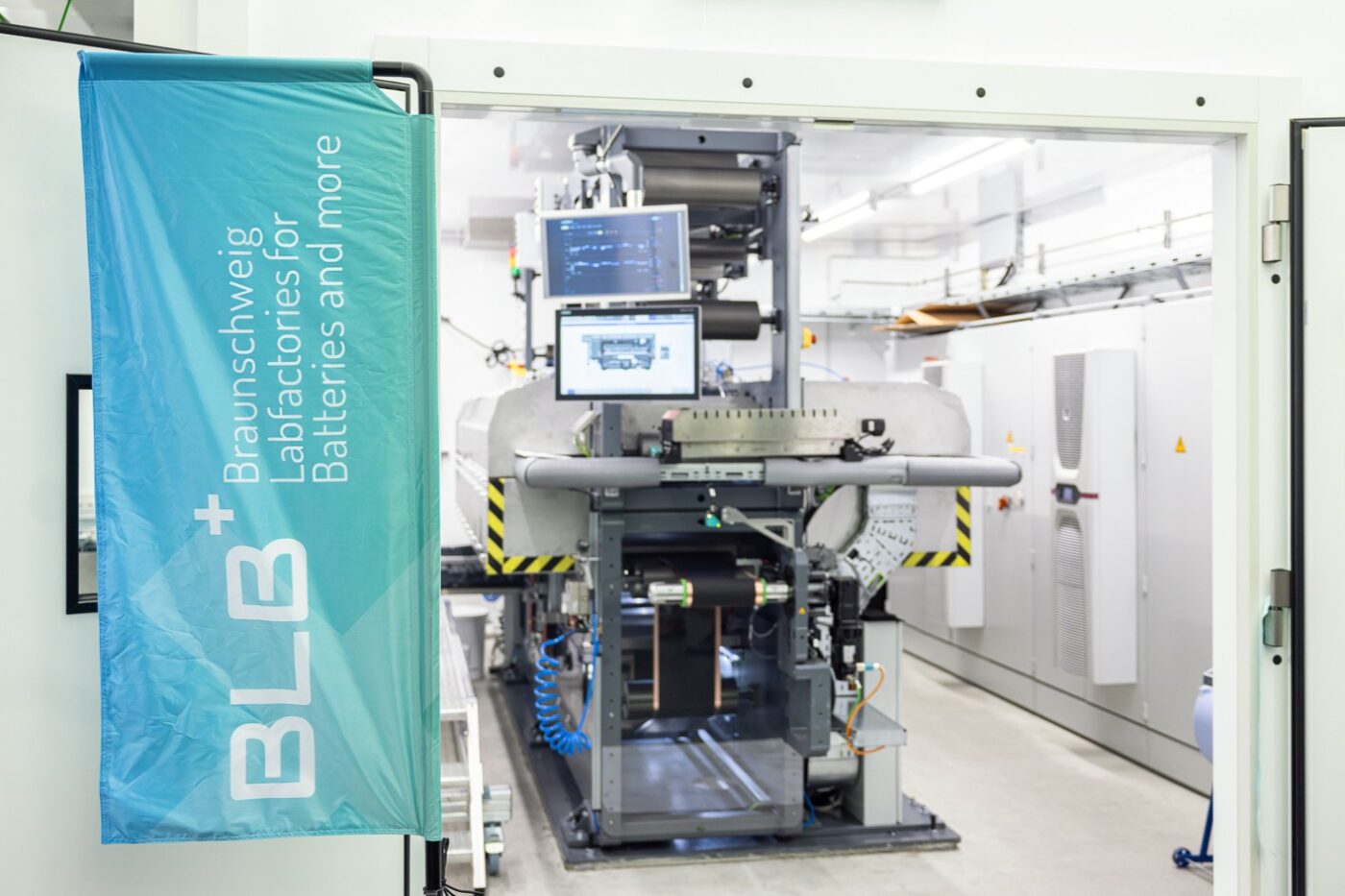
The investment was funded with approximately ten million euros by the Federal Ministry for Research, Technology and Space (BMFTR). The funding, provided under the ‘ForBatt’ programme, aims to enable the BLB to make key contributions to the further development of battery cell production in Germany.
Specifically, the BLB has now inaugurated the following facilities, including associated laboratory and analysis infrastructure:
- 3D printing system for solid-state electrodes: This system aims to develop and produce innovative 3D solid-state electrodes for future battery generations.
- Pilot system for dry coating with dry room and laboratory infrastructure: This process, also known as dry coating, is a promising new production method expected to offer significant advantages over conventional wet coating of electrodes in terms of cost, energy efficiency, and sustainability.
- Tandem wet coating system for circular battery cell production: This system is specifically designed to enable multiple circular production cycles using sustainable drying processes. It allows for the reproducible manufacturing of larger quantities of electrodes and cells. Combined with the existing recycling facility, the BLB aims to create the conditions for industry-relevant investigations into closed material loops.
“Together, the three facilities complete a research infrastructure that is unique in Germany, enabling us to develop innovations for sustainable, circular and high-performance battery cell technologies along the entire value chain – from basic research to industry-oriented demonstration,” explains Professor Arno Kwade, Vice President for Transfer and Innovation at TU Braunschweig and spokesperson for the BLB Executive Board. “With these facilities, which are funded by the BMFTR with over ten million euros, the BLB+ regional network is strengthening the expansion of the Braunschweig and Lower Saxony region into a leading hotspot for the circular production of energy storage and conversion devices and is making an important contribution to the transformation of battery cell production in Germany.”
The inauguration was also attended by Lower Saxony’s Minister of Science, Falko Mohrs. He stated: “We need strong research, closely networked with companies and start-ups, and well coordinated at national level. That is what TU Braunschweig stands for. Above all, the question of how batteries and battery materials can be reused is being addressed here. The new research facilities perfectly complement this infrastructure here – making us pioneers nationwide.”
TU Braunschweig founded the Battery LabFactory Braunschweig (BLB) in 2012 and opened a research pilot hall for battery cell production in 2015. In 2020, the BLB also established a battery diagnosis line, and in 2023, the CircularLab was added, focusing on circular production and the recycling of lithium-ion batteries. Currently, TU Braunschweig is also constructing the Center for Circular Production of Next Batteries and Fuel Cells (CPC), which will not be part of the BLB directly but will join the BLB+ research consortium.

0 Comments