


Renault recalls R4 and R5 over potential battery issues

According to information published in the European Commission’s safety database, a manufacturing defect in the supplied battery cells could cause charging errors or overheating, which may result in a fire. The issue has already been identified: a production anomaly at the supplier’s plant can lead to delamination of the anode in a battery cell, where electrode material detaches and may damage the current collector and separator. This could potentially cause an internal short circuit in the traction battery. The EU database entry, referenced as SR/00796/26, states: “A production anomaly at the supplier’s facility may cause delamination of the anode in a battery cell, where electrode material detaches and can damage the current collector and separator, potentially leading to an internal short circuit in the traction battery […].”
However, the EU publication does not specify how many vehicles of the two models are affected – only the production period is mentioned. It is also unclear in which countries the affected vehicles were delivered. At the request of electrive, a spokesperson for Renault Germany said that only four vehicles in Germany were affected. These had already been returned to workshops before any formal notification was issued by Germany’s federal motor authority, the Kraftfahrt-Bundesamt. However, the two Renault models are not yet listed in the authority’s public recall database.
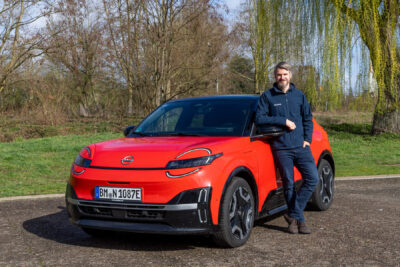
Renault, or its electric vehicle division Ampere, assembles the ready-to-install battery packs for the vehicles in-house, though the cells are sourced externally. The Renault 5 E-Tech and 4 E-Tech use AESC pouch cells. Each module contains 46 NMC cells, and four modules are used per vehicle to form the up to 52 kWh battery pack found in both Renault models. The new Nissan Micra – read our test drive review here – uses the same AmpR Small platform and battery but is not mentioned in the EU document, as production of the Micra at Ampere only began in January of this year.
The relatively short production period of the affected vehicles suggests a quality issue linked to a specific batch of supplied battery cells, which a Renault spokesperson confirmed: “There was a defect in one batch of the battery cells, which was identified and resolved as quickly as possible.” A broader design issue would likely have affected a larger number of vehicles, as the Renault 5 E-Tech has been in production since 2024.
ec.europa.eu, forococheselectricos.com (in Spanish)


0 Comments