


CATL captures half of China’s EV battery market
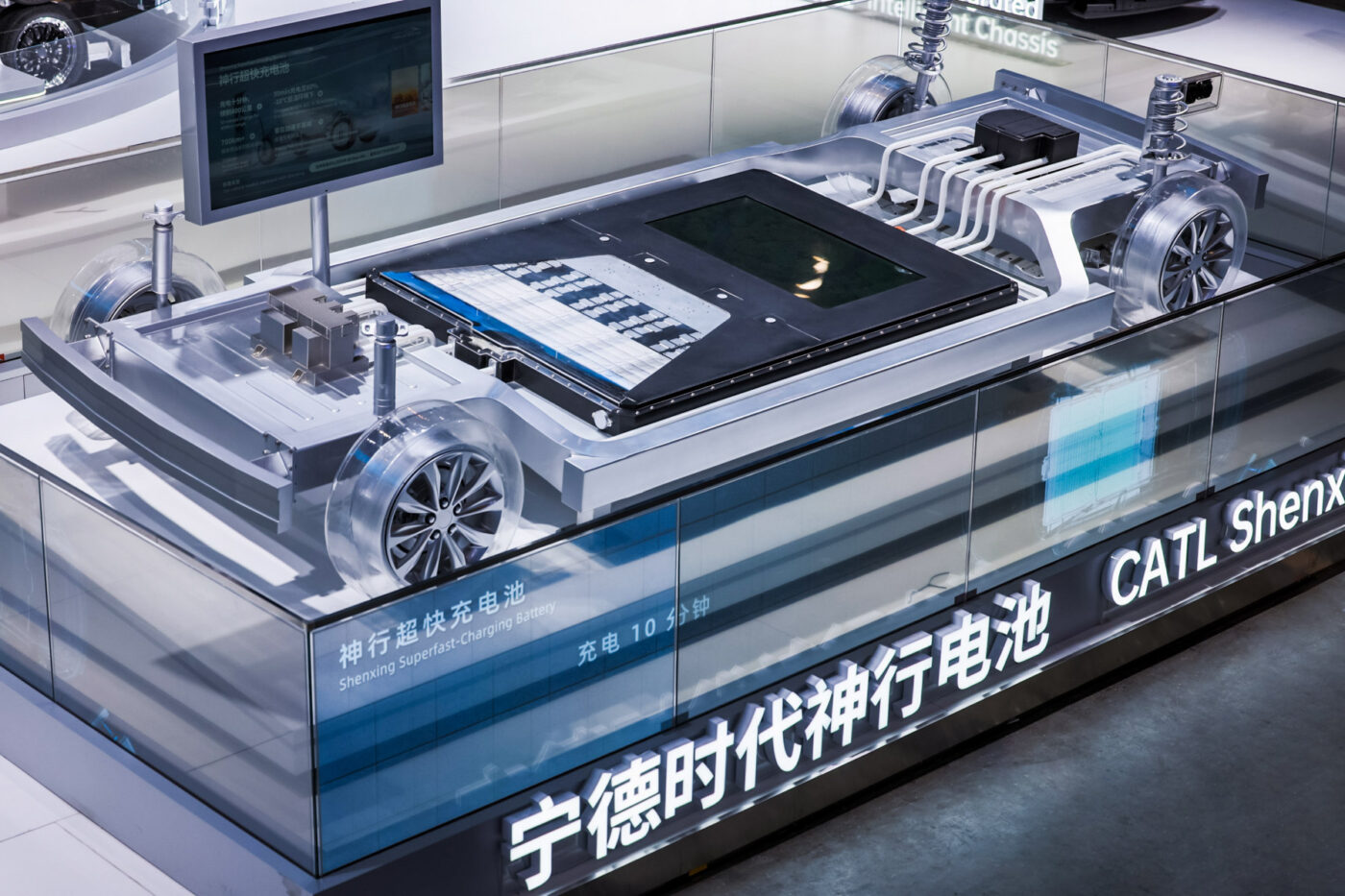
According to data from the China Passenger Car Association, CATL achieved a market share of 50.1% in the electric vehicle battery sector in the first quarter of 2026. This figure represents CATL’s estimated production share in the domestic market. It is an estimate, as the first quarter has not yet concluded—five days remain in March.
Regardless, the portal Car News China reports that CATL has regained this level of dominance in China for the first time in five years. In 2021, the company already held half of the domestic market, which at the time had a significantly smaller total volume. Incidentally, China’s total production volume of EV batteries for the first two months of the year reached 310 GWh, representing a 22% increase compared to the previous year.
But Car News China emphasises: “However, the proportion between produced and installed packs reached the historical low of 19%.” Currently, a significant volume is being produced for stock.
What stands out is CATL’s strategic positioning: the company dominates the ternary NMC battery segment in China while simultaneously expanding its presence in the LFP segment. The figures reflect this: CATL’s market share for NMC batteries reached 81.6% between January and March. Its market share for LFP batteries stood at 41% in the first quarter—’the highest [level] in four years,’ according to Car News China.
| Rank | Manufacturer | Total market share | NMC market share | LFP market share |
|---|---|---|---|---|
| 1 | CATL | 50.1% | 81.6% | 41% |
| 2 | BYD | 17.5% | 0% | 22.6% |
| 3 | Gotion | 6.1% | 0.4% | 7.7% |
| 4 | CALB | 5.3% | 5.4% | 5.3% |
| 5 | EVE | 5% | 1.1% | 6.1% |
| 6 | Rept Battero | 3.1% | 0% | 4% |
| 7 | Sunwoda | 2.8% | 0.2% | 3.6% |
| 8 | SVOLT | 2.5% | 7.6% | 1.1% |
| 9 | Zenergy | 2.1% | 0.3% | 2.6% |
| 10 | Zhejiang Yaoning | 1.8% | 0% | 2.4% |
Source: Car News China
As the table shows, CATL leads by a significant margin. The second-largest domestic battery manufacturer in the first quarter was BYD, with a 17.5% market share, representing a 4.3% decline compared to the previous year. Car News China describes this as BYD’s ‘weakest result in five years.’ However, the company, which operates solely in the LFP segment, holds a 22.6% share of the LFP battery market. In this segment, the gap to CATL is not as pronounced.
Overall, it is clear that most manufacturers focus on either NMC or LFP battery chemistries. Only CATL and CALB pursue a dual strategy, while other manufacturers largely concentrate on a single chemistry—more frequently LFP than NMC. Consequently, the LFP market is more competitive, whereas CATL has pulled far ahead in the NMC battery segment with the aforementioned 81% market share. Only SVOLT and CALB still hold market shares above 5%.
Nevertheless, market shares are not fixed. In the coming years, competition among battery manufacturers is expected to shift towards new segments such as sodium-ion and solid-state batteries. At the same time, questions arise about how profitably manufacturers can operate if the domestic market continues to weaken as it has in recent months.
According to statistics from the China Passenger Car Association, only around 370,000 batteries were installed in vehicles with alternative drivetrains (BEV, PHEV, and EREV) in February. This includes 100,000 in plug-in hybrid vehicles (-61% year-on-year), 236,000 in battery-electric vehicles (-41% year-on-year), and 27,000 in electric trucks.
“This slide is caused by the short-term decrease in demand for EVs in China due to the gradual phasing-out of governmental subsidies,” writes Car News China. More details on the pronounced February dip in China can be found here.
0 Comments