


UK passes two million EVs as market share hits 26%
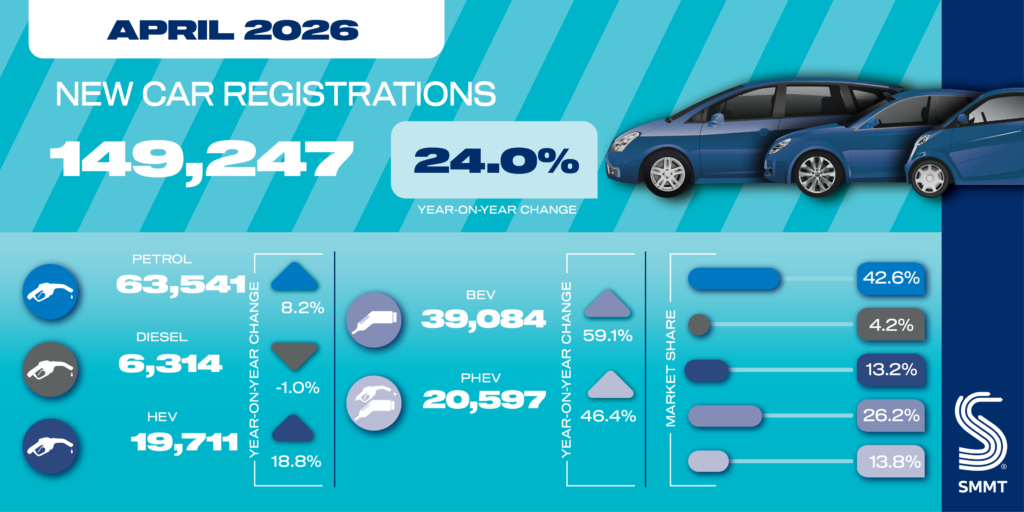
39.084 new battery electric cars were registered in the UK in April, 59.1% more than in April 2025. BEVs thus accounted for 26.2% of new registrations. Electrified vehicles as a whole – including BEVs, plug-in hybrids and full hybrids – represented 53.2% of the market, marking the second time this year that more than half of all new cars featured an electrified powertrain.
Plug-in hybrid electric vehicles contributed a 13.8% market share in April, following growth of 46.4%, while hybrid electric vehicles reached 13.2%, up 18.8%. Together, these segments continue to support the broader electrification of the UK vehicle fleet.
This follows an already strong March, when 86,120 battery-electric units were newly registered. Market share then stood at 22.6 per cent. Electrified vehicles had reached a record volume, with a combined 196,059 registrations across battery electric, plug-in hybrid and hybrid models.
Alongside strong momentum in electric mobility, the UK reached a major milestone. According to the Society of Motor Manufacturers and Traders, cumulative battery-electric registrations totalled 2,012,758 vehicles.
As usual, the SMMT says to take these results with a grain of salt. Because: Despite the milestone and continued growth, battery-electric uptake remains below regulatory expectations. Year to date, BEVs account for 23.1% of new car registrations, significantly short of the 33% share required under the UK’s Zero Emission Vehicle (ZEV) mandate.
The SMMT attributes the slower-than-expected BEV uptake to a range of factors, including high energy and production costs, as well as the continued need for investment in charging infrastructure. Manufacturers have also introduced significant incentives and discounts to support demand, alongside government measures such as the Electric Car Grant.
Mike Hawes, Chief Executive of the SMMT, said: “Two million electric car registrations is a considerable milestone to celebrate, although natural demand is still well below the level demanded by the mandate.”
Outlook revised for EV adoption
The SMMT has revised its outlook for electric vehicle adoption in 2026, lowering its expectations following weaker demand in the first quarter. Battery-electric vehicles are now projected to achieve a 26.8% market share this year, down from an earlier forecast of 28.5%.
At the same time, overall vehicle registrations are expected to reach 2.093 million units in 2026, reflecting improved confidence in total market volumes. By 2027, the market is forecast to grow to 2.121 million units, with BEVs accounting for 32.0% of registrations.
This would still leave a gap of around six percentage points compared to ZEV mandate requirements, indicating ongoing challenges in aligning market demand with regulatory targets.
Hawes warned: “The mounting cost of compliance threatens to limit consumer choice, overall decarbonisation and the sector’s competitiveness so the need for a rapid review of the transition to align policy with market realities is unchanged, else Britain’s attractiveness as a vehicle market and manufacturing hub will be put at risk.”
Update 6 May 2026
Meanwhile, electric van registrations in the UK jumped 44.7%, giving the entire segment a boost. A total of 2,439 battery-electric vans were registered in April, according to new figures published by the SMMT. In turn, the UK light commercial vehicle market grew by 6.8%.
Despite the increase, electric van uptake remains significantly below the UK’s Zero Emission Vehicle (ZEV) mandate target, which requires a 24% zero-emission share in the light commercial vehicle sector in 2026. Year-to-date, battery-electric vans account for 9.4% of all new van registrations in the UK.
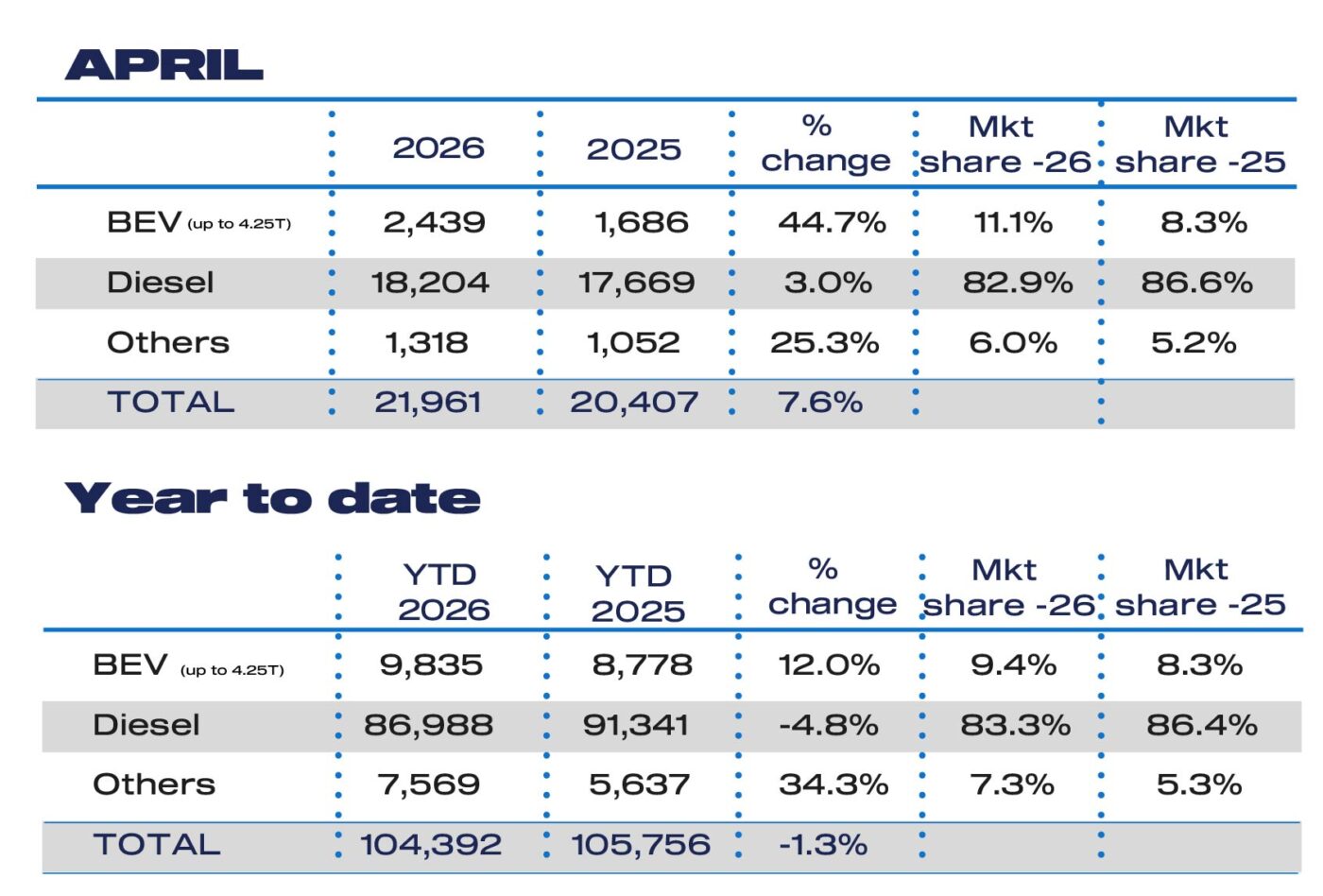
The SMMT noted that more than half of all light commercial vehicle models currently available in the UK are offered with an electric drivetrain. Manufacturers are also continuing to support adoption through discounts and the government’s Plug-in Van Grant. Year-to-date, battery-electric vans account for 9.4% of all new LCV registrations in the UK. The SMMT therefore reiterated calls for a review of the regulatory framework governing the transition to zero-emission commercial vehicles.
Mike Hawes, Chief Executive of the SMMT, said: “April’s improved market is welcome news, despite a tough economic environment. New LCV investment drives growth and decarbonisation, but must be sustained by investment in public and depot BEV infrastructure to build momentum for fleet renewal that cuts emissions and boosts business.”
Just as with passenger cars, the SMMT also revised down its market outlook for electric vans in 2026. Battery-electric vans up to 3.5 tonnes are now expected to record volume growth of 25% this year, around half the increase forecast in January. The organisation expects electric vans to achieve an 11.1% market share across the full year, remaining considerably below the ambitions set out under the UK’s ZEV mandate.
0 Comments