


Tesla launches startup programme for battery cell production in Grünheide
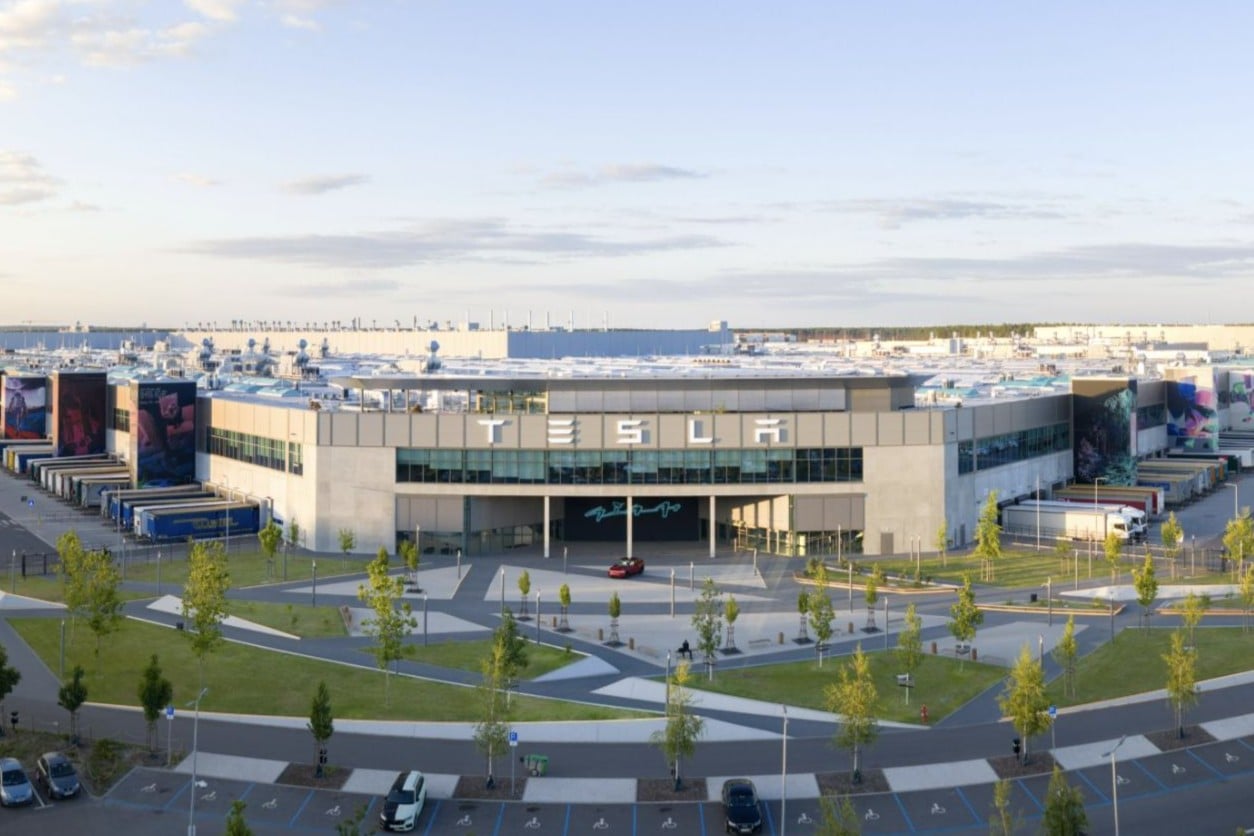
The initiative targets startups developing technologies for industrial-scale battery cell production. Its focus lies on solutions in materials, equipment, manufacturing processes, automation, and artificial intelligence. Applicants must demonstrate how their innovations can measurably enhance cell production in terms of quality, speed, cost, safety, or scalability.
The programme is structured into five phases. After an online application and review of submitted concepts, technical expert discussions and a pitch session with Tesla representatives will take place. The most promising participants will have the opportunity to test their technology under real production conditions as part of a paid pilot project alongside Tesla’s battery cell team in Grünheide. Applications are open until 24 July, with the programme set to begin in August.
The ‘Cell Giga Challenge’ is organised in collaboration with the Berlin-based startup platform JUNI, which is operated by UNITE gGmbH and supported, among others, by the EXIST programme of the Federal Ministry for Economic Affairs and Climate Action. The initiative aims to accelerate the transfer of innovations from the startup sector into industrial battery cell production.
The challenge is linked to the ongoing establishment of battery cell production at the Gigafactory Berlin-Brandenburg. In May, Tesla announced plans to increase the planned annual capacity of future cell production from eight to 18 GWh and to invest an additional $250m USD to this end. According to Tesla and JUNI, this – combined with previously announced measures – brings the total investment in cell production setup to around $350m USD. With an annual capacity of 18GWh, the plant could produce battery cells for approximately 250,000 to 350,000 electric vehicles per year. Tesla recently indicated that production is expected to commence in the first half of 2027.
Last week, the manufacturer also announced plans to gradually increase Model Y production in Grünheide to 7,500 vehicles per week by October. At the same time, global deliveries in the second quarter of 2026 rose by 25 percent year-on-year to 480,126 vehicles. By opening its cell production to startups, Tesla aims to integrate innovations in materials, automation, and AI more rapidly into series production.
juni.science (DE), electrek.co

0 Comments