


How TST links logistics with new business opportunities in the energy sector
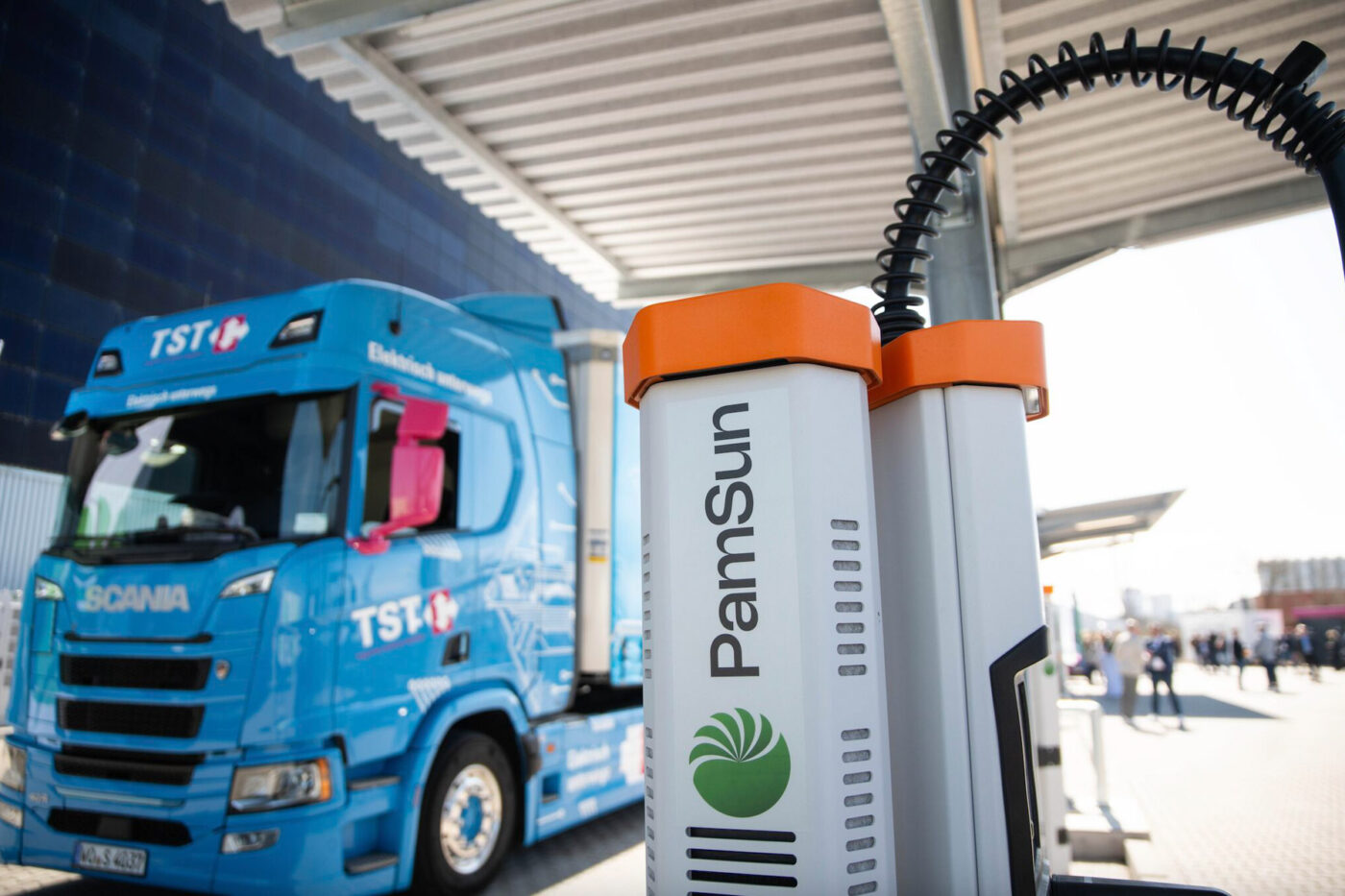
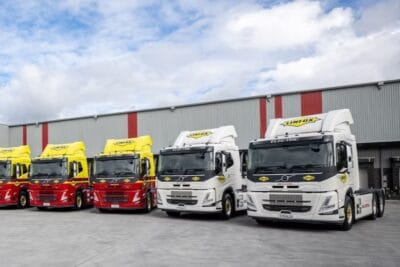
TST GmbH is a family-owned logistics provider serving numerous clients in retail, mechanical engineering, and the chemical and pharmaceutical industries. The group currently employs around 3,500 staff and operates 75 sites in Germany, with additional locations in Europe and the US. TST recently expanded its fleet of battery-electric trucks to 30 units, accounting for a quarter of its total HGV fleet. According to the company, the focus is primarily on battery-electric tractor units. However, that is not all. Alongside its self-imposed fleet targets, TST is simultaneously expanding its own charging parks under the brand name ‘PamSun.’
Katrin Herda, Head of E-Mobility & Energy Solutions at TST, explains that the company’s transition to alternative drivetrains is closely linked to its own electricity production. One would not be possible without the other. Herda oversees areas such as photovoltaics and charging infrastructure. She highlights that TST now uses thousands of square metres of roof space to generate its own green electricity. Specifically, TST operates 75 sites across Germany, 45% of which are owner-occupied, while 55% are leased. The total warehouse space amounts to one million square metres. The logistics provider’s fleet comprises around 120 tractor units, 45 swap bodies, and approximately 200 trailers (‘curtain-sided, box, and refrigerated’). TST completes more than 1,000 transports daily, summarising the company’s operational scale.
Starting point: too much unused roof space
For several years, Katrin Herda and her team have driven the company’s diversification and transformation towards e-mobility. “A few years ago, we realised we had so much unused roof space. At the same time, energy costs were rising, and the idea emerged to become more self-sufficient in terms of energy,” she explains. TST subsequently experimented successfully with photovoltaics, primarily for its own use. Interestingly, the concept of self-sufficient electricity generation at TST predated the idea of integrating battery-electric trucks. However, just at the right time, electric trucks became viable for everyday use. “This led us to the idea of becoming a climate-friendly logistics provider,” says Herda. This vision is supported by the recently added goals of equipping one million square metres of roof space with solar panels, charging its own electric trucks with self-generated electricity, and establishing a cooperative depot charging network.
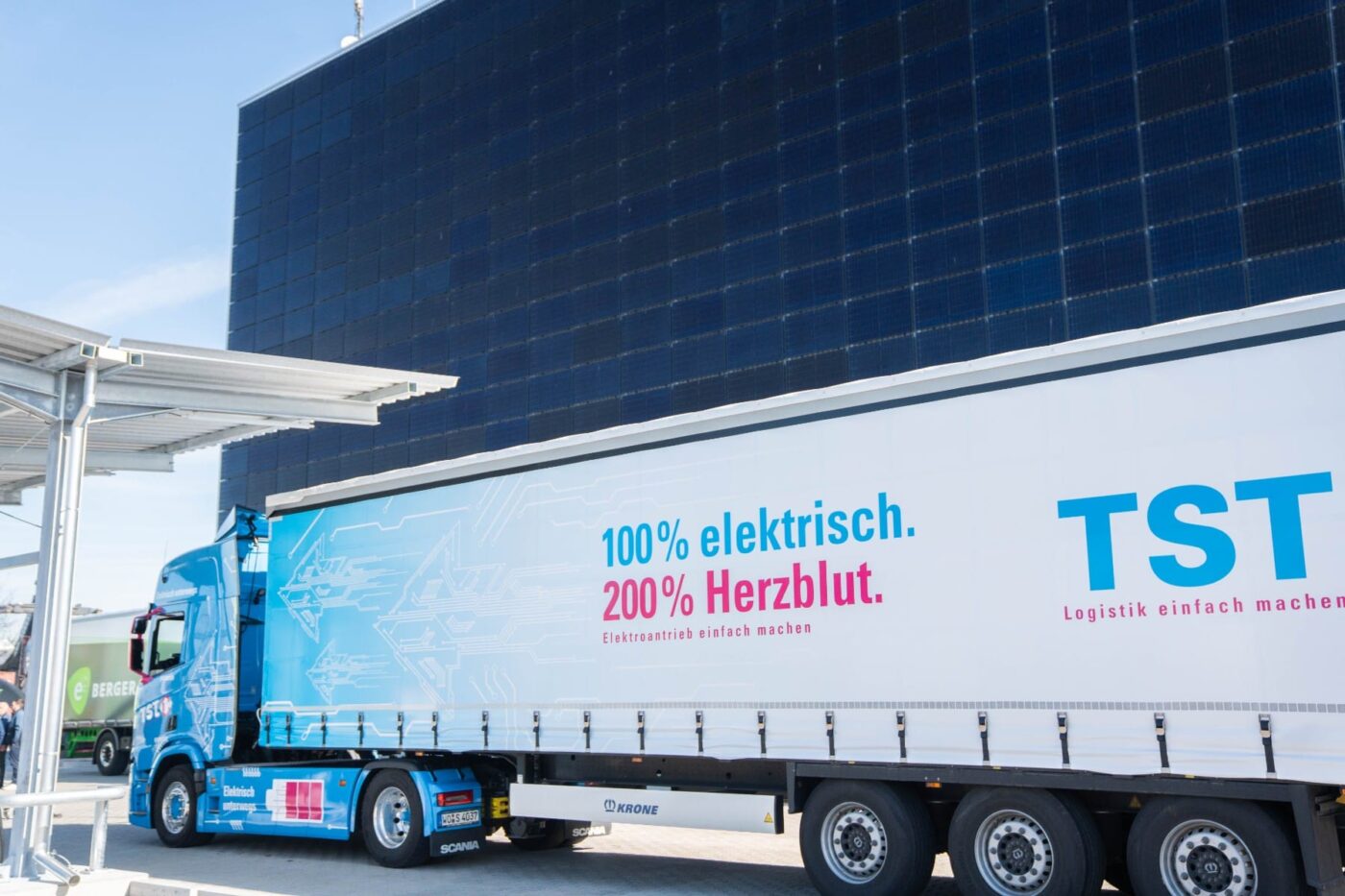
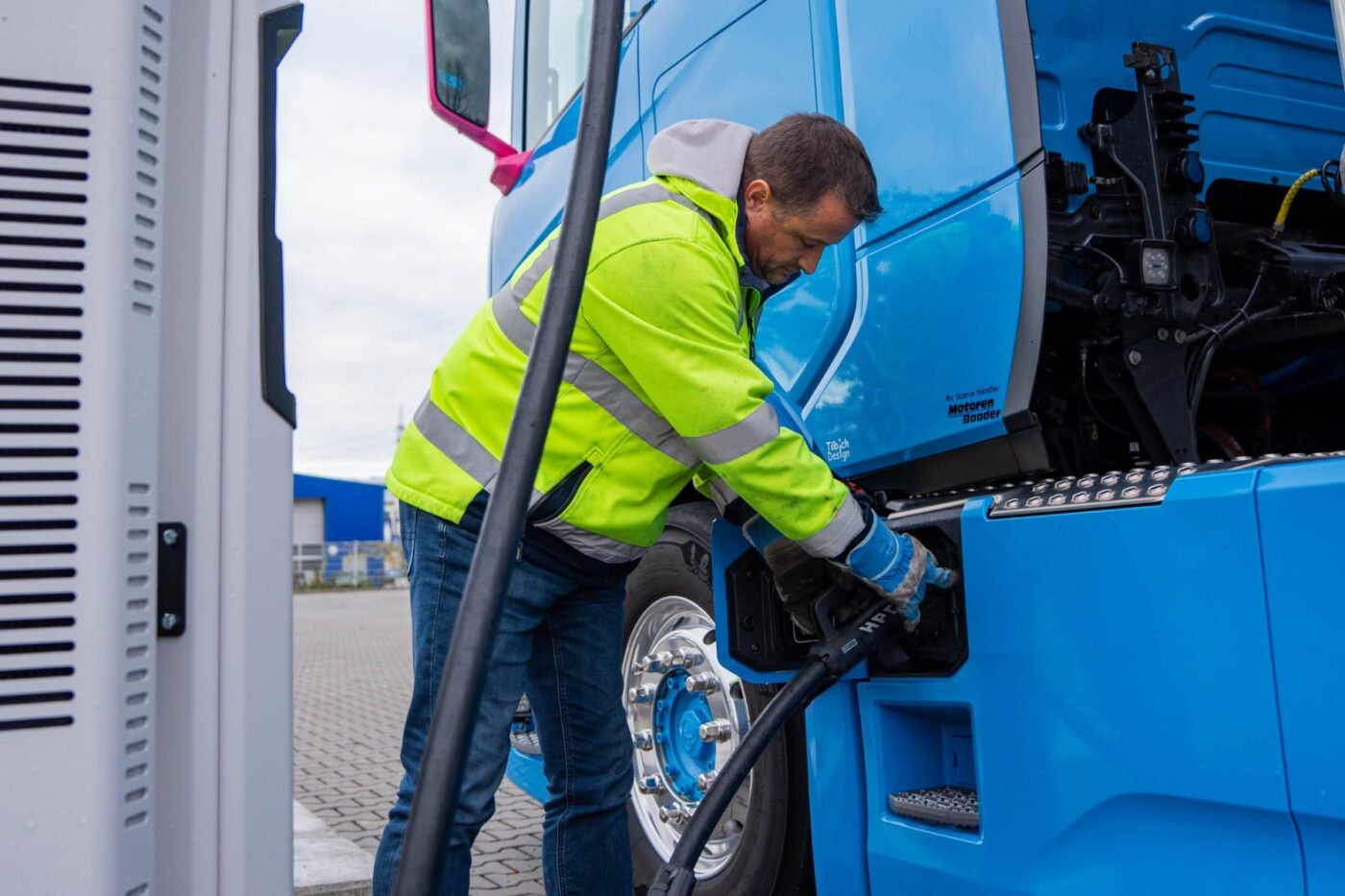
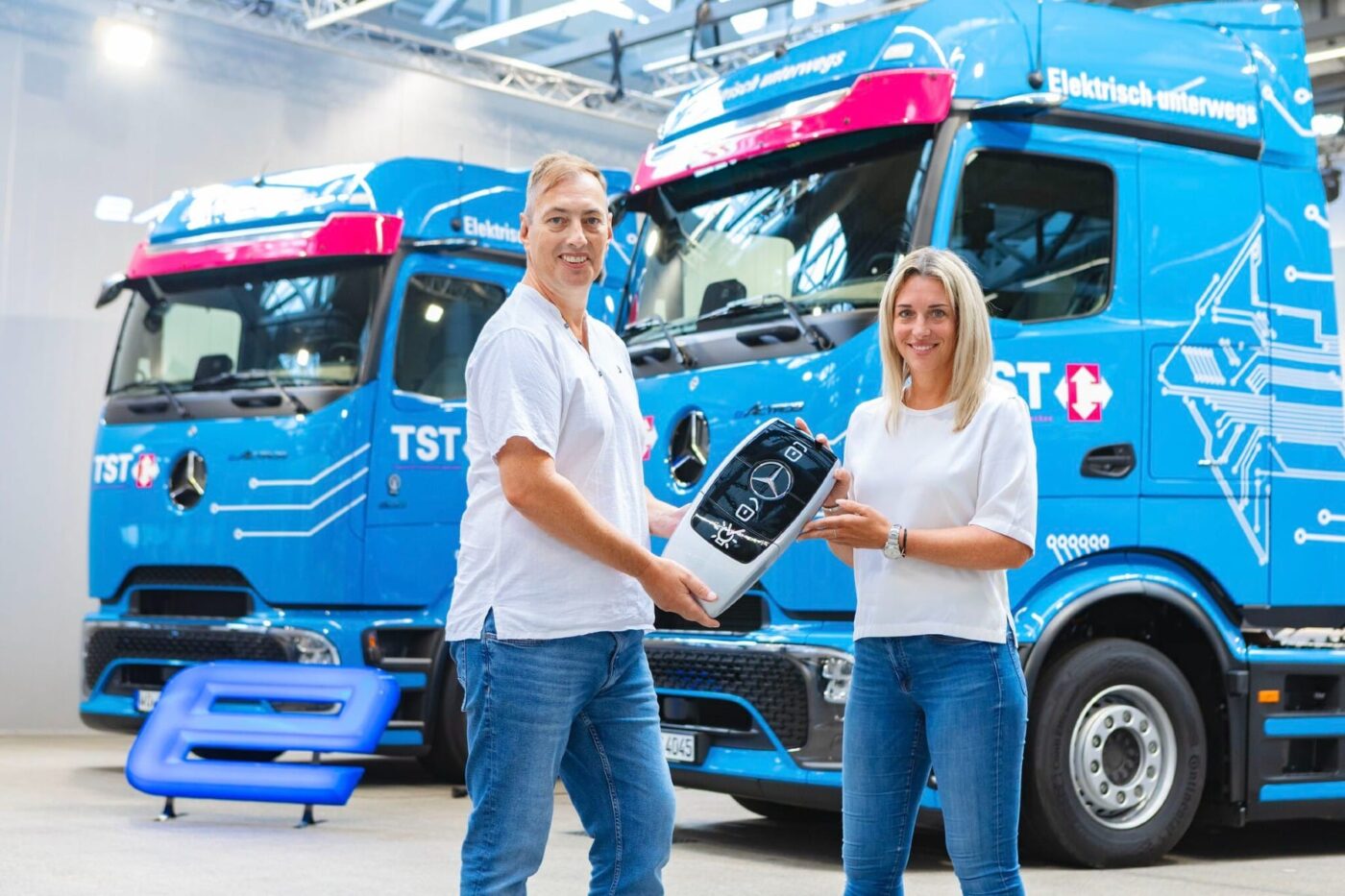
The TST brand continues to represent the core contract logistics business. However, with the establishment of the PamSun brand in 2023 (officially: PamSun powered by TST), the company’s leadership underscores its commitment to energy generation and marketing. The primary link between the two brands is TST’s fleet of 30 battery-electric trucks, which includes models from Scania and Mercedes-Benz. These vehicles are predominantly used in two-shift operations for regional transport but are also deployed in long-distance haulage. Herda is convinced that ‘at least 90% of our routes will be covered by battery-electric trucks in the future.’
The inauguration of TST’s first dedicated e-HGV charging park in Worms marked the first major project for the PamSun brand in March 2025. The facility is not only intended for the company’s own battery-electric trucks but is also publicly accessible. It features eight charging points with capacities of 3 x 400 kW, 3 x 240 kW, and 2 x 160 kW. “At the Worms charging hub, 45-tonne trucks can pull in without decoupling,” Herda emphasises. Further charging parks are already planned at TST’s sites in Wevelinghoven (North Rhine-Westphalia, Germany) and Alzey (Rhineland-Palatinate, Germany).
Charging strategy: from depot to depot
However, TST does not intend to limit itself to its own semi-public charging facilities. In June 2025, TST and its subsidiary PamSun announced plans to initiate a cooperative depot charging network for battery-electric trucks, based on cooperative principles. Haulage companies can join the network to use the infrastructure of others with their electric trucks or to provide charging points themselves. TST presented the plans for this cooperative depot charging network at the ‘Transport Logistic’ trade fair in Munich last year.
Katrin Herda explains that this additional project was prompted by the numerous challenges facing the transport and logistics sector in its transition to sustainable mobility: “There is not only a lack of sufficient charging stations but also a lack of those that meet the specific requirements of HGV traffic.” For many logistics companies, high prices at public charging points are an additional cost factor that further strains already tight budgets.
‘At 81ct/kWh, every business case for an electric truck Is dead”
Herda speaks from experience: “When we started with our battery-electric trucks in July 2024, we had no charging infrastructure of our own. We were dependent on public networks, where we paid up to 81 pence per kWh at peak times. At 81ct/kWh, every business case for an electric truck is dead. That’s why we want to do better now.” The cooperative approach developed by TST aims to create a reliable framework in which technical, economic, and operational issues can be resolved collectively. And, as Herda adds: “We must not overlook small haulage companies during this transformation. We want to offer them the opportunity to join this network, whether or not they have their own charging infrastructure.”
In this setup, TST’s own charging parks are intended to form the backbone. The company has three different layouts in mind. Following the Worms model, so-called charging stations will be established, primarily for fast charging during the 45-minute driver break. Additionally, the company envisions charging parks with sanitary facilities, driver lounges, and overnight accommodation. Here, alongside fast chargers, moderate charging capacities will be offered for overnight charging. The first charging park of this kind is set to be built at TST’s site in Alzey and will eventually include a booking function. To store solar energy for such charging stations and parks, the company also plans to integrate stationary battery storage systems (‘in the range of 6-7 MWh’) into the local charging ecosystems.
As a third concept, charging is also planned to take place directly during the loading and unloading of trucks at the ramp. Several technical implementations are conceivable, ranging from retractable charging pillars to a traversing system. However, TST also intends to open these chargers to third parties and therefore requires a system compliant with calibration laws, which does not yet exist and complicates matters. “That’s why we are currently working with a manufacturer to develop a solution for this charging concept,” says Herda. “We need something that doesn’t interfere with manoeuvring but is still compliant with calibration laws. In our view, that would truly be a game-changer for the industry.”
Need for Improvement in billing practices and more
For now, Katrin Herda can share experiences based primarily on the charging station already operational in Worms. “We had 3,000 square metres available and equipped the site with the aforementioned eight charging points, which have since been covered,” she reports. The energy comes from the roofs of seven surrounding buildings (‘100,000 square metres of PV with 7.5 MW capacity’). According to Herda, the electricity is sufficient to supply not only TST’s own battery-electric trucks but also over 20 external operators whose electric trucks now stop at TST for charging. What these operators particularly appreciate, according to Herda, are the more favourable pricing conditions compared to public networks, a practical billing system (‘most drivers do not carry their company’s credit cards’), the reliability of the charging infrastructure, and, of course, ‘truck-ready’ charging points—locations that are truly suitable for HGVs in terms of clearance height and turning circles.
All these points are set to be central to the planned cooperative depot charging network. According to Herda, an initial event for interested parties was well attended. She also hints that there have been inquiries from abroad: “We are receiving signals that stakeholders in neighbouring countries are interested. This means we are not thinking solely on a Germany-wide scale.”
0 Comments