


ACC permanently abandons battery projects in Germany and Italy
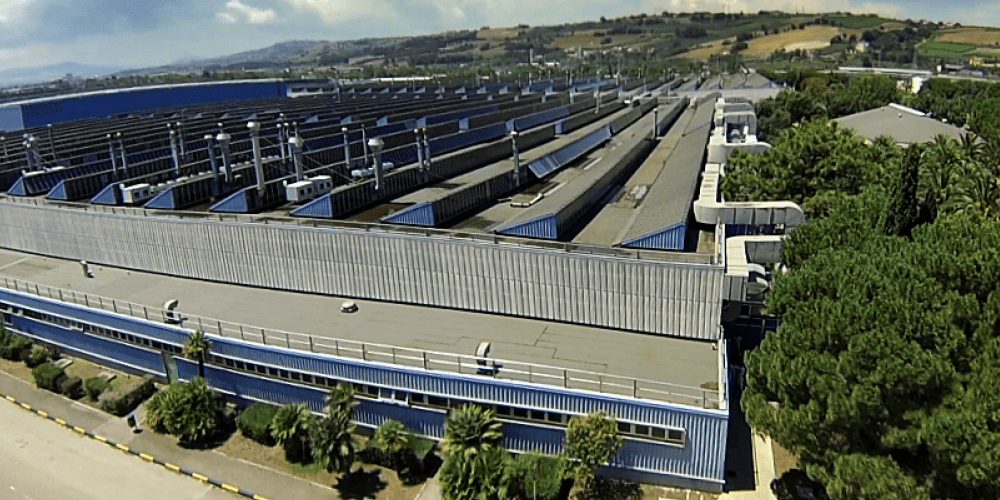
As reported by the Italian metalworkers’ union UILM over the weekend, ACC management has informed employee representatives that the projects in Kaiserslautern and the Italian town of Termoli have been ‘definitively shelved.’ After UILM made this information public, the battery joint venture—led by majority investor Stellantis along with Mercedes-Benz and TotalEnergies—confirmed that the conditions for restarting the projects, which have been on hold since May 2024, ‘are unlikely to be met.’
The Automotive Cells Company (ACC) initially paused construction work on its battery cell factories in Kaiserslautern and the Italian town of Termoli—officially as part of a strategic review, as the company considered shifting from nickel-based cell chemistry to more cost-effective battery technologies. At ACC’s first and so far only factory in Douvrin, France, which has been producing cells since 2023, the company relies on NMC battery cells (nickel-manganese-cobalt). However, majority shareholder Stellantis has since partnered with CATL to produce more affordable LFP cells, with the two companies building a cell factory in Spain near Stellantis’s vehicle plants.
While developments in Kaiserslautern stalled, reports from Termoli continued to emerge, though none were positive. In September 2024, the Italian government withdrew its funding commitment after the company failed to reaffirm its plans. By November of last year, it had become clear that the projects would be abandoned entirely. According to a newspaper report, management concluded that the project was ‘no longer viable due to technical, financial, and strategic challenges hindering growth.’ The announcement was expected by the end of 2025 or the first few months of this year—and has now been made.
There is no longer any place for the Kaiserslautern and Termoli projects in ACC’s plans—shareholder TotalEnergies had already publicly questioned investments in additional cell factories beyond Douvrin last year. The focus is now on winding down the paused projects. ACC stated that it has begun a “constructive dialogue” with works councils in Germany and trade unions in Italy regarding the potential discontinuation of the projects.
It remains unclear how long these negotiations will take or what a potential agreement might entail. The Italian metalworkers’ union UILM has already demanded ‘clear and coherent industrial decisions’ to compensate for the failed plans. The priority is not necessarily electromobility-related projects but rather the preservation of jobs. The Termoli site is a Stellantis engine plant, and while the group has hinted at continued production of engines and transmissions, no concrete plans have been announced. Under new CEO Antonio Filosa, Stellantis is internally reviewing numerous projects from the previous management—including internationally, as highlighted by the recent multi-billion-euro write-down primarily affecting its US operations.
The precarious status of the Kaiserslautern and Termoli projects had been apparent for some time. Demand for electric vehicles has not developed as initially anticipated, and Stellantis’s EV models—often based on hybrid platforms and frequently lagging behind competitors—have not always been convincing. Additionally, Stellantis’s electric vehicles tend to be priced relatively high. So far, Stellantis is ACC’s only customer, while co-shareholder Mercedes-Benz has yet to source cells from the joint venture.
This situation is unlikely to change in the near future, as ACC is struggling with high scrap rates at its sole plant in Douvrin. According to various reports, this has led to ACC being unable to meet even Stellantis’s demand. Just last week, Bloomberg reported that Stellantis can currently equip only around 1,000 vehicles per month with ACC cells, with delivery delays of up to eight months being mentioned. ACC has now brought in a team of experts from China to boost production and reduce high scrap rates.
reuters.com, uilmnazionale.it (in Italian)
0 Comments