


French state invests in Imerys lithium project
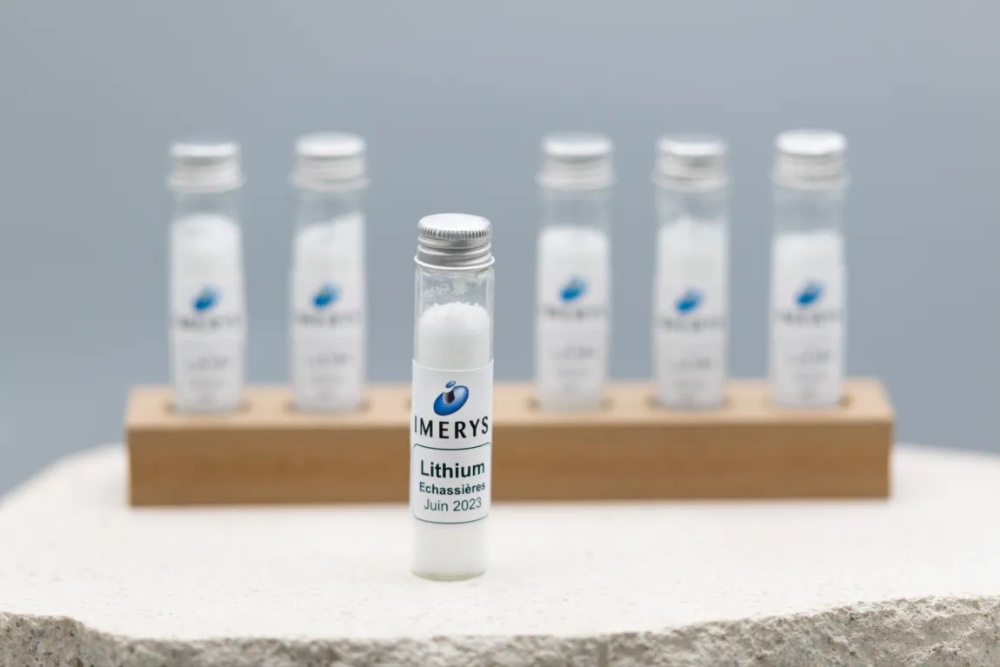
The French mining group Imerys aims to become one of Europe’s leading lithium suppliers through this project. The initiative involves a mine at the Beauvoir site in the French department of Allier, where up to 34,000 tonnes of lithium could be extracted annually in the near future. The deposit is considered one of the world’s five largest hard-rock lithium reserves. However, a feasibility study is still required to realise the project, which was announced as early as 2022. According to Imerys, the final investment decision depends on the outcome of this study. The project has been named Emili (Exploitation de Mica Lithinifère).
There is positive news regarding the project’s initial funding. The state-owned promotional bank Banque des Territoires, acting on behalf of the French state, is investing €50 million in the Emili project. Specifically, it is acquiring an unspecified minority stake, with the transaction expected to be complete ‘in the coming months’. France regards domestic lithium mining as a major project of national interest—and it is also considered strategically important at the European level.
“A geostrategic issue of this century”
“I am delighted about this acquisition […]. Strategic metals and rare earths are a key geostrategic issue of this century and are crucial for our energy supply and sovereignty. I am making this a priority,” commented Roland Lescure, French Minister for Economy, Finance and Industry, Energy, and Digital Sovereignty.
“The state’s participation in EMILI’s capital is an important recognition of the industrial and strategic potential of our project,” responded Alessandro Dazza, CEO of Imerys. “This partnership provides us with the means to achieve our goals for 2026 and reinforces our commitment to becoming a key player in France’s and Europe’s energy transition.”
Imerys has been conducting technical studies at the site in the French Massif Central for some time. The company emphasises that the Emili project could become one of the largest lithium mining projects in the European Union. At full capacity, the raw material extracted could equip 700,000 battery-electric vehicles with lithium-ion batteries annually.
Currently, ten lithium mining projects in the EU are considered promising. According to those involved, as reported by the French newspaper “Sud-Ouest”, the French Emili project would rank as the second-largest initiative after the suspension of Rio Tinto’s Jadar project in Serbia. It would follow the Upper Rhine Valley project of the German-Australian lithium producer Vulcan Energy Resources.
Initial investigations date back to the 1960s
At the Beauvoir site, Imerys has been extracting kaolin for ceramic production since the late 19th century. As early as the 1960s, the Bureau de Recherches Géologiques et Minières (BRGM) identified lithium deposits in the subsurface. However, Imerys—a specialist in ceramic products and operator of the existing mine—stated that it was unaware of the lithium content until a few years ago. According to current studies, the concentration is estimated at 0.9 to 1 per cent, meaning nearly 100 tonnes of rock must be mined to obtain one tonne of lithium.
In an earlier statement, Alessandro Dazza mentioned that his team estimates the deposit at around one million tonnes of lithium oxide, which is ‘far more than the BRGM originally assumed’. The state institute had initially estimated 320,000 tonnes. In an official statement in 2022, Imerys referred to a mining lifespan of at least 25 years, though this was considered a conservative estimate. “We will continue the studies to see if we can extend operations to 30 or 35 years,” Dazza said at the time.
Two sites planned
In the long term, lithium mining in the Auvergne-Rhône-Alpes region could create 1,000 direct and indirect jobs across two sites, according to official statements. One site will be the mine itself, located at depths of 75 to 350 metres, while the other will be a facility for refining minerals and converting the raw material into lithium hydroxide, situated less than 100 kilometres from the mine. The company estimates development and construction costs at roughly €1 billion. The production costs for lithium extracted at Beauvoir are estimated at €7 to €9 per kilogramme, which Imerys considers competitive—’particularly in the European market.’
For lithium extraction, the French company plans to adhere to the IRMA standard, which serves as a benchmark for responsible mining. Among other measures, the company intends to use underground mining methods to ‘minimise the impact on natural habitats.’ Additionally, the project design is to be developed ‘in collaboration with all local private and public stakeholders’. Imerys also aims to extract lithium with less than half the CO₂ emissions of typical hard-rock lithium operations worldwide. This is to be achieved through an electrically powered mining fleet, transport via underground pipelines and trains, and the use of the French electricity mix, which has a high share of nuclear power.
Imerys is headquartered in Paris and produces industrial carbon black and synthetic graphite, among other materials. The company has production sites in Willebroek, Belgium, and Bodio, Switzerland. With the Emili lithium project, the group is pursuing a strategic realignment, focusing increasingly on specialty minerals for sustainable energy applications.
This aligns with the recent announcement of a collaboration with Shanshan New Material to establish a European production facility for synthetic graphite for anodes.
stern.de, imerys.com
0 Comments