


ICCT study finds high CO₂ emissions from modern plug-in hybrids
In Europe, plug-in hybrids accounted for nine per cent of all new passenger car registrations in 2025. In Germany, they even achieved nearly 11 per cent market share in the past year. Plug-in hybrids can be powered both electrically and by an internal combustion engine. “While carmakers market this versatility as a win for consumers and the climate alike, multiple reports have disputed the reliability of official fuel consumption and CO2 emissions figures,” the ICCT states in its study.
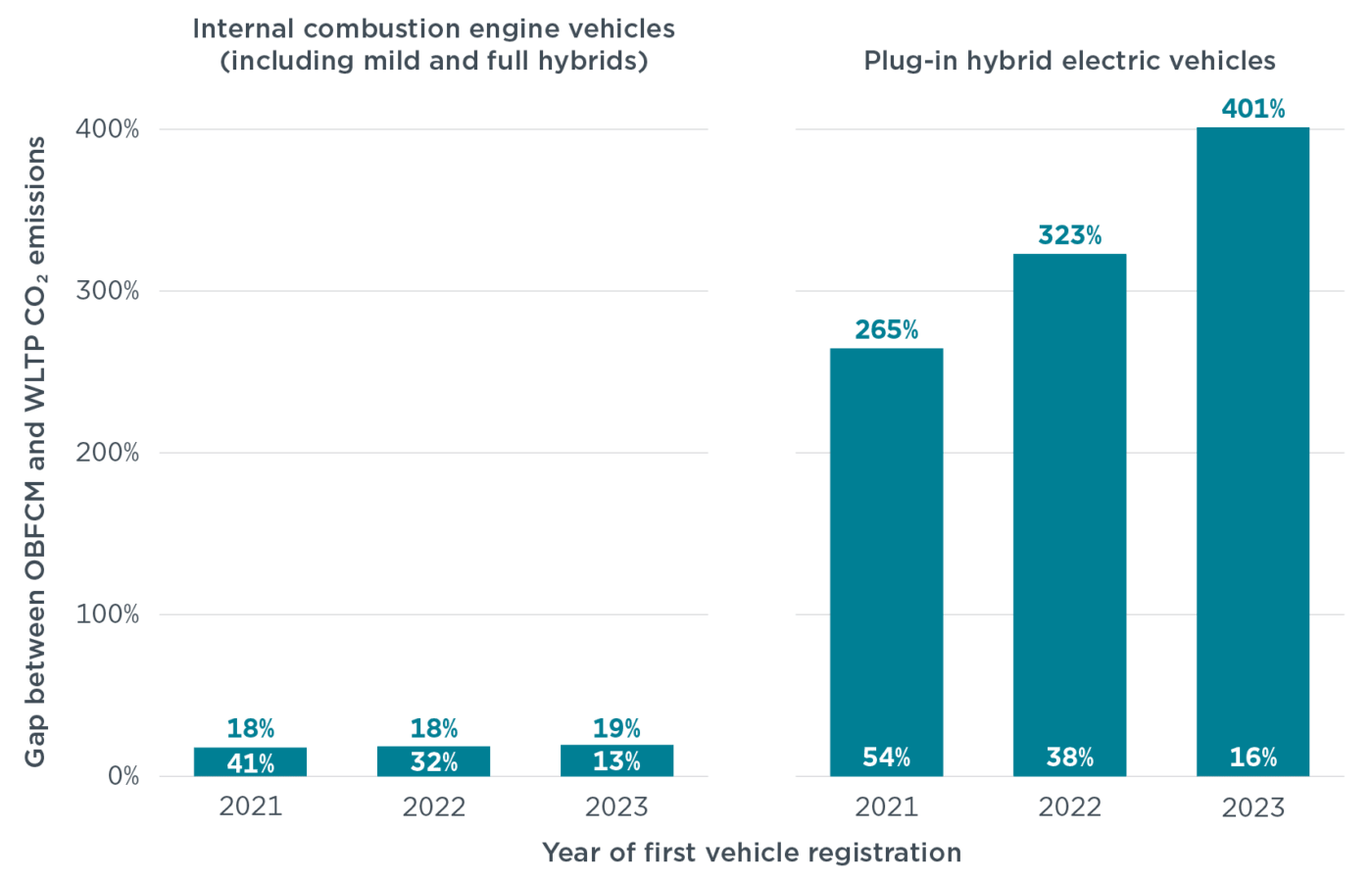
The issue: when plug-in hybrids are not charged regularly, they consume significantly more fuel, as the hybrid powertrain makes these vehicles relatively heavy. The ICCT now quantifies this problem with new data: “The gap between real-world and official emissions values grew from 265% in 2021 to 400% in 2023, on average across all manufacturers,” according to the ICCT researchers. The discrepancy was highest for Mercedes, Europe’s largest plug-in hybrid manufacturer between 2021 and 2023. “452% on average, nearly doubling from 329% in 2021 to 614% in 2023.”
At its core, the ICCT identifies three factors that undermine the CO₂ balance of plug-in hybrids:
- The vehicles are charged less frequently, and the electric mode is used less than theoretically assumed when calculating CO₂ emissions
- The internal combustion engine often supports the electric motor even during ‘pure electric driving’
- The weight of two powertrains increases the overall energy demand
The conclusion: manufacturers have reported excessively low CO₂ emissions for their plug-in hybrids for years – and this powertrain stands out extremely compared to other drive types. According to ICCT calculations, the ‘gap’ equates to approximately 100 megatonnes of CO₂ emissions from new registrations between 2021 and 2025 – emissions that have been factored into the EU’s CO₂ reduction targets without actually being saved.
To estimate this emissions gap, the ICCT relied on its own analyses of plug-in hybrids and registration data from the European Environment Agency, applying ‘an assumed lifetime mileage of 240,000 kilometres in line with standard ICCT methodology.’ The real-world emissions gap averaged 99 g CO₂/km between 2021 and 2023. Furthermore: “The real-world gap averaged 99 gCO2/km across 2021–2023, and with roughly 840,000 new PHEVs registered annually in the EEA, this amounts to approximately 20 megatons of unaccounted CO2 per year—totalling around 100 megatons over the 2021–2025 period, equivalent to approximately 42 billion litres of additional fuel consumed.”
“The gap of plug-in hybrids is shockingly high”
The study specifically analysed eight million vehicles, including conventional petrol and diesel cars as well as their hybrid variants. While official and real-world values also diverge for normal internal combustion engines, the discrepancy is far less pronounced than for part-time electric vehicles. “The gap of plug-in hybrids is shockingly high, but this should not distract from the fact that the gap of conventional vehicles, which still make up the majority of vehicle sales in the EU, is also considerably high at 20%. As a consequence, we didn’t see any notable reductions in the real-world CO2 emissions of vehicles with a combustion engine over the past years,” explained Jan Dornoff, Senior Researcher at the ICCT and co-author of the study.
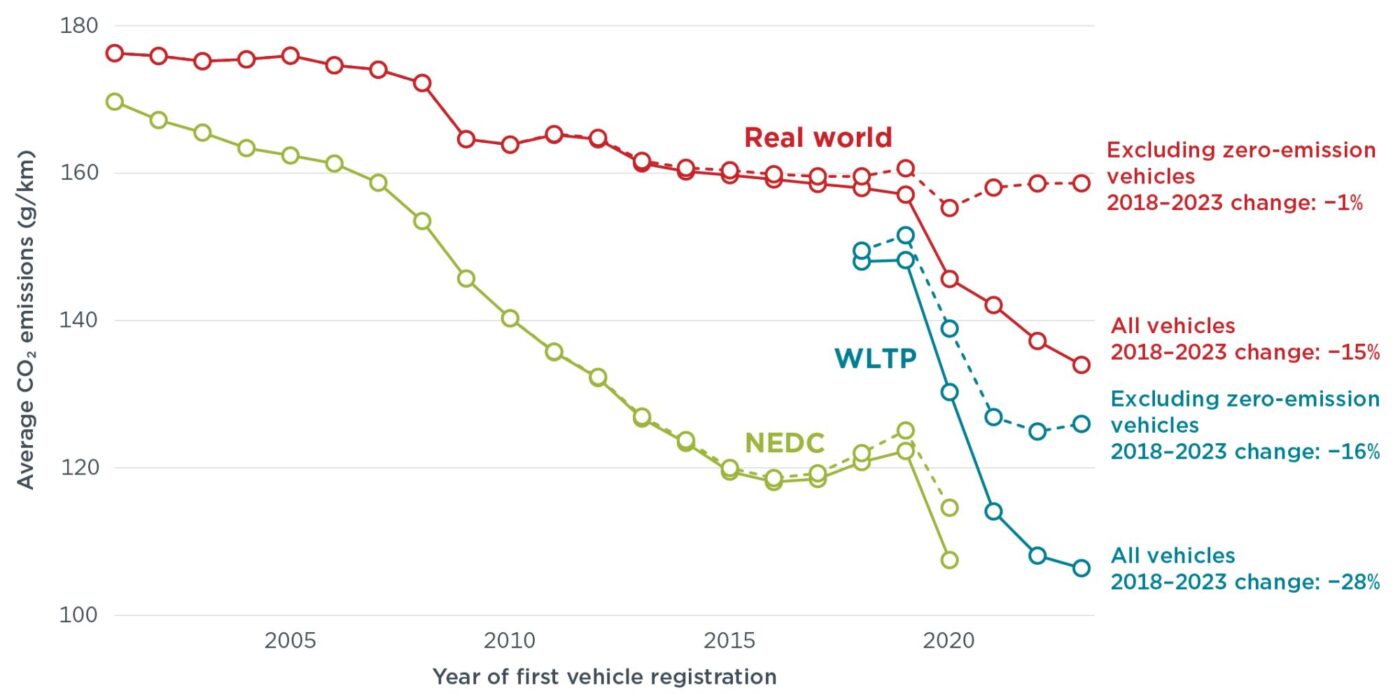
Across all drive types, the officially reported CO₂ emissions for new cars in Europe fell by 28 per cent between 2018 and 2023 – while real-world emissions decreased by only 15 per cent, the ICCT states. As expected, battery-electric vehicles made the largest contribution. However, for internal combustion engines, the reduction in average real-world emissions during this period was ‘only 1%’ according to the analysts.
“Plug-in hybrids consume far more fuel on the road than official figures suggest. This study reinforces earlier findings, including our own. Unless regulators address this flaw, carmakers will continue to report emissions that are far lower than those produced in real-world driving,” warned Sonsoles Díaz, ICCT Senior Researcher.
At least, the European Commission has now recognised the problem. In 2025, the calculation formula for the so-called utility factor was adjusted to enable more realistic estimates. A further correction is planned for 2027. However, the EU’s CO₂ reduction targets for passenger cars and light commercial vehicles are currently being renegotiated in the European Parliament – and a preliminary draft proposes suspending future corrections.
Dr Peter Mock, Europe Managing Director of the ICCT, commented: “Even with the 2025 correction, emissions on the road are not accurately estimated. And the worrying trend is that new models are not emitting less but more. Even if carmakers claim that consumers drive more kilometers in electric mode, the reality is something else.”
The original title of the new study is ‘On the way to ‘real-world’ CO₂ values? Evidence from 2021–2023 on-board fuel consumption monitoring data in the European passenger car market.’ This report is the tenth edition of the ICCT’s series From Laboratory to Road. For the first time, the analysis combined data from two sources: on-board fuel consumption data from around eight million vehicles registered in Europe between 2021 and 2023 and reported to EU authorities, as well as self-collected consumption data from 300,000 vehicles registered in Germany between 2021 and 2024.
theicct.org, theicct.org (Study)

2 Comments