


BEVs over Hydrogen: South Korea considers reallocating subsidies
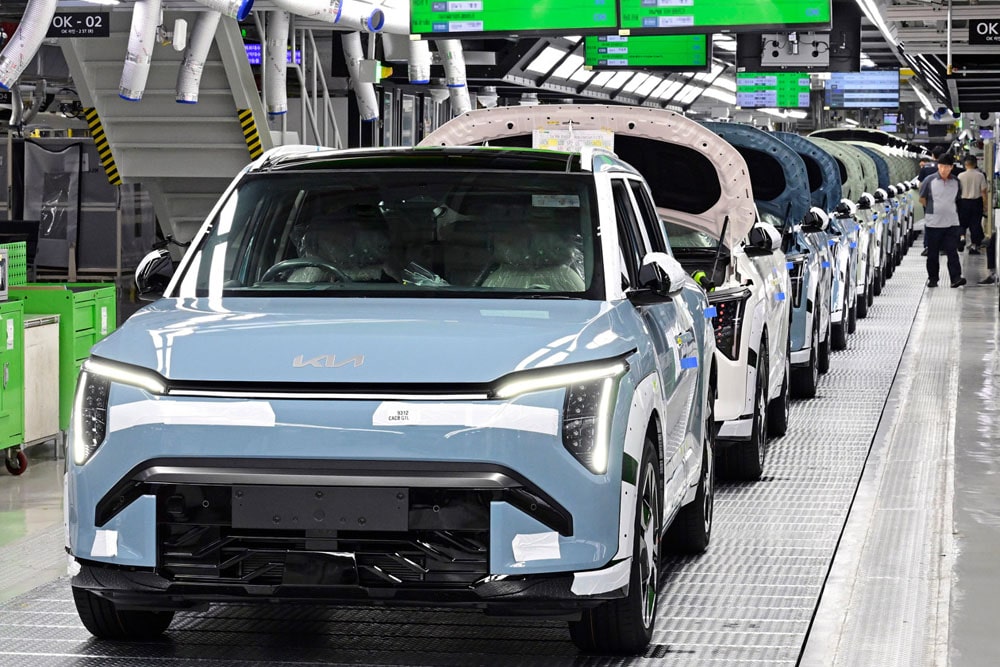
South Korea’s subsidy budget for battery-electric cars – which this year totals 1.7454 trillion Won (approximately €1 billion euros) – is at risk of being exhausted prematurely. This is partly due to rising fuel prices caused by the conflict in Iran. Significantly more South Koreans are now purchasing BEVs compared to previous years, when the budget was sufficient. The Ministry of Trade, Industry and Energy reports a 125.3 per cent increase, with 162,026 battery-electric cars sold in the first five months of the year.
According to South Korean media, the government is now considering reallocating other subsidies in the short term to bolster the battery-electric car incentive scheme. Climate Minister Kim Seong-hwan recently stated: “From a people-centered perspective, regardless of how much budget is allocated, it is right to allow consumers to buy as many vehicles as they want.”
Potential candidates for reallocation include subsidies for hydrogen-powered cars, which have an annual budget of 576.2 billion Won (~€330 million), funding for the expansion of electric vehicle charging stations totalling 451.75 billion Won (~€260 million), and support for the development of hydrogen refuelling stations amounting to 174.3 billion Won (~€100 million euros).
However, even if a portion of these budgets is redirected towards battery-electric car subsidies, another challenge remains: the structure of electric vehicle subsidies requires co-financing from both central and local government funds. This means municipal budgets must align with the central government’s budget. An official from the Ministry of Environment explained: “We are seeking cooperation to make up for the shortfall in local funds through a supplementary budget next month, when new local government heads begin their terms.”
To date, South Korea has offered subsidies of between 5.3 and 5.8 million Won for the purchase of a battery-electric car, depending on the vehicle size, equivalent to approximately €3,000 to €3,300 euros. Eligible vehicles include domestically produced models such as the Hyundai Ioniq 6 and Kia EV3, as well as international offerings like the Tesla Model 3 and Y, and the BYD Dolphin and Seal from Chinese manufacturers. Recently, there have been discussions about restricting subsidies for foreign models.
0 Comments